
‘They disappear like magic dust’: Welsh artist makes beach sculptures that are ‘obliterated’ by the tide
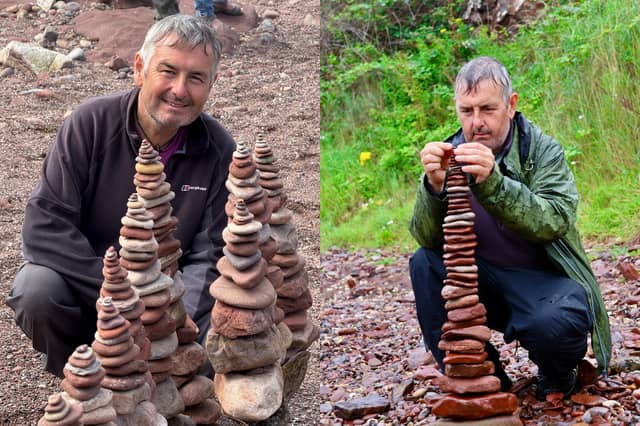

An environmental artist who uses driftwood, pebbles and abandoned toys to make temporary artworks and sculptures in nature has said they disappear like “magic dust” with the tide.
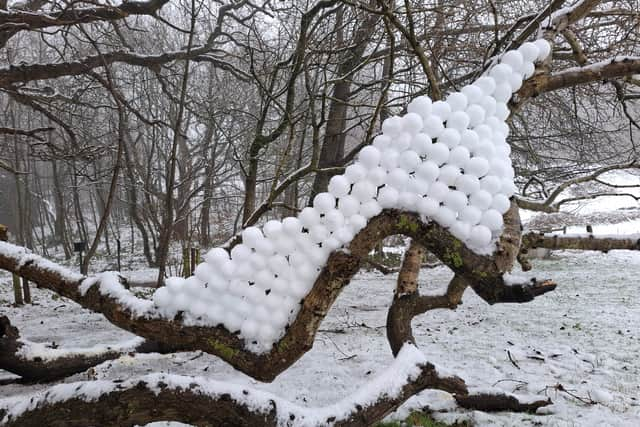
Tim Pugh, 59, from Flintshire, North Wales, works on beaches and in woodlands to create sculptures from whatever materials he finds that day, including old toys, miners’ tags and washed-up army parachutes.
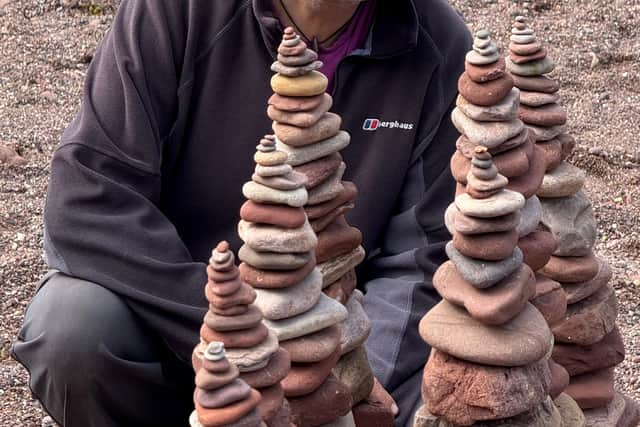
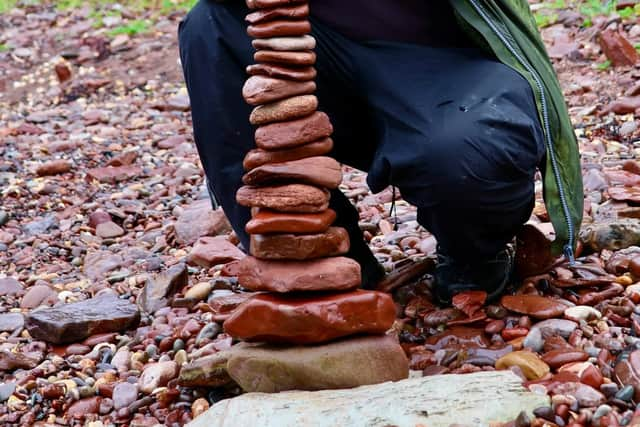
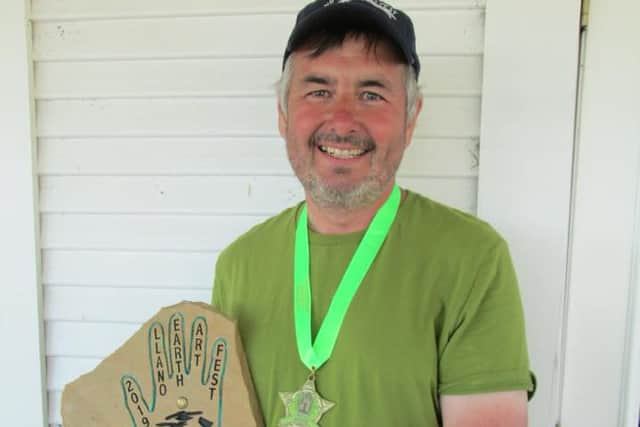
He won the Adult Artistic award at the World Rock Stacking Championships in 2019 and 2020 and recently came second in the Adult Finalist category at the European Stone Stacking Championships.
The full-time environmental artist’s works are designed to “leave a light touch on the land”, washing away and leaving no trace of their existence.
“I like the transience of it – I think that’s the magical thing about it,” Tim told PA Real Life.
“There’s a lot of people making stone stacks now, and a lot of people say they despoil the landscape.
“It’s not for me to antagonise people, but to show that my work really will fall down and totally disappear within a matter of days.”
Tim became interested in land art while studying at Edinburgh College of Art.
After graduating, he moved back to North Wales and started working in woods and parks as a land artist.
Tim explained: “I’m one of those people who said, ‘I’m going to be an artist and nothing else’.
“It’s an all-consuming thing, this art.”
He was supported by his grandmother Beatrix, a “staunch ally” who encouraged him during the difficult early years of starting out as an artist.
Through residencies, school workshops and exhibitions, Tim has been able to earn a living as a full-time artist, even being taught in primary schools as part of the Welsh art curriculum.
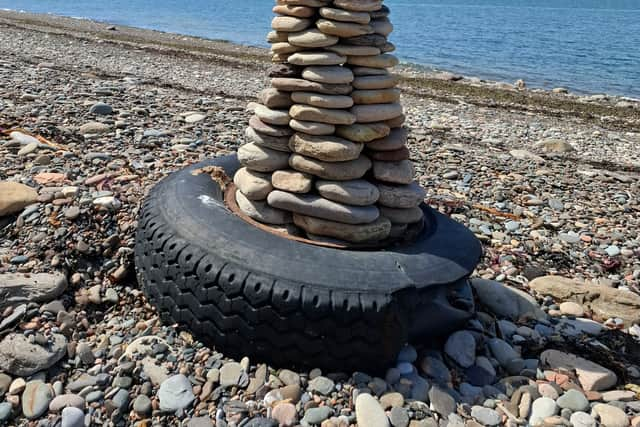
He spends most of his time on Whitehaven beach in Cumbria and in North Wales, engaged in a constant cycle of creating sculptures out of stones, driftwood and detritus, photographing them and then letting them wash away.
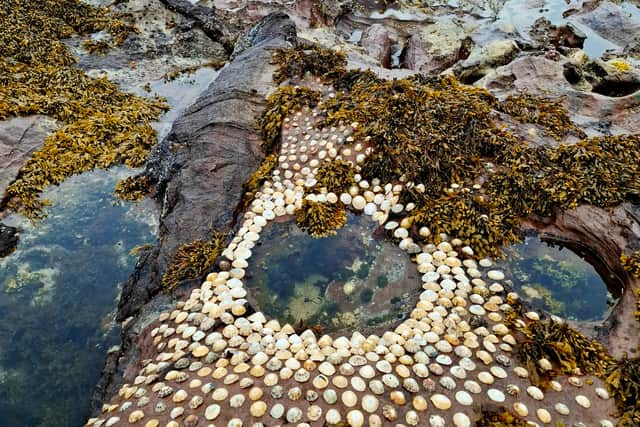
One artwork shows shells fanning out from a tidepool like a sun.
“It’s great for making sculptures, and it’s got lots of fossils and driftwood on it,” he said.
“There’s a family of ravens that come down and eat my sandwiches every time I go – they trust me now.
“It’s like my studio. We’ve had these storms the last few weeks, and they brought lots of new detritus and materials to play with.”
Tim said he sometimes plans ideas in advance with drawings, but they often change depending on what has washed up.
“Often I find really poignant things like miners’ tags,” he said.
He said he has also found bits of old railway lines, children’s toys and even an army parachute.
He added: “I went to a beach once in North Wales, and it was awash with baby starfish, unfortunately all dead.
“I abandoned my ideas and worked with the poor little starfish to make a pattern.”
Tim said he is careful not to work with living things, inspecting rocks to remove any snails that might be crushed.
He voiced concern about the “worrying trend” of hikers taking stones from ancient walls, cairns and hill forts to build stone stacks.
“Leaving a light touch on the land is very important, because I do understand these criticisms about these stone stacks: they do proliferate,” he said.
“The beach I work with, I know it’s quite violent with high tides, so all of my work is obliterated, even the chunky stuff.”
Tim said this “sheer impermanence” is the “magic dust” in his work.
He added that he has a “love-hate relationship” with the plastic that washes up on the beach.
In one sculpture, multicoloured fragments of plastic become smoke billowing out of an industrial tower.
Another depicts a sea turtle, one of the species impacted heavily by plastic pollution in the oceans.
Tim regularly collects plastic from the beach and uses it to teach school children about plastic pollution.
“A lot of local people don’t notice it any more when they walk, scattered amongst the rocks, because they’re that accustomed to the plastic,” he said.
“We’ve all done it, taken toys to the beach and forgotten about them and lost them.
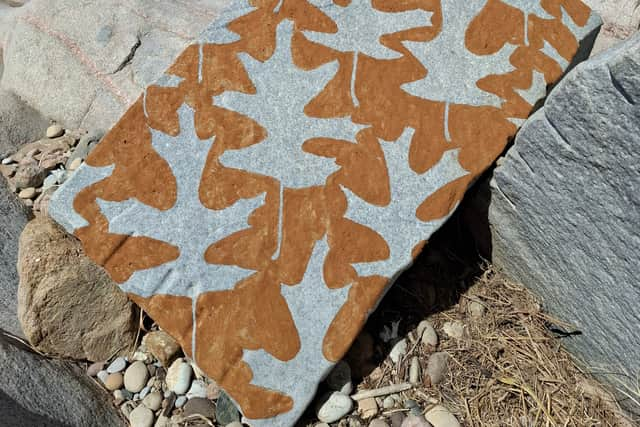
Five years ago, while exploring the beach, Tim slipped on some seaweed-covered boulders and broke his arm in two places.
“I had to climb this cliff with one arm and all my camera equipment, because the sea was coming in and it had cut me off,” he said.
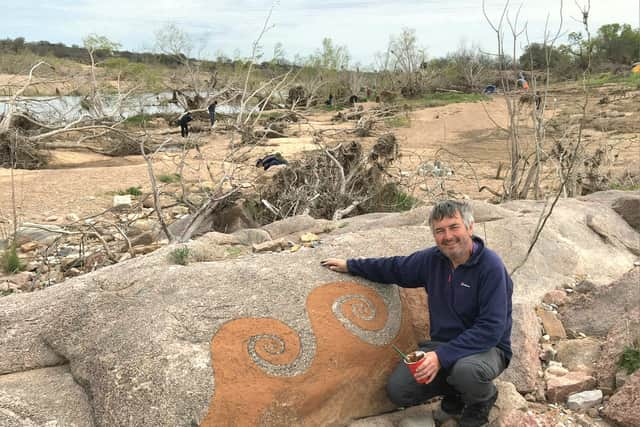
Three months later in 2019, he was crowned the world champion in adult artistic stone stacking at the Llano Earth Art Festival in Texas – a title he kept the following year.
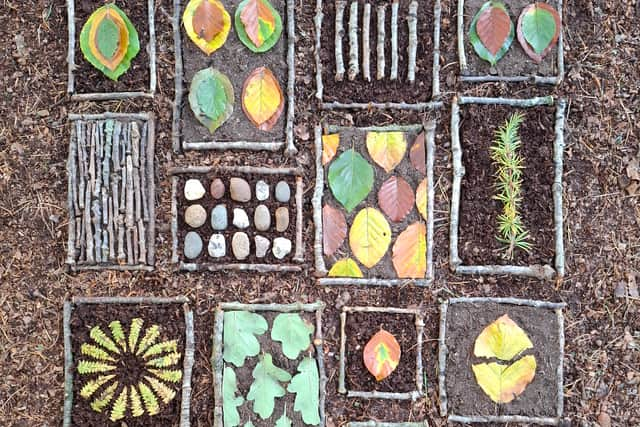
“[The European Land Art Festival] is a fantastic event because it’s for people of all ages and abilities to come down and have a go,” he said.
“It’s good for children that think they’re not good at art, because they can just have a go and there are no wrongs or rights.
“There’s nearly always a gang of lads that are a bit cheeky in class, and you put them on the beach – you have to drag them away in the end.”
Tim advised hopeful land artists to “just have a go at a simple shape in your back yard or on a local beach”.
He added: “As we say in Wales, ‘tisio go’: give it a go!”