
Thousands of workers stage protests across Italy in general strike
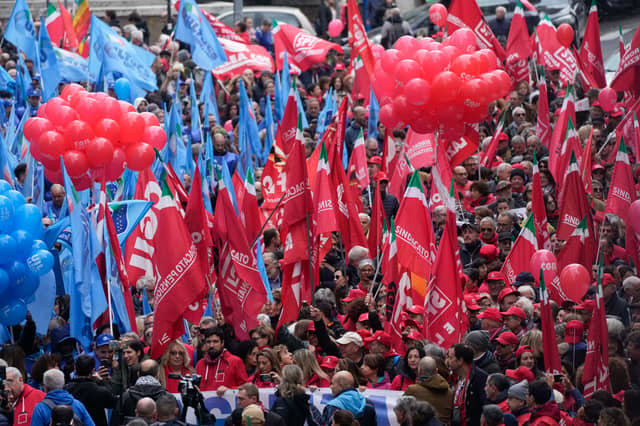

Thousands of teachers, healthcare workers, rubbish collectors and others have walked off their jobs across Italy to protest against a decline in spending power, persistently low salaries and government policies they say have weakened public services.
Italy’s most powerful trade unions called the eight-hour strike and mobilised marches in cities across the country to target premier Giorgia Meloni’s latest budget that they say penalises schools, healthcare and other services.
They also are pressing for a more equitable distribution of profits from private companies to workers.

The strike forced ITA airlines to cancel dozens of domestic and international flights, and hit schools, hospitals and local transport.
Unions called for an eight-hour strike but transport minister Matteo Salvini imposed an injunction limiting the strike in the transport sector to four hours.
It was the first general strike since last November. Unions faced possible sanctions for involving the healthcare and justice sectors, which have staged strikes recently. The Italian railway, which also has been the target of recent labour actions, was exempted.
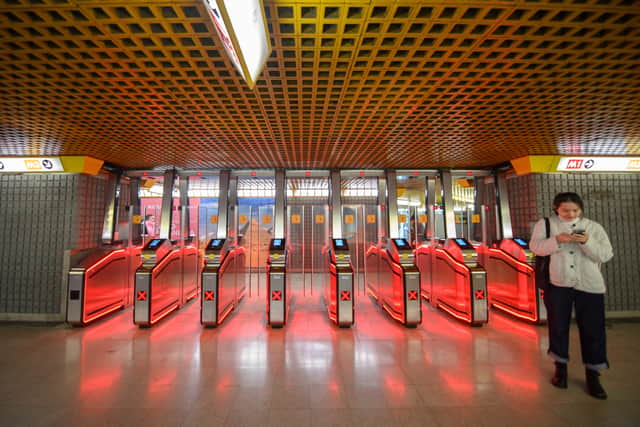
“There are many people who go abroad because the salaries are too low,” said Anna Salsa, a member of the UIL healthcare union, at the demonstration in Rome. “We are forced to do double shifts to give the minimal levels of essential care.”
Protesters also cited persistent increases in the cost of basic necessities.
While starting salaries in Italy are aligned with the rest of Europe, pay increases do not keep pace, said Maurizio Del Conte, a labour law expert at Milan’s Bocconi University.
As a result, Italy’s gross median salary of 35,000 euros a year is at the low end of European averages, well behind its G7 partners in France and Germany.