
Thousands turn out to bid farewell to last king of Greece

Thousands of people have paid their final respects to the last king of Greece, Constantine II, who died last week at the age of 82.
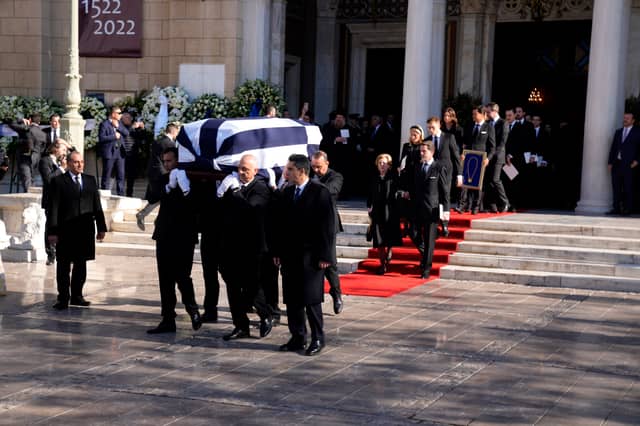
To chants of “long live the king” and “Constantine, Constantine” from the crowd in Athens, the casket carrying the former monarch emerged from the Greek capital’s metropolitan cathedral after a funeral service attended by royalty from across Europe.
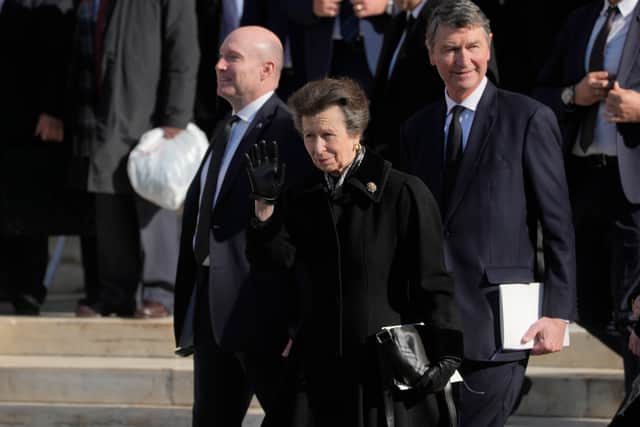
Constantine was said to have been especially close to the King. The British royal family was represented at the funeral by the Princess Royal.
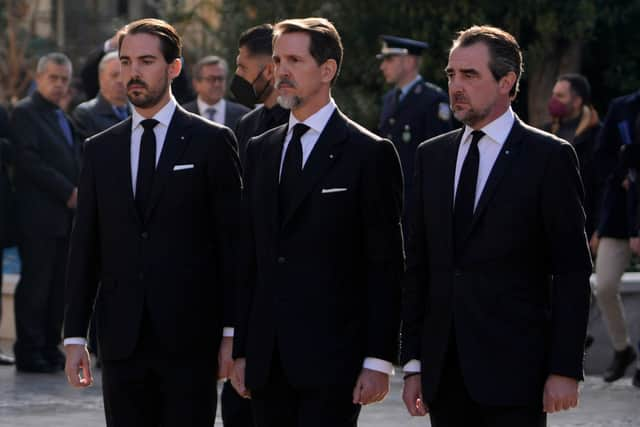
As the casket was taken from the cathedral after the ceremony, the late Greek king’s wife Anne-Marie and his eldest son Pavlos followed at the head of the funeral procession.
The casket, draped with the Greek flag, was loaded into a hearse for the trip to Tatoi, the former royal estate north of Athens where Constantine will be buried near his parents and ancestors.
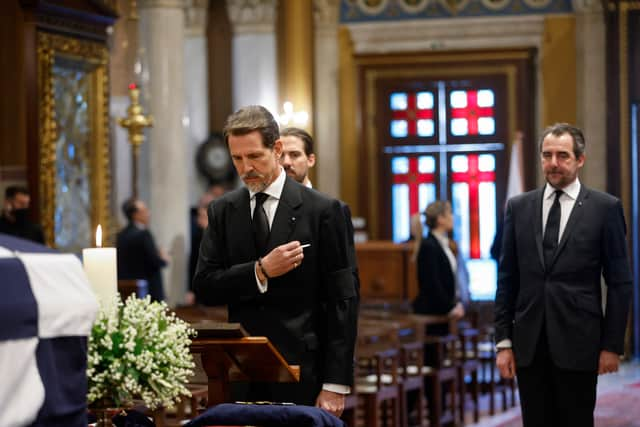
Royals from across Europe, including the Spanish and Danish royal families, who were closely related to Constantine, were in Athens to attend the service and burial, while hundreds of police were deployed in the Greek capital.
Constantine’s wife, Anne-Marie, is the sister of Denmark’s Queen Margrethe II, while his sister Sophia is the wife of Spain’s former King Juan Carlos, and mother of Spain’s current monarch, King Felipe VI.
Margrethe and nearly the entire Spanish royal family attended the funeral.
Juan Carlos, walking with the aid of a walking stick, attended with Sophia at his side. It was a rare public appearance for the former king, who has been living in Abu Dhabi since being cut off from the Spanish royal family in 2020 amid financial scandals.
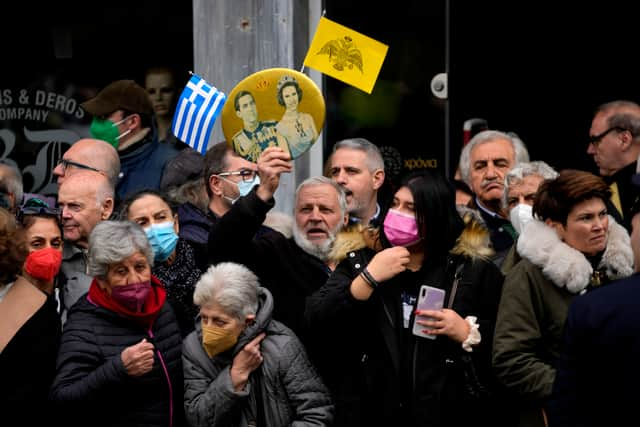
Braving the pre-dawn darkness and winter chill, thousands of people young and old lined up for hours, some clutching flowers.
Athens resident Georgia Florenti, who waited to pay her respects to the former monarch, said: “He was a constitutional leader of the country. It was a monarchy then, so we must honour this man who stayed in Greece for so many years and who is Greek.”
Some expressed disappointment that Constantine was being buried without the honours awarded to former heads of state.
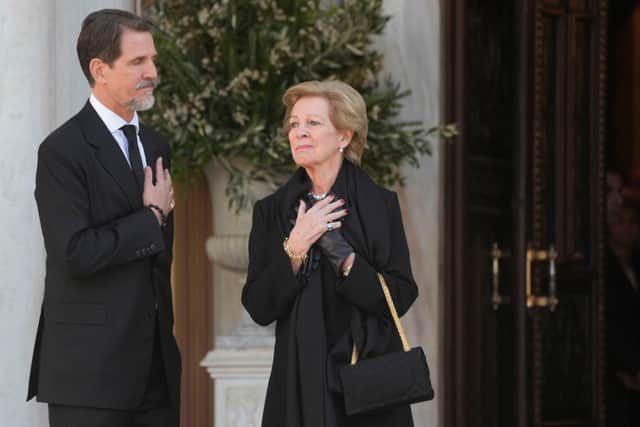
A controversial figure during a turbulent time in Greek history, Constantine acceded to the throne in 1964 at the age of 23, by which time he had already won an Olympic gold medal in sailing.
The young king and his wife enjoyed huge popularity, but that support waned quickly because of Constantine’s active involvement in the machinations that brought down the elected government of then-prime minister George Papandreou.

“He himself was beloved, but unfortunately, through the mindless and thoughtless management of the 1965 crisis, he managed to squander this sympathy very quickly.”
The episode involving the defection from the ruling party of several legislators destabilised the constitutional order and led to a military coup in 1967. Constantine eventually clashed with the military rulers and was forced into exile.

After his win in a November election, Mr Karamanlis called for a plebiscite on the monarchy. Constantine was not allowed to return to campaign, but the result was widely accepted: 69.2% voted in favour of a republic.
To his final days, Constantine, while accepting that Greece was now a republic, continued to style himself king of Greece and his children as princes and princesses.

“He accepted the 1974 referendum. He did not create a party of monarchy nostalgics. Thus, with his silence, he contributed to cementing the new system of government.”
There have been no significant opinion polls measuring possible support for the former king since the monarchy was abolished, and public discourse in Greece tends to be significantly negative concerning the monarchy.
The prevailing judgment on Constantine “is not exactly unfair, but it is one-dimensional,” Mr Diamantopoulos said.
“But a discourse that was politically dominant and not altruistic came to treat him negatively for everything, without any reference to the positive contributions he made.”
The size of the crowd waiting patiently for hours in Athens to pay their final respects suggested Constantine as a person was still much loved by a segment of society.
Lawyer Giannis Katsiavos, who was among the crowd, said: “He is a former high-level official to whom we should certainly show the necessary honours, a person who was serious, who was noble, who was decent.
“We will remember him forever.”