
Too many of us are failed: Woman with OCD who believes years of undiagnosed autism saw her sectioned at 16 releases book
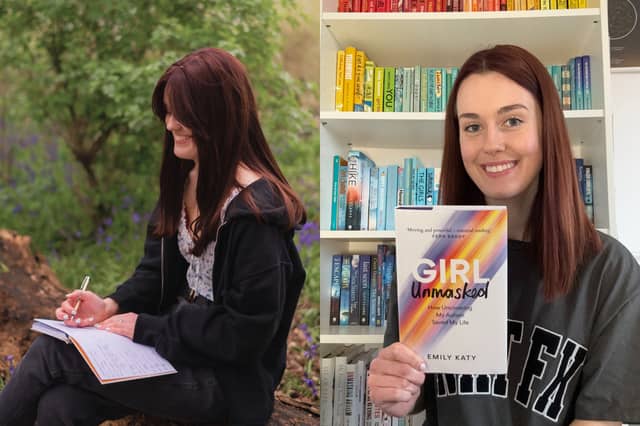

A 22-year-old woman with obsessive-compulsive disorder (OCD) who believes her years of undiagnosed autism led to her being sectioned at 16 has channelled her “anger” into writing her first book as she feels “too many autistic people are failed”.
Emily Katy, a mental health nurse who lives in St Albans, Hertfordshire, said her first memory of her OCD was when she was 10, as she would tap her books in order and ensure objects were positioned in specific places.
In the years that followed, this changed to her focusing on contamination, germs, and worrying about her parents’ health – and she felt she had to do “compulsive acts” to keep her family safe, including self-harming.
“Panic would consume me and take over and, at that point, I had no control over where I ran to, what was happening, I felt like I couldn’t breathe,” Emily told PA Real Life.
After trying to take her own life at 16, Emily was sectioned on a children’s mental health unit and she remained there for around three months, leaving her feeling embarrassed and scared.
Looking back now, Emily believes she was sectioned because she was autistic – but she did not receive her official diagnosis until nine months after first being admitted to the unit.
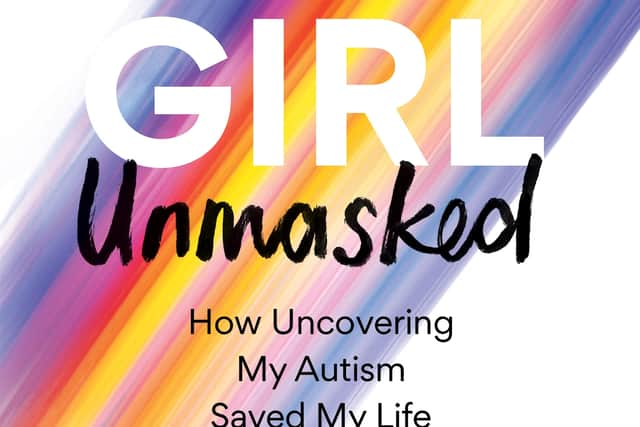
The book, ‘Girl Unmasked: How Uncovering My Autism Saved My Life’, tells of the journey to her eventual diagnosis – and although she nearly did not survive, she wants others with autism to know “how wonderful and valued they are”.
“I want autistic people, especially autistic girls who have historically been missed and let down, to be recognised as autistic and supported before their mental health deteriorates and before they’re broken by the world,” Emily said.
“I want autistic young people to grow up knowing how wonderful and valued they are and be able to understand their brain and actually have the support that they need to thrive.
“Too many autistic people are failed, and it’s time for that to change.”
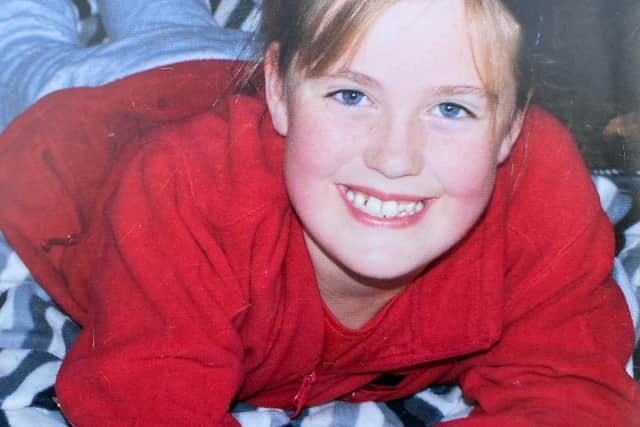
She had struggled with anxiety and wanted to “blend in” among her peers, but at the age of 13, she said “something just switched in (her) brain” – with noises, crowds, and busy social settings making her feel “overwhelmed”.
Emily went from being the most well-behaved student at school to avoiding lessons, hiding in the library, having panic attacks, and “rocking” under desks or on the floor in the canteen due to experiencing “sensory overload”.
As her anxiety “kept building and building”, she started running away from school when “triggered” by noise or change, leading to police searches, and she later started self-harming.
“That distress just kept building up, and I wasn’t telling anyone about it,” Emily said.
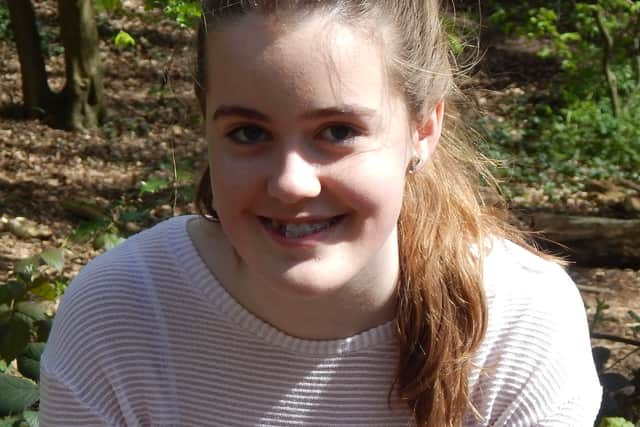
Emily said she recognised that there was “no logical link” between self-harming and keeping her family safe, but if she did not act upon those thoughts, she felt she was being “selfish”.
Her other OCD compulsions included walking around her village, tapping lampposts, ensuring objects were in specific places, and tapping the books on her bookshelf in order – because otherwise she thought “something bad would happen”.
“Sometimes the thoughts would come in the car and I would think, ‘Oh, to stop there being a car crash, I would have to tap something in 10 lots of 10’,” Emily said.
“It’s that cycle of those intrusive thoughts leading to those compulsions because you’re trying to relieve that anxiety and distress… you can never satisfy OCD.”
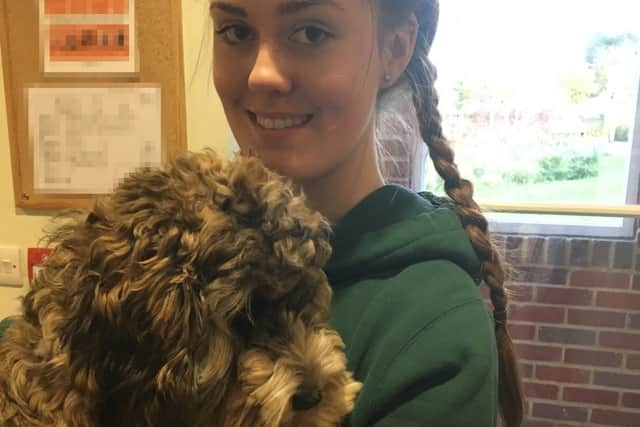
Looking back now, she believes this was due to having “autistic burnout”, high anxiety, and “OCD spirals” – yet after she was admitted to hospital, she said her medical mental health notes described her as “hysterical”.
She said no-one had recognised her symptoms as being autism-related at the time, and she was later sectioned at a children’s mental health unit, the name of which she does not wish to disclose, at 16.
Emily said her freedom and privacy were taken away from her, as “powerful professionals” restricted when she could go outside or use the toilet, and the “loss of control” she experienced was “scary”.
When Emily was discharged from the unit after a three-month stay, she was diagnosed with generalised anxiety disorder and mixed personality disorder.
But while Emily was studying psychology for her A-Levels, she discovered a study on the link between OCD and autism – and she later presented a list of all the reasons why she could be autistic to her parents.
After her doctor on the unit said she was just experiencing “high social anxiety”, Emily’s parents decided to pay for a private autism assessment when she was 16 due to long waiting lists – and this is when “everything changed”.
“A psychiatrist said to me at the end, ‘Emily, I think there’s one explanation for everything that you’ve been through, and I think that explanation is autism’,” Emily said.
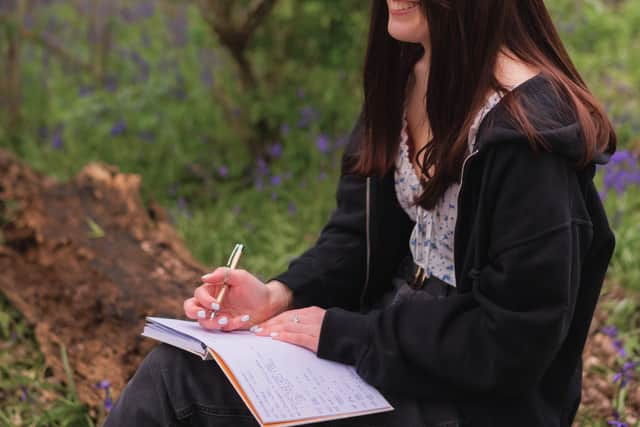
“It was honestly the first time that I thought, ‘Okay, everything that’s happened isn’t my fault’, and I think I gave myself permission then to stop hurting myself for everything that went wrong.”
From that moment on, Emily said she started learning about her brain and autism – and she has since built an incredibly supportive community online, amassing 68,500 followers on the platform X, formerly known as Twitter.
Emily’s experiences have led her to become a mental health nurse, where she hopes to “fight to make other people’s lives easier”, and she has written her first book called ‘Girl Unmasked: How Uncovering My Autism Saved My Life’.

“I was angry that the people who were meant to understand autism and were meant to help me – teachers, doctors, all the adults around me – didn’t know what autism was,” Emily said.
“They didn’t understand it and they couldn’t recognise it, so I ended up sectioned, and even then my autism wasn’t recognised.
“But when you find people who get you, people who understand you and can support you, that’s when you can start to thrive.”
‘Girl Unmasked: How Uncovering My Autism Saved My Life’ by Emily Katy will be published by Monoray on March 28.
For mental health support, contact the Samaritans on 116 123, email them at [email protected], or visit samaritans.org.