
Trump says 25% tariffs on Mexican and Canadian imports will start Tuesday
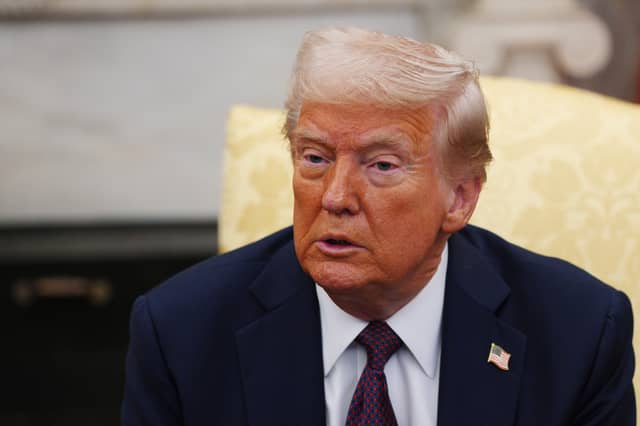

US President Donald Trump has that 25% taxes on imports from Mexico and Canada would start on Tuesday, sparking renewed fears of a North American trade war that already showed signs of pushing up inflation and hindering growth.
“Tomorrow — tariffs 25% on Canada and 25% on Mexico. And that’ll start,” Mr Trump told reporters in the Roosevelt Room.
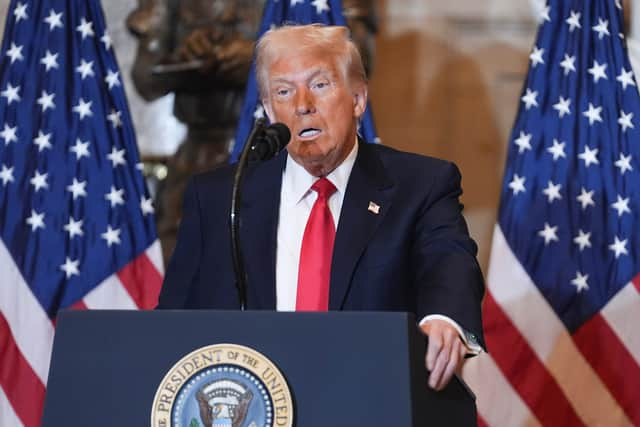
Mr Trump has said the tariffs are to force the two US neighbours to step up their fight against fentanyl trafficking and stop illegal immigration.
But Mr Trump has also indicated that he wants to even the trade imbalance with both countries as well and push more factories to relocate in the US.
His comments quickly rattled the US stock market, with the S&P 500 index down 2% in Monday afternoon trading.
It is a sign of the political and economic risks that Mr Trump feels compelled to take, given the possibility of higher inflation and the possible demise of a decades-long trade partnership with Mexico and Canada.
Yet the Trump administration remains confident that tariffs are the best choice to boost US manufacturing and attract foreign investment.
Before Mr Trump’s statement on tariffs in response to a question on Tuesday, commerce secretary Howard Lutnick said that the computer chipmaker TSMC had expanded its investment in the US because of the possibility of separate 25% tariffs.
Mr Trump provided a one-month delay in February as both Mexico and Canada promised concessions.
“If Trump is imposing tariffs, we are ready,” said Canadian foreign minister Melanie Joly.
“We are ready with 155 billion dollars worth of tariffs and we’re ready with the first tranche of tariffs, which is 30 billion dollars.”
Ms Joly said Canada has a very strong border plan and explained that to Trump administration officials last week.
She said the diplomatic efforts are continuing. She spoke after Mr Trump made his comments on Tuesday.
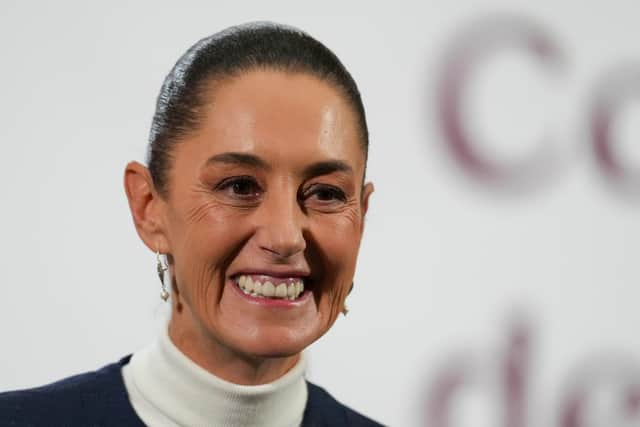
Mexican President Claudia Sheinbaum went into Monday waiting to see what Mr Trump would say.
“It’s a decision that depends on the United States government, on the United States president,” Ms Sheinbaum said ahead of Mr Trump’s statement.
“So whatever his decision is, we will make our decisions and there is a plan, there is unity in Mexico.”

Mexico sent 10,000 National Guard troops to their shared border to crack down on drug trafficking and illegal immigration.
Canada named a fentanyl czar, even though smuggling of the drug from Canada into the US appears to be relatively modest.
As late as Sunday, it remained unclear what choice Mr Trump would make on tariff rates.
Mr Lutnick told Fox News Channel’s “Sunday Morning Futures” that the decision was “fluid”.
“He’s sort of thinking about right now how exactly he wants to play it with Mexico and Canada,” Mr Lutnick said.
“And that is a fluid situation. There are going to be tariffs on Tuesday on Mexico and Canada. Exactly what they are, we’re going to leave that for the president and his team to negotiate.”
Treasury secretary Scott Bessent said Mexico has also offered to place 20% taxes on all imports from China as part of talks with the US.
Mr Bessent told CBS News on Sunday that China would “eat” the cost of the tariffs, instead of passing them along to the US businesses and consumers that import their products in the form of higher prices.
But companies ranging from Ford to Walmart have warned about the negative impact that tariffs could create for their businesses.
Mr Trump also plans to roll out what he calls “reciprocal” tariffs on April that would match the rate charged by other countries, including any subsidies and and value added taxes charged by those countries.
The US president has already announced the removal of exemptions from his 2018 tariffs on steel and aluminium, in addition to tariffs on autos, computer chips, copper and pharmaceutical drugs.