
Truss’s Cabinet reshuffle: Key statistics and major milestones


Here are some of the records set and milestones reached by the Cabinet reshuffle:
– For the first time, there are no white males in any of the four most senior positions of the UK government: prime minister (Liz Truss), chancellor of the Exchequer (Kwasi Kwarteng), Home Secretary (Suella Braverman) and Foreign Secretary (James Cleverly).
The UK also has its first non-white Environment secretary (Ranil Jayawardena) and International Trade Secretary (Kemi Badenoch).
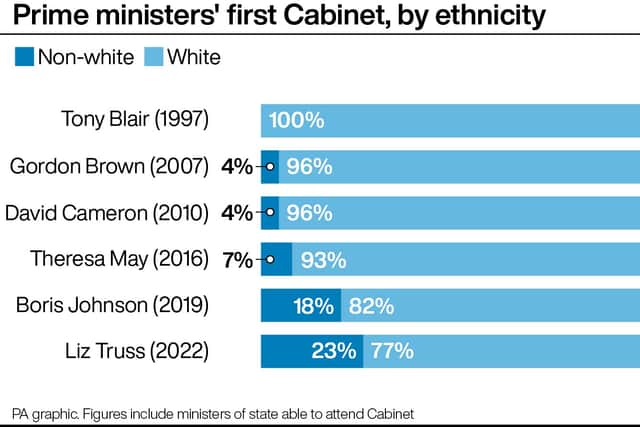
Nearly a quarter (23%) of all people able to attend Cabinet meetings are non-white.
This is the highest proportion ever for a prime minister’s first Cabinet.
– Nadhim Zahawi goes into the history books as the second shortest serving chancellor of the Exchequer.
Mr Zahawi was given the job by former prime minister Boris Johnson on July 5 and clocked up 63 days until being replaced by Kwasi Kwarteng on September 6.
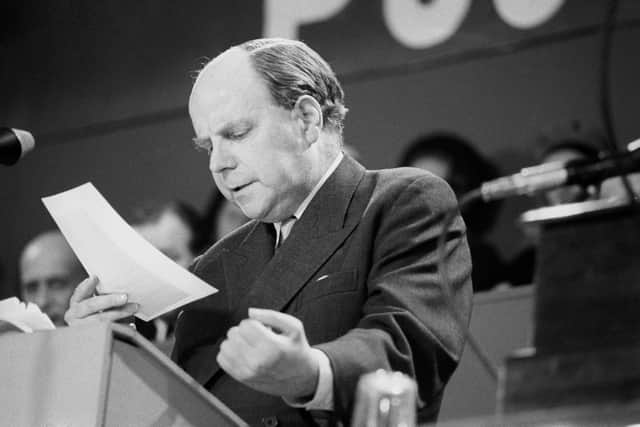
This was more than double the time spent in the role by Iain Macleod, who became Conservative chancellor on June 20 1970 but died suddenly just 30 days later.
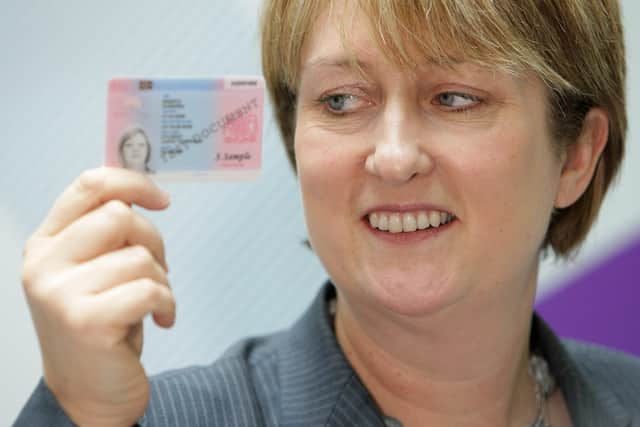
– Suella Braverman is only the fifth woman in history to hold the post of home secretary.
The first was Labour’s Jacqui Smith, who did the job from 2007 to 2009.
The others were Theresa May (2010-16), Amber Rudd (2016-18) and Priti Patel (2019-22).
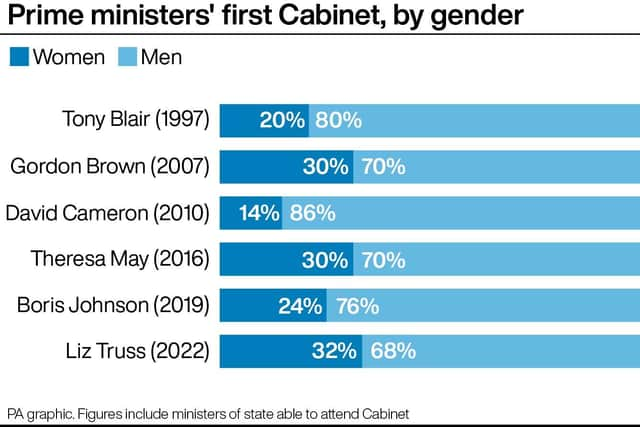
– Nearly a third (32%) of all people able to attend Cabinet meetings are women.
– Kit Malthouse is the ninth education secretary in the past 12 years.
Since 2010, the post has been held by Michael Gove (2010-14), Nicky Morgan (2014-16), Justine Greening (2016-18), Damian Hinds (2018-19), Gavin Williamson (2019-21), Nadhim Zahawi (2021-22), Michelle Donelan (for two days in July 2022), James Cleverly (from July to September 2022) and now Mr Malthouse.
The turnover has been so great that five separate people have held the job of education secretary in the last 12 months.
– The UK also has its ninth justice secretary since 2010.
The new holder of the role, Brandon Lewis, follows Ken Clarke (2010-12), Chris Grayling (2012-15), Michael Gove (2015-16), Liz Truss (2016-17), David Lidington (2017-18), David Gauke (2018-19), Robert Buckland (2019-21) and Dominic Raab (2021-22).
– Shailesh Vara is another name for the history books, having become the shortest serving Northern Ireland secretary since the post was created in 1972.
He was appointed to the role on July 7 this year and lasted 61 days before being replaced on September 6 by Chris Heaton-Harris.
– Wendy Morton is the first woman to serve as Conservative chief whip.
Labour has had four female chief whips, the most recent being Dame Rosie Winterton, who held the role from 2010 to 2016.
The first female Labour chief whip, Ann Taylor, was in the post from 1998 to 2001 and was also the first ever female Government chief whip.

Conservative politician Michael Heseltine was the first to be officially appointed to the post, holding it from 1995 to 1997.
The others have been Labour’s John Prescott (1997 to 2007), the Liberal Democrat leader Nick Clegg (2010 to 2015) and the Conservative Dominic Raab (2021 to 2022).
– Anne-Marie Trevelyan is the sixth transport secretary since 2010 and the 13th politician to have Cabinet-level responsibility for transport since 1997.
– Baroness Evans has lost her position as leader of the House of Lords, having held the role for six years and spanning the premierships of both Theresa May and Boris Johnson.
She was the first leader of the Lords to serve under two different prime ministers since Lord Shepherd, who held the role between 1974 and 1976 when first Harold Wilson then Jim Callaghan were in Downing Street.
She was also the longest serving leader of the Lords since 1951.