
UK researchers working to uncover mysteries of the deep sea

UK researchers are working to uncover and document the mysteries of the deep sea.
Scientists from the Natural History Museum (NHM) joined a six-week voyage to understand more about the fragile and rarely studied environments in the remote waters of the South Atlantic.
The team was equipped to sample and map the sea floor, test water quality, measure temperature and plastic particles, and identify the species living in the sea.
The researchers suspect a couple of the samples they retrieved from the water around the islands of St Helena and Ascension may be examples of species not previously known to science, but further analysis is ongoing.
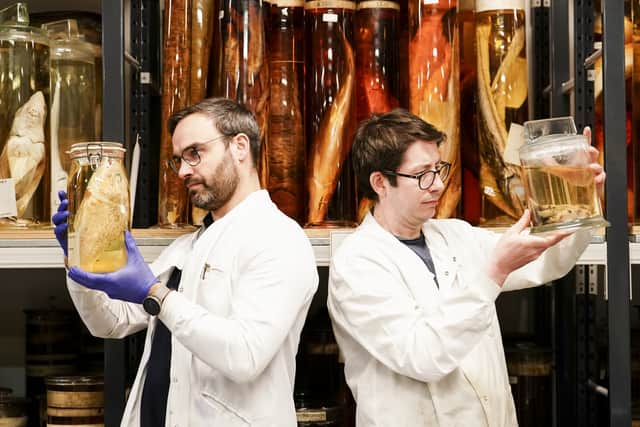
James Maclaine, NHM’s senior curator, fish, who was on the expedition, told the PA news agency: “All of it makes me really excited.
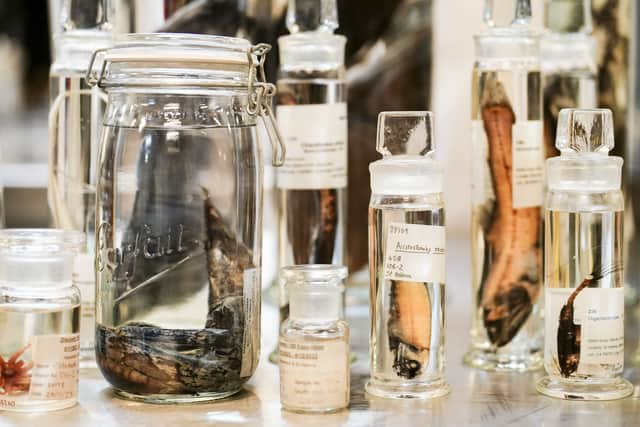
“And when they’re fresh you see all kinds of features that you don’t see once they’re preserved.
“But I think my favourite group of deep sea fishes are the angler fish, and it’s brilliant to see them.
“We got lots of juvenile ones and we got a few that were very rare and had hardly ever been seen before as well.”
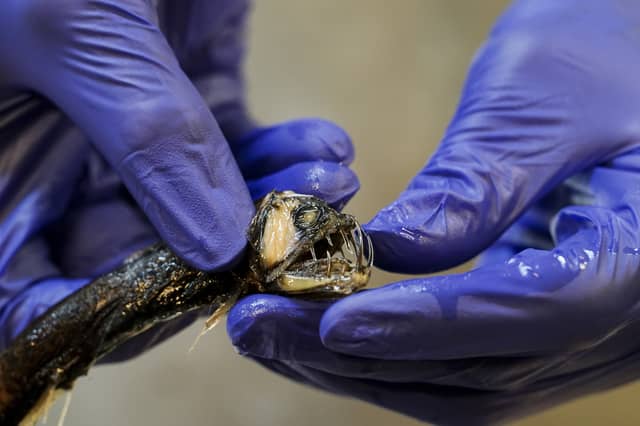
The animal is believed to have the biggest tooth to head ratio of any animal.
The fish, which does not grow longer than about 10 inches, has sharp fang-like teeth that are about half the size of its head.
The researchers also collected a number of other creatures from a depth of 1,000 metres, with other sampling work carried out between 400-700 metres.
The expedition was part of the UK Government’s Blue Belt Programme, which works closely with UK Overseas Territories to assist them in managing and maintaining healthy and productive marine environments.
Museum scientists Chris Fletcher, research assistant (Marine Invertebrates), and Jon Ablett, Senior Curator in Charge, Mollusca, were also on the expedition.
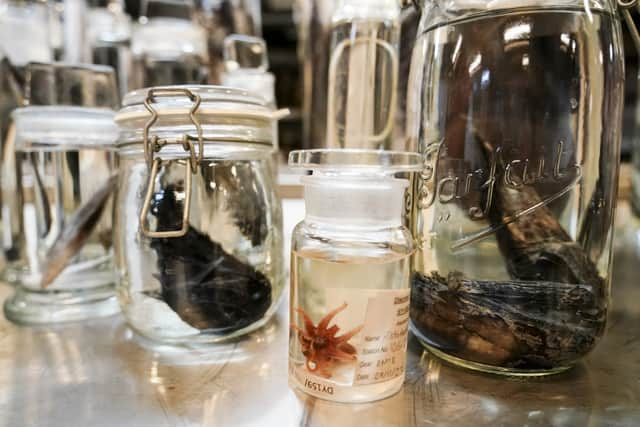
The team aboard the ship worked 24 hours a day throughout most of the sampling periods.
During the day, teams would analyse the seabed, including sampling the sea floor thousands of metres below the surface, and during the night would drop a net into the water and gently trawl to collect the samples.
Explaining some of the aims of the mission, Mr Fletcher said his role was to help identify all the crustaceans found and help curate all the specimens while on board.
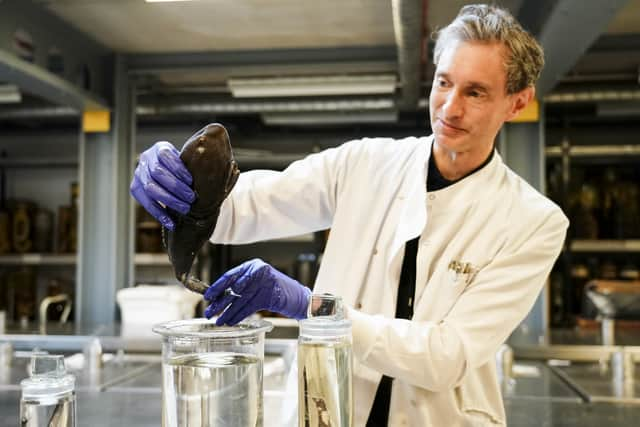
Mr Fletcher told PA: “So whole-genome sequencing it’s where we figure out the entire genetic code of organisms.
“This is really important so we firstly we can find out how these genes relate to different biological functions and physical structures of each organism.
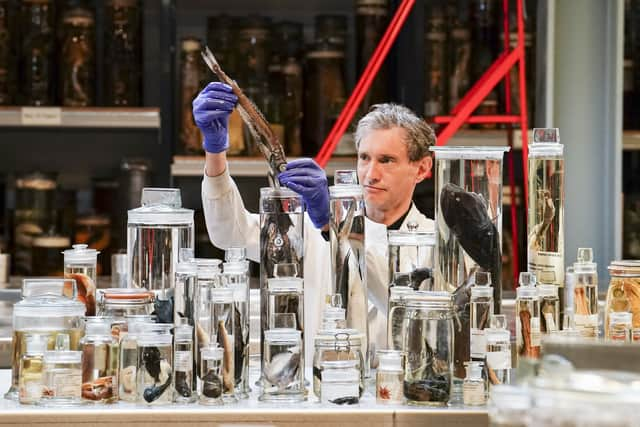
The information collected from the samples will be available to researchers across the world who will be able to use the database to inform their studies.
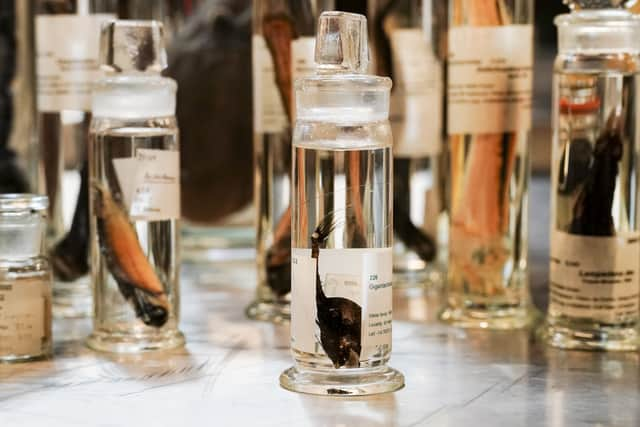
The voyage was also organised by Cefas, the Centre for Environment, Fisheries and Aquaculture Science, to help understand how to better protect marine ecosystems.
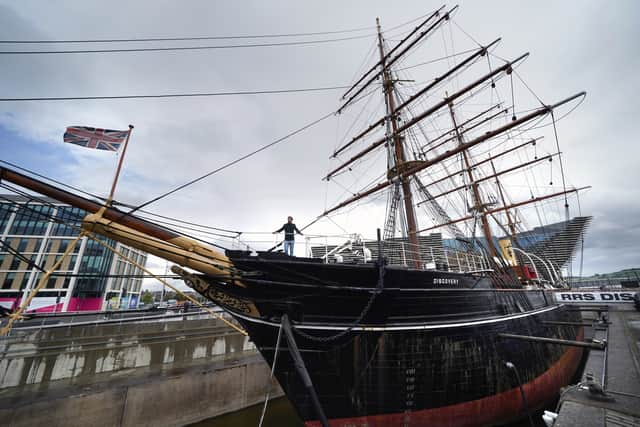
International marine minister Lord Benyon said: “The RRS Discovery’s expedition to the remote islands of Ascension Island and St Helena was a fantastic venture for gathering knowledge – from an increased understanding of lesser-known species, to discovering previously unknown landscapes under the sea and evidence of thriving marine ecosystems.
“The UK’s Blue Belt Programme was set up to help our Overseas Territories protect and enhance ocean health and halt biodiversity loss, and by funding pioneering discoveries such as these, we will help propel the UK forward on its mission to protect at least 30% of the world’s ocean by 2030.”