
Ukraine sceptical over Easter ceasefire as sides exchange hundreds of prisoners

Ukraine said it would reciprocate any genuine ceasefire by Moscow but voiced scepticism after Russian President Vladimir Putin announced a temporary Easter truce in Ukraine starting on Saturday.
The announcement from Kyiv came as Russia and Ukraine conducted their largest prisoner exchange since Moscow’s full-scale invasion started over three years ago.
Mr Putin announced a temporary Easter ceasefire in Ukraine starting on Saturday, citing humanitarian reasons.
According to the Kremlin, the ceasefire will last from 6pm Moscow time on Saturday to midnight following Easter Sunday.
Mr Putin offered no details on how the ceasefire would be monitored or whether it would cover airstrikes or ongoing ground battles that rage around the clock.
Ukrainian President Volodymyr Zelensky said if Russia is genuinely ready to observe a full and unconditional ceasefire, Ukraine will mirror that approach and strike only in defence.

“If a full ceasefire truly takes hold, Ukraine proposes extending it beyond Easter Day on April 20,” Mr Zelensky said on Telegram.
“That will reveal Russia’s true intentions, as 30 hours are enough for headlines, but not for genuine confidence-building measures.”
Mr Zelensky added that, according to military reports, Russian assaults and artillery fire continued along parts of the 600-mile long front line.

“Putin has now made statements about his alleged readiness for a ceasefire. 30 hours instead of 30 days,” Mr Sybiha continued, writing on X.
“Unfortunately, we have had a long history of his statements not matching his actions.”
Mr Putin’s ceasefire announcement came after US President Donald Trump on Friday said negotiations between Ukraine and Russia are “coming to a head” and insisted that neither side is “playing” him in his push to end the grinding three-year war.

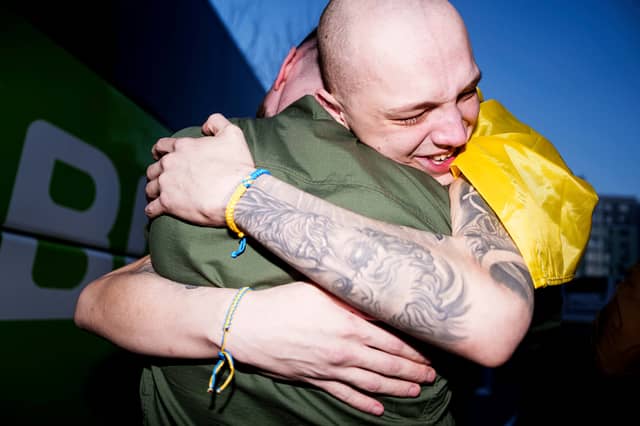
Mr Zelensky said that 277 Ukrainian “warriors” have returned home from Russian captivity.
Both sides thanked the United Arab Emirates for their mediation.
Most of the Ukrainians freed in the latest prisoner exchange are young people born after 2000, Ukraine’s co-ordination headquarters for the treatment of prisoners of war said on Friday.
Outside a hospital in Ukraine’s Northern Chernihiv region, where recently freed POWs were brought after the exchange at the border, dozens of relatives stood waiting.
Thousands of POWs remain in captivity. The exchange is the fourth this year and the 63rd since the start of Russia’s full-scale invasion.
On the battlefield, Russia’s defence ministry said on Saturday that its forces pushed Ukrainian troops from the village of Oleshnya, one of their last remaining footholds in Russia’s Kursk region, where the Ukrainians staged a surprise incursion last year.
The Associated Press was unable to verify the claim immediately from Russia.