
US and South Korea fire missiles into sea, matching North Korea’s launches
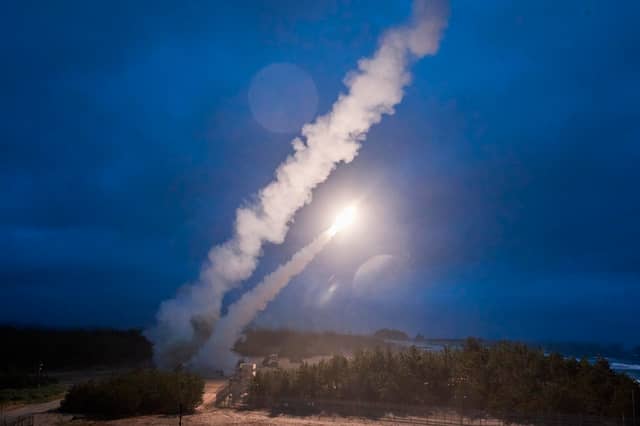

The US and South Korean militaries have launched eight ballistic missiles into the sea in a show of force matching a North Korean display a day earlier.
South Korea’s Joint Chiefs of Staff said the allies’ live-fire exercise involved eight Army Tactical Missile System missiles fired into South Korea’s eastern waters across 10 minutes. It said the drill was aimed at demonstrating an ability to respond swiftly and accurately to North Korean attacks.
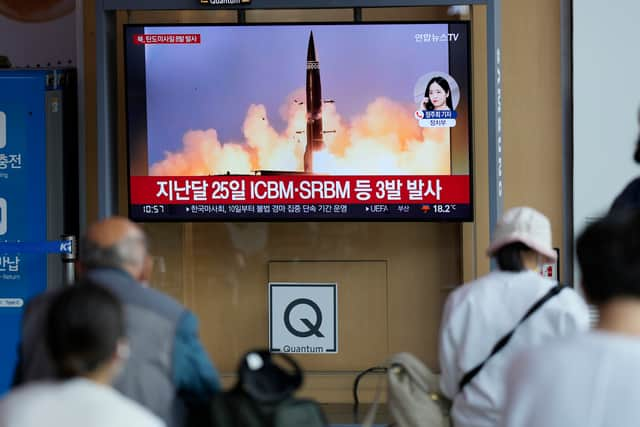
It was North Korea’s 18th round of missile tests in 2022 alone — a streak that included the country’s first launches of intercontinental ballistic missiles (ICBM) in nearly five years.
South Korean and US officials also say North Korea is preparing to conduct its first nuclear test since September 2017 as leader Kim Jong Un pushes brinkmanship aimed at cementing the North’s status as a nuclear power and negotiating economic and security concessions from a position of strength.
US and South Korean forces conducted a similar live-fire drill following North Korea’s previous ballistic launches on May 25, which South Korea’s military said involved an ICBM flown on medium-range trajectory and two short-range weapons. Those tests came as President Joe Biden wrapped up his trip to South Korea and Japan, where he reaffirmed the US commitment to defend both allies.

North Korea has long condemned the allies’ combined military exercises as invasion rehearsals and often countered with its own missile drills, including short-range launches in 2016 and 2017 that simulated nuclear attacks on South Korean ports and US military facilities in Japan.
Hours after the North Korean launches, Japan and the United States conducted a joint ballistic missile exercise aimed at showing their “rapid response capability” and “strong determination” to counter threats, Japan’s Defence Ministry said.
Russia and China vetoed a US-sponsored resolution that would have imposed additional sanctions on North Korea over its latest ballistic tests on May 25, insisting that Washington should instead focus on reviving negotiations with Pyongyang.
Those talks have stalled since 2019 over disagreements in exchanging the release of crippling US-led sanctions for the North’s disarmament steps.
Despite facing harsh challenges at home, including a decaying economy and a Covid-19 outbreak, Mr Kim has shown no willingness to fully surrender an arsenal he sees as his strongest guarantee of survival.
His government has so far rejected the Biden administration’s offers for open-ended talks and is clearly intent on converting the dormant denuclearisation negotiations into a mutual arms-reduction process, experts say.