
Veteran fundraises for private surgery to prevent total blindness, claiming NHS wait times exceed the critical window


An Army veteran who lost vision in one eye is fundraising for private cataract surgery to prevent total blindness, claiming NHS wait times exceed the critical window for the procedure.
Antony Gale, 59, who lives in Swansea, south-west Wales, had his life turned upside down when in 2020 he was diagnosed with type 2 diabetes and lost vision in his left eye due to stress-induced diabetic retinopathy.
His health continued to decline, with the amputation of three toes in 2023 due to gangrene – a loss of blood supply which causes body tissue to die – leaving him struggling with mobility.
Now, he can only see light and shadow in his right eye, and says his consultant at Singleton Hospital in Swansea warned just two weeks ago that a cataract, in Antony’s specific case, must be removed within “a number of weeks” to prevent total blindness, but NHS waiting times make this impossible.
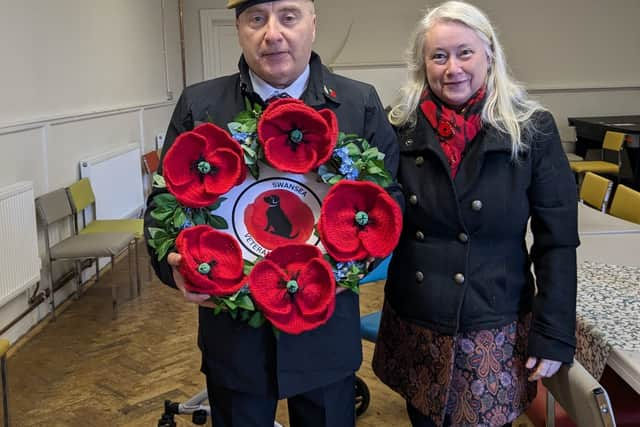
The £3,500 private surgery cost prompted Antony’s friend to launch a GoFundMe, which has raised more than £1,200 so far, and has allowed him to have his first private clinic appointment scheduled as he hopes to preserve his remaining vision.
The divorced dad of one to Ethan, 15, told PA Real Life: “I started my life as an adult at 16-and-a-half, I joined the Army and I’ve never been unemployed, never been sick, nothing.
“And then all of a sudden, in the last four years, my world has fallen apart.
“And I just think, ‘Why me?’

“Now you’re encouraged to talk about weakness, and it’s so important.”
After more than 40 years in the Army as a soldier, Antony transitioned to civilian life as a prison manager.
In 2017 he left the Prison Service, seeking a change of pace.
However, within three days he became a private military contractor, travelling the world.
“I was shocked – I’ve always been fit and active, never smoked, don’t drink,” Antony explained.
“I don’t eat really healthily, eating lettuce all day, but I don’t exactly eat 20 doughnuts a day.”
Little did he know this would be the beginning of his health seriously declining.
The same year, Antony suddenly lost all vision in his left eye, which was caused by stress-induced diabetic retinopathy – according to the NHS, this condition occurs when high blood sugar levels damage the back of the eye.

“It was weird because leaving the forces and doing another job, I was fine, no problem at all.
“I functioned correctly as a human, I got on with my life… and I never suffered with PTSD because I was sort of in that mindset that you chose that job, get on with life.
“The biggest problem was, when I lost my sight, I realised that I no longer had control of it – it controlled me.”
Unable to return to work, Antony faced the immense challenge of adjusting to life with limited eyesight and having to use a cane.
According to the NHS, gangrene is a loss of blood supply which causes body tissue to die, and people with diabetes have an increased risk of developing gangrene because the high blood sugar levels associated with the condition can damage your nerves.
Since then, he has struggled with balance and has had to rely on a walking frame for mobility, instead of a cane.
Antony said: “I can’t sense what’s in front of me on the ground.
“I was housebound for maybe six, seven months, and didn’t go out. I just couldn’t get my head together.

“Because I was doing so well in my head – getting out and about, walking with a white stick, and accepting that I’m not the only blind person in the world, and never will be – but then adding my toes getting chopped off I just went downhill.”
At a check-up appointment at Singleton Hospital just two weeks ago, Antony says his consultant warned that, in his particular case, a cataract in his right eye must be removed within “a number of weeks” to prevent it from hardening and becoming inoperable, which would leave him blind in his right eye as well as his left.
Having the operation would also preserve Antony’s remaining light perception and shadow vision.

“I don’t want to point fingers, but the reality is, I’m not going to be the only one in this position,” he added.
“With the NHS, it was absolutely petrifying because I had no control of it, not at all.
“And then to be told the only way you could get it done is through private… and then looking at the money, that was another massive fear factor.”
A spokesperson at Swansea Bay University Health Board said: “We are very conscious that some patients are waiting longer for treatment than we would like – that’s why we are doing everything possible to bring down waiting lists for operations and procedures.
“Mr Gale was offered cataract surgery in July 2023 but he decided not to proceed at that time. However, on further review last month, he opted for surgery and was listed on a priority basis.
“His waiting time will depend on how many other urgent cases are ahead of him but he will be seen as soon as possible.
“We understand how distressing it is for people facing long waits. We have already contacted Mr Gale to discuss his ongoing concerns with him directly.”

So far it has raised more than £1,200, with many small businesses in his area contributing through donation pots too.
“When Fiona told me we had £250, I just broke down and cried,” he said.
“I cried and cried, and I’m not scared to admit it, because I think what people need to realise is that as the veteran community, we are all human.
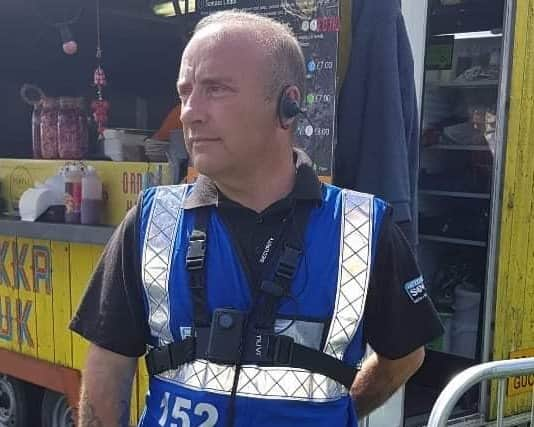
Now, with nearly half the funds raised, Antony has his first private clinic appointment scheduled for December 4.
He said: “It would mean the world to me, and I really am very thankful for everyone who has already donated.”
To find out more about Antony’s fundraiser, visit: www.gofundme.com/f/help-antony-save-his-sight-urgent-cataract-surgery-needed.