
Video game addict kicked out of uni after playing 16 hours a day becomes therapist and is flooded with emails by parents


A former video game addict who was left with permanent damage to the tendons in his wrist after playing 16 hours of video games a day has set up his own therapy practice to help people overcome their screen addiction and spend more time in the real world.
Adam Holman, 31, from Wisconsin, began playing “classic games” like Legend of Zelda and Super Mario on Nintendo consoles before getting sucked into “highly addictive” online computer games and getting kicked out of university.
Adam, who says he was virtually born with a controller in his hands, managed to wean himself off video games after realising they were ruining his relationships and physical health.
He now uses his traumatic experience to help others who struggle with video games, social media and technology, having qualified as a therapist and set up his own practice, Main Quest Psychotherapy, after moving to Arizona in 2021.

He told PA Real Life: “Game development companies research ways for people to play for longer and rightfully so, because that’s their job.
“They will implement things intentionally to get people to spend more time playing.
“At my peak, I was playing around 16 hours a day, every day, for an extended period of time.”
As a child, Adam would play video games on his NES for a “healthy” amount of time, about an hour a day, after getting home from school.

“My parents would take my controller or power chords and hide them,” he said.
Despite their best efforts, Adam and his siblings would often find their hiding places or play at their friends’ houses.
Then, he started playing computer games, in particular multiplayer role-playing games (RPGs), where players assume the roles of fictional characters in an imaginary world.
“It really disrupted my ability to function in my life”, he said.

Adam continued playing video games after going to study computer science at the University of Wisconsin, Milwaukee, but soon his grades started to suffer.
“They pulled me into the office and said ‘You’re going to end up in a load of debt with no degree, so we’re not going to let you continue'”, he said.
It also had a devastating impact on Adam’s relationships.
“Naturally when you are spending 16 hours playing video games you are not attending to your relationship”, he said.
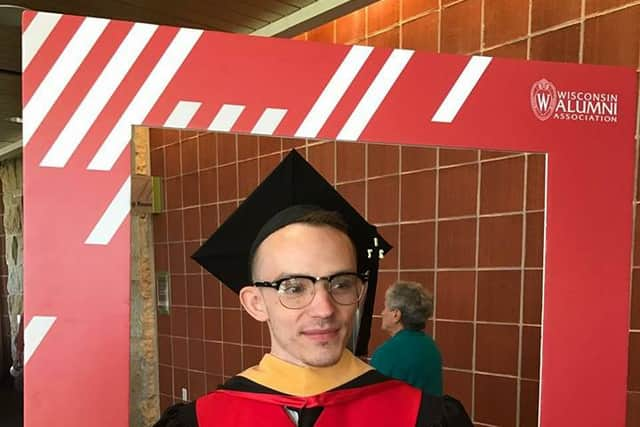
Adam spent so much time using a mouse and keyboard that he developed tendonitis in his wrist and was forced to see a doctor.
“It still affects me to this day,” he said.
“Because of my injury I’m very prone to the tendons in my right hand becoming irritated.”
Getting kicked out of college was the turning point for Adam who came up with a solution that did not involve quitting video games all together.

“I had convinced everyone that I was doing well because I felt so much shame over the fact that I was having a hard time,” he said.
“So either, I was going to have to find a path forward, or collapse and tell everyone that essentially I was a fraud and had been lying.”
Adam also started going for “short walks” every morning without taking any technology with him.
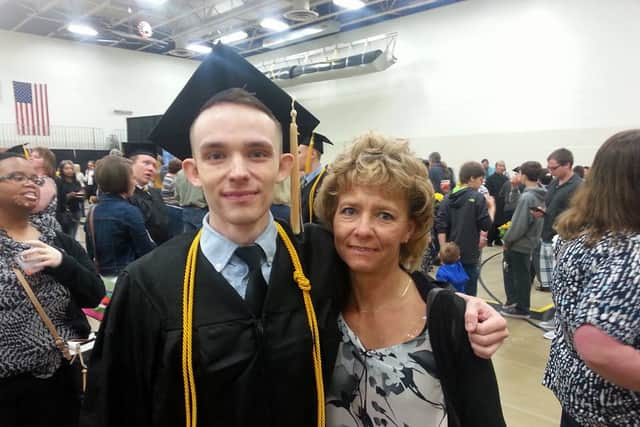
“I decided to go back to school for social work and do something that was helping other people and using the experience I just had”, he added.
He has since opened Main Quest Psychotherapy, providing therapy to people who are dealing with video game “overuse”, as well as social media and other forms of technology.
Adults in the UK spend more than five hours staring at screens, according to the regulator Ofcom’s Media Nations Report.

“The conditions that Covid and the lockdown created made it more appealing to turn to social media and video games,” he added.
“I know for certain that a lot of us found ways to cope with the challenges of the pandemic and have continued to use those methods.”
As a result, Adam has been “flooded” with emails from parents who are concerned for their children.
“The uptake has been overwhelming,” he said.
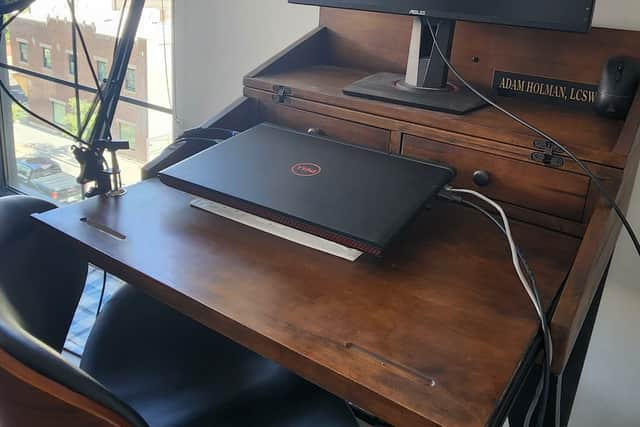
Adam has found that parents struggle to understand how modern video games can become so addictive as their experience growing up was very different.
“I think parents feel really frustrated,” he continued.
“Back in the day, you would be really hard pressed to be addicted to video games, because you can only play them so much until they get boring.
“Whereas with modern games, and especially certain genres, you can play them infinitely and they continue to be rewarding.”

“Diablo is really the first game which I was obsessed with and chose to play instead of doing other, more important things with my time”, he added.
To help parents address some of these concerns, Adam created the Tech Support course which is accessible online.
“It helps parents and their children identify the reasons for playing video games and set healthy boundaries, which I call no argument boundaries, because if you start arguing, both of you will lose,” he said.