
Violence spreads throughout Pakistan after arrest of ex-PM Imran Khan
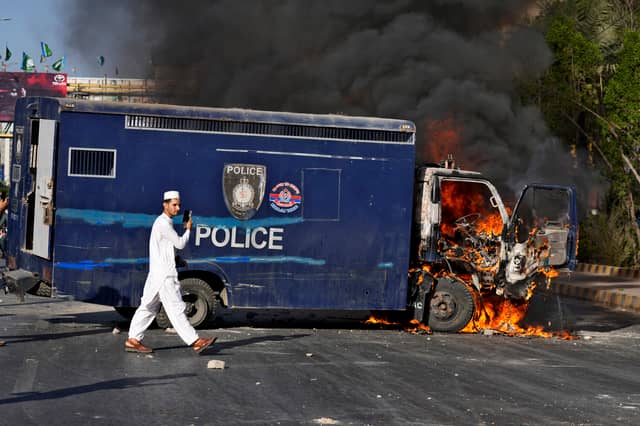

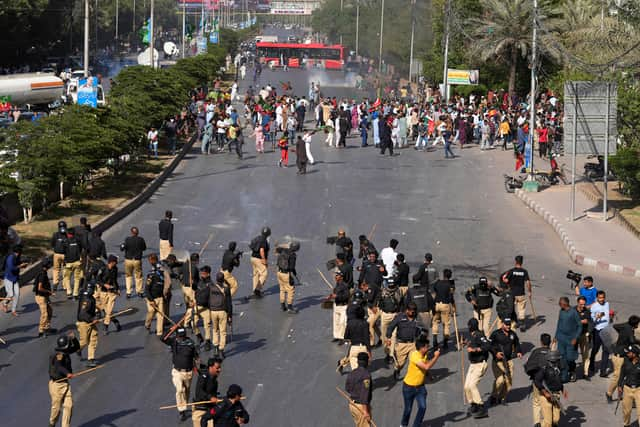
Pakistan’s former prime minister Imran Khan has been arrested and dragged from court as he appeared to face charges in multiple corruption cases, sparking violent demonstrations by his supporters in almost all of the country’s major cities.
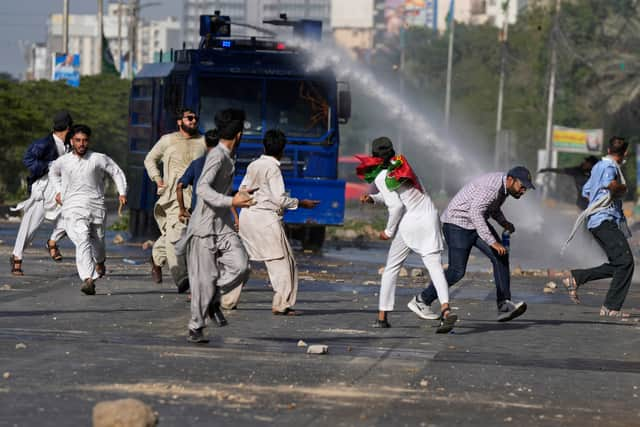
At least one person was reported killed in clashes between protesters and the military in Quetta, the capital of Baluchistan province, with another five people wounded, while about 15 injuries were reported amid similar violence in Karachi, Peshawar, Rawalpindi and Lahore.
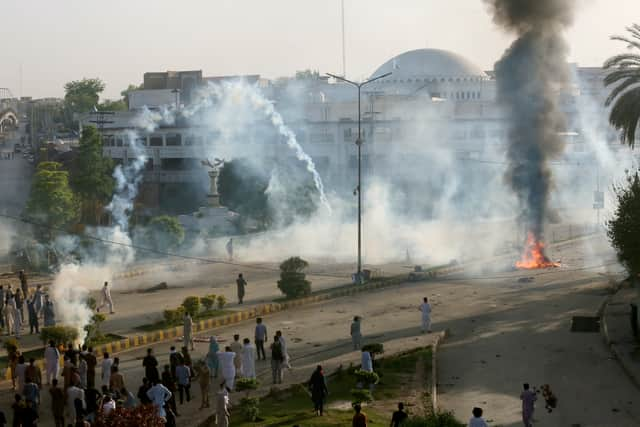
Officials at Pakistan’s telecoms authority said regulators had blocked social media including Twitter, and internet service was suspended in Islamabad and other cities.
Classes at some private schools were cancelled for Wednesday.
Khan was ousted in a no-confidence vote in April 2022 but remains the leading opposition figure.

Mr Chaudhry denounced the arrest of the 71-year-old former cricket star as “an abduction”. Pakistan’s independent GEO TV broadcast video of Khan being hauled away.
A scuffle broke out between Khan supporters and police outside the court. Some of Khan’s lawyers and supporters were injured in the melee, as were several police, Mr Chaudhry said.
Khan’s party complained to the court, which requested a police report explaining the charges for the arrest.
Khan was taken to the garrison city of Rawalpindi, near Islamabad, for questioning at the offices of the National Accountability Bureau, according to police and government officials.
He has denounced the cases against him, which include terrorism charges, as a politically motivated plot by his successor, Prime Minister Shahbaz Sharif, saying his removal was illegal and a western conspiracy. Khan has campaigned against Mr Sharif and demanded early elections.
Tuesday’s arrest was based on a new warrant from the National Accountability Bureau obtained last week in a separate case for which Khan had not been granted bail, making him vulnerable to be seized, and his lawyers have challenged the legality of the arrest. He is scheduled to appear at an anti-corruption tribunal on Wednesday, officials said.
“Imran Khan has been arrested because he was being sought in a graft case,” interior minister Rana Sanaullah Khan told a news conference.
He alleged Pakistan’s treasury had lost millions of dollars while Khan was in office due to illegal purchases of lands from a business tycoon.

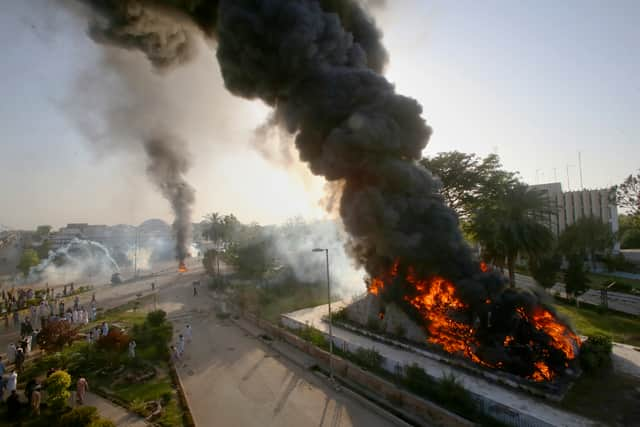
“It should have not happened,” he said, shortly after TV video emerged of burning vehicles and damaged public property in parts of the country.
Authorities said they have banned rallies in the eastern province of Punjab.
As the news of the arrest spread, about 4,000 Khan supporters stormed the official residence of the top regional commander in Lahore, smashing windows and doors, damaging furniture and staging a sit-in as troops retreated to avoid violence. The protesters also burned police vehicles and blocked key roads.
Protesters also smashed the main gate of the army’s headquarters in the garrison city of Rawalpindi, where troops exercised restraint. Hundreds of demonstrators shouted pro-Khan slogans as they moved towards the sprawling building.
Raoof Hasan, another leader from Khan’s party, told Al Jazeera English television that the arrest was “blatant interference in the judicial affairs by the powers-that-be”. He added that Khan “was virtually abducted from the court of law”.
Khan’s arrest came hours after he issued a video message before heading to Islamabad, saying he was “mentally prepared” for arrest.
Khan was wounded by a gunman at a rally in November in an attack that killed one of his supporters and wounded 13.
He has insisted, without offering any evidence, that there is a plot to assassinate him, alleging that Pakistan’s spy agency was behind the conspiracy.
In a strongly worded statement on Monday, the military accused Khan of “fabricated and malicious allegations” about its involvement in the November shooting, saying they are “extremely unfortunate, deplorable and unacceptable”.
The military has directly ruled Pakistan for more than half of the 75 years since the country gained independence from British colonial rule, and wields considerable power over civilian governments.
Mr Sharif, whose government faces spiralling economic woes, condemned Khan for criticising the military.
“Let this be abundantly clear that you, as former prime minister, currently on trial for corruption, are claiming legitimacy to overturn the legal and political system,” Mr Sharif tweeted after Khan’s arrest.
In Washington, US secretary of state Antony Blinken and UK Foreign Secretary James Cleverly told a news conference they were aware of reports about Khan’s arrest but declined any substantive comment. “We just want to make sure that whatever happens in Pakistan is consistent with the rule of law, with the constitution,” Mr Blinken said.
Mr Cleverly said: “The UK has a longstanding and close relationship with Pakistan. We are Commonwealth partners. We want to see peaceful democracy in that country. We want to see the rule of law adhered to. I’m uncomfortable to speculate further without having a detailed briefing on that.”