
Water gushes through palm trees and sand dunes after rare rain in Sahara Desert
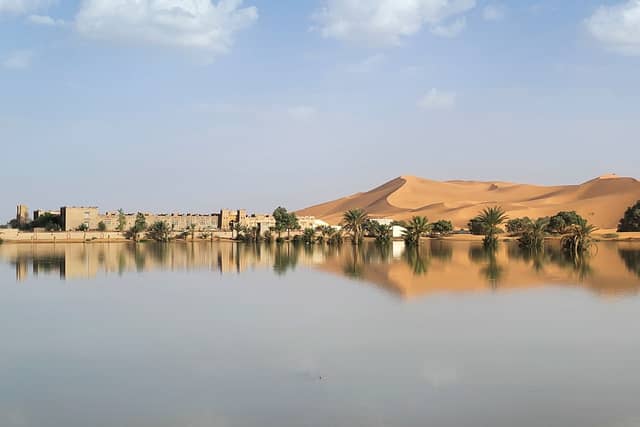

A rare deluge of rain has left blue lagoons of water amid the palm trees and sand dunes of the Sahara Desert, nourishing some of its most drought-stricken regions with more water than many have seen in decades.
South-eastern Morocco’s desert is among the most arid places in the world and rarely experiences rain in late summer.

In Tagounite, a village about 280 miles (450km) south of the capital, Rabat, more than 100mm (3.9in) was recorded in a 24-hour period.
The storms provided more rainfall than had been seen in decades, leaving striking images of bountiful water gushing through the Saharan sands amid castles and desert flora.

“It’s been 30 to 50 years since we’ve had this much rain in such a short space of time,” said Houssine Youabeb, of Morocco’s General Directorate of Meteorology.
Such rains, which meteorologists are calling an extratropical storm, may indeed change the course of the region’s weather in months and years to come as the air retains more moisture, causing more evaporation and drawing more storms, he said.
Six consecutive years of drought have posed challenges for much of Morocco, forcing farmers to leave fields fallow and cities and villages to ration water consumption.
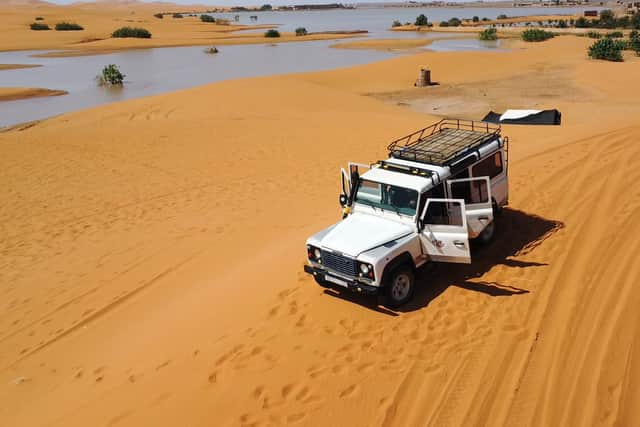
The region’s dammed reservoirs reported refilling at record rates throughout September, though it is unclear how far that will go towards alleviating the drought.
However, water gushing through the sands and oases also left more than 20 dead in Morocco and Algeria and damaged farmers’ harvests, forcing the government to allocate emergency relief funds, including in some areas affected by last year’s earthquake.
Nasa satellite images showed water rushing in to fill Lake Iriqui, a famous lakebed between Zagora and Tata that had been dry for 50 years.