
What are the next stages in the process to name new Supreme Court justice?


President Joe Biden and Senate Democrats are expected to move quickly to fill the seat of retiring Supreme Court Justice Stephen Breyer, seizing the chance to energise their voting base ahead of November’s midterm elections, when control of Congress will be at stake.
The president promised during his campaign to name a black woman to the Supreme Court if a vacancy arises, and the White House reiterated that commitment.

For Democratic politicians, it could also lessen the sting from their unsuccessful efforts to pass voting rights legislation or get Mr Biden’s ambitious social spending and environmental package over the finish line.
A look at the confirmation process and what we know, and do not know, about what is to come:
– What is next?
The Senate plans to launch the confirmation process as soon as Mr Biden makes a nomination.
Senate Majority Leader Chuck Schumer, a New York Democrat, said Mr Biden’s pick will receive a prompt hearing and will be considered and confirmed “with all deliberate speed”.
Even though Mr Breyer is not expected to retire until the summer, the Senate can move quickly to confirm his successor.
Democrats could quickly hold confirmation hearings in the Judiciary Committee and even hold a full vote in the Senate before he steps down.
The Senate would just refrain from sending the president the paperwork on the final confirmation vote until Mr Breyer steps aside.
The Supreme Court’s term usually ends in late June.
– What does it take to confirm a nominee?
Only a Senate majority.
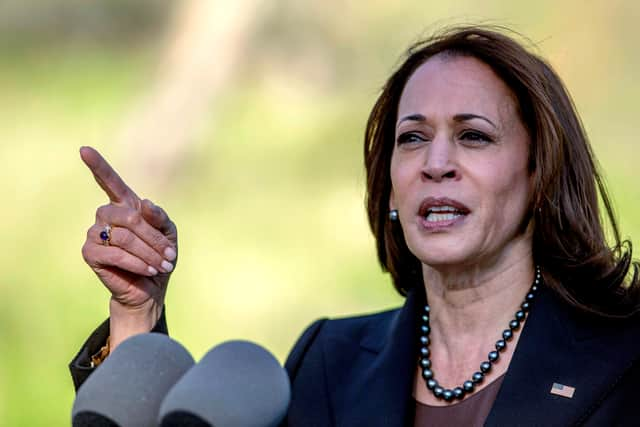
The Senate is divided 50-50 along party lines, but Democrats control the chamber because Vice President Kamala Harris can break tie votes.
He did so as Democrats threatened to filibuster President Donald Trump’s first nominee, Neil Gorsuch.
– How does the process work?
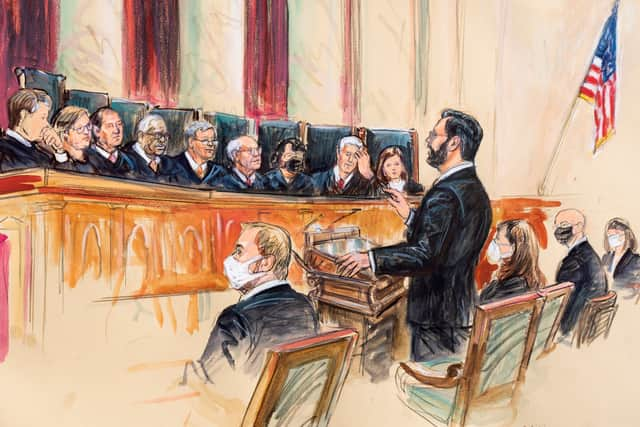
It is up to the Senate Judiciary Committee to vet the nominee and hold confirmation hearings that typically extend over three days.
Once the committee approves the nomination, it goes to the Senate floor for a final vote.

From the appointment of the first justices in 1789 through its consideration of nominee Amy Coney Barrett in 2020, the Senate has confirmed 120 Supreme Court nominations out of 164 received.
Of the 44 nominations which were not confirmed, 12 were rejected outright in roll-call votes by the Senate, according to the Congressional Research Service.
– Who are the senators to watch?
Supreme Court nominations have become increasingly partisan, so it is likely the vast majority of Republicans will oppose Mr Biden’s nominee.
But with the court’s ideological balance unthreatened by the nomination, Mr Biden’s pick would not change the court’s 6-3 conservative tilt, some bipartisan support is possible.
Moderate Republican Senators Susan Collins of Maine and Lisa Murkowski of Alaska will be closely watched as possible swing votes.
A handful of other Republican senators, including some who are retiring, could be possible crossover votes depending on the nominee.
On the Democratic side, all eyes will be on Senators Joe Manchin of West Virginia and Kyrsten Sinema of Arizona.
They were willing to buck Mr Biden and their Democratic colleagues when it came to changing the Senate’s filibuster rules.
Would they be willing to do the same when it comes to the Supreme Court?
– How long will the confirmation process take?
Supreme Court nominations have taken around 70 days to move through the Senate, but there are no set rules for how long the process lasts.

She was confirmed on October 26 2020, exactly a month after Donald Trump nominated her.
– What are advocacy groups advising Democrats?
They are calling for diversity in the pick, not only demographically, but in experience.
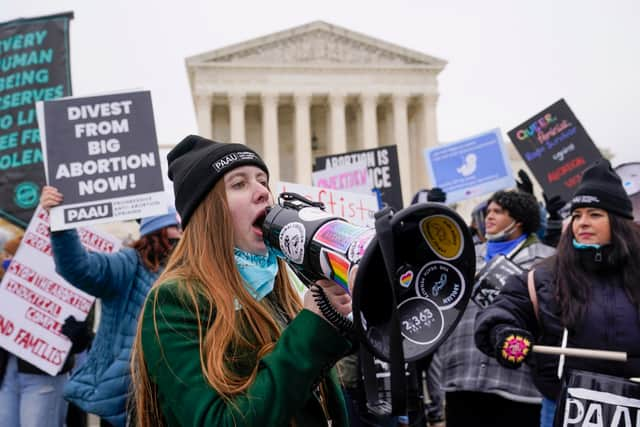
“We urge the president and the Senate to move quickly to nominate and confirm the first black woman Supreme Court justice, drawing from the extraordinary pool of brilliant and qualified women scholars, jurists and attorneys that our country has to offer,” said Ben Jealous, president of People for the American Way.
“President Biden has many highly-qualified candidates to consider, but we hope he takes this opportunity to not only make good on his commitment to increase the court’s racial diversity, but also his vision for professional diversity,” said Brian Fallon, executive director of Demand Justice.