
What the body language of the royals at the funeral can tell us about how they’re feeling


The eyes of the world are watching, as the Queen is honoured with a historic state funeral.
The ceremony began with a procession of senior royals behind the coffin as it was carried to Westminster Abbey – where 2,000 people were in attendance to pay their respects, before a committal service at Windsor Castle.

With so many people watching proceedings, the body language of the royal family and statespeople in attendance has come under intense scrutiny. “Body language is mostly subconscious, and those signals we send out are often authentic and true to what’s going on inside, even though we try to mask those emotions,” suggests Sonia Beldom, a communication coach, verified NLP practitioner, CBT therapist and executive coach.
“Body language is therefore thought to be a more reliable way of interpreting a person than the words they use. We use these signals to decode and interpret what’s in the mind of the person, and what sort of person they are. We also use these signals to interpret others’ moods and emotions.”
As attendees entered Westminster Abbey, Beldom says faces and chins down “shows humility and respect”.
This is what else we can learn from how people held themselves at the funeral…
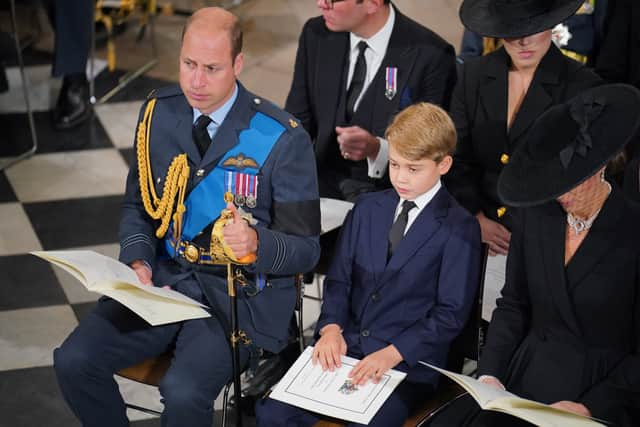
Beldom says she can see classic signs of grief in the faces of the male members of the royal party – particularly King Charles, the Prince of Wales and the Duke of Sussex. She detects this in “furrowing of the brow, and especially when the glabella (the bit between our eyebrows, above the nose) displays sign of tension – increased vertical lines”.
When the congregation sang God Save The King, Beldom detects “a slight parting of his [Charles’] lips in a horizontal in-breath”, saying “it is a sign of grief, which he is controlling brilliantly”.
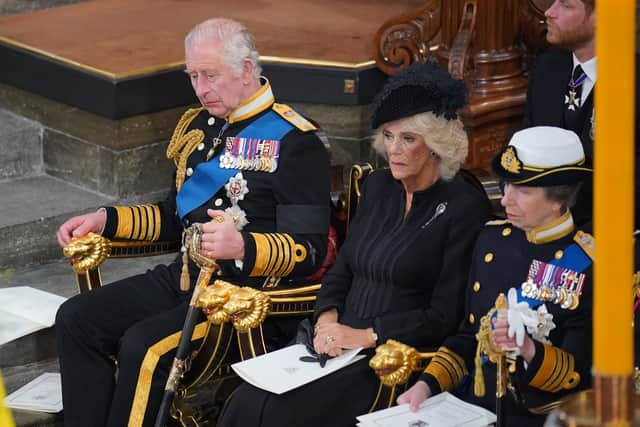
On the part of the Queen Consort and the Princess of Wales, Beldom suggests their body language has been “incredibly controlled”. She continues: “By tightening mouths, we can more easily control our facial muscles. All the female royals are composed, with slightly pursed lips – which helps hold back emotion.”
Beldom describes the Queen Consort’s deportment as “beautiful”, saying: “Her shoulders are horizontal, neck relaxed, her chin is slightly dipped, which is no surprise in grief, and often portrays a person considering something upsetting.”
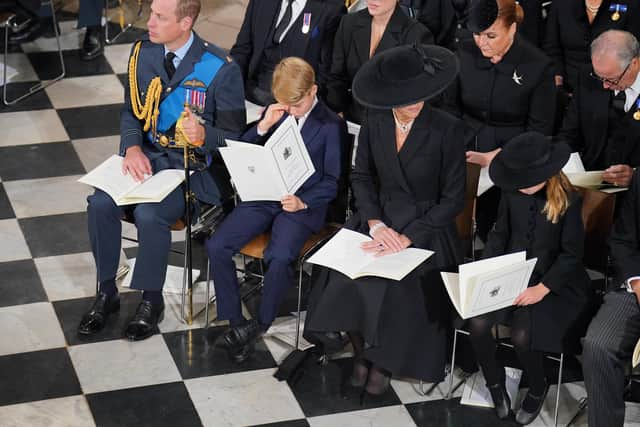
The Prince and Princess of Wales were accompanied by their two eldest children, Prince George and Princess Charlotte. “Children are usually very open with less guarded nonverbal gestures, however, George and Charlotte are very well behaved,” says Beldom. “Whilst taking in their surroundings, they are not being distracted by them.”
In the procession after the service, Beldom says “the faces of the major male royals are far more relaxed… Down to the main, emotional service being over. William’s face looks much smoother.”
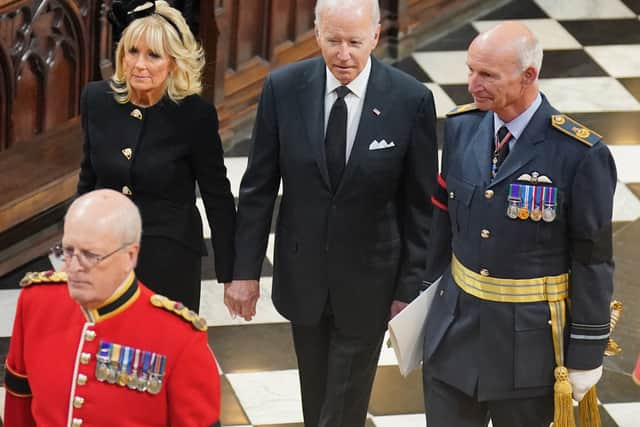
World leaders were in attendance to pay their respects to Britain’s longest-reigning monarch, and their body language was also revealing – particularly as they walked into the event.
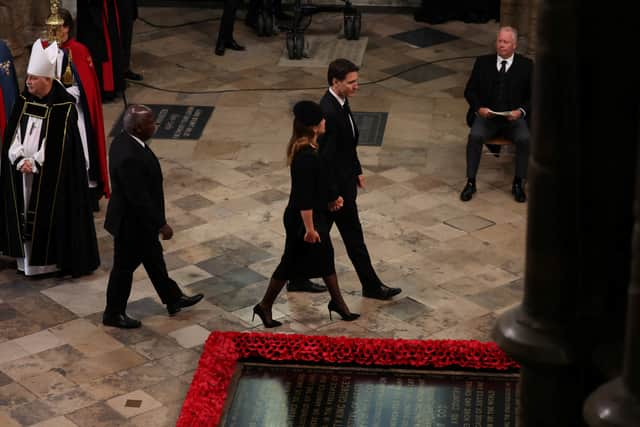
Canadian prime minister Justin Trudeau was also there, and Beldom says he displayed “classic confident statesman body language – relaxed, upright, chin up”. She suggests he had a “relaxed walking style, allowing his arm to swing naturally – and also showed courtesy in glancing around, to take in and acknowledge everybody there”.