
Wheelchair rugby player, 25, with cerebral palsy sets sights on ParalympicsGB team: ‘This is it, this is what I want to do’
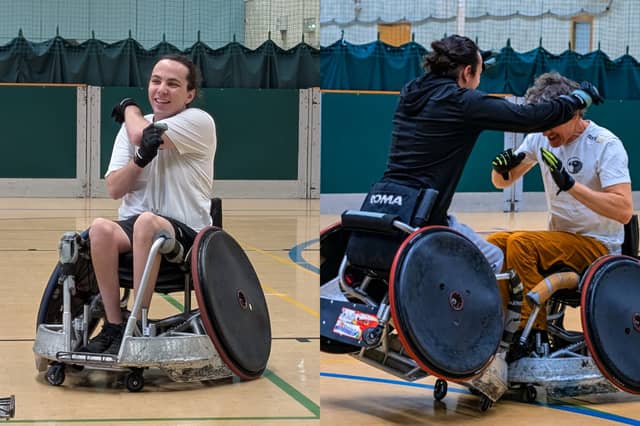

A 25-year-old wheelchair rugby player who was diagnosed with cerebral palsy aged one has said the sport “means more than I could put into words” and is pushing for a coveted spot on the ParalympicsGB team.
Jesse Hayes, from Budleigh Salterton near Exeter, Devon, has only been playing wheelchair rugby for just under a year but has already decided that “my goal is to play at the highest level – and that, of course, is the Paralympics”.
Jesse, who runs disability awareness company The Legacies Project, was diagnosed with cerebral palsy at 12 months old. He loved playing sport, but Jesse had struggled to find a truly inclusive team for people with disabilities.
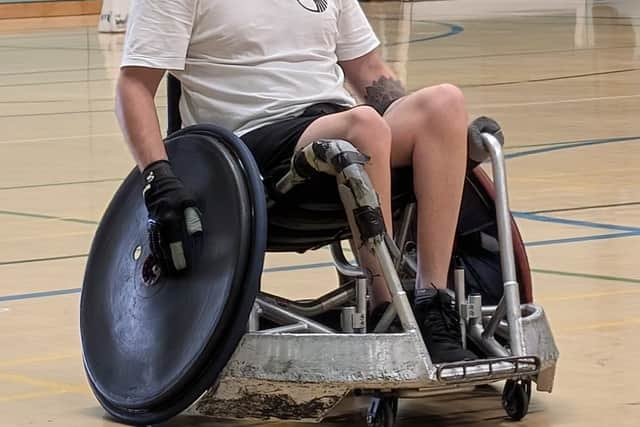
“I played sports throughout my life, like cricket, American football, football, but there was lots of: ‘Got to protect Jesse, Jesse can’t do this, Jesse can’t do that’,” Jesse told PA Real Life.
“You know, when you’re playing American football and you can’t really participate, it really defeats the point of playing.
“But what I really love about rugby is that once everyone’s in those chairs, no matter how you get in those chairs, it’s just a whole level playing field. Everyone’s the same.
“There’s roles for every ability and every body, and every role is quite vital to the team and making things happen.”
Jesse was born prematurely at 24 weeks, weighing just 1lb 10z – “I was the size of your hand, essentially” – adding that “mum had to carry around oxygen tanks and all sorts just to help me get by, especially at the early stages”.
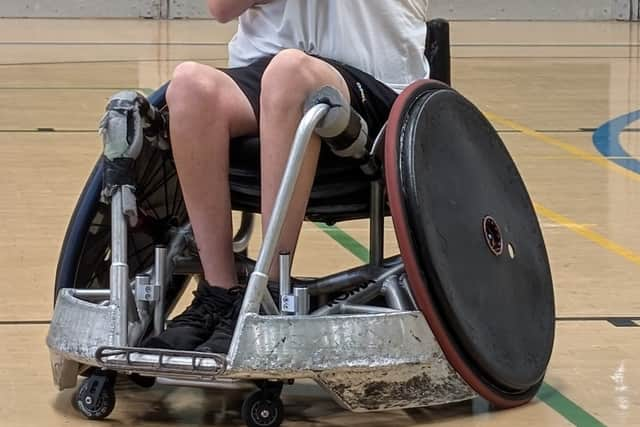
However, after years of speech and language therapy and physiotherapy, as well as a number of surgeries, Jesse has defied the odds.
“I’ve never looked at myself as ‘I have a disability’,” Jesse said.
“I’m really fortunate with how my cerebral palsy affects me, because it could be a lot worse. I’m very, for the most part, mobile, I can walk for a bit, and I’m pretty independent.
“It took tons of work to do. I’ve learned to walk countless times throughout my life. It’s a constant thing.
“I had walking frames, I had specialised buggies as a child, and now I use my wheelchair for long distance walking, or if I need to stand up for a long time.”
Having always loved sports, but finding it hard to find a team truly accepting of disability, Jesse was delighted to be told about the West Country Hawks Wheelchair Rugby Club in 2025.
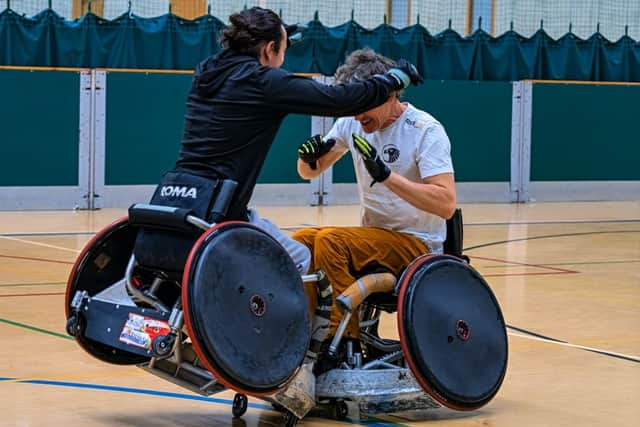
The sport was developed in Canada in the 1970s by athletes with quadriplegia, and combines elements of rugby, basketball and handball, with players using specialist armoured wheelchairs. It has been a Paralympic sport since 2000.
“I think wheelchair rugby is a lot more interesting than rugby,” Jesse said.
“This might be a bit of a biased opinion, but I do see wheelchair rugby to be a bit more brutal than traditional rugby.
“I think that’s because you’re getting people who are looked upon as frail and fragile, and then you’re pushing around the court at high speeds and just smacking into each other.
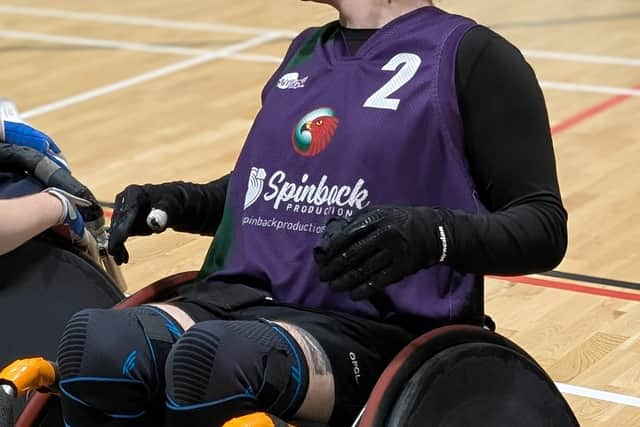
Jesse is now chairman of the West Country Hawks Wheelchair Rugby Club and is working to expand the community and share “what the club means to me, personally, and to other players”.
“They say it’s their safe space. It’s helped them mentally. Some people will say it has saved their lives.”
Thanks to support from team sponsor Enable Law, a specialist medical negligence, personal injury, education and mental capacity law firm, the team has access to financial backing – as well as a brand new kit – to help it go from strength to strength and push its players to the highest levels of the sport.
Michelle Biddulph, Enable Law partner and injury specialist, said: “The West Country Hawks are inspirational and the Enable Law team are delighted that our sponsorship will help it power forward.
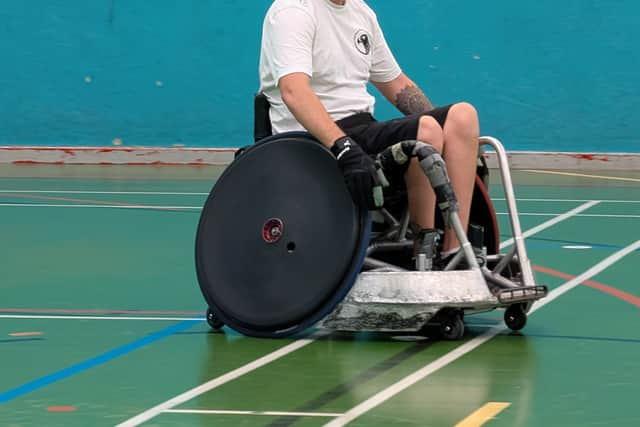
For Jesse, the sport has provided a new perspective on living with disability, and provided the opportunity to make “more friends now than I ever did in college and secondary school combined”.
“The disability, of itself, isn’t what makes you disabled. In my view, it’s the moment you try to go out into society, that’s the bit that is disabling… Because the infrastructure is just not there,” Jesse added.
“That is the moment where the disability exists. And I love the fact that that doesn’t exist in the Hawks at all.”
As for the end goal of competing in the Paralympic Games, Jesse said “the big thing for me at the moment is I’ve got to turn up to training”. Through the Hawks, Jesse has been able to make connections with players and coaches who compete at the highest level, but also trains for up to ten hours per week on the court.
“If you sit around waiting for it to happen, it’s not going to,” Jesse said.
“You have to make the connections and put the work in and find the right people to speak to.”