
Why it’s time to re-energise with flower power on botanic beauty St Lucia


Dragon’s blood, hanging crab claws and giant fishtails surround me, heightening my senses – although I’m in an environment far more calming than these strange horticultural names might suggest.
Working my way through acres of palms, I brush past scarlet ginger lilies, fragrant frangipani and a tree offering trailing black berries, which my guide Coady describes as Bob Marley’s dreadlocks.

This is where dragon’s blood, a striking deep red sedum, provides creeping ground cover. Spiky red flowers with yellow tips give the illusion of suspended crab or lobster claws, and huge palms mimicking giant fishtails form part of the exotic planting within this tropical landscape, part of the 2,000-acre Soufriere Estate.
Coady points out wafts of lemon grass, which make a great alternative to regular mosquito repellent if you rub the leaves on your skin, as well as St John’s Bush, which is said to ease menstrual cramps, and the aptly named tree of life, which apparently aids the immune system and helps reduce cholesterol.
Further on, we reach the Diamond Waterfall, not the most imposing at 50ft high, but whose therapeutic mineral-laden cascades have tinted the rocks a blend of yellow, green and purple. It is served by sulphur springs upstream, its mineral-rich volcanic waters spilling over the rockface.
While you can’t swim at the foot of the falls, hot spring baths nearby should satiate anyone’s desire to take a dip. It is said that bathing here aids rheumatism, respiratory complaints and ulcers.
Volcanic soil is the key to the lushness of this Caribbean island, situated between Martinique and St Vincent and to the northwest of Barbados, its richness and tropical rains encouraging even the most difficult of plants to thrive.
Around 300,000 years ago, volcanic activity created a legacy of beauty in the famous Pitons – Gros Piton and Petit Piton – majestic mini mountainous lava globes rising from the Caribbean Sea, and now covered with vegetation and trees. They’ve become prime hiking trails accessible to tourists wanting to get a better view.
Nestled between those Pitons like a perfectly fitted Cinderella’s slipper is the luxurious Sugar Beach resort, itself a botanical paradise spread across more than 100 acres of tropical forest with enough planting to mimic Diamond Botanical Gardens’ flora and fauna.
Formerly a working sugar plantation, the property has a long history of owners including Lord Glenconner, famously known for his friendship with Princess Margaret, and is now owned by the Green family, owners of The Connaught and Claridge’s in London, and managed by Viceroy.
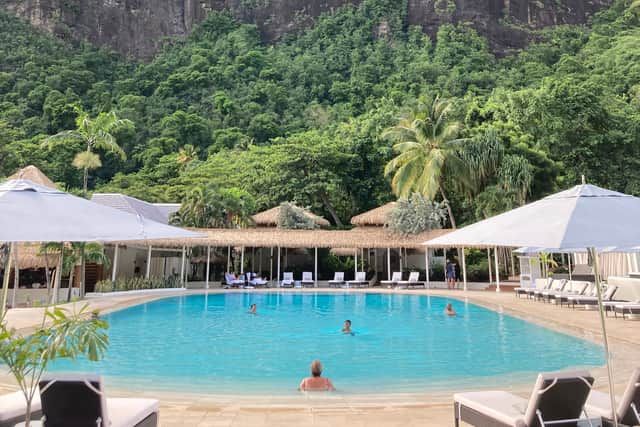
Following a steep meandering road down from the barriered entrance, there’s no indication that Sugar Beach houses 105 resort accommodations and 25 residences, because they are all so subtly positioned, from the beachfront bungalows which overlook the shimmering white sand imported from Guyana, to luxurious, vast villas secreted among the plantings of palms, flamboyant trees and other tropical gems.
Hollywood star Matt Damon reportedly rented out the whole resort in 2013 to celebrate the renewal of his wedding vows, inviting George Clooney, Ben Affleck, Jennifer Garner, Michael Douglas and Catherine Zeta-Jones to the celebrations, although Sugar Beach staff remain tight-lipped about any celebrity presence.
An enviable collection of modern art ranging from the likes of Andy Warhol to Damian Hirst provides a contemporary twist, adorning walls throughout, even in the well-equipped children’s club.
Sugar Beach was the first resort on the island to re-open after the pandemic, and wisely kept the gardeners on throughout lockdown, explains head gardener Julian Joseph.
“The gardens have evolved over the years, as landscapers had different ideas. We’ve tried to avoid the use of imported materials and plants which are going to become invasive,” Julian explains.
A major refurbishment – the resort closed for five months last year – has produced nine new luxury accommodations, upgraded culinary outlets, a beachside fitness facility, a refreshed spa and a new main pool area, as Sugar Beach celebrates its 30th anniversary this year.
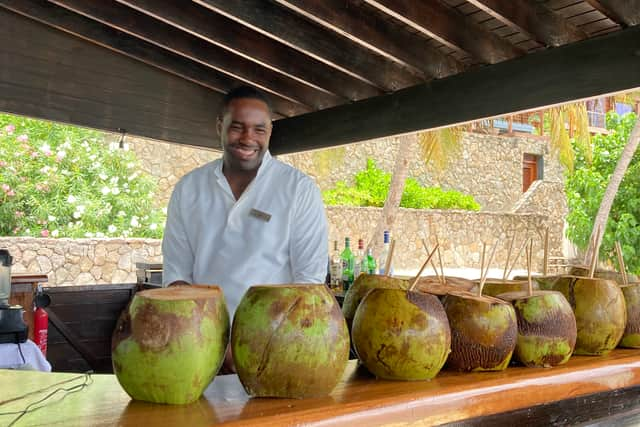
Edibles including bananas, mangoes, coconuts and avocados are pointed out in the regular garden tours, which are conducted by the horticulturalists on site.
Much of the produce goes into the salads, salsas, sauces and other delicacies on the menus, or is incorporated into the plethora of cocktails served in the stylish resort bars.
Wellbeing is big here – from yoga to Piton hikes, rainforest spa treatments featuring natural products, and gentle walking trails where you may spot hummingbirds, will certainly encounter lizards, and according to one young guest, may come across the odd scorpion.
Deep within the network of tropical planting is a rainforest spa, a lantern-lit long wooden corridor leading to treehouses on stilts, perched high above the ground and fringed by a stream. Here, singles or couples can have a range of treatments, many with a nod to the landscape – bamboo massages, body scrubs made from cinnamon, and coconut and sulphur mud wraps to detox and relax.
But if a hotel beauty treatment feels a little sterile, there are natural remedies a short drive away, which will provide a grittier, smellier experience altogether.
Venturing out, I dunk myself in toe-curlingly hot muddy water at Sulphur Springs – Soufriere (the former capital) gets its name from the French meaning sulphur mine – slathering myself in gritty, sand-coloured volcanic mud, known for its exfoliating and skin-enhancing properties. The site is a short walk from the edge of the crater known as La Caldera (the cauldron), described as the Caribbean’s only ‘walk-in’ volcano.
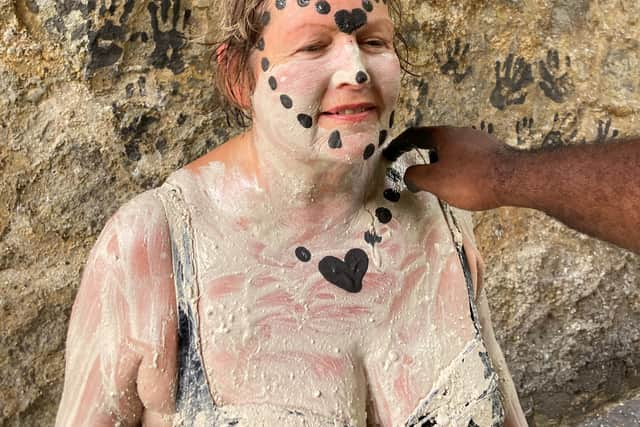
But it is the sight of the crater nearby, a rocky landscape dotted with mud pits of scalding bubbling water throwing up clouds of smoke and steam, which really sets my skin tingling.
Here, the pungent, rotten-egg stench of sulphur billowing from the cracks in the earth catches your throat, and the stark landscape is far removed from the lush oasis its volcanic nutrients have served in the nearby botanical garden. At least the smell keeps the snakes and spiders away, our guide John says, grinning.
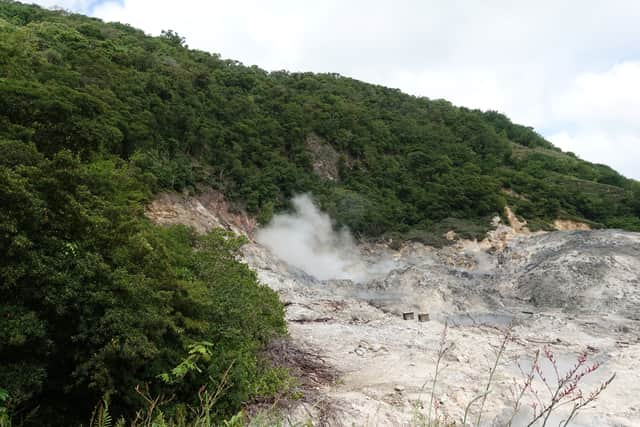
All that changed 33 years ago, he recalls, when a tour guide jumped rather too hard on the surface and the earth gave way, resulting in him suffering second-degree burns. That’s why we are now only allowed to observe the scene from a distance.
In the heat of the day, the lush forested oasis of Sugar Beach is beckoning, as we wend our way down to the beach, past deep red crotons, phoenix and areca palms, coral hibiscus and sizzling scarlet flamboyant trees. Hanging crab claws and dragon’s blood never felt so inviting.
How to plan your trip
Sugar Beach, a Viceroy Resort (viceroyhotelsandresorts.com/sugar-beach), has rooms from £414/$500 per night (two sharing) including breakfast. For more information on St Lucia visit stlucia.org.