
Woman, 29, who cannot urinate due to rare condition barred from Greggs disabled toilet ‘until she showed catheter bag’
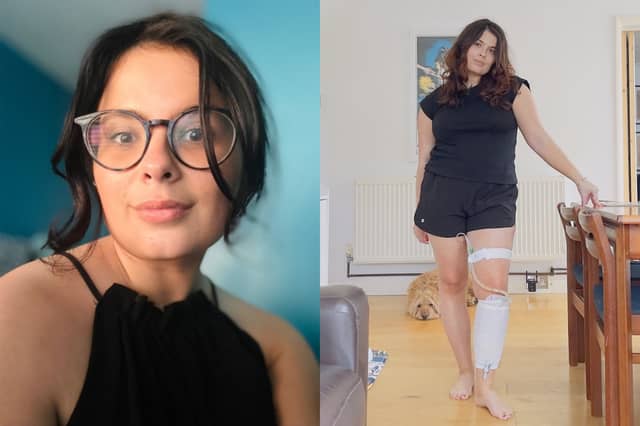

A young woman whose life is “on hold” due to a rare condition which means she cannot urinate claims she was denied access to the disabled toilet in Greggs until she showed her catheter bag.
In July 2024, freelance communications professional Evan Francis, 29, from Minster-on-Sea in Kent, was diagnosed with Fowler’s Syndrome – a urethral sphincter condition that affects as few as two in a million women per year.
Doctors initially attributed her symptoms of recurring urinary tract infections (UTIs) to stress, after she was made redundant and went through a break-up in November 2023, until her rare diagnosis eventually saw her fitted with an indwelling urinary catheter attached to a urinary leg bag.
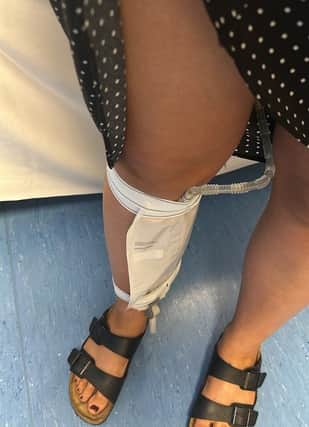
She was later surgically fitted with a suprapubic catheter to her lower abdomen, which has to be changed every eight to 10 weeks, leaving her vulnerable to further infections – with Evan spending 96 hours in A&E in 2024 alone.
“Terrified” she will be “like this forever”, Evan said she hopes she will be eligible for surgical intervention, but in the meantime her rare condition has had a dramatic effect on her self-esteem, dating life and mental health.
“I’ve got a tube hanging out my vagina – I don’t feel sexy, I don’t feel my best, I don’t feel me,” she told PA Real Life.

Evan started experiencing recurring UTIs at the start of 2024, which doctors initially dismissed as stress-related after her recent break-up and redundancy.
But after four in one month, her doctors sent her for an ultrasound.
She was catheterised in April 2024 to relieve her discomfort and, at a later appointment, underwent urodynamics testing – a traumatic experience Evan said she still has not fully recovered from.

“He had lots of students in the room when he was doing this test – there was no dignity.
“The catheter went wrong and so my urethra was bleeding… I’ve never really got over that – it’s made my urethra incredibly sensitive.”
Eventually, in July 2024, urologists told Evan she had Fowler’s Syndrome.

“They found two litres of urine trapped in my bladder – a woman’s bladder should only hold about 500ml,” Evan said.
Her initial attempts at self-catheterisation failed due to bloating from fluid retention, which made her look “nine months pregnant”.
Instead, she was fitted with a suprapubic catheter – a drainage tube inserted into the bladder via an incision in the lower abdomen.

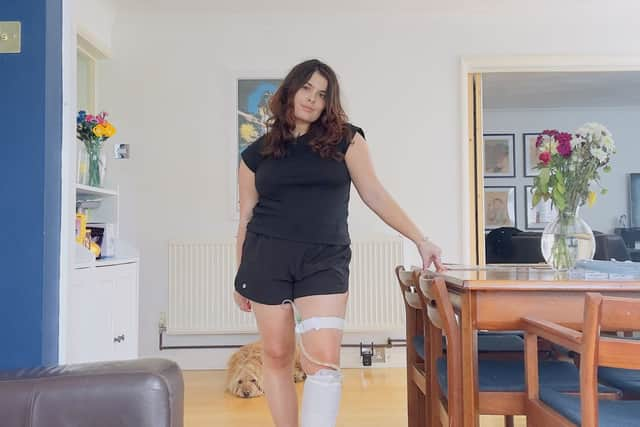
“I like to dress well and I was thinking ‘I can’t really wear that with this outfit, it doesn’t go’,” she said.
She switched to a valve, allowing her to drain her bladder herself at intervals, but infections remained a common occurrence.
Evan has also experienced several stuck catheters, causing “unbearable pain” that require an A&E visit.
Living with Fowler’s Syndrome has also affected Evan’s confidence, prohibiting her from advancing her career, dating, or even buying property like her peers.
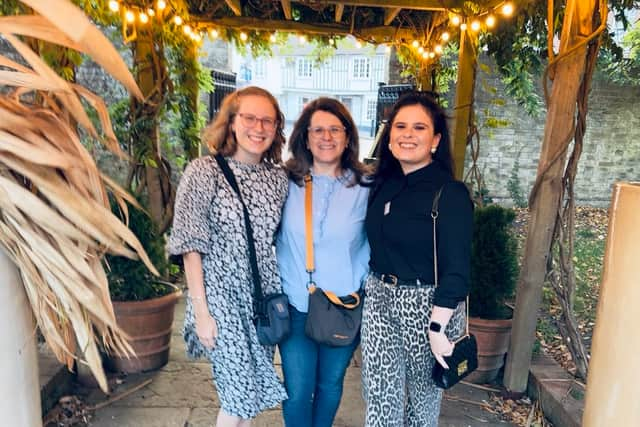
Evan currently lives with her mum Chere and her mother’s partner, Nick, while her dad, Peter, has also frequently taken her to A&E – and she is grateful that, despite her parents’ divorce, they have worked together to support her through her illness.
The mental toll is significant, with Evan “constantly paranoid” that she smells of urine.
She has also faced difficulties with the “invisible” nature of her disability.

“I asked to use the disabled toilet and the assistant said to me ‘You’re not disabled, though’,” said Evan.
“And so I said ‘How do you know that?’ I decided to just get the bag out and say ‘Does this make me disabled?'”
Evan now has her own Radar key to prevent future access problems, but believes better awareness is needed.

Although freelancing has offered flexibility, she said the financial instability is hard to manage – and is a source of anxiety ahead of prospective surgery.
“I’m terrified that I’m going to be left like this forever because the understanding around this condition is still really vague,” she said.
Evan said she hopes to be eligible for sacral nerve modulation, which would involve a pacemaker being fitted into the nerve in her back that controls the sphincter muscle, potentially allowing her to urinate normally again.
She has also led awareness talks at her GP surgery and written to her MP about catheter care for young people and women.
A spokesman for Greggs said: “We’re really sorry to learn that this customer request was not dealt with in line with our company policy.
“We will be taking steps to make sure all shop colleagues are aware of these policies to ensure this does not happen again.”