
Woman who welcomed eight foxes into her home now uses them as therapy animals to help domestic abuse survivors
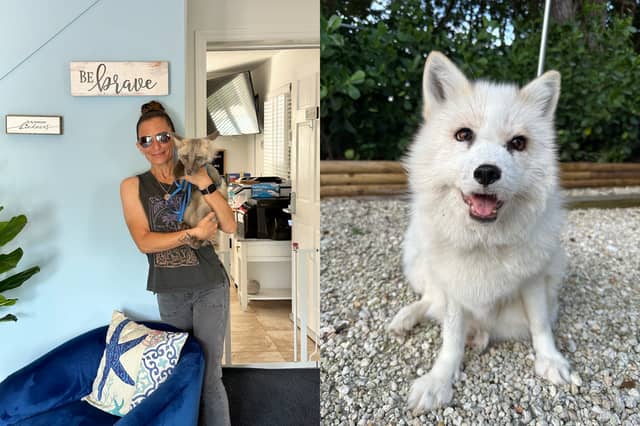

A woman who rescued eight foxes from fur farms that now sleep in a twin-size bed in her home now uses them as therapy foxes in women’s shelters and youth rehabilitation programmes and claims many “resonate” with the foxes’ “story of survival”.
Nicole Navarro, 43, who works part-time on a tourist boat and lives in Key Largo, Florida, with her eight foxes, Libby, Louie, Reef, Kai, Coral, Jasper, Ridley and Penny, began rescuing the animals in 2020 after she got laid off in the pandemic.
Nicole, who is single and has no children, says all of her foxes were “deemed undesirable” by fur farmers, as they had “some sort of physical defect”, such as missing tails or toes, but claims this is what “ended up saving their lives”.
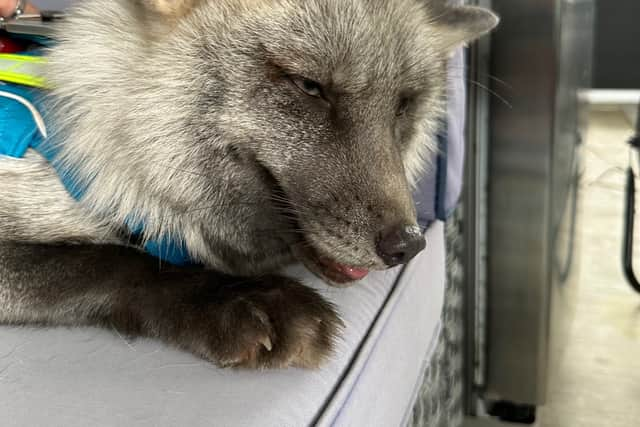
At the end of 2022, Nicole began using them as therapy foxes, where she puts them in a harness, allows people to stroke them and tells the foxes’ stories of going from being bred to kill to living a happy life, which she finds “extremely rewarding” as she has “experienced intense trauma” in her past.
Nicole told PA Real Life: “When I take the foxes to the sessions, I find that the people really resonate with the foxes’ story of survival.
“Often these people are victims of domestic abuse and in a way, have been in a similar position.”

She explained: “In 2018, two foxes were surrendered and even though I had a lot of experience with different species of animals throughout my life, I grew up on a very large horse farm in western Pennsylvania, I had never had up close personal experience with foxes.
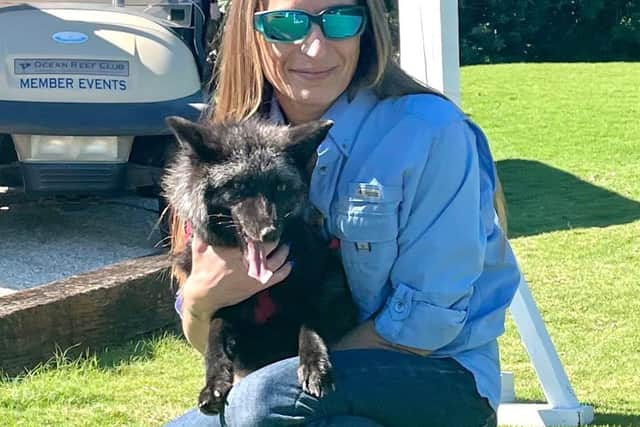
From then on, Nicole started contacting fox rescue centres throughout America about potentially rescuing them in the future, and in March 2020, one of her contacts asked her if she was ready to take some foxes that were being surrendered from a fur farm.

Two months later, she welcomed Louie and Libby, foxes from a fur farm, into her home and since then, she has adopted another six foxes.

“So some of the foxes I have don’t have tails, some of them are harmed by their mother at a very young age so they’re missing parts of their tail and Reef is even missing some toes.
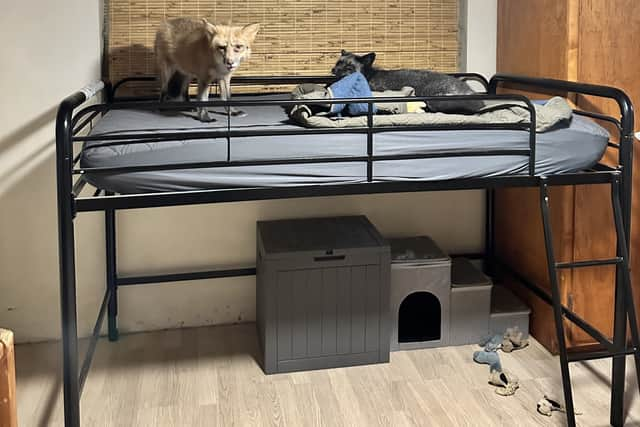
Nicole keeps them all in two large enclosures outside and they even have 24/7 access to a room in her house.

“It gets pretty warm here so the room is air conditioned… and they all have outdoor enclosures with ramps and platforms and enrichment activities, toys and tunnels.
“So they are really given everything they need to use the natural instincts they have – they’re not domestic in any way, shape or form.”
Nicole explained her daily-routine to look after her furry friends, saying: “I get up fairly early and I do a spot clean of the enclosures.
“I feed them a little breakfast – they eat rabbit, duck, chicken, turkey, I do offer them fruits and vegetables, but they rarely go for it.
“I sit back there with them, I interact with them, I play with them.”
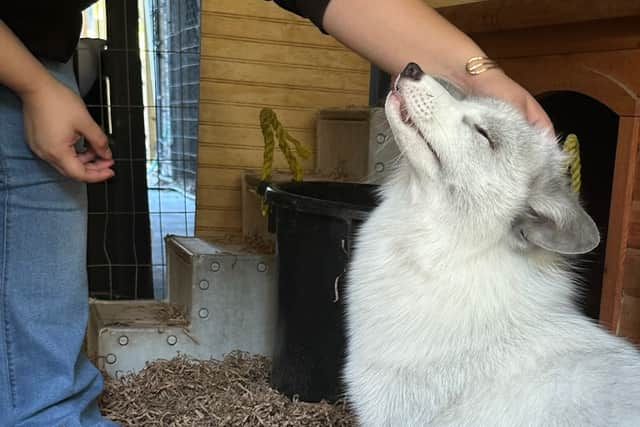
She said: “I reached out to a women’s holistic trauma recovery programme and just sort of proposed the idea of bringing a fox to meet the women and sharing the foxes’ stories of survival – going from certain deaths to living on an island in Florida.
“When I take one of my foxes into the sessions, I put him in a harness and a little leash, but I don’t train him on a leash.
“I tell his story and then welcome people to pet him or play with him, but it’s amazing, as soon as I put the harness on him his personality changes – he’s so calm and relaxed and we’ve never had any issues with him.”

She said: “The Florida Keys Children’s Shelter saw what we were doing with the women and asked if they could start bringing children here to meet the foxes and hear their stories and so that started officially last year.
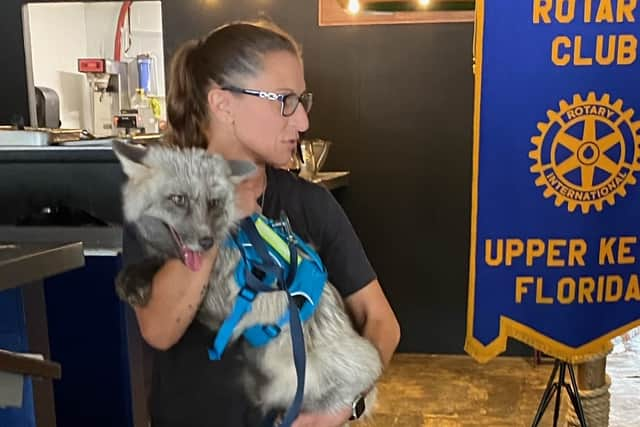
“We also go to a live-in temporary shelter for women, and when I tell the fox’s story, people are usually really moved.”
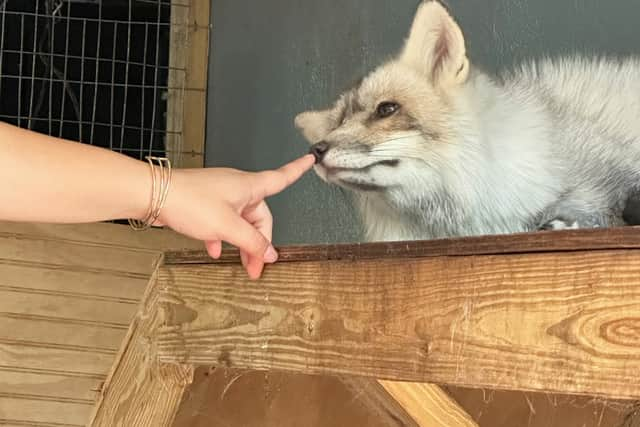
“So, me being able to work through that in the past, and now be able to give back to people that are struggling with some of the very same things, is extremely rewarding.
“I don’t ask for a fee from any of these facilities, it’s really my way of giving back and especially in this community that’s been so extremely supportive of me and the foxes since day one.”
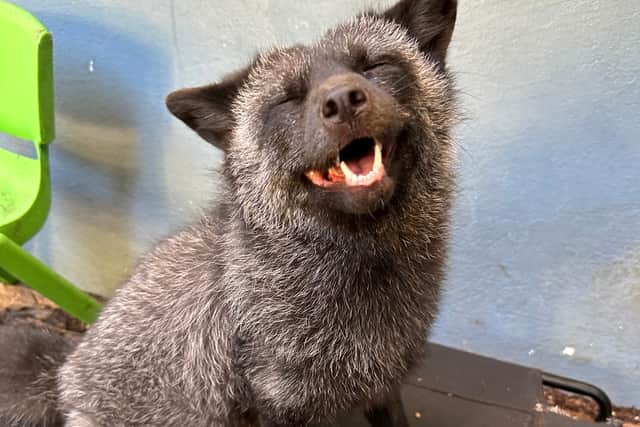
She said: “For me to be able to provide the environment that I can for them, it helps my mental health.
“Even sitting out there watching them, playing with them or even watching them sleep is just very rewarding knowing that I’m able to provide this for them.”