
Zelensky lashes out at Putin and urges Davos forum’s support for Ukraine’s fight
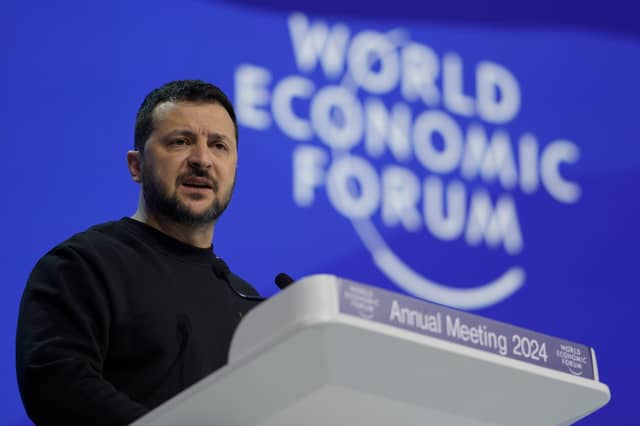

Ukrainian President Volodymyr Zelensky took a swing at Russian President Vladimir Putin at the World Economic Forum’s annual meeting in Switzerland on Tuesday.
He also took a harsh tone with his allies as war fatigue grows, pressing political and corporate leaders to enforce sanctions, help rebuild his country and advance the peace process.
Mr Zelensky is trying to keep his country’s long and largely stalemated defence against Russia in the minds of political leaders, as Israel’s war with Hamas, which passed the 100-day mark this week, has siphoned off much of the world’s attention and sparked concerns about a wider conflict in the Middle East.
“Anyone thinks this is only about us, this is only about Ukraine. They are fundamentally mistaken,” he said in a speech in English in the ski resort of Davos. “Possible directions and even timeline of a new Russian aggression beyond Ukraine become more and more obvious.”
“Putin embodies war” and will not change, he said.
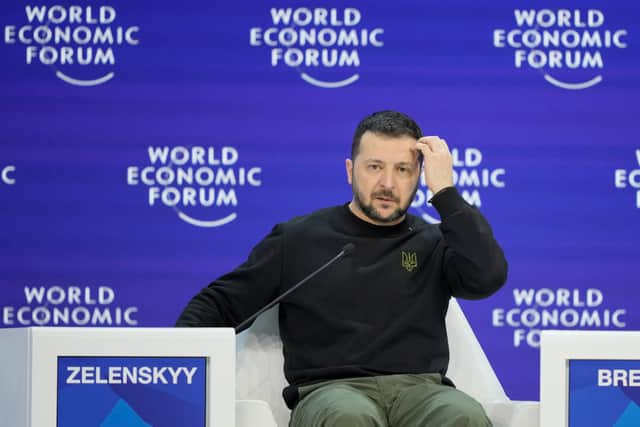
“After February 24, nothing harmed our coalition more than this concept. Every ‘Don’t escalate’ to us sounded like ‘You will prevail’ to Putin,” Mr Zelensky said.
He thanked allies for each package of sanctions on Moscow but urged them to ensure they work. Russia, for example, has found workarounds for imports of banned Western products that still appear on shelves.
It is Mr Zelensky’s first trip to Davos since the war began after speaking by video in previous years, and he rushed between meetings with corporate executives and world leaders. Surrounded by a large security contingent, he has drawn the attention of media and others seeking to meet him.
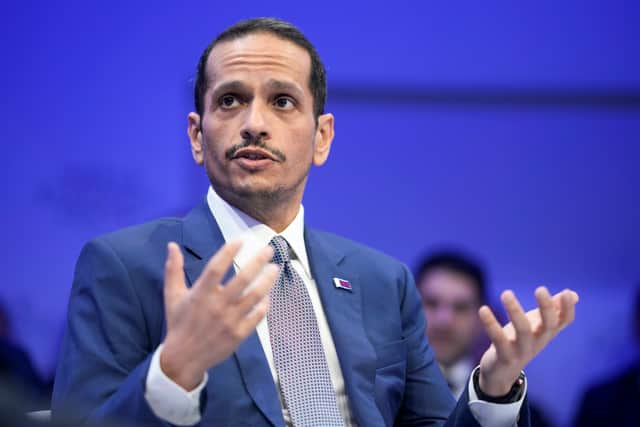
Qatari premier Sheikh Mohammed bin Abdulrahman Al Thani said the focus on the attacks on ships in the Red Sea by Yemen’s Houthi rebels – which have spurred retaliatory strikes by the US and Britain – is “on the symptoms and not treating the real issue” of Israel’s war with Hamas.
“We should focus on the main conflict in Gaza. And as soon as it’s defused I believe everything else will be defused,” he said, adding that a two-state solution is required to end the conflict.
Sheikh Mohammed also warned that a military confrontation “will not contain” the Houthi attacks.
“I think that what we have right now in the region is a recipe of escalation everywhere,” he added.
Chinese premier Mr Li focused on pitching the country as a place to invest, noting that “we are opening wide our embrace”. He said China’s economy is estimated to have grown about 5.2% last year, exceeding the target it had set of 5%.
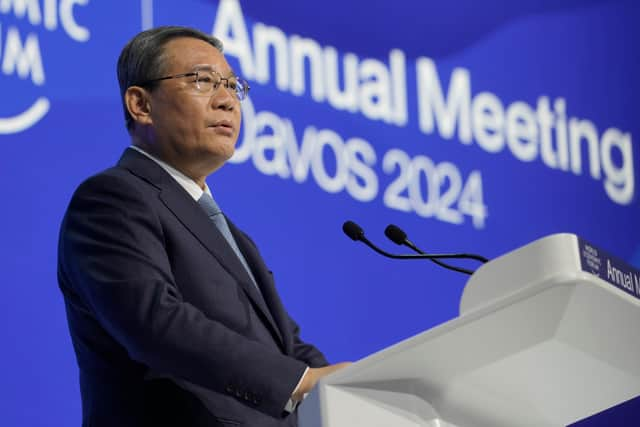
Mr Li made a veiled criticism of US restrictions on China’s ability to buy advanced computer chips used in everything from mobile phones to washing machines.
“Technology’s achievements should be used to benefit all humankind and it should not be used as a method to limit, to suppress another country,” he said.
Ms von der Leyen reiterated that the EU does not want to break from Beijing – one of its most important trade partners – but ease the risks of relying too heavily on it because “we have issues when it comes to access to the market, when it comes to a level playing field, when it comes to economic security”.
She noted China’s export controls on metals used in computer chips, solar cells and more.
For the US, Mr Sullivan said no when the Associated Press asked whether he would meet China’s delegation as he headed into talks with Mr Zelensky and US Secretary of State Antony Blinken.
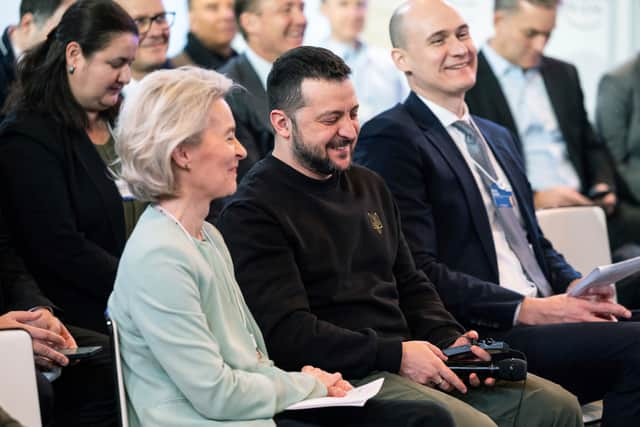
The Ukrainian leader hopes to use the high visibility of the forum to showcase his country’s pressing needs, and allies will be lining up: Corporate chiefs including JPMorgan Chase chief executive Jamie Dimon and officials like Ms von der Leyen learned in multiple gatherings what support and investment is needed to help rebuild Ukraine.
“It’s time for us, for Ukrainian companies, for international companies to rebuild (the) Ukrainian economy,” Maxim Timchenko, chief of Ukrainian energy company DTEK said after the session. “To rely on ourselves. To build a future for Ukraine.”
In her speech, Ms von der Leyen painted an optimistic view of the war in Ukraine despite the battlefield stalemate. She said Russia has “lost half of its military capabilities”, while Ukraine regained half the ground it had originally lost early in the invasion.
A day earlier, Mr Zelensky visited Switzerland’s capital, Bern, where President Viola Amherd pledged her country will work with Ukraine to help organise a “peace summit”.
In his speech at Davos, he invited every leader who respects international law to join, saying “peace must be the answer”.