A veil of sadness has fallen over County Limerick following the tragic passing of Ruth Staunton
Search


16 Mar 2026

Please allow ads as they help fund our trusted local news content.
Kindly add us to your ad blocker whitelist.
If you want further access to Ireland's best local journalism, consider contributing and/or subscribing to our free daily Newsletter .
Support our mission and join our community now.
To continue reading this article, you can subscribe for as little as €0.50 per week which will also give you access to all of our premium content and archived articles!
Alternatively, you can pay €0.50 per article, capped at €1 per day.
Thank you for supporting Ireland's best local journalism!


A woman who thought she had a cold but ended up having Strep A and losing her leg to a rare flesh-eating disease is now kayaking and swimming with her prosthetic and determined to make “the most of every opportunity”.
Friedel de Beer, 51, a former swim school owner who lives in the French Alps, developed what she believed was a cold in February 2023 and a few days later collapsed and noticed blistered red skin on her ankle.
Her husband, James Hope-Lang, a 57-year-old programme director, rushed her to hospital, where doctors warned she may have only a few hours left to live.
She was later diagnosed with Strep A, which had developed into necrotising fasciitis – which according to the NHS is also known as the ‘flesh-eating disease’ – a rare and life-threatening infection.
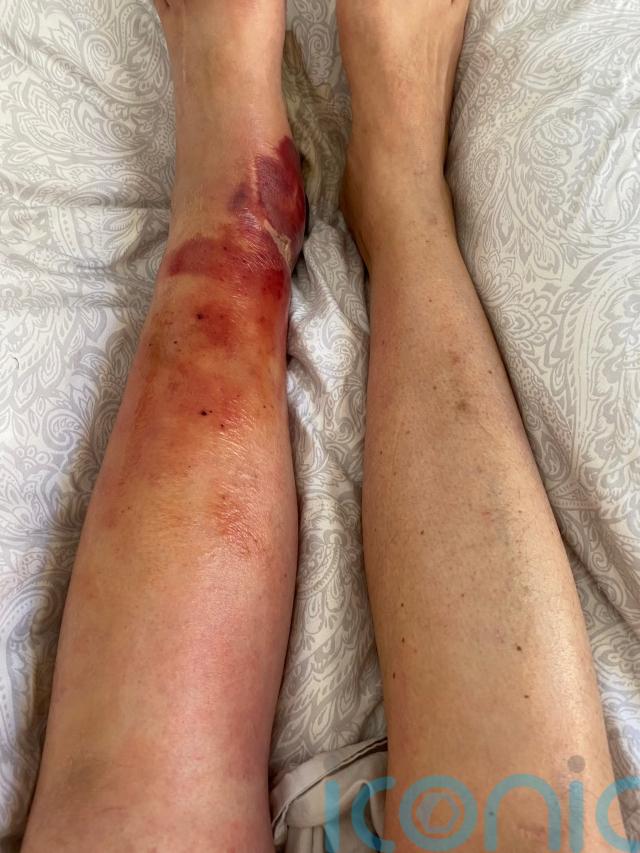
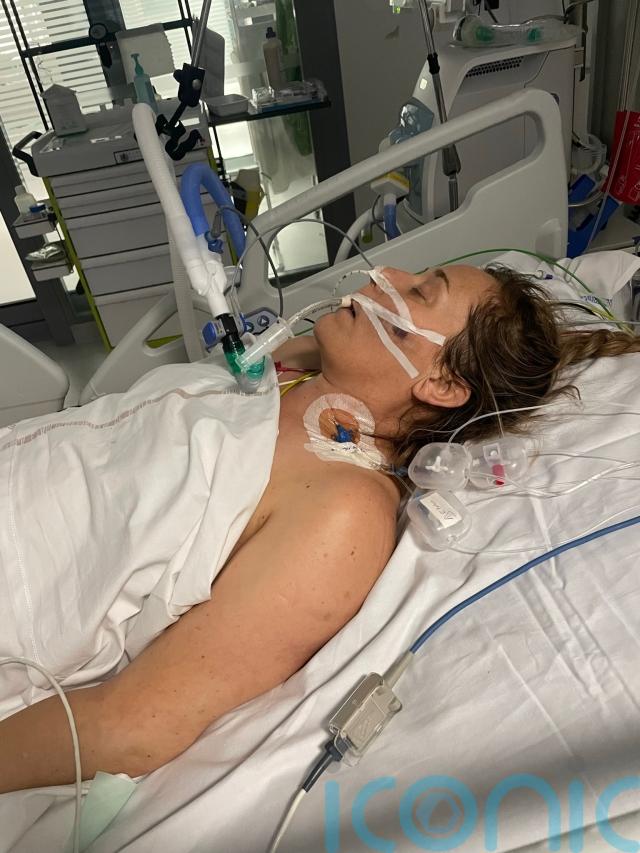
Friedel was placed into a medically induced coma so surgeons could remove as much infected tissue as possible, leaving her leg almost entirely stripped of skin.
Despite this, she continued to show signs of infection and underwent a below-the-knee amputation, followed by an above-the-knee amputation when the infection persisted.
Friedel then had to learn to walk with a prosthetic, before undergoing another operation in 2025 to remove 4cm from her femur to make the prosthetic more manageable.
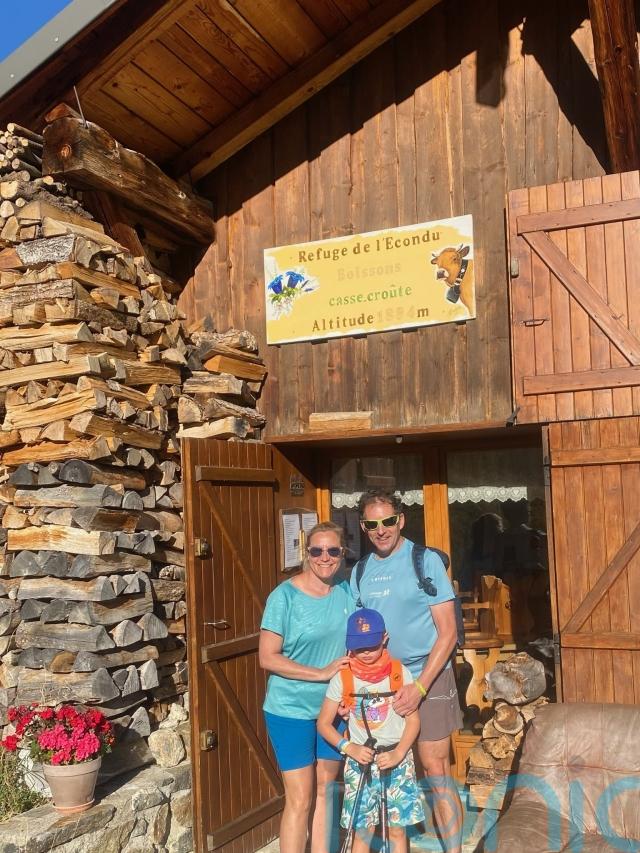
She now swims, kayaks and walks with her prosthetic alongside her 11-year-old son, JJ, and said the experience has put her life “into perspective”.
Friedel told PA Real Life: “You feel you are very lucky that you survived and it does change your priorities in terms of what you feel is important in life, and living life and making the most of every opportunity.
“I do have bad days or weeks and it’s overwhelming, but you just have to let it out and allow yourself to be sad, allow yourself to be angry, upset and then move on.”
On February 7 2023 Friedel, who was born in South Africa but was then living in West Sussex, felt like she “was getting a cold” and after taking painkillers she did not “feel any better”.
She “did not think much of it”, and a few days later drove to her and her husband’s rental home on the edge of the French Alps near Lake Annecy.
She drove there to join her husband for the school break, as their son was studying there full-time – but, on the way she had to stop at every service station as she was so fatigued.
Once in France, she developed a gradual increase of pain in her calf muscle and the skin on her ankle appeared red, but she did not “think it was anything serious”.
The following day, she collapsed on her bathroom floor and the day after that, the skin on her ankle “completely changed” and looked “dark and blood blistered”.
She took photos of her ankle and sent them to James, who passed them on to a doctor friend who said she needed to go to hospital immediately, as it appeared she had an infection.
There was not an explicit cut – instead, she had a red spot on her ankle, indicating an internal infection that had spread and was getting worse, presenting itself on the skin.
James drove Friedel to hospital that day, on February 12, and after tests were carried out, staff took him aside and told him his wife was suffering from “something really serious”.
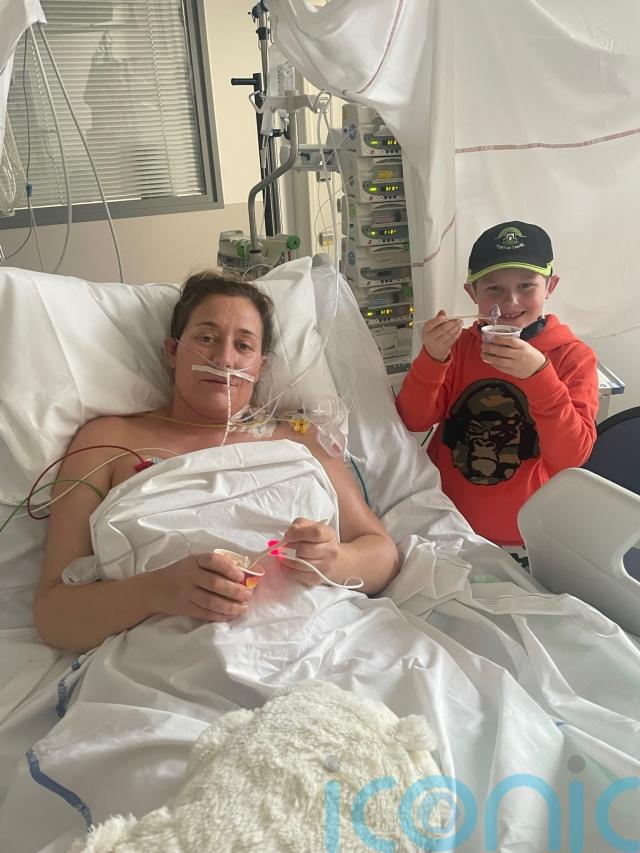
She was transferred to another hospital for intensive care treatment as doctors said they were “hours away from losing” her.
On the way, Friedel was already experiencing septic shock and a scan revealed she had Strep A which had mutated into necrotising fasciitis.
Upon arrival at the next hospital, doctors took her straight into emergency surgery to remove as much infected tissue as possible.
James explained: “They made small incisions in the flesh, and they pressed the flesh to see if it bleeds, and if it doesn’t bleed, it means it’s infected, and then they just have to cut it out.
“They worked their way up the leg, trying to find the point where the infection has got to and try and cut it out.
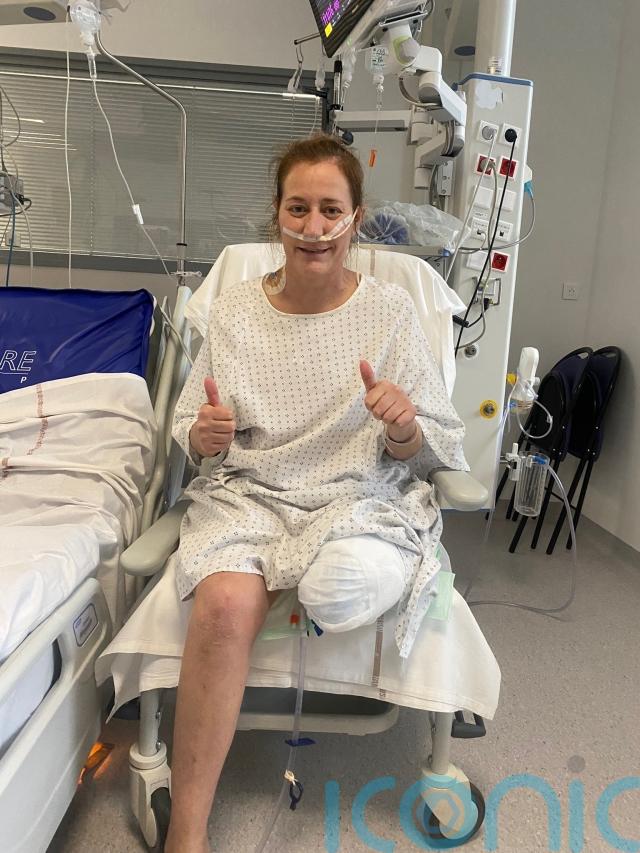
“But they said it can move centimetres an hour.”
She was then placed in a medically induced coma, on February 13, for eight days so surgeons could remove more infected tissue each day, until one leg was almost completely stripped of skin.
“Between my foot and the top and back of my knee was just completely exposed, there was no skin at all,” Friedel said.
When Friedel woke up from the coma, on February 21, she still had a fever, which indicated she still had an infection.
Doctors explained they would need to amputate below her knee to remove the infection.
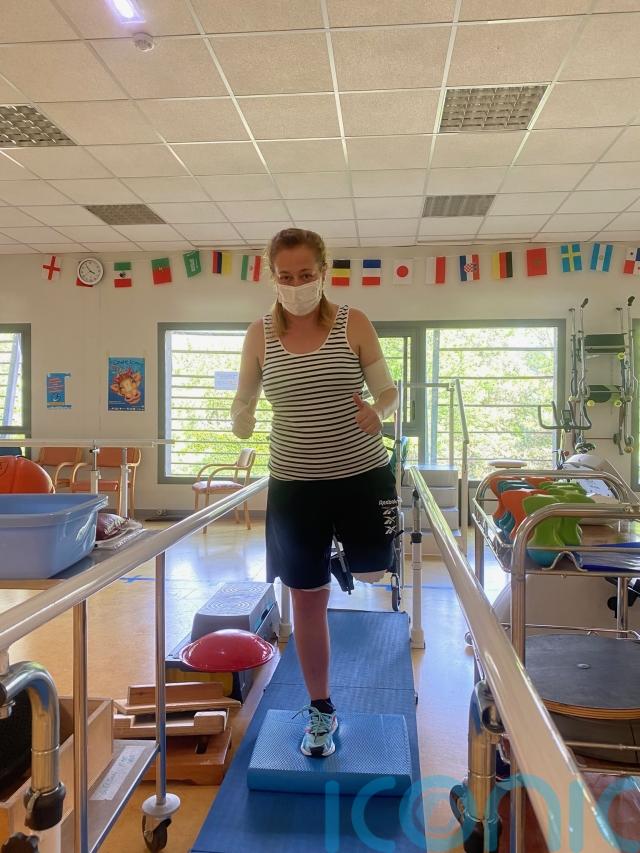
“I said I have no problem with that at all, because I knew the state my leg was in and that I would really struggle to walk on it,” Friedel recalled.
“I realised I never really liked that leg very much anyway!”
On February 24 2023, doctors performed the amputation.
However, she continued to have a fever, caused by a secondary infection, so on March 3 2023 she underwent an above-the-knee amputation.
After the surgery, the fever passed but she felt “very weak” and could barely sit up by herself.
By mid-March, after physiotherapy sessions, she was able to move herself from her bed to her wheelchair and was taking antibiotics to ensure the infection had fully cleared.
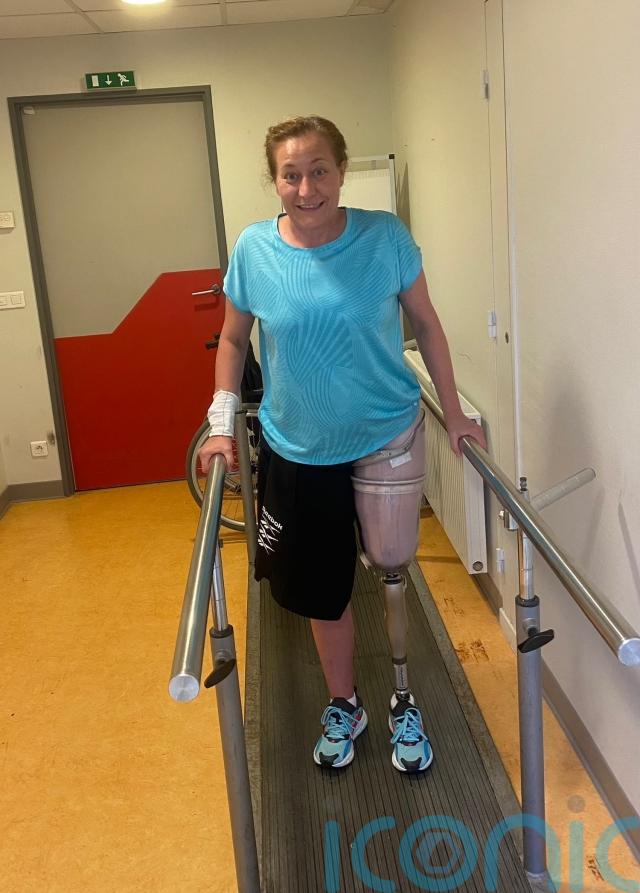
She said: “I was in survival mode, I never really felt overwhelmed by it at the time, because the care was phenomenal, so I fully trusted that I was in good hands.”
She took her first independent steps using her prosthetic in May and was able to return home full-time in July.
But Friedel kept getting pressure wounds on her stump, so she had to remove her prosthetic for the skin to heal which she found “frustrating and more challenging” than the surgery itself.
Friedel added: “So in the end, I said to the doctors I’m not really back to normal, because I was only walking for 40% of the time.
“They decided that the femur was a little bit long and it was creating a wound.”
So, in February 2025, now living full-time in the French Alps, she returned to hospital for surgeons to amputate a further 4cm from her femur.
She remained in hospital until July 2025 while her wound healed, and had to relearn how to walk with a prosthetic.
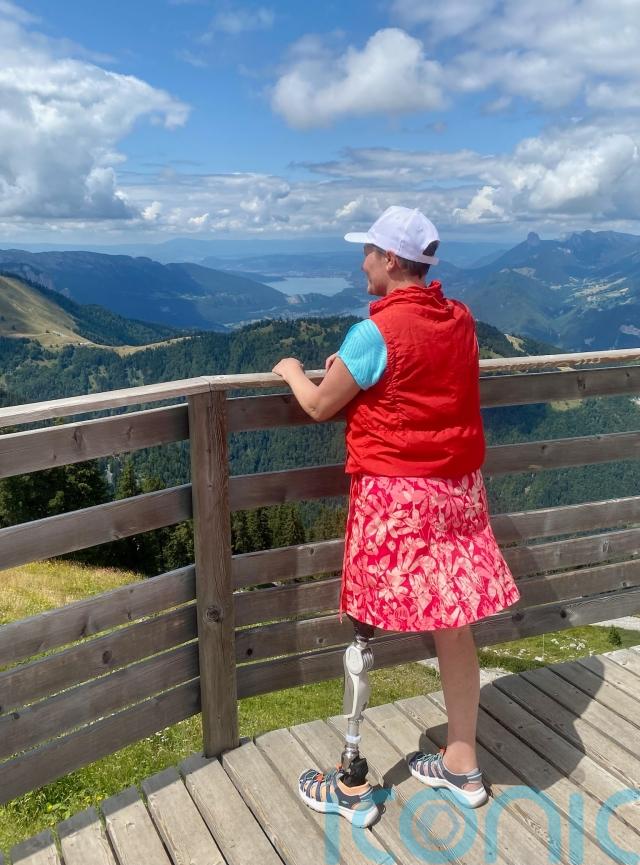
“I say you can check out but can never leave – having an amputation is a bit like that,” she explained.
“Your hospital becomes like a second home.
“I’ve got a little bruise now so I have to rest for a day, and there’s some pinching from the prosthetic so I have to go into hospital for them to make adjustments.
“If you put on a bit of weight then suddenly the socket doesn’t fit well, and it’s an ongoing process.
“The doctor said my brain is still connected to when I had two legs and I have to consciously think about the process of what I’m going to do and how I’m going to do it.”
In her day-to-day life, she said she “loves showing” her prosthetic and “never covers it” and encourages people to ask her questions about it.
She said: “I prefer to show it because it’s such an amazing piece of equipment and I don’t mind people talking to me about it.
“I love kids because they’re just so open, and just openly ask you questions.
“I always say to parents, please don’t stop your child from asking.”

She has also learnt how to swim and kayak with her prosthetic, and loves to do so with her son.
However, she cannot cycle or ski and “wants to integrate back into an active lifestyle” and is fundraising for a prosthetic sports knee to make this possible.
Friedel has found navigating her recovery as a mother difficult but believes it has shown how “resilient” children can be.
She said her son was traumatised by seeing her in intensive care at first, but he now cannot “really remember” her without a prosthetic.
Friedel also believes it has shown her son that there are people “who look different” and “there is nothing weird about it”.
Looking back on her experiences, she added: “It’s helped me put things into perspective and when I have bad days I think I have to look at myself now – there’s still so many things you can do – I’m able to walk and do things with my son. It might be slightly slow or different.”
To donate to Friedel’s fundraiser, visit: www.gofundme.com/f/help-friedel-recover.

Subscribe or register today to discover more from DonegalLive.ie
Buy the e-paper of the Donegal Democrat, Donegal People's Press, Donegal Post and Inish Times here for instant access to Donegal's premier news titles.
Keep up with the latest news from Donegal with our daily newsletter featuring the most important stories of the day delivered to your inbox every evening at 5pm.

This publication supports the work of the Press Council of Ireland and Office of the Press Ombudsman, and our staff operate within the Code of Practice of the Press Council. You can obtain a copy of the Code, or contact the Council, at www.presscouncil.ie, Lo-call 1800 208 080 or email: info@presscouncil.ie.