ALERT: Storm Bram weather warning update issued by Met Éireann as winds prevail
Search


09 Dec 2025

Please allow ads as they help fund our trusted local news content.
Kindly add us to your ad blocker whitelist.
If you want further access to Ireland's best local journalism, consider contributing and/or subscribing to our free daily Newsletter .
Support our mission and join our community now.
To continue reading this article, you can subscribe for as little as €0.50 per week which will also give you access to all of our premium content and archived articles!
Alternatively, you can pay €0.50 per article, capped at €1 per day.
Thank you for supporting Ireland's best local journalism!


The Queen has met members of a charity dedicated to raising awareness of economic abuse and heard powerful stories from women affected by the issue.
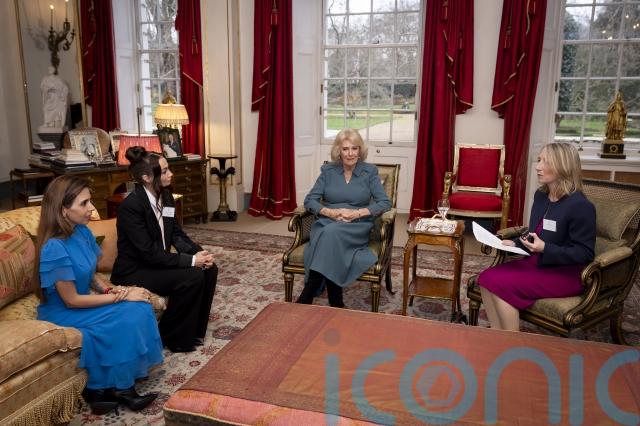
Camilla met officials from the Surviving Economic Abuse (SEA) charity and heard women tell their stories in a room, before a wider reception which also involved banking industry representatives.
Economic abuse involves a current or ex-partner controlling someone else’s money and what that money can buy, such as housing, food, transport, employment, child maintenance, clothing and phones.
It is often perpetrated alongside other abusive behaviours, such as physical, sexual and psychological abuse, to build fear and isolation.
Thanking the charity at the reception, the Queen said: “I thought I knew most things about domestic abuse but I’ve learned a lot today that I didn’t know about.
“And talking to all these very brave women and getting them to tell their stories and talk to each other and put to all the banks and the financial institutions under one umbrella, swapping ideas and stories I think is the way forward. So, I just hope that today has been a step in that direction.”
Even when people leave their abuser, they can continue to exert control through financial ties, such as stopping paying their share of a joint mortgage or running up debts on a joint account.
SEA is working to change behaviours that drive economic abuse and develop a support model that can help build stronger responses in each community.
The charity works with the financial services sector to help ensure consistent good practice when supporting victim-survivors.
It aims to encourage legal, regulatory and policy reforms to drive systemic change to support survivors and children, disrupt abusers and prevent economic abuse.
Natalie Curtis, an SEA ambassador, said: “Domestic abuse is such a complex subject, when we talk about economic abuse, that’s another barrier for many women leaving.
“And for her (the Queen) to be so empathetic, caring and show her support for victims and survivors means the world to the likes of myself and others.
“I think it’s such a privilege to be able to come to Clarence House and for her to hear first-hand what incredible work SEA do. It’s life-changing and life-saving.”
SEA chief executive officer Sam Smethers said financial abuse has “a really devastating impact on women’s lives, it can prevent them from leaving an abuser in a dangerous situation but it also often continues post-separation, it can go on for many, many years”.
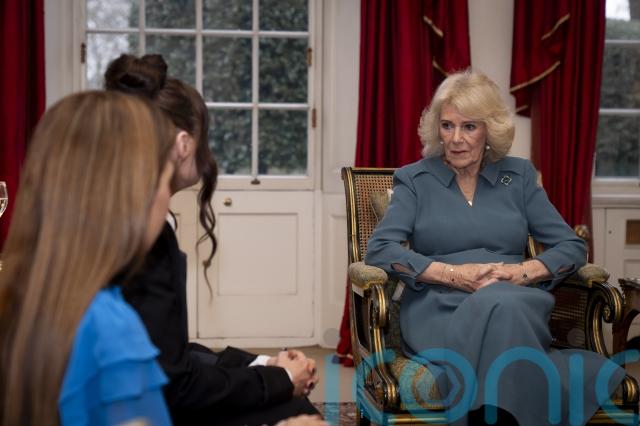
She said it had been “really powerful” hearing the women’s stories “and quite an emotional day, they’ve all been talking about their own personal experiences of economic abuse, which is a dangerous form of coercive control and really how connected it is with their own safety and their own experiences of other forms of abuse as well.
“What really hit home today is how it carries on for many, many years, post-separation.”
Asked how important it is that the Queen shines a spotlight on the issue, she said: “It’s so important, because it’s raising awareness, we know that raising awareness on its own will save lives because victim-survivors are more likely to seek help if they know they have been experiencing economic abuse and they can recognise the signs of that.
“But also because she’s such a powerful advocate herself. We know just how committed she is on the issues of violence against women and girls. So, to be here today talking about economic abuse with someone who is such a powerful champion… that’s really amazing for us.”
Dr Bijna Kotak Dasani, an SEA ambassador, told the Queen about her experiences, adding she was now in “probably a much better place than I have been in many years,” after starting her own company.
She said: “Today, the reason I’m here to share my story is from a position of strength, not from a position of weakness… I really want to support the work that SEA is doing and help create awareness but also effective change so that the next person, and the next person, has a better outcome.”

Subscribe or register today to discover more from DonegalLive.ie
Buy the e-paper of the Donegal Democrat, Donegal People's Press, Donegal Post and Inish Times here for instant access to Donegal's premier news titles.
Keep up with the latest news from Donegal with our daily newsletter featuring the most important stories of the day delivered to your inbox every evening at 5pm.

This publication supports the work of the Press Council of Ireland and Office of the Press Ombudsman, and our staff operate within the Code of Practice of the Press Council. You can obtain a copy of the Code, or contact the Council, at www.presscouncil.ie, Lo-call 1800 208 080 or email: info@presscouncil.ie.