The late Paul Kavanagh beaming after riding a winner in JP McManus' famous silks
Search


29 Dec 2025

Please allow ads as they help fund our trusted local news content.
Kindly add us to your ad blocker whitelist.
If you want further access to Ireland's best local journalism, consider contributing and/or subscribing to our free daily Newsletter .
Support our mission and join our community now.
To continue reading this article, you can subscribe for as little as €0.50 per week which will also give you access to all of our premium content and archived articles!
Alternatively, you can pay €0.50 per article, capped at €1 per day.
Thank you for supporting Ireland's best local journalism!


Air passengers are being warned to brace for ticket hikes as regional airports across the UK face “unprecedented” rises in property tax next year.
Analysis of official Government data for the Press Association has revealed regional airports are among those facing the steepest increases in business rates of any sector in the UK amid an overhaul of property valuations underpinning the tax.
While London’s Heathrow and Gatwick are also being hit with eye-watering increases in their business rates bills, the figures show that the most extreme cases are focused outside of London, with regional airports set to suffer.
Global tax firm Ryan’s calculation of Valuation Office Agency (VOA) data found that the rateable values have jumped more than six-fold in some cases in the latest property revaluation, sending tax bills soaring higher.
Even with so-called transitional relief, which limits increases to 30% next year, regional airports will still endure some of the largest cash increases in the country.
And most airports will see their bills more than double over the next three years.
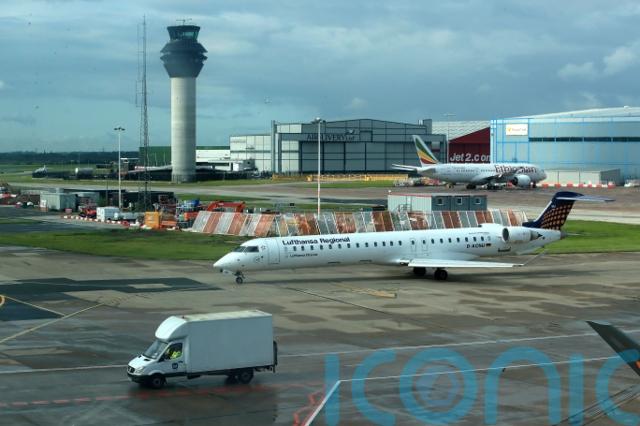
Manchester Airport is among the worst affected, with its business rates bill set to surge by £4.2 million to £18.1 million next year, according to Ryan’s data.
Bristol Airport will see a £1.2 million increase to £5.2 million, while Birmingham International Airport is expected to see a £1.8 million hike to £7.6 million.
Newcastle International Airport is in line for a £244,755 hike to £1.1 million.
Alex Probyn, practice leader for Europe and Asia-Pacific property tax at Ryan, told PA: “With an unprecedented 295% sector-wide uplift, regional airports simply cannot absorb a cost shock of this magnitude.
“These increases will inevitably flow through the system: first into airport charges, then into airline costs, and ultimately into ticket prices.”
Airport operators have warned the tax blow may also hold back investment in the sector.
A Manchester Airports Group spokesperson said: “Airports were already some of the highest rates-payers in the country and were prepared to pay significantly more.
“But increases of more than 100% mean we have to look again at our plans to invest more than £2 billion in our airports across the UK over the next five years.
“It is inevitable air travel will become more expensive as the industry absorbs these costs. That impacts hard-working people throughout the country and makes global trade harder for businesses.”
AirportsUK – the trade group representing the sector – is working on a response to the Treasury’s consultation on the business rates plan, which closes in February.
It said the plans are “short-sighted” and will “have a knock-on effect for the businesses that depend on airport connectivity in all areas of England”.
This risks “negatively impacting local economies that depend on the supply chains, tourists and connections their airports provide”, according to the group.
“That is why the long-term review into how airport business rates are calculated, also announced by Government, is so important and we will engage with Treasury to ensure this delivers the positive outcome airports need to drive investment and economic growth.”
Other regional airports heading for mammoth bill increases include Liverpool Airport with a £233,100 rise to £1 million, East Midlands International Airport with a £437,895 increase to £1.9 million and Bournemouth Airport with a £102,398 increase to £443,723.

Subscribe or register today to discover more from DonegalLive.ie
Buy the e-paper of the Donegal Democrat, Donegal People's Press, Donegal Post and Inish Times here for instant access to Donegal's premier news titles.
Keep up with the latest news from Donegal with our daily newsletter featuring the most important stories of the day delivered to your inbox every evening at 5pm.

This publication supports the work of the Press Council of Ireland and Office of the Press Ombudsman, and our staff operate within the Code of Practice of the Press Council. You can obtain a copy of the Code, or contact the Council, at www.presscouncil.ie, Lo-call 1800 208 080 or email: info@presscouncil.ie.