'You're expecting a gun': Woman shares details of 'terrifying' incident where she was flashed off the road
Search


24 Feb 2026

Please allow ads as they help fund our trusted local news content.
Kindly add us to your ad blocker whitelist.
If you want further access to Ireland's best local journalism, consider contributing and/or subscribing to our free daily Newsletter .
Support our mission and join our community now.
To continue reading this article, you can subscribe for as little as €0.50 per week which will also give you access to all of our premium content and archived articles!
Alternatively, you can pay €0.50 per article, capped at €1 per day.
Thank you for supporting Ireland's best local journalism!


Most of the UK’s biggest businesses have hit targets for gender representation in their boardroom, but fall short when it comes to women leaders who face greater scrutiny and unconscious bias, according to Government-backed report.
Data from the FTSE Women Leaders Review shows that women held 43% of board positions on FTSE 350 companies in 2025.
It marks a significant leap towards gender balance in the boardrooms of the UK’s biggest listed companies, from the 9.5% recorded when the review began 15 years ago.
Nevertheless, the proportion is more or less the same than it was in 2024.
Vivienne Artz, chief executive of the FTSE Women Leaders Review, said the “pace of change is naturally beginning to level as parity approaches”, adding: “Boards are still making progress, which is great, but there’s not as much progress to make.”
The review, which is supported by the Government, tracks the progress of the FTSE 350 and 50 of the UK’s largest private companies towards voluntary gender representation targets.
The latest report revealed that the proportion of women in leadership positions on the FTSE 350 has edged up to 36%, from 35% the previous year, as of the end of October 2025.
Within that, the proportion of women in chief executive roles was 8%, up from 7%.
There were nine women chief executives at FTSE 100 companies.
There has been a recent flurry of female bosses quitting from top listed companies and being replaced by men, such as Dame Emma Walmsley from drug firm GSK, Liv Garfield from water supplier Severn Trent, and Diageo’s Debra Crew.
On the other hand, energy giant BP appointed its first ever female chief executive, who is due to step into the role in April.
Ms Artz said firms were making slow progress when it comes to gender balance for the CEO, chair and finance director roles.
“It’s because they are incredibly demanding and difficult roles to fill,” she told the Press Association.
“I think that too often we rely on the safe option which is, ‘we’re going to have have someone who’s done it before’.
“And if you’re always going back to fishing in the same pond then you’re not finding new talent… you’re not looking at skills and expertise, as opposed to a CV that you feel comfortable with and you’re seen before,” she said.
Furthermore, Ms Artz said women can face barriers to leadership positions due to prevailing attitudes which have “not been easy to dismantle”.
“I think we can say that female CEOs get a lot more scrutiny and they get judged on different things that male CEOs do,” she said.
She said that talking points such as whether the person is married or has children can be “distracting, and in many ways it diminishes the credibility of the leader”.
“We do know that there is absolutely still unconscious bias and that there’s attitudes that need to change,” she said.
Ms Artz also argued that the cost of childcare means that families are led to making decisions that can “derail” or “sideline” a woman’s career.
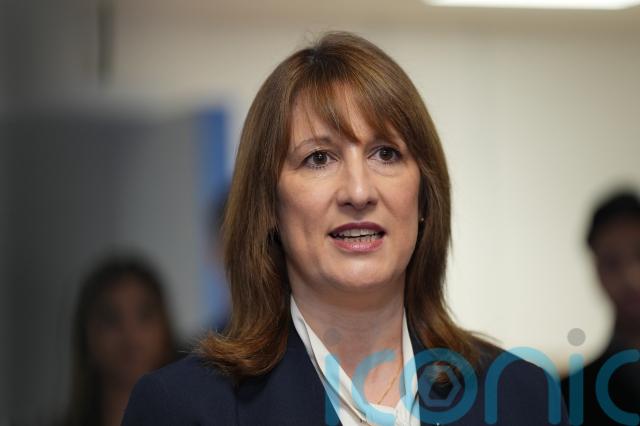
Responding to the report, Chancellor Rachel Reeves said the data “shows how far we’ve come”, adding: “But there is still a long way to go as women remain under‑represented in key executive roles.
“As Chancellor, I’m clear there should be no ceiling on a woman’s ambition.
“When they can participate fully at every level, organisations make better decisions, innovate more and perform more strongly, boosting our whole economy.”
Business and Trade Secretary Peter Kyle said: “It’s essential that our top talent can reach the highest levels of leadership, which is why I’m so pleased the UK continues to lead the charge for gender equality in boardrooms.
“However, be in no doubt that despite this progress, there is still much more work to do.”
Looking at individual companies, drinks giant Diageo and supermarket and services chain The Co-operative Group have the highest representation of women in their boardrooms, at 77.8% and 72.7% respectively.
Marks & Spencer, HSBC, and water firms Severn Trent and Pennon Group are among those to record representation greater than 60%.
At the other end of the scale, parcel giant Evri and yoghurt maker Muller had no women on their boards, while the likes of pub groups Mitchells & Butlers and Wetherspoons were towards the bottom of the list with representation of 22%.

Subscribe or register today to discover more from DonegalLive.ie
Buy the e-paper of the Donegal Democrat, Donegal People's Press, Donegal Post and Inish Times here for instant access to Donegal's premier news titles.
Keep up with the latest news from Donegal with our daily newsletter featuring the most important stories of the day delivered to your inbox every evening at 5pm.

This publication supports the work of the Press Council of Ireland and Office of the Press Ombudsman, and our staff operate within the Code of Practice of the Press Council. You can obtain a copy of the Code, or contact the Council, at www.presscouncil.ie, Lo-call 1800 208 080 or email: info@presscouncil.ie.