REVEALED: Where the €11 million Lotto ticket was won last night as shop says it's 'still sinking in'
Search


27 Feb 2026

Please allow ads as they help fund our trusted local news content.
Kindly add us to your ad blocker whitelist.
If you want further access to Ireland's best local journalism, consider contributing and/or subscribing to our free daily Newsletter .
Support our mission and join our community now.
To continue reading this article, you can subscribe for as little as €0.50 per week which will also give you access to all of our premium content and archived articles!
Alternatively, you can pay €0.50 per article, capped at €1 per day.
Thank you for supporting Ireland's best local journalism!


An application to halt the trial of three Derry men for the murder of journalist Lyra McKee has been rejected by a court in Belfast.
Her Honour Judge Patricia Smyth said that despite issues raised with evidence, including “deeply disturbing behaviour by an experienced police officer”, she did “not consider that there are no circumstances in which I could properly convict any of the defendants charged with murder”.
Ms McKee, 29, died after being hit by a bullet as she stood close to police vehicles while observing rioting in the Creggan area of Londonderry on April 18 2019.
The New IRA claimed responsibility for the death.
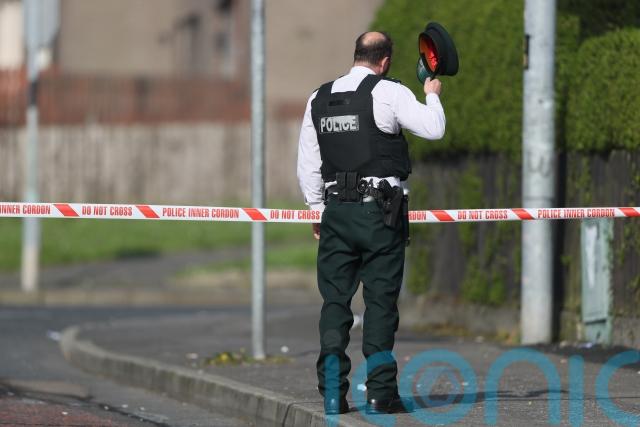
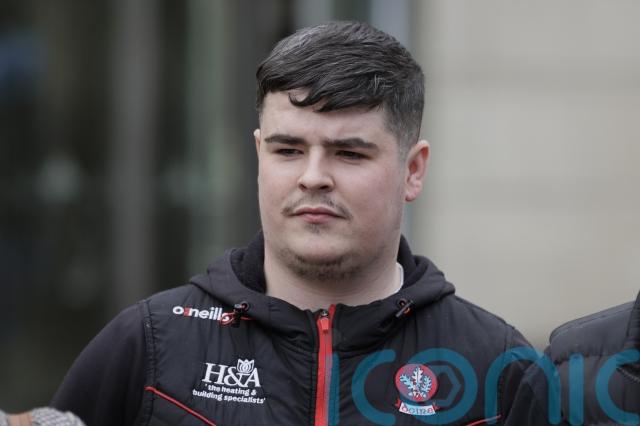
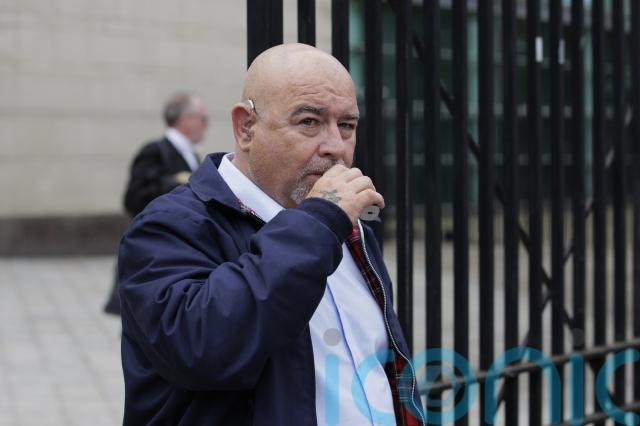
Three men from Derry – Peter Cavanagh, 37, of Mary Street, Jordan Gareth Devine, 25, of Bishop Street, and Paul McIntyre, 58, of Kells Walk – are on trial at Belfast Crown Court charged with her murder. They are also facing other charges connected to the shooting and the rioting.
Six other Derry men are on trial on charges including rioting and throwing petrol bombs.
They are: Joseph Patrick Barr, 37, of Sandringham Drive, Jude Forest Coffey, 28, of Gartan Square, Joseph Anthony Campbell, 25, of Gosheden Cottages, Patrick Anthony Gallagher, 33, of John Field Place, Christopher Joseph Gillen, 45, of Balbane Pass, and Kieran George McCool, 57, of Ballymagowan Gardens.
Another man accused of rioting and throwing petrol bombs on the night of the murder died during trial proceedings last year.
On Friday Judge Smyth told the court it was up to the prosecution to “prove that the gunman possessed and fired the gun with the intention to kill or cause grievous bodily harm, and whether that intention was also held by the defendants”.
“Having considered all of the evidence I do not consider that there are no circumstances in which I could properly convict any of the defendants charged with murder,” she said.
“With regard to the remaining defendants and the remaining charges, the weaknesses in the identification evidence are apparent and ultimately the weight that should be attached to it, taking into account any supporting evidence, is a matter to be determined at the end of the trial.
“Having considered the evidence as a whole, I do not consider that there are no circumstances in which I could properly convict any of the defendants charged with the remaining offences.”
Judge Smyth said she was required to rule on a number of issues in deciding whether the defendants had a case to answer, including admissibility of evidence from an MTV documentary filmed at the time and identification evidence given by police.
Presenter Reggie Yates and a camera crew were making a film about republicans opposed to the Northern Ireland peace process in the period leading up to traditional commemorations in the city to mark the 1916 Easter Rising against British rule in Dublin.
The defence had objected to the inclusion of that footage on the grounds of its authenticity and procurement, but Judge Smyth ruled that the footage had not been unlawfully obtained.
She described the footage as “clearly relevant, since it shows the events as they occurred and is, at the very least, prima facie authentic and admissible”.
“There is no evidence at all to suggest that it is not reliable and authentic,” she said.
The defence also raised an objection on the fact that a member of the PSNI Major Investigation Team had shown footage, which included masked rioters, to a group of police officers – referred to as “the Waterside viewing” – in advance of the formal controlled viewing procedure to make identifications.
The judge did not accept that the evidence established bad faith or was intended to falsely identify, but said the incident “can only be regarded as deeply disturbing behaviour by an experienced police officer who displayed an unhealthy desire to identify the perpetrators at any cost”.
She ruled that this evidence should be excluded because its inclusion would be “so unfairly prejudicial to the defendants”, but overall she was “satisfied that the defendants could still receive a fair trial”.
READ NEXT: Probation for Derry woman who exposed herself during Apprentice Boys march
On balance she said the trial should proceed because “of the important public interest that those charged with grave crimes should be tried when weighed against the competing consideration that the court should not convey the impression that the end justifies the means”.
The judge also noted that there was no evidence that the senior investigating officer was aware of “the Waterside viewing” prior to Crown counsel raising the query and no fault was attributable to the Public Prosecution Service.

Subscribe or register today to discover more from DonegalLive.ie
Buy the e-paper of the Donegal Democrat, Donegal People's Press, Donegal Post and Inish Times here for instant access to Donegal's premier news titles.
Keep up with the latest news from Donegal with our daily newsletter featuring the most important stories of the day delivered to your inbox every evening at 5pm.

This publication supports the work of the Press Council of Ireland and Office of the Press Ombudsman, and our staff operate within the Code of Practice of the Press Council. You can obtain a copy of the Code, or contact the Council, at www.presscouncil.ie, Lo-call 1800 208 080 or email: info@presscouncil.ie.