A photo of Scarlett Faulkner surrounded by candles in a church I PICTURE: Facebook
Search


02 Apr 2026

Please allow ads as they help fund our trusted local news content.
Kindly add us to your ad blocker whitelist.
If you want further access to Ireland's best local journalism, consider contributing and/or subscribing to our free daily Newsletter .
Support our mission and join our community now.
To continue reading this article, you can subscribe for as little as €0.50 per week which will also give you access to all of our premium content and archived articles!
Alternatively, you can pay €0.50 per article, capped at €1 per day.
Thank you for supporting Ireland's best local journalism!

57 Irish labourers who had been constructing Mile 59 of the Philadelphia and Columbia Railroad died suddenly in the summer of 1832; among the dead were young men from Donegal, Derry and Tyrone.

THE truth is no-one alive really knows what happened during the searing August of 1832 at Duffy’s Cut in Malvern, southeastern Pennsylvania. This much though is indisputable – fifty-seven Irish labourers who had been constructing Mile 59 of the Philadelphia and Columbia Railroad died suddenly that summer in the wooded valley. They were hastily buried in the dirt and shale by the side of the track, and the circumstances of their deaths buried with them. Over the years, their demise was attributed to an outbreak of cholera. But the truth may be a whole lot darker.
Since 2002, a disparate group of academics, historians, archaeologists, anthropologists, students, interns and even a clergyman have been slowly unravelling the story of Duffy’s Cut. Their findings have unearthed – literally – the tragic story of a group of labourers from Donegal, Derry and Tyrone, young men who left the Foyle in pursuit of the American dream. What they got was the stuff of nightmares.
Leaving Ireland
THE story of Duffy’s Cut begins around St. Patrick’s Day, 1832. An advert appears in the Derry Journal announcing the departure of a ship – the John Stamp – from Derry to Philadelphia on April 12.
In those days, Derry was long established as one of Ireland’s principal emigration ports and the John Stamp was one of dozens of ships vying for custom at Derry Port in 1832, bound for destinations in the New World – Quebec, New York, New Brunswick and Philadelphia. Some 7,643 people would sail out of Derry bound for the United States and the British Colonies in 1832 alone.
Ireland in April 1832 was a place worth leaving. Although the number of poor Catholic Irish departing these shores would become a flood following the Great Famine (1845–50), a sizeable quantity were already trickling out of the country from the end of the Napoleonic Wars (1815) onwards. And with good reason. The potato crop had failed in 1816, triggering famine. A typhus epidemic raged in its wake and lasted until December 1817, claiming 50,000 lives.
Over a period of two decades, crop failures, starvation, fever epidemics, the collapse of the textile industry, the battle for Catholic emancipation and the tithe wars, combined to make life in Ireland a misery. To compound matters, in January 1832, Asiatic cholera surfaced in Belfast and Dublin and quicky spread throughout the country.
John Ruddy, born in Inishowen in 1814, had lived through it all in his eighteen summers, and knew nothing but affliction. Enough was enough. Economic prospects in the rugged peninsula of his birth were appalling. Ruddy was among those who scraped together the price of passage to Amerikay that Spring, reporting to the shipping agents, James Corscaden & Co, at 26 Shipquay Street, in Derry, where he paid between £4,10s and £5 to book a berth on the small sailing ship John Stamp, bound for Philadelphia.
There was nothing easy about the voyage across the Atlantic at that time. In The Last of the Name, Clonmany man Charles McGlinchey (1861–1954) recounts: “After the wars were over in 1815, lots of ones went off to America. It was all sailing vessels at that time. One of the Grants of Clochfin went to America and it took him three months. On the way over he got so seasick that the crew were for throwing him overboard because he was about dead. They had a sheet of canvas spread out to roll him up in, but some Malin men interfered and wouldn’t let them throw him overboard as long as there was life in him. He lasted out the voyage and reached Philadelphia. Instead of taking work he got a pack and soon made the price of a house, and before he died he had a street of houses.”
It was this kind of fortune John Ruddy and his ilk dreamed of as they braved the Atlantic swells.
In America
JUNE 23, 1832: The John Stamp sailed into the great port city of Philadelphia after a long voyage across the Atlantic. One hundred and sixty passengers disembarked, setting foot on American soil for the first time, among them a group of young Donegal labourers: George Doherty (28), William Putetill (20), William Devine (21), Daniel McCahill (25), Bernie McGarty (20), David Patchill (20), Robert Skelton (20), Bernard McIlheaney (23), George Quigley (22).
Eighteen year-old John Ruddy also filed off the John Stamp, no doubt agog at the manner of cargos arriving and departing the waterfront and at the impressive metropolis of America’s third largest city.
The Donegal men were in the company of Tyrone natives James Deveney (26), Patrick McAnamy (20), Samuel Forbes (23), and Derry men John McGlone (25) and John McClanon (24). These are among the men believed to have met their end just six weeks later in Chester County at the place known as Duffy’s Cut.
The young men probably didn’t know it as they stepped onto the wharf, but they had swapped one hostile environment for another. Philadelphia in 1832 was not a particularly welcoming place for Irish Catholics.
Irish emigration to America had begun as early as the 1720s – in the eighteenth century 200,000 Irish people went – but three quarters of these were Ulster Presbyterians. Wholesale Catholic emigration came in the nineteenth century following repeated crop failures, starvation and famine. Between 1816 and 1842, it is estimated that there were fourteen famines in Ireland.
When the American government repealed restrictions on imigration in 1827, Irish Catholics abandoned Ireland in their droves. Between 1828 and 1837, almost 400,000 Irish departed for America and Canada. But they weren’t particularly well received in the land of opportunity.
Only the year before John Ruddy and his fellow-immigrants arrived, an anti-Irish Catholic riot occurred in Philadelphia on the occasion of an Orange parade. Michael Cronon, Academic Director at Boston College, has written of the socially disadvantaged status of the newly arrived Irish: “They suffered from attacks by Americans who were fearful of the effect of the Irish presence in their country. Such attacks were often displayed in religious terms. America was a predominantly Protestant country and it was feared that all these immigrant Irish Catholics would swamp the settled population, and so there were regular incidents of secterian violence.”
Cronin adds: “If they could find work, it was often menial and low-paid. They lived in poor conditions, and suffered racial abuse, and were viewed by the authorities as an irritant – dirty, lazy, violent, and drunken. Rather than being welcomed, the Irish were viewed with suspicion.”
John Ruddy had travelled light across the Atlantic – a wooden box containing his meagre supplies stood at his feet. George Doherty’s possessions were even lighter, his earthly belongings wrapped in a simple bundle. The others too were similarly unburdened. Standing there on the docks in Philadelphia, this is where the men are believed to have first encountered Philip Duffy.
A Man Named Duffy
Philip Duffy had the contract to construct Mile 59 of the Philadelphia and Columbia Railroad. In the 1830s, America was opening up and the Irish would play a central role in the building of the railroad across the vast continent. With contracts doled out by the mile, men like Duffy were on the lookout for labours.
In June 1829, an American newspaper report mentions Duffy by name, noting that he was “prosceuting his Herculean task with a sturdy looking band of the sons of Erin.” Irish-born and a native speaker, Duffy was said to have met incoming ships at Philadelphia docks to hire new arrivals to work on the railroads.
The pressure on contractors like Philip Duffy to stay on schedule was immense. America was in the process of becoming America – the country was rapidly expanding, there was a fierce desire for movement and to get there faster, to gain wealth, build and realise ambitions. The new technology of railways was an integral part of this spirit of expansion. Wealthy men, with dreams of becoming even wealthier, were in a hurry and needed railways built quickly, irrespective of the terrain.
READ NEXT: Fine festive dining 1850s style in Inishowen's Falmore House
As one observer noted, it was cruel work: “Every foot of track had to be laid by hand. If there was a ditch, it had to be filled with a shovel. If there was a rock it had to be shifted – if not with a block and tackle, then by crude explosive. Laying this track was pitiless, backbreaking labour, in all weathers, sun-up to sun-down in sweltering summer and subzero winter; dangerous work, requiring a great deal of stamina and fitness. Only a desperate man would take on such a job.”
A group of desperate men, some of them from Inishowen, were to be found standing on the docks in Philadelphia on a Saturday in June 1832. It is documented that in the early summer of 1832, Philip Duffy “employed a large number of Irishmen, who had but lately arrived on these shores.” Among these Irishmen are thought to be John Ruddy and his comrades from the John Stamp.
They didn’t know it, but they were all dead men walking.
Slavery in Malvern
Duffy transported the men some twenty miles west, from Philadelphia to Malvern, in Chester County. There was no time for the workers to get their bearings, they were expected to begin work immediately – Mile 59 would wait for no man. The task was indeed Herculean, particularly for those working on the tick-infested stretch between Malvern and Frazer known as Dead Horse Hollow.
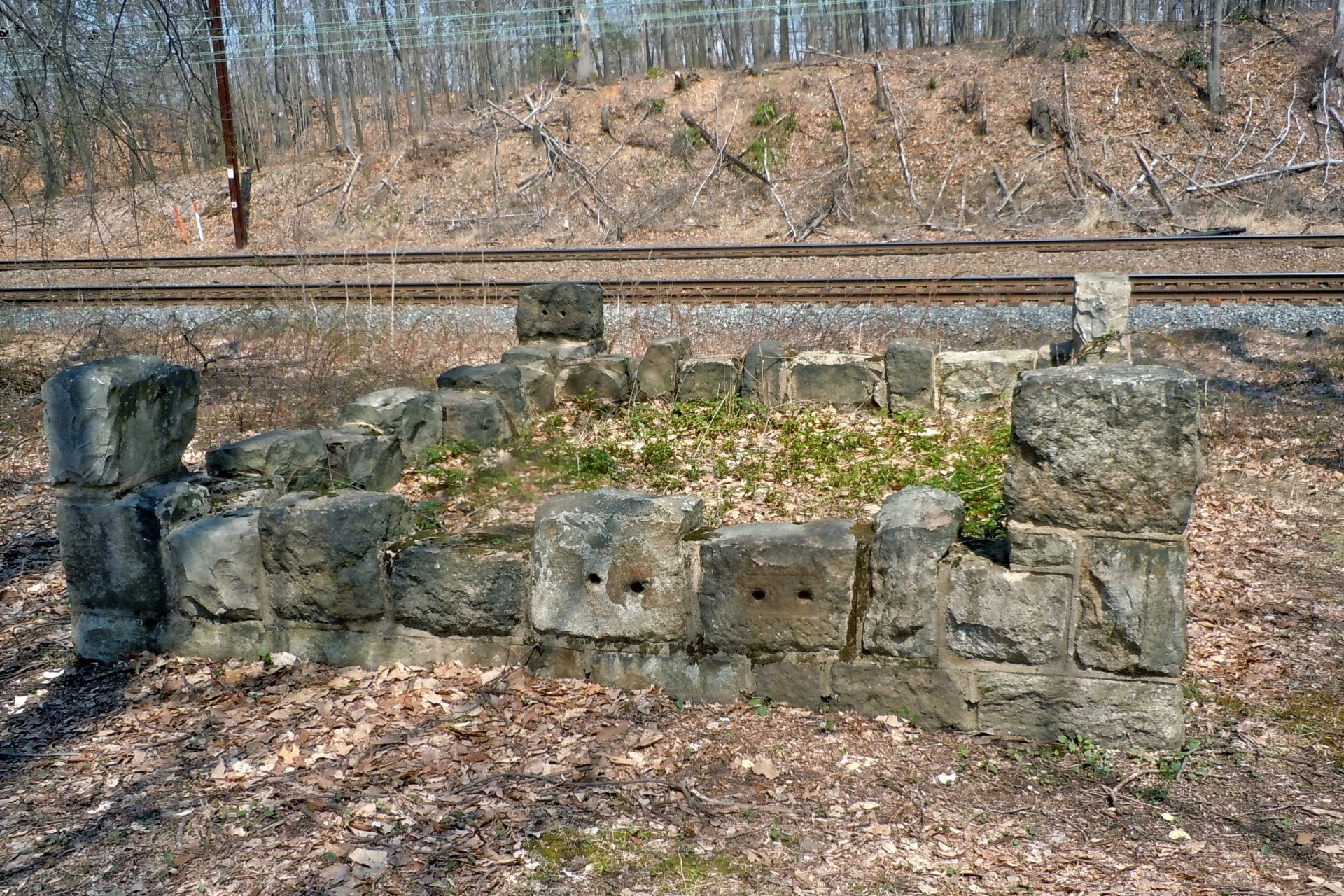
In order to bridge a ravine that stood in the path of the proposed track, the men would have to erect an earthen fill that would eventually stretch more than 100 yards. The hill they constructed stands to this day and became known as Duffy’s Cut.
As many as 120 men worked on Mile 59 – about half of them at Duffy’s Cut, where they slept in a large shanty or cabin on the west side of the ravine. They were paid about 50 cents a day and provided with living quarters in the shanty, plus whiskey. According to the Pennsylvania Gazette, “The average contract to build a mile of railroad was between $4000 and $6000 in the 1830s; Duffy’s contract for Mile 59 was for $23,000 – and even that fell far short of the final cost of $32,000.”
The conditions the men worked in were atrocious. An Inch man, Bernard Hegarty, who worked on the construction of the railroads in the 1830s, told members of his family that he “wouldn’t let his dog go to America because the conditions were so bad – it was slave labour.”
There is an old saying on the East Coast of America that under every mile of track is a dead Irishman. Fifty thousand men would die building the railroad in the 1800s. And yet, the immigrants probably considered themselves fortunate to have been hired, right off the boat. This was what they had come for – a first step to a new life and a chance to send money home.
Charles Latrobe, who penned Rambles in North America in 1835, was aware of this latter Irish trait: “In one thing the emigrant Irish of every class distinguish themselves above people of other nations, and that is in love and kindly feelings which they cherish towards their native land, towards those whom they have left behind; a fact proved by the large sums which are yearly transmitted from them to ther mother country, in aid of their poverty stricken relatives.”
No money would cross the Atlantic from the men at Duffy’s Cut. By August 1832, work on Mile 59 was well behind schedule and Philip Duffy was losing money. But for the men in the shanty, at Dead Horse Hollow, that was the very least of their problems.
"On the Grianan of Aileach, spare a thought for me
As my life drains away underneath this oak tree
That damned yellow fever did not take my life
But a cut from an Irishman’s knife"
- Excerpt from 57 Ghosts of Duffy’s Cut (by Leo McCauley, Moville)
Death at Duffy’s Cut
By coincidence, just fourteen days after the John Stamp berthed at Philadelphia, the first case of cholera appeared in the city. There is no evidence to suggest the men brought cholera with them from Ireland. Asiatic in origin, the disease started spreading in 1817 from seaport to seaport. It had struck London in 1831, Dublin and Belfast at the beginning of 1832, and now, in the summer of 1832, reached North America. Cholera was dreaded, and with good reason.
Its symptoms include severe abdominal pain, massive diarrhoea, and vomiting. The spread of the disease, largely misunderstood in the 1830s, was due to inadequate sanitation and water treatment. Death from cholera comes quickly – otherwise healthy adults can succumb within hours. In Philadelphia, its spread was rapid.
By the first week of August, 830 cases had been recorded with 362 people already dead. As the pandemic coincided with the first large waves of Irish immigrants in Pennsylvania, the finger of blame was almost inevitably pointed at recently arrived Irish immigrants. Fear and panic reigned.
In The Ghosts of Duffy’s Cut, the authors Watson, Ahtes and Schandelmeier noted that the unfortunate timing created new dangers for the likes of John Ruddy: “Irish Catholics were understood in Protestant America to be the agents of the infection of Popery and subversion, when they were also perceived to be the agents of infection with cholera, any result is imaginable.”
Cholera struck Duffy’s Cut in mid-August. What happened next is that fifty-seven Irish labourers died in truly appalling circumstances. A newspaper article written in June 1889 by Julian Sachse, some 57 years after the event, drew on testimony from local residents alive when the men died at Duffy’s Cut: “Most of the workmen fled from the infected shanty at once but so great was the fear of the surrounding population, that every house was closed against the fugitives, no one was found willing to give them food or shelter.”
Cholera undoubtedly claimed at least eight of the workers but railroad files indicate that as desperate survivors attempted to flee the valley, they were turned back by vigilantes. In the end, there were no survivors at Duffy’s Cut and fifty-seven men from Donegal, Derry and Tyrone died there. But surely not all from cholera? The Philadelphia Weekly points out the obvious flaw in the story: “The official record didn’t add up. Even with the relatively primitive medical treatments for cholera available back in 1832, such as leeching, the death rate was only 40 to 60 percent, meaning nearly half of all people who contracted the disease recovered. The fact that all 57 Irishmen contracted cholera and died from it would seem to be at best an amazing statistical anomaly—and at worst, a bald-faced lie.”
There is no doubt that the citizens of the nearby affluent Scotch-Irish Willistown Township were terrified when the Irish workers came looking for help that August. They turned them away but did they, or the railway company – under pressure to complete the line and desperate to stem the spread of the cholera epidemic – resort to murder by a lynch-mob?
“Of all the places in the world, this was the worst place for them to be,” says Professor William Watson of Immaculata University, “They were expendable. Because they were recently arrived Irishmen, they were assumed to be the cause of the epidemic. It was anti-Catholic, anti-Irish prejudice; white-on-white racism.”
Only a blacksmith and four Sisters of Charity from the city came to the aid of the dying and dead Irishmen. Julian Sachse records the efforts of the blacksmith: “When all fled he alone remained and ministered to the sick. When the scourge claimed its first victim he laid the man out as decently as he could, dug a grave single-handedly, then returned and dragged the corpse over to the opposite side of the ravine and buried it.”
But the task was simply too big for one man. The dead were lain in the ditch beside the tracks and hastily covered without ceremony. The blacksmith was ordered to burn the infected shanty to the ground. All traces of what happened at Duffy’s Cut were obliterated. The Sisters of Charity had to make their own way back to the city, unaided by locals or stagecoach drivers, such was the fear of contagion. A new crew was hired and although it was delayed, Mile 59 was finished, albeit at a terrible cost.
“Six weeks from the docks of Philadelphia to rotting in a ditch outside of Malvern. Not exactly the American dream,” observed John Ahtes, Associate Professor of History at Immaculata College.
The Ghosts of Duffy’s Cut
The tale of the men of Duffy’s Cut remained in the local folklore of Malvern. Shortly after the events of August 1832, a local man reported seeing “dead Irishmen dancing on their grave” at Duffy’s Cut. The area quickly gained a reputation for being haunted and was generally avoided.
As the Philadelphia Weekly astutely observed in a recent article: “History would blame cholera for their deaths, but history is always written by the winners, and the winners—in this case the railroad company and the landed gentry of Chester County—would be best served by such an explanation.”
For more than 170 years, on the odd occasion that Duffy’s Cut even merited a mention, the deaths were attributed to cholera. A darker truth, if it existed, was unspoken. The wheels of hundreds of thousands of trains would roll over Dead Horse Hollow in the years that followed, commuting to and from the city of Philadelphia . . . over the bodies of fifty-seven Irishmen who had been “disappeared” from history.
Setting things right
The story of Duffy’s Cut took a remarkable twist in September 2002. Two historians were sitting in an office at Immaculata University, about a mile from Duffy’s Cut. Through a window, in the evening gloom, Professor William Watson and his colleague Tom Conner saw three shining figures which then disappeared. Nearby townhouse residents had reported similar sightings over the years. Later, Watson and Conner would conclude that they too had seen the ghosts of Duffy’s Cut.
Two years later, Watson’s brother Frank, a Lutheran pastor, made a discovery which would trigger a crusade to uncover the truth of what actually happened at Duffy’s Cut. Frank approached William with suppressed records of the events at Duffy’s Cut, documents passed on by the Watson’s grandfather, a railway official.
Chances are the real story of what happened at Duffy’s Cut would never have seen the light of day had it not been for the subsequent extraordinary dedication of the Watson brothers. Colleagues at Immaculata University came on board, and so began a quest to find out what happened to the Irishmen, and why. A combination of academic know-how combined with hard-toil on the site of Duffy’s Cut, yielded astonishing results.
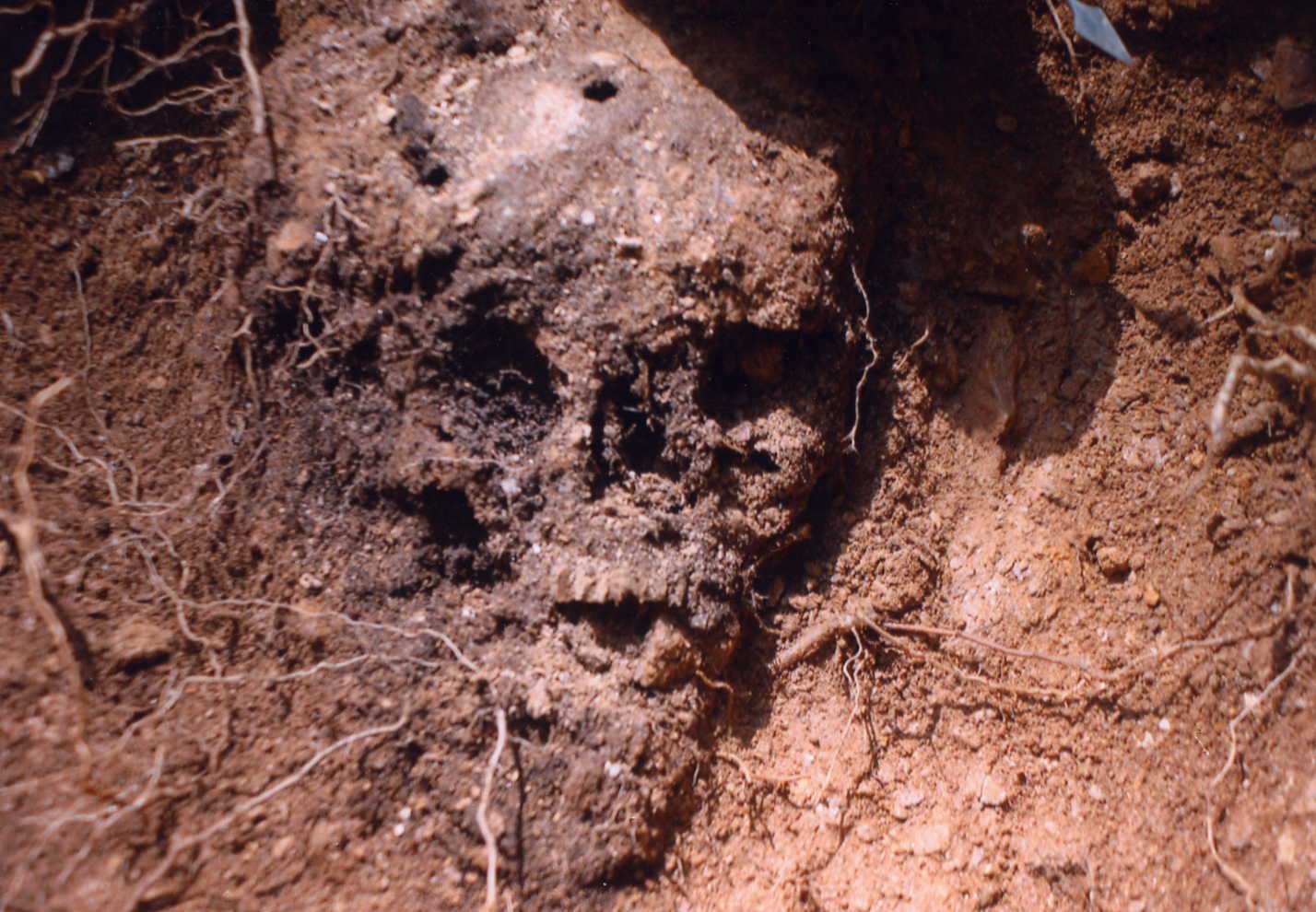
Artefacts mounted up as the dig continued; in time these would number over 2,000. Cooking pots, forks, spoons, glassware and pottery were revealed. Clay pipes, one with the word Derry embossed on it, were found. Then, in March 2009, the team found their first skeleton. By now, the Watson’s had enlisted the assistance of a remarkable army of experts – archaeologists, anthropologists, geophysicists and even a forensic dentist. Their conclusions were stark.
A number of skulls revealed clear evidence of perimortem trauma – trauma sustained at or about the time of death. In other words, modern medical science was confirming that some of the men at Duffy’s Cut had died in violent circumstances. Bullets and axes had completed the work started by cholera.
“One of the skulls had a bullet hole,” says Laura Kennedy, curator of the Duffy’s Cut museum at Immaculata. “Most of the wounds look like an axe blow or pick.” Frank Watson wasn’t in the least surprised at the results: “Bad stuff happened there and you feel that the longer you are there. I’ve been down there a couple of times by myself and it creeped me out. When this all started, none of us wanted to be there by ourselves.”
The dig at Duffy’s Cut was now making international headlines. The Watsons and their colleagues at Immaculata University published a book in 2006, The Ghosts of Duffy’s Cut which sold out, they also used a documentary and the internet to measure their progress. The Irish ambassador to the United States paid a visit to the site. By now the story had developed an Inishowen dimension. The Watsons and their team had been trawling through ship records, mindful of documentation which stated that Philip Duffy had employed a large number of recently arrived Irishmen in the early summer of 1832. Their research led them to the aforementioned John Stamp, which had arrived in Philadelphia from Derry in June 1832. The men on board fitted the bill.
Putting flesh on the bones
But then came a sensational development – which, if proved by DNA testing, would bring the story of Duffy’s Cut full circle. One of the remains had been tentatively identified as that of eighteen year old John Ruddy, from Inishowen. The skull indicated that Ruddy was missing his first molar – a rare genetic dental anomaly. When this development was spotted in media reports by members of the present-generation Ruddy clan in Inishowen, bells began to ring. The story of Duffy’s Cut was about to take an extraordinary turn.
Inishowen man Liam Ruddy, takes up the story: “I decided to contact the team because of two strange coincidences – the name Ruddy and the genetic teeth defect. At the age of seventeen, I had a molar removed from my top left set of teeth because it was impacting on the rest of the teeth in that area. I can remember my dentist telling me I had too many teeth for the size of my gums – our Ruddys have a narrow jawline. I found this a bit coincidental but subsequently found it is a family trait as my two sisters are also missing certain top or bottom molars for the same reason.”
There was another piece of evidence that seemed to fit. Liam’s father, and two of his uncles, confirmed that there was a long history in the clan of family members who left Ireland for a better life in America over many years, including two brothers who left in and around the 1830s. The story goes that two Ruddy brothers were working in the field in the morning and in the afternoon they left for America and were never heard of again.
It was enough to persuade the Ruddy family to get in touch with the research team in Pennsylvania. Liam Ruddy, aware that the link was “tenuous”, made the journey across the Atlantic to provide a DNA sample. On the other side of the Atlantic, the excitement was palpable.
“The body we excavated had a one-in-a-million anomaly,” says Bill Watson, “There are not a million Ruddys and there are not a million people in Donegal, and here’s a Ruddy and he has it and two of his aunts have it and they also have a story in the family of a guy coming over to the US in the 1830s, working on the railroad and vanishing. What are the odds of that? How could it not be him?”
The dedication of those involved in the Duffy’s Cut project has been exceptional. Frank Watson describes it as “a spiritual journey, an effort to right an historical wrong.” Walter Licht, a University of Pennsylvania professor and a railroad historian, has labelled the team’s work as remarkable: “They’ve uncovered a slice of American history that wouldn’t appear in normal textbooks,” he said.
Their work by the side of the railroad track in Malvern has been monitored with extreme interest by people in the North West who believe their relatives perished at Duffy’s Cut. Derry man Brian Hegarty believes his great great great uncle died there. A few years ago he told the Derry Journal: “My father’s family are from Inch Island. The story’s been in my family for generations, about my great great great uncles John and Bernard Hegarty, who went to America in 1832. John wrote a letter back to his family – or rather, he got somebody to write it for him because he would have been illiterate – to say he was working on the railroads in Pennsylvania, and he was never heard of again.”
The physical side of the project came to an end before Christmas 2011, when it was finally decided that the remaining bodies – in a mass grave – were too close to the existing railroad tracks to proceed safely. The bodies, buried under 50 feet of earth, are unlikely to be excavated any time soon. It was a bittersweet end for the Watsons and their team. And yet, 180 years after the event, they had succeeded in wrestling the story of Duffy’s Cut from a little-known slice of folklore to a real piece of American history.
As Frank Watson remarked, “It’s never too late to do the right thing.”
For Liam Ruddy, irrespective of how the DNA tests pan out, the fate that befell the young man – now believed to be John Ruddy – and his comrades, is emotionally disturbing: “Like many before and after him, life in pre-Famine Ireland must have been extremely difficult if you were relatively poor. Looking for a way to better your circumstance and self-esteem, the New World must have appeared a very attractive option. I can only imagine the stories that would have come back from others who had been there, about a land of milk and honey – where there was plenty of work and a much better standard of living. They were sold a promise and many young men and women left their home to seek a better life, knowing they may never return and never see their family again.
The journey would have been long but they would have been inspired by thoughts of what lay ahead and the strength of friendships made with those on board. All those promises made and plans drawn up – they would have believed that all would be well with the world. And then to die in such an ignominious and brutal way is just heartbreaking – no matter who the person is. A fit and strong person of eighteen years – who in all probability worked the farm from a very early age – would have survived cholera and many other diseases and should have lived a long life.”
Peace at last
Eight days before St. Patrick’s Day 2012, four Irishmen and an Irishwoman were buried at the West Laurel Hill Cemetery in Pennsylvania. The Irish Times reported: “180 years after they are believed to have been murdered . . . they were accorded honours they were denied during their short, cruel lives. Irish tenors sang the Star-Spangled Banner and the Soldier’s Song, accompanied by seven pipers in kilts.”
Bishop Michael Fitzgerald from Philadelphia read prayers at the emotional ceremony, which involved contributions from the Watson brothers. The Irish embassy was represented and members of the 69th Pennsylvania Irish Brigade fired Civil War muskets in a final salute. The remains were laid to rest at the foot of a 10ft high limestone Celtic cross sculpted in Stradbally, Co Waterford. As funerals go, it was a good one.
The Watsons meantime have not given up hope that the remaining victims of Duffy’s Cut, buried deep under the rail track in Malvern, will also be afforded a Christian burial and they continue to lobby in Washington and elsewhere in an effort to bring this story to a conclusion. Considering their extraordinary ten-year long pursuit for the truth of what really happened at Duffy’s Cut, who is to argue that they will not make this happen?
If, as hoped, DNA and isotope tests at the Smithsonian Institute in Washington confirm his identity, the remains of the fifth Irishman recovered from the shale and dirt of Duffy’s Cut, John Ruddy, may be returned across the Atlantic to a final resting place in a family grave in his native Inishowen. Home finally, among his own.
When that day comes, the people of the rugged peninsula he left in April 1832 – full of hopes and dreams – will surely afford him as decent a welcome as Inishowen has ever seen.

Subscribe or register today to discover more from DonegalLive.ie
Buy the e-paper of the Donegal Democrat, Donegal People's Press, Donegal Post and Inish Times here for instant access to Donegal's premier news titles.
Keep up with the latest news from Donegal with our daily newsletter featuring the most important stories of the day delivered to your inbox every evening at 5pm.

This publication supports the work of the Press Council of Ireland and Office of the Press Ombudsman, and our staff operate within the Code of Practice of the Press Council. You can obtain a copy of the Code, or contact the Council, at www.presscouncil.ie, Lo-call 1800 208 080 or email: info@presscouncil.ie.