Arranmore Island has produced an extraordinary concentration of skilled civil engineering operatives, and few families illustrate that tradition better than the Lenty Gallagher family.
For more than 60 years, three generations from the same family have worked on some of the most demanding tunnelling projects ever undertaken. Over that time, methods evolved from manual drill and blast using gelignite to modern mechanised and computerised tunnelling.
Earlier generations worked in conditions that meant basic survival, circumstances that would be abhorred today. Nowadays, health, safety, environment, and quality assurance are central disciplines rather than afterthoughts.
Laurence Lenty Gallagher Senior left Arranmore in the early 1960s to work on the Scottish Hydro Electric schemes. Earlier in 1955, on the Breadalbane project, a crew that included Donegal Tunnel Tigers set a world manual tunnelling record, advancing about 170 metres of hard rock in seven days using hand-held pneumatic drills and gelignite blast methods. That record still stands for purely manual tunnelling, not because modern crews lack ability, but because the industry moved on from that level of human toll once mechanisation and modern safety standards arrived.
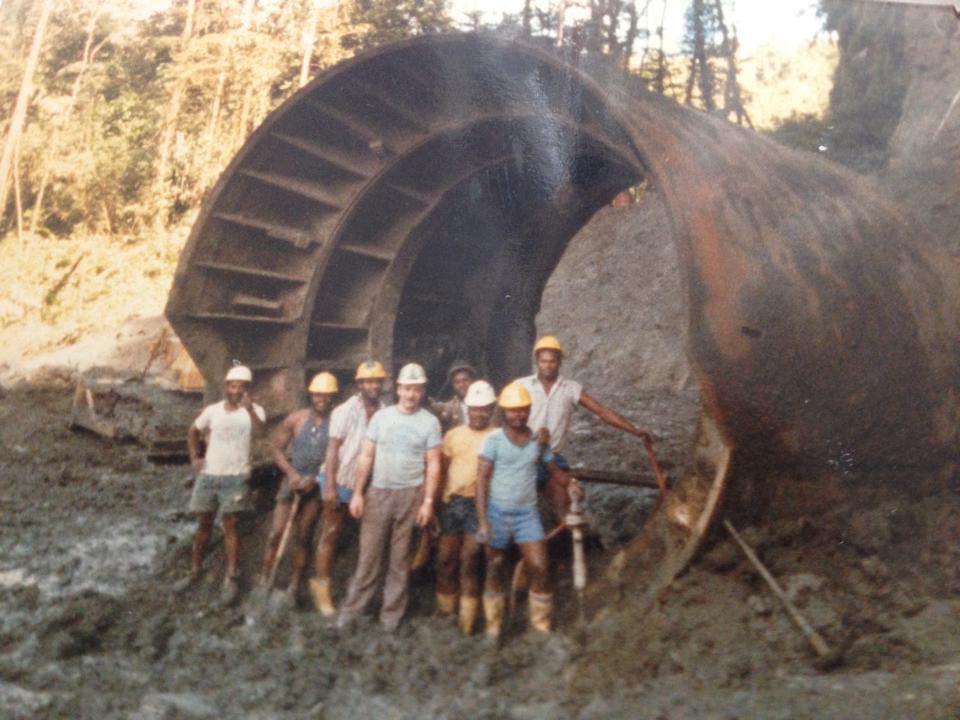 Laurence Lenty Gallagher Senior in Papua New Guinea, 1984, serving as pit boss on a four metre Dosco digger shield TBM during overseas tunnelling works
In 1987, Laurence Senior went on to work on the Channel Tunnel at Folkestone. During that project, a Donegal Tunnel Tiger-led drive achieved over 1,100 metres of tunnel in a single month through chalk marl, at the time the fastest sustained advance of its kind. It was also there, in 1988, that he briefly met Prime Minister Margaret Thatcher during a site visit, a moment that became part of tunnelling folklore rather than political theatre, one of the rare occasions when men who normally worked unseen reached fame.
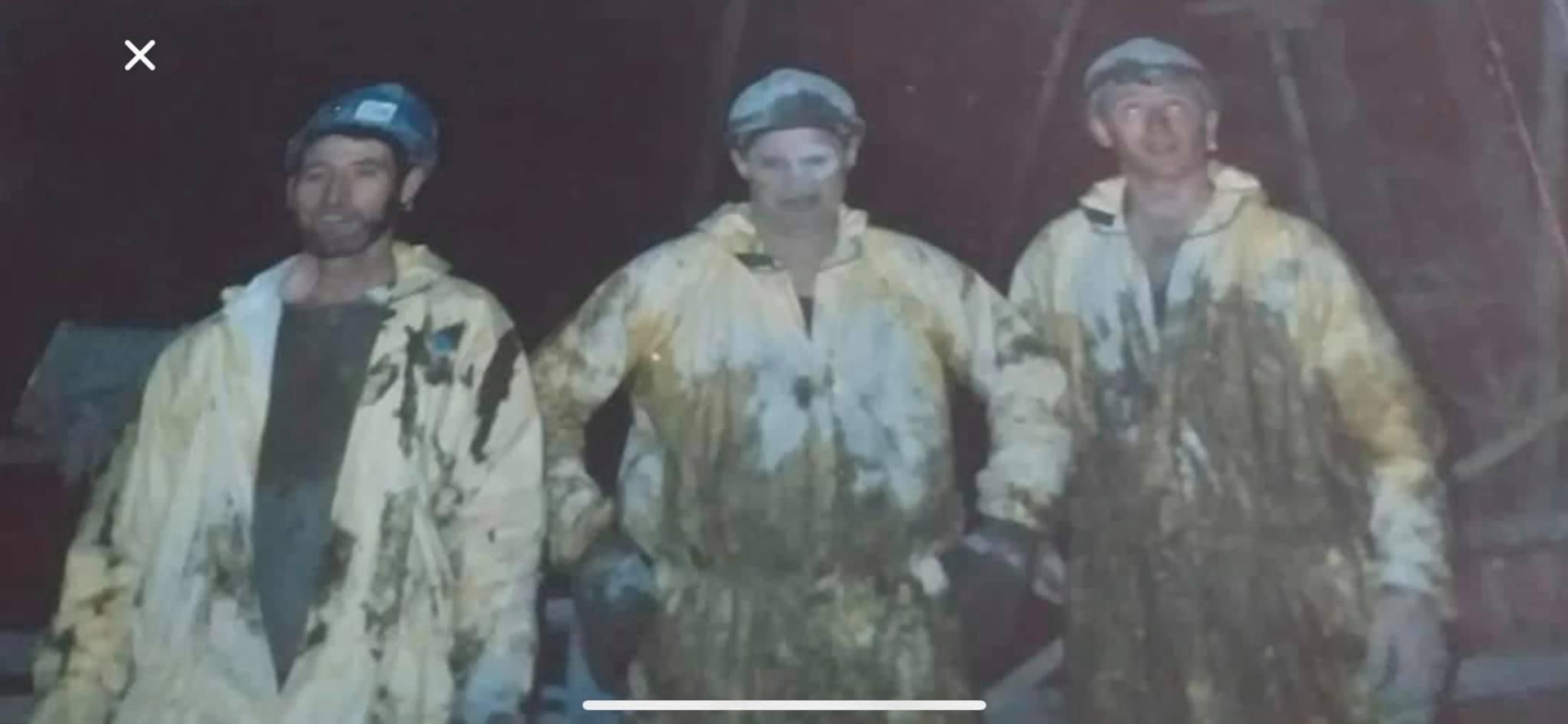 Donegal Tunnel Tigers Bryan Byrne of Arranmore, Tony McGarvey and Paul Roarty of Gaoth Dobhair on the Jubilee Line Extension, London, 1997
Experience Under Pressure Below Dublin Port
In the year 2000, Laurence Senior returned to Ireland to work on the Dublin Port Tunnel, then the largest and most technically demanding civil engineering project ever undertaken in the State.
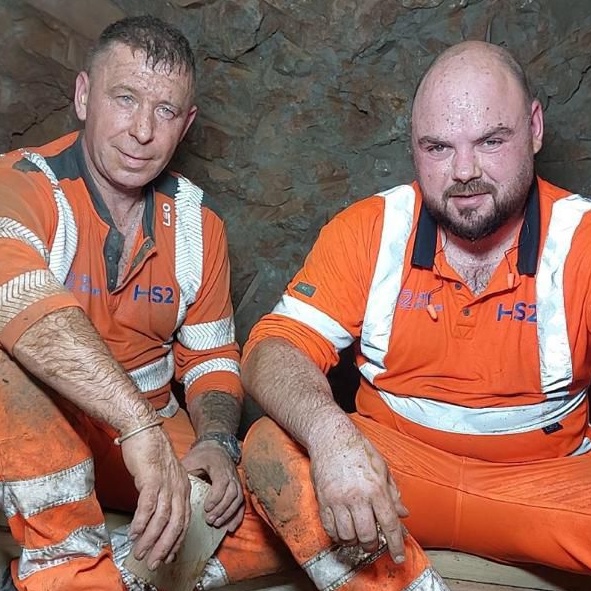
-1767540170739.jpg) Laurence Junior and his son Laurence Junior Junior on the HS2 London tunnels, third and fourth generation Donegal Tunnel Tigers working on England’s largest infrastructure project
Laurence Junior and his son Laurence Junior Junior on the HS2 London tunnels, third and fourth generation Donegal Tunnel Tigers working on England’s largest infrastructure project
On that job, he trained his son, Laurence Junior, born in 1975, passing on a practical understanding of underground work shaped by experience rather than theory.
Like many major tunnel projects, the Dublin Port Tunnel suffered cost and programme overruns. During the bore, unexpected ground conditions caused the tunnel boring machine to sink, turning routine production into a recovery operation where judgment and hard-won experience made the difference between loss of control and restored progress. Both father and son estimate that around 80 per cent of the workforce on the Dublin Port Tunnel were Donegal-born Tunnel Tigers.
Inside England’s Largest and Most Contested Rail Project
Today, Laurence Junior and his two sons, Laurence Junior Junior, born in 1998, and Michael born 2000, are all working on the High Speed 2 project in London.
HS2 is the largest civil engineering project ever undertaken in England by capital cost and scale, and one of the most politically contested infrastructure schemes in modern Europe. The London to Birmingham section alone was originally estimated at about £18 billion in 2010 prices and is now expected to reach around £80 billion in current prices and possibly more.
All three Lenty Gallaghers are working on the twin bore tunnels being driven from West Ruislip in West London towards Green Park Way and on towards Euston Station. Each tunnel is approximately nine metres in diameter and constructed at depths of up to 45 metres below ground. In their six-kilometre section, around 400 operatives work underground.
Laurence estimates that roughly a quarter are from Donegal, reflecting the continued presence of Irish tunnelling expertise on major British projects. Of the one hundred Donegal Tunnel Tigers on the job, twelve are in senior supervisory roles. Laurence Junior works as a Front-Line Supervisor, responsible for coordinating and overseeing a team of around 30 operatives on a safety-critical section of the works where the emphasis is not just on output, but planned and controlled progress every shift.
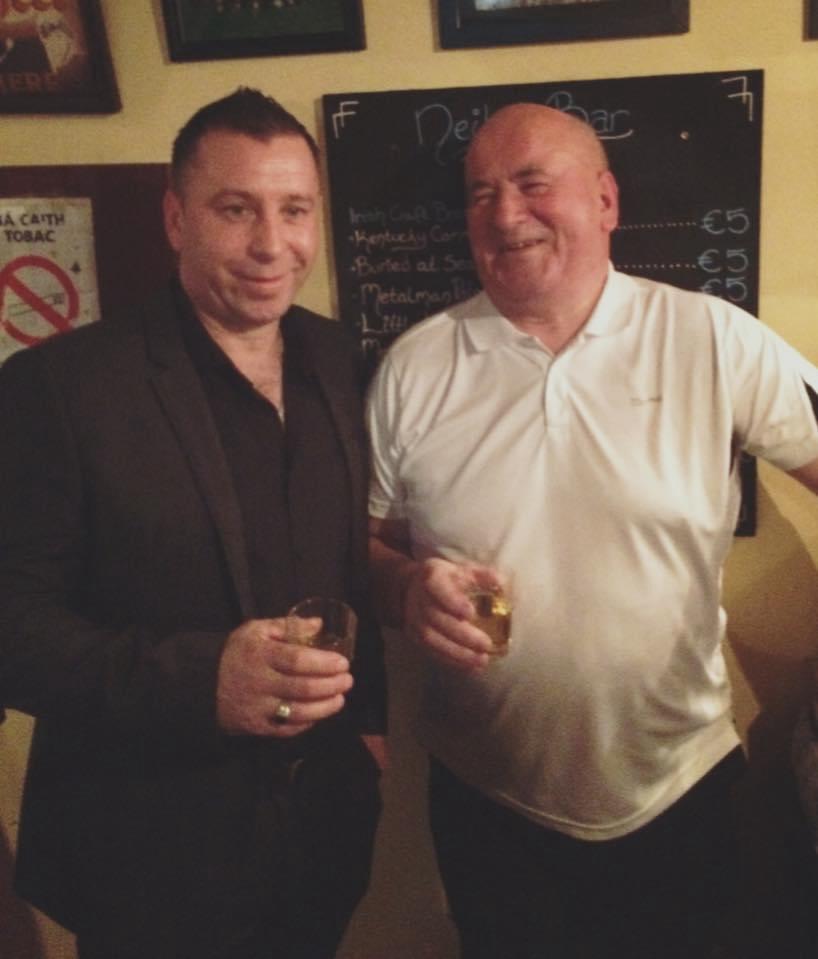 Laurence Junior aged 40 with his father Laurence Senior aged 70, 2015, two generations of Donegal tunnelling experience shaped by different eras but the same trade
From Survival to Zero Harm
The contrast between generations is stark. When Laurence Senior started tunnelling in the 1960s, work was manual, noisy, dusty, damp, and dangerous.
Personal protective equipment was minimal or non-existent. Compressed air was often unmanaged. Gelignite was handled daily on a trial-and-error basis. Over his career, he lost around sixty colleagues, many of them close friends. Today, they are remembered at the Donegal Tunnel Tigers memorial in Dungloe, a permanent marker of a trade that built nations while quietly consuming men.
On HS2, the environment is entirely different. Modern tunnelling relies on large tunnel boring machines operating within tightly controlled systems. The role of the workforce is no longer brute excavation but disciplined coordination, maintenance, and supervision of a moving underground production environment where errors have serious consequences.
Responsibility has not diminished; it has intensified. As Front-Line Supervisor, Laurence Junior plans work sequences, manages interfaces, ensures compliance with safety and quality systems, and looks after the welfare of his team in an environment where a small lapse can carry disproportionate consequences.
 Laurence Lenty Gallagher Junior with Ownie Gallagher of Gaoth Dobhair, reflecting the close Donegal network that has long underpinned major tunnelling projects
Health and safety sit at the centre of the project. Every activity is carefully planned, briefed, supervised and audited.
Socialising in Silence on a Politically Toxic Project
Outside the tunnels, the men remain reserved and restrained. HS2 has become a lightning rod for opposition, criticised for cost escalation, disruption, and negative environmental impact.
Many of those working on the project avoid discussing it in public. They are not policy makers, they are specialists delivering work under demanding conditions on a project that has become politically toxic, where the workforce can find itself judged for political decisions made far above ground and beyond the tunnel face.
Personal Toil and Inherited Weight
As a young man on the Jubilee Line extension in the mid-1990s, travelling daily through London during the IRA bombing campaign, routine commutes became interrogations.
Being Irish, and Donegal Irish in particular, meant repeated stops, interrogation, and detentions at City checkpoints, sometimes lasting hours. In 1996, a misunderstanding at an armed checkpoint on London Bridge saw him dragged from a car and held at gunpoint, an experience that left a lasting mark.
That exposure to risk began earlier. Newly arrived in London as a teenager, alone in a borrowed flat late on a Friday night, fear and isolation overwhelmed him, a moment that quietly hardened resolve. Years later on Arranmore, sitting with his father, Laurence realised that both of them, born thirty years apart, had each served as pit boss on the same four metre Dosco digger shield TBM, on different continents and a generation apart, a coincidence that confirmed continuity.
Tunnel work ran through the family. At one point, his father had three sons working underground in London at the same time. Uncles on both sides of the family were tunnellers. One, Charlie Rodgers from outside Falcarragh, broke his back on a tunnel job in Newcastle and never returned underground. For Laurence, the trade was never romantic; it was a family occupation where skill meant survival and injury could end a career overnight.
A Tradition Forged by Isolation and Endurance
Arranmore Island sits exposed on the Atlantic edge of Donegal, shaped by fishing, farming, and generations of emigration. Those conditions produced discipline, self-reliance, and an acceptance of demanding work far from home.
Since famine times, Donegal Tunnel Tigers have carried those traits into some of the most challenging underground projects ever undertaken, from Scotland’s hydroelectric schemes and the London Underground to the Channel Tunnel, Crossrail, the Dublin Port Tunnel, and now HS2.
Today, around one hundred Donegal men are working deep underground on a 10-kilometre section of England’s largest infrastructure project, applying the same quiet competence that has defined the tradition for more than a century. When Phase One from London to Birmingham is complete, some hope the northern extensions towards Liverpool and Manchester will follow. If not, many expect their skills will be needed closer to home on the Dublin Metro, allowing the tradition to continue on Irish soil, still following the challenges rather than the spotlight.
Eamonn Coyle is a Chartered Engineer & Environmentalist