Motorists are being advised the road remains closed to facilitate a technical examination by Garda Forensic Collision Investigators
Search


01 Mar 2026

Please allow ads as they help fund our trusted local news content.
Kindly add us to your ad blocker whitelist.
If you want further access to Ireland's best local journalism, consider contributing and/or subscribing to our free daily Newsletter .
Support our mission and join our community now.
To continue reading this article, you can subscribe for as little as €0.50 per week which will also give you access to all of our premium content and archived articles!
Alternatively, you can pay €0.50 per article, capped at €1 per day.
Thank you for supporting Ireland's best local journalism!

Glen Head, Glean Cholm Cille - Atlantic headland supporting coastal grassland and heath restoration

David Attenborough once suggested that “The human species is a plague on the Earth”.
Whether or not one accepts that stark assessment, the evidence on the ground is increasingly difficult to ignore. The expansion of fossil fuel-driven industrial capitalism since the mid nineteenth century has been one of the most environmentally destructive forces in human history.
READ NEXT: Donegal and the limits of unchecked growth - what can we do?
It has barely stopped raining in parts of Ireland since December 2025. As global temperatures rise, the atmosphere holds more moisture, increasing the likelihood of prolonged and intense rainfall events in Ireland.
Farmers have been unable to turn stock out to grass as land remains saturated. Large parts of our island were recently flooded under several feet of water.
Globally, wildlife populations have declined by 75% since the 1970’s, according to the WWF Living Planet Index. Within the European Union, around 80% of protected habitats are assessed as being in poor or bad conservation status.
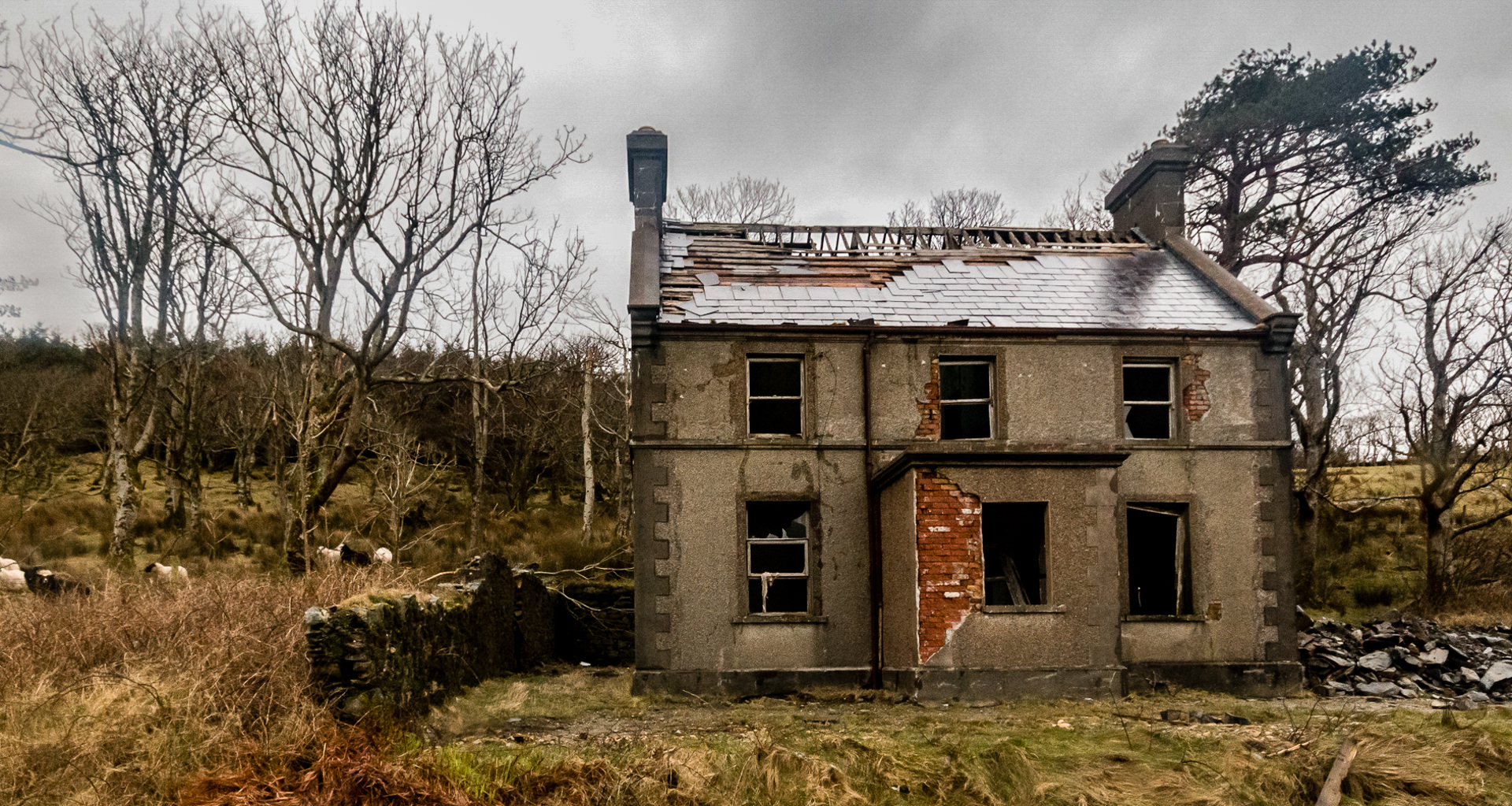
Abandoned farmhouse reverting to natural succession and habitat recovery at Carrick
Claims are often made that our topsoil can deliver only another sixty harvests, while others suggest closer to one hundred. Regardless of the precise figure, soil degradation is a serious issue both nationally and internationally. Approximately 95% of our food production depends on soil. At current rates of deterioration, that foundation is under sustained pressure.
According to the Environmental Protection Agency, roughly half of Ireland’s rivers and lakes are not in good ecological status under the EU Water Framework Directive. Year after year we fail to meet national climate targets.
Donegal suffered serious landslides in 2017 following periods of intense rainfall and storm events. In June 2025, unusually high temperatures were recorded at the same location in Malin Head, highlighting the growing volatility of our climate at Ireland’s most northerly point.
As a result of declining fish stocks and tightening EU quota allocations, fishermen operating out of Killybegs face significant restrictions. The Atlantic mackerel stock, one of the region’s most important commercial species, has been assessed as being under sustained pressure in recent years, with quota restrictions affecting industry viability.
Invasive species such as Japanese knotweed are aggressively colonising river systems, transport corridors and disturbed land, outcompeting native vegetation, reducing local biodiversity and imposing substantial long-term control and remediation costs.
Against this backdrop, it is legitimate to question how ecologically wild the Wild Atlantic Way truly is, and whether Donegal’s landscapes function as resilient ecosystems or merely present a visually dramatic, touristy but ecologically degraded facade.
Re-Wilding - The New Buzz Word
In 2016, the late biologist and Harvard professor Edward O. Wilson argued in his book “Half Earth” that to safeguard biodiversity and maintain a stable biosphere, humanity should set aside 50% of the Earth’s land and sea surface for nature.
His proposal was based on the species area relationship, a well-established ecological principle suggesting that protecting half the planet could allow roughly 85% of species to persist long term. Currently, only about 18% of the Earth’s land surface is formally protected, while less than 8.0% of the ocean is designated as protected.
Donegal’s Land Use Reality and Peat Carbon
Donegal’s landscape is predominantly grassland and rough pasture, with this category likely accounting for well over half of the county’s land area in combination with commonage and grazed upland. Forest cover accounts for approximately 12% of the county.
Extensive blanket bog and other peatland habitats cover around 30% or more of Donegal, representing in excess of 150,000 hectares. When drained, peat soils can emit around 10 tonnes of CO2 per hectare per year, depending on condition.
Rewilding, or giving back to nature, significantly reduces these emissions and restores long-term carbon storage capacity. Areas under arable tillage are minimal and well under 5%, reflecting the county’s topography and climate.
Semi-natural habitats such as heathland, wetland, dune systems and lakes form a mosaic with grassland and peatland across the rest of the county.
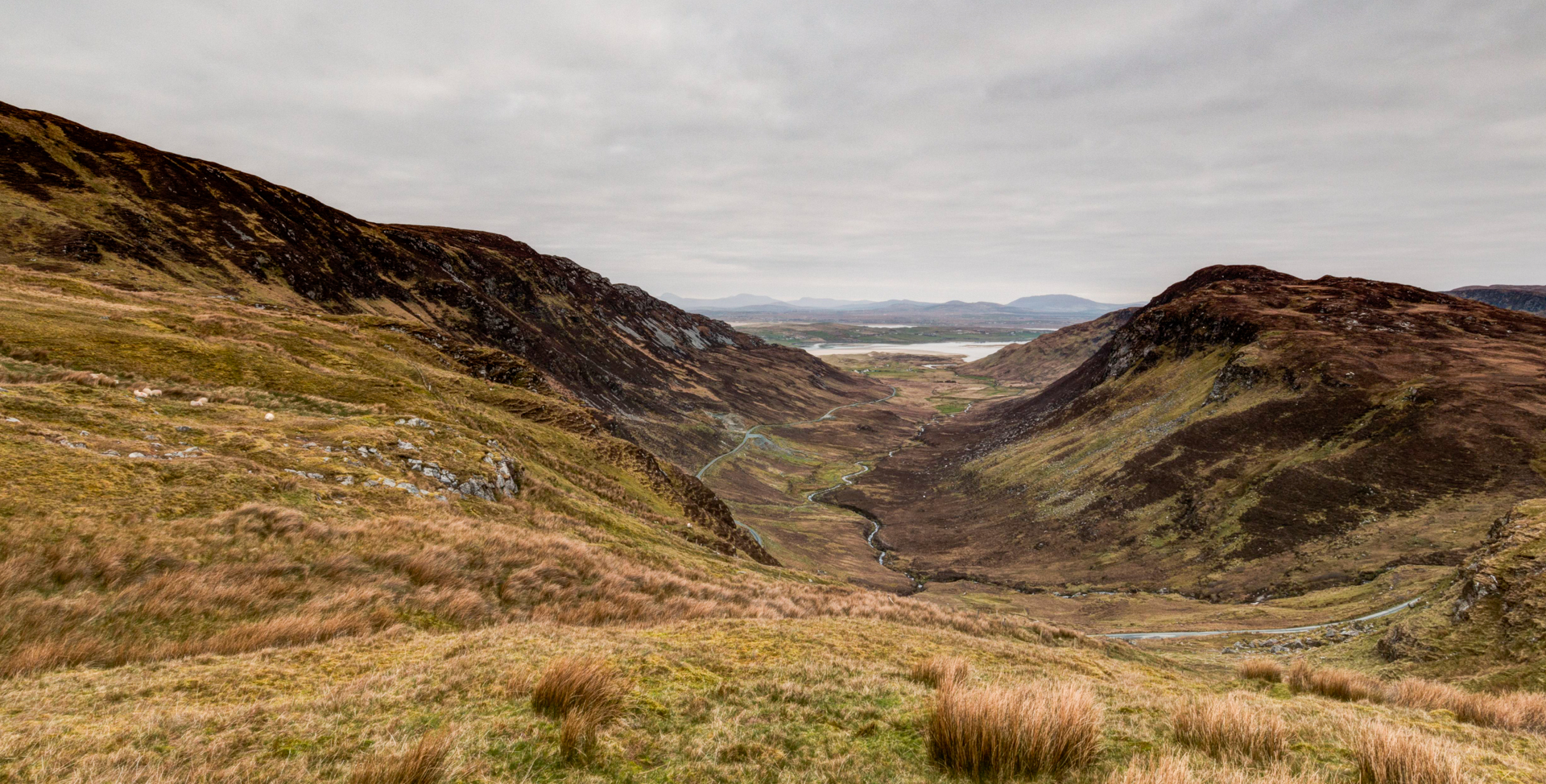
Granny Point, Loughros - Dynamic cliff landscape shaped by erosion and maritime ecology
Giving Back to Nature at Knepp and Dunsany, Working Models of Managed Rewilding
In 2018, Isabella Tree and her husband Charlie Burrell published the book Wilding. In it, they describe how they converted a 1,400-hectare arable estate in Sussex into a rewilded landscape. Initially, whilst under intensive farming, reliant on chemical fertilisers and pesticides, soil quality declined and the business was financially unviable. Following the shift to extensive grazing and natural wilding, biodiversity increased significantly and the estate diversified into profitable eco-tourism and organic meat production.
At Dunsany, Co Meath, Lord Dunsany adopted a similar low-intervention approach across approximately 400 hectares of his estate. Large areas were removed from conventional production and allowed to grow wild naturally. Native woodland expansion, wetland recovery and the return of species such as barn owls and hares have been documented.
The estate has also developed biodiversity monitoring, educational outreach and low-intensity grazing systems. In addition, the approach has enhanced on-site carbon sequestration, improved natural water retention and flood attenuation, strengthened soil structure and microbial activity, and increased habitat connectivity across the wider landscape mosaic.
The Case for Donegal
Donegal is traditionally associated with cattle and sheep farming. Only a very small proportion of land, approximately 3%, is used for tillage, reflecting soil type, climate and topography. The dominant systems are drystock and upland grazing.
Teagasc figures indicate that average family farm income for cattle and sheep systems nationally is often below €40,000 per annum, with a substantial proportion, frequently over 80% in drystock systems, derived directly from CAP support initiatives. In marginal northwestern counties, this dependency is typically higher than the national average.
Grassland and rough grazing account for most of the agricultural land use. Cattle systems occupy a significant share of improved grassland, while sheep grazing is widespread across upland and commonage areas. Given this structural reliance on public CAP support, a legitimate policy question arises as to whether targeted incentives could support partial land use transition towards managed rewilding in carefully selected areas.
From Economic Dependence to Ecological Opportunity
Examples in Sussex and at Dunsany, Co Meath, demonstrate that low intervention models can increase biodiversity while maintaining land management.
However, any approach in Donegal would require careful planning. Blanket peat, acidic soils, wind and high rainfall create different ecological conditions in lowland England. If land were simply abandoned without a strategy, rushes, bracken and invasive species could dominate. Hence, hydrology, grazing pressure, vegetation growth and deer management would need to be actively monitored.
A managed transition, rather than passive abandonment, would therefore be essential. Following the decision to rewild the 1,400-hectare Knepp Estate in Sussex, significant biodiversity gains were recorded within five years, including increases in nightingales, purple emperor butterflies and breeding turtle doves. This demonstrates that ecological recovery can occur relatively quickly when rewilded areas are allowed to function more naturally.
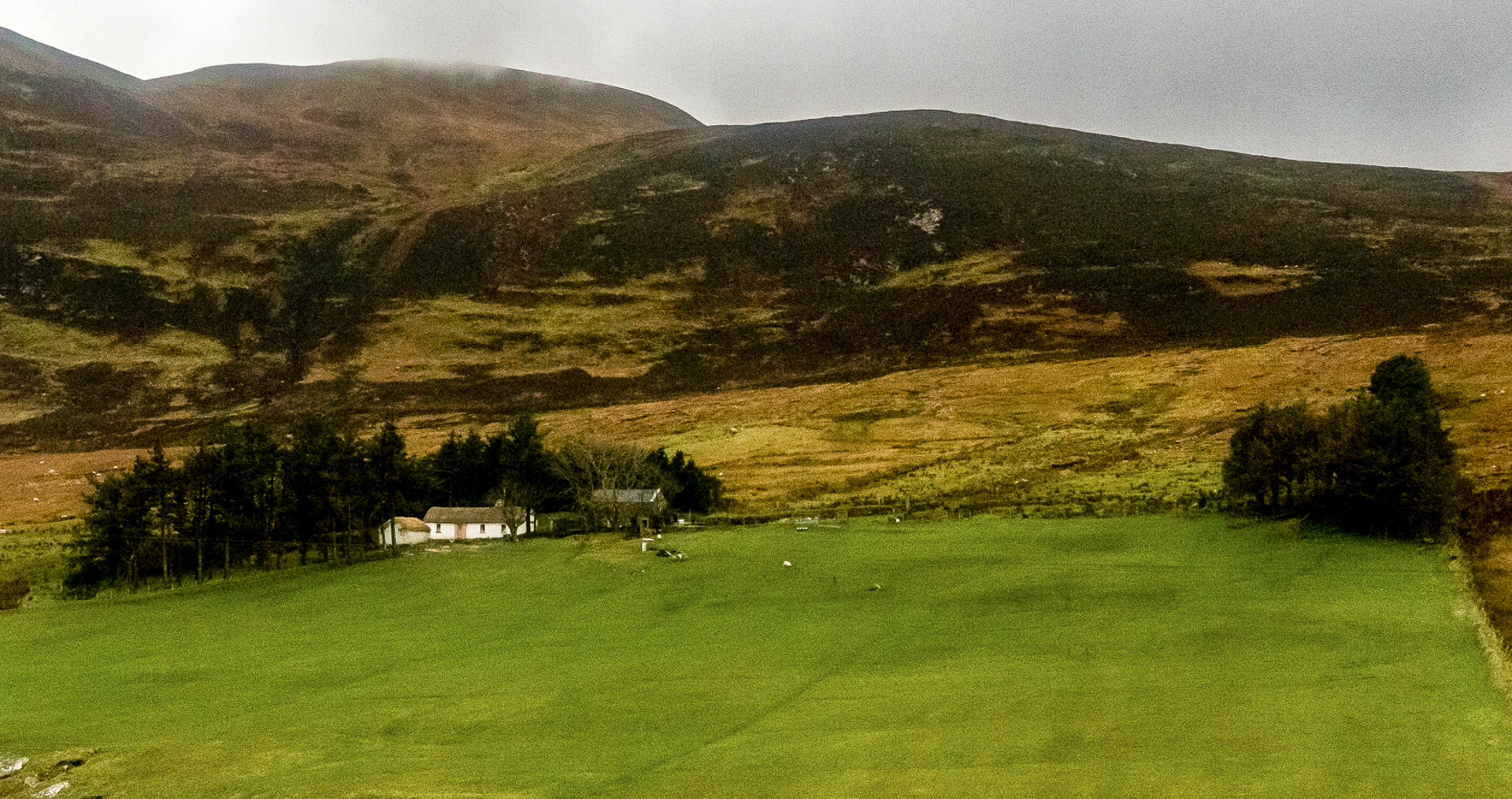
Carrick, Glean Cholm Cille - Marginal farmland transitioning toward woodland and scrub regeneration
A Practical Pilot for Donegal
In Donegal specifically, a practical starting point could possibly be to focus on a clearly defined portion of marginal upland, rugged lowland, carefully selected sections of blanket bog, rugged commonage grazing land and drained peatlands most in need of restoration. These are areas where farming returns are often lowest and where incentivised environmental gains could be highest.
A targeted, redirected CAP pilot scheme, aimed at managed rewilding, could support landowners to gradually transform the most sensitive ground, rewet damaged peat and restore natural habitats, all while ensuring farm incomes are adequately supported.
This would not mean walking away from the land or undermining rural communities. It would mean managing certain areas differently, grounded in climate science and ecological recovery, with nature given more room to recover and farmers properly supported through the transition, in support of the 50% back to nature philosophy.
While a full return to preindustrial conditions is unrealistic, measurable recovery of species such as curlew, hen harrier, corncrake, red squirrel, eagle, otter, badger and raptor populations is feasible if habitat quality and hydrology are restored.
Attenborough called us a plague. But a plague does not have to be permanent. Donegal has the landscape, the people and the policy tools to begin writing a different ending.
Attenborough also suggested that: “It’s surely our responsibility to do everything within our power to create a planet that provides a home not just for us, but for all life on Earth.”
Eamonn Coyle, Chartered Engineer & Chartered Environmentalist

Subscribe or register today to discover more from DonegalLive.ie
Buy the e-paper of the Donegal Democrat, Donegal People's Press, Donegal Post and Inish Times here for instant access to Donegal's premier news titles.
Keep up with the latest news from Donegal with our daily newsletter featuring the most important stories of the day delivered to your inbox every evening at 5pm.

This publication supports the work of the Press Council of Ireland and Office of the Press Ombudsman, and our staff operate within the Code of Practice of the Press Council. You can obtain a copy of the Code, or contact the Council, at www.presscouncil.ie, Lo-call 1800 208 080 or email: info@presscouncil.ie.