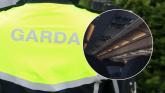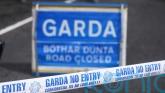
Motorists are being advised the road remains closed to facilitate a technical examination by Garda Forensic Collision Investigators
Search


01 Mar 2026

Please allow ads as they help fund our trusted local news content.
Kindly add us to your ad blocker whitelist.
If you want further access to Ireland's best local journalism, consider contributing and/or subscribing to our free daily Newsletter .
Support our mission and join our community now.
To continue reading this article, you can subscribe for as little as €0.50 per week which will also give you access to all of our premium content and archived articles!
Alternatively, you can pay €0.50 per article, capped at €1 per day.
Thank you for supporting Ireland's best local journalism!

Chief Historian and Poet to Red Hugh O'Donnell

The Donegal land record “Commission for an Inquisition as to the meares and bounds of the territory of Tirconnell, 26 November, 1603” shows that Mícheál Ó Cléirigh’s cousin, Chief Historian and Poet to Red Hugh O'Donnell, Lughaidh Ó Cléirigh lived in Bundoran in 1603.
While the Franciscan Louvain Papers record of Bundrowes friary of refuge in the 1630s establishes that Mícheál Ó Cléirigh’s Annals of the Four Masters were created in The Convent of Donegal at Bundrowes in Bundoran, the land record of Lughaidh further reveals the historical significance of the Ó Cléirigh family lands in Bundoran.
Sourced from The Calendar of the Patent Rolls of the Chancery of Ireland, the Inquisition record is directed towards Gaelic landowners in Tirconnell. Lughaidh Ó Cléirigh’s name is transcribed as “Loy O’Clere of Doran, cronocler” (Lughaidh Ó Cléirigh of Bundoran, chronicler).
READ NEXT: A first look at archaeological artefacts from the Four Masters site in Bundoran
The Royal Irish Academy’s Dictionary of Irish Biography stated that “In 1603 Lughaidh Ó Cléirigh was a member of a commission set up to inquire into the boundaries of the lordship of Tír Conaill, which became Co. Donegal. In this record he is described as ‘a chronicler’ and was said to reside at a place called Doran (Irish patent rolls of James I, 47).”
What has yet to be highlighted in any historical scholarship is that “Doran” is the ancient Gaelic place-name for the coastal district of Bundoran. Bundoran “the foot of the little water” is named after the Doran River, which flows through the heartland of the seaside community, Lugaidh’s home as a chronicler in 1603.
_(1)-1772354159436.jpg)
Tirhugh land records from the early 1600s note Bundoran as “Doorron” and it has also been most famously expressed in William Allingham’s poem, The Winding Banks of the Erne: “From Dooran to the Fairy Bridge, / and round by Tullen strand, / Level and long, and white with waves, / where gull and curlew stand” (1865).
Today, “Doran” proudly lives on in the memory of many old native Bundoran families. While Bundoran has modernised, a neighbourhood called “Doran Close” located on the Ó Cléirigh family lands of Drumacrin, still carries the history of the old name "Doran."
For Donegal historians, this record of Lughaidh Ó Cléirigh in Bundoran in 1603 is historically significant for four key reasons.
Firstly, it establishes that in 1603 the Ó Cléirigh Bundoran lands belonged to Lughaidh, one of the most well-respected Ó Cléirighs. The Ó Cléirighs of Kilbarron were originally granted the Bundoran land of Drumacrin in Magh Ene by the first Niall Garbh O’Donnell (d.1348). This history is noted by Cú Choigcríche Ó Cléirigh in the Ó Cléirigh Book of Genealogies in the entry 1566.
-1772354182085.jpg)
Secondly, it shows that Lughaidh’s brother “Gillebreed O’Clere of Kilbaron" was the likely erenagh in Kilbarron in 1603 while Lughaidh was the chronicler “of Bundoran.” Later records from 1607, 1608, 1609 and 1613 indicate that Lughaidh fulfilled more of his Ó Cléirigh sept duties from Ballymagroarty in Drumhome.
Thirdly, since Lughaidh was one of the most well-respected Gaelic members of the Donegal land commission, the record spotlights that he was the ideal figure to offer support for the friars who fled Donegal Town to set up their refuge Convent of Donegal at Bundrowes in Bundoran in 1601.
Lastly, Ireland’s foremost Four Masters historian, Dr. Bernadette Cunningham noted in her book, The Annals of the Four Masters (2014) that Mícheál Ó Cléirigh names his cousin Lughaidh “among those from whom he had learned much about the Irish language.” While living in Bundoran, Lughaidh may have educated his young, protege cousin-chronicler Mícheál.
The late, Bundoran native, Ó Cléirigh historian and President of the County Donegal Historical Society, Fr. Paddy Gallagher pointed out that Lughaidh and his Ó Cléirigh kinsmen supported their cousin, Mícheál, years later, when he returned back home to begin work on the Annals in 1626 in Bundoran.
According to Dr. Cunningham, Lughaidh’s famous biography Beatha Aodha Ruaidh Uí Dhomhnaill (The Life of Red Hugh O'Donnell) was an “important source” manuscript for the creation of the Annals of the Four Masters.
The land record of “Lughaidh Ó Cléirigh of Bundoran, chronicler” is not a myth, nor is it a legend. Lughaidh illuminates Donegal historians to the historical truth that there is a scholarly and ethical responsibility to tell the full Ó Cléirigh story and to share all the recorded history of the Ó Cléirigh homelands in Ballyshannon and Bundoran fairly.
400 years on – by highlighting the rich Ó Cléirigh history in Bundoran, from Lughaidh "The Chronicler of Bundoran" to Mícheál "The Chief of the Annals in Bundoran" – we honour their lives, spirits and legacies with Tirhugh heart and humility – the historic Bundoran Ó Cléirighs.

Subscribe or register today to discover more from DonegalLive.ie
Buy the e-paper of the Donegal Democrat, Donegal People's Press, Donegal Post and Inish Times here for instant access to Donegal's premier news titles.
Keep up with the latest news from Donegal with our daily newsletter featuring the most important stories of the day delivered to your inbox every evening at 5pm.

This publication supports the work of the Press Council of Ireland and Office of the Press Ombudsman, and our staff operate within the Code of Practice of the Press Council. You can obtain a copy of the Code, or contact the Council, at www.presscouncil.ie, Lo-call 1800 208 080 or email: info@presscouncil.ie.