'Such sad news' - Search for missing woman stood down as body is discovered in river
Search


22 Feb 2026

Please allow ads as they help fund our trusted local news content.
Kindly add us to your ad blocker whitelist.
If you want further access to Ireland's best local journalism, consider contributing and/or subscribing to our free daily Newsletter .
Support our mission and join our community now.
To continue reading this article, you can subscribe for as little as €0.50 per week which will also give you access to all of our premium content and archived articles!
Alternatively, you can pay €0.50 per article, capped at €1 per day.
Thank you for supporting Ireland's best local journalism!


The editor of the Financial Times, Roula Khalaf, has said it is a “pivotal” and “existential” time for journalism.
The award-winning journalist highlighted three key challenges facing the industry, notably the rising global threat to media freedom – including in countries like the US.
Khalaf believes the way to combat these growing challenges is through maintaining “extremely” high standards in everyday reporting, saying trust is journalism’s core “currency”.
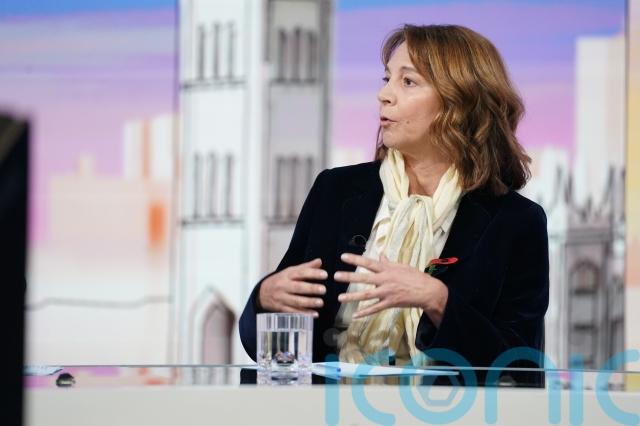
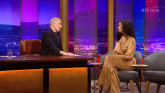
Speaking on Radio 4’s Desert Island Discs with Lauren Laverne, Khalaf said: “I tend to think of it as three forces that are challenging journalism today.
“The first force is something we were used to, which is the freedom of the media is under threat, but the freedom of the media is now under threat in more countries, including in the US frankly.
“I have to worry about my correspondents in the US in a way that I never used to.”
Since US President Donald Trump returned to the White House, he has used a number of tactics against media outlets that may have been critical of his administration, including the use of lawsuits and restricted access to the White House press office.
A notable example was when the late-night presenter Jimmy Kimmel was taken off the air, and suspended indefinitely, in September, after comments he made on ABC’s Jimmy Kimmel Live! following the murder of right-wing activist Charlie Kirk, an ally of Mr Trump.
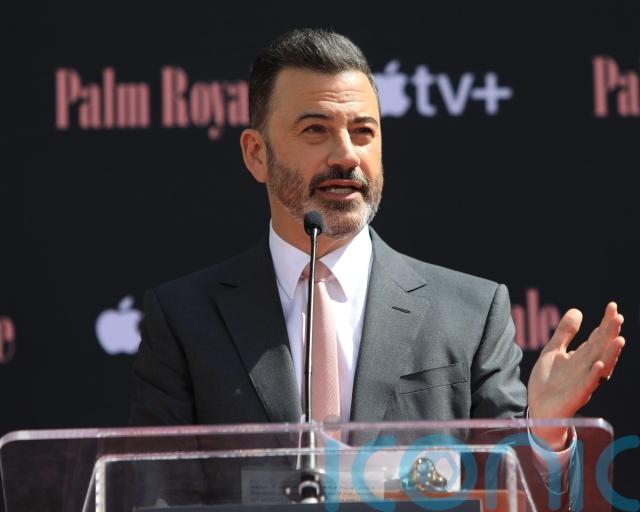
Mr Trump later suggested that if any TV networks only give him bad press “maybe their licence should be taken away”.
The suspension was met with criticism from the public, some of Hollywood’s biggest stars and political figures, of the US administration for infringing on their freedom of speech and free press, leading to Kimmel’s return five days later.
Khalaf continued: “Related to that is that the truth itself is challenged today.
“You can have different narratives about how you got to a certain situation, or different opinions, but today, what we are witnessing is an attempt at creating a different narrative of the truth, and there are different narratives of the truth.
“Then you have all the economic headwinds and the technological headwinds. On the economic side, a lot of local journalism has now disappeared because creating quality journalism is very expensive and they simply can’t afford it any more.”
“And in an AI (artificial intelligence) world, the truth is challenged, but there’s also a threat of disintermediation. I’m sure that you’ve seen deep fakes everywhere on social media these days.
“I think that this is a pivotal time and it’s an existential time for journalism and for the media industry.”
When asked how to respond to these challenges, she said: “In some ways we are lucky because trust, which I always say, is really our currency.
“I think that you have to maintain extremely, extremely high standards in order to protect that trust.”
Listen to the full Desert Island Disc episode on BBC Sounds and BBC Radio 4 from Sunday at 10am.

Subscribe or register today to discover more from DonegalLive.ie
Buy the e-paper of the Donegal Democrat, Donegal People's Press, Donegal Post and Inish Times here for instant access to Donegal's premier news titles.
Keep up with the latest news from Donegal with our daily newsletter featuring the most important stories of the day delivered to your inbox every evening at 5pm.

This publication supports the work of the Press Council of Ireland and Office of the Press Ombudsman, and our staff operate within the Code of Practice of the Press Council. You can obtain a copy of the Code, or contact the Council, at www.presscouncil.ie, Lo-call 1800 208 080 or email: info@presscouncil.ie.