Search


03 Feb 2026
Search
03 Feb 2026

Please allow ads as they help fund our trusted local news content.
Kindly add us to your ad blocker whitelist.
If you want further access to Ireland's best local journalism, consider contributing and/or subscribing to our free daily Newsletter .
Support our mission and join our community now.
To continue reading this article, you can subscribe for as little as €0.50 per week which will also give you access to all of our premium content and archived articles!
Alternatively, you can pay €0.50 per article, capped at €1 per day.
Thank you for supporting Ireland's best local journalism!


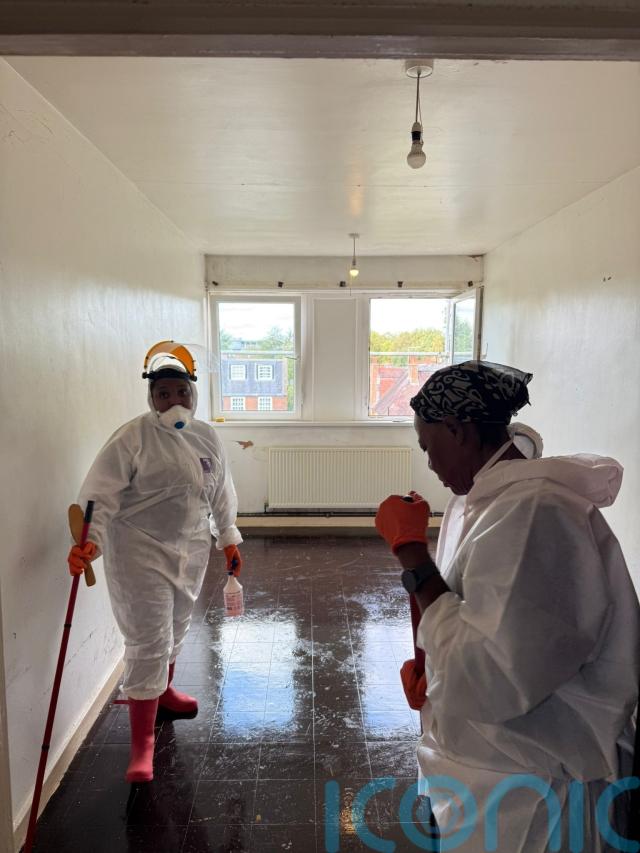
A specialist cleaner who has cleared a bathtub full of human faeces and removed more than a tonne of urine bottles from homes as she cleans biohazard and trauma scenes has urged people to check on vulnerable friends and family as cases of hoarding increase.
Former Transport for London (TfL) worker Mufaro Mapanda, 63, has been working in her Essex franchise of the specialist cleaning service Pocket Rockets, with her niece, Mellisa Chiyangwa, 30, since 2023.
The pair have been called to clear the homes of hoarders and drug addicts, and to clean up scenes of violence or suicide, and they’ve noticed a spike in hoarding cases in recent months.
They recently had to clear a bathtub full of human faeces, removing more than a tonne of urine bottles from the property, and Mufaro – who is also a founder of the Hope for African Communities charity – said the job has made her realise how important it is to check in on vulnerable people in the community.
“Hoarders are people and often they don’t understand that how they live isn’t normal,” Mufaro told PA Real Life.
“Hoarding is caused by mental health issues, and we really need to raise awareness about it.
“It’s so important to check on vulnerable people, not just on the phone, because often they sound OK on the phone, but in person. Then they can seek help early.”
Mufaro has always loved helping people.

Born in Zimbabwe, she arrived in Britain in 1999.
“At that time, there were a lot of problems in Zimbabwe. The government was chasing white settlers from the country. I was against that so I had to flee as a refugee,” she explained.
She said she was welcomed in Britain and – apart from the weather – enjoyed settling into her new home.
She found a job with TfL and worked as a station supervisor for 17 years.

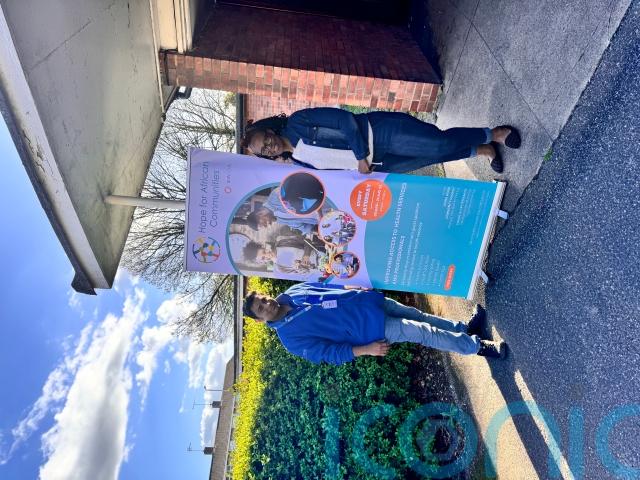
Although she was always doing what she could to help friends and family, in 2012, she decided to set up a charity – Hope for African Communities (HAC) – to offer services to vulnerable people from ethnic minority communities.
Alongside various projects to help refugees and asylum seekers settle in Britain, HAC funded and built a primary school in a deprived area of Zimbabwe.
“It has six classrooms and is in an old farmhouse, which was abandoned after the owners were killed,” she says.
“We are trying to secure funding as we need to build more schools in Zimbabwe. It is a need.”

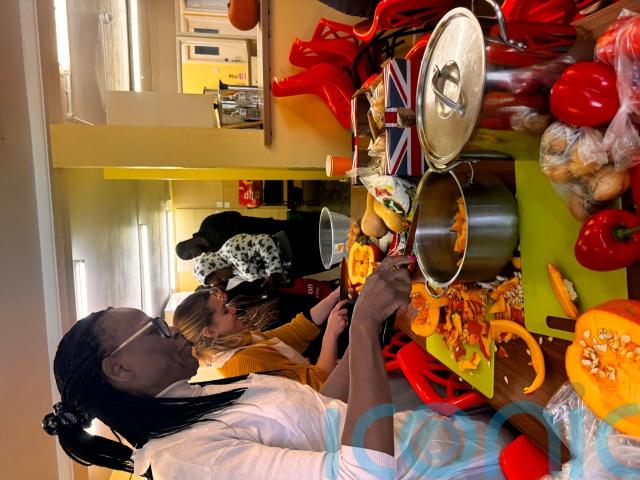
In 2020, during Covid, seeing that many people were struggling, Mufaro set up a registered food bank in Basildon with Mellisa.
Today, it has 80 registered weekly visitors and Mufaro expects that number to pass 100 next year.
Many of the users of the food bank are mothers with young children, who are most appreciative of basic necessities like toiletries and baby food.
“Charity is not like a business,” Mufaro said.

“In business, it doesn’t matter if people are appreciative. But when you do something charitable for someone, you feel it in your heart.
“We don’t want the glory, we just want to make sure that the children can go to school having eaten something.”
In 2023, Mufaro and Mellisa set up a biohazard and trauma cleaning business as they noticed there was a need for it in the community.
They formed a franchise of Pocket Rockets, a specialist cleaning company based in Lincoln.
The work they do is difficult and often shocking, especially when they have to clean up after a violent scene, unattended death or suicide.
They approach each with positivity and passion, working closely with the families to ensure the job is done professionally.
The pair say the most challenging jobs are working with hoarders.
According to the NHS, hoarding disorder is “where someone acquires an excessive number of items and stores them in a chaotic manner, usually resulting in unmanageable amounts of clutter”.
“Many of these people have spent 20 years accumulating clutter,” Mellisa said.
“It becomes very dense but they don’t want you coming in to take it away because they are their belongings.”
She said they often have to be patient when they are called to a job only to find the owner refuses to let them in.
“Sometimes it can take up to a month of talking on the phone to make them comfortable and trusting enough just to let you into the house,” she said.
Once trust has been gained, it is still a painstaking and often costly process to remove the belongings.
Emotional support is needed at every stage.
A recent job took five people nine days to get an elderly person’s house back to a clean and liveable state.
Every item had to be carefully picked through and the house had been damaged by the amount of clutter, with the plumbing completely broken.
“That was their situation for 20 years and we were trying to fix it in nine days,” Mellisa said, illustrating that the problem is not the mess but the mental health of the hoarder.
In another recent job, the pair had to clean the house of someone who had spent years defecating in the bathtub and urinating in bottles.
“All the bottles weighed over a tonne,” Mufaro recalled.
“We still wonder how they could live like that with the smell, eat food there and think that everything was OK. But that’s why we really need to raise awareness about these issues.”
Mufaro sees her cleaning role as partly charitable because so much of it is to do with helping people get out of difficult situations.
Despite often overwhelming difficulties, she believes she and her niece are doing important work to help vulnerable people.
They say they are always looking for companies and customers to work with, and encourage people to get in touch.
You can find their website here: www.pocketrockets.org.uk/places/essex-east-london.

Subscribe or register today to discover more from DonegalLive.ie
Buy the e-paper of the Donegal Democrat, Donegal People's Press, Donegal Post and Inish Times here for instant access to Donegal's premier news titles.
Keep up with the latest news from Donegal with our daily newsletter featuring the most important stories of the day delivered to your inbox every evening at 5pm.

This publication supports the work of the Press Council of Ireland and Office of the Press Ombudsman, and our staff operate within the Code of Practice of the Press Council. You can obtain a copy of the Code, or contact the Council, at www.presscouncil.ie, Lo-call 1800 208 080 or email: info@presscouncil.ie.