The woman was conveyed to University Hospital Limerick for treatment of serious injuries. She was pronounced deceased yesterday evening.
Search


02 Apr 2026

Please allow ads as they help fund our trusted local news content.
Kindly add us to your ad blocker whitelist.
If you want further access to Ireland's best local journalism, consider contributing and/or subscribing to our free daily Newsletter .
Support our mission and join our community now.
To continue reading this article, you can subscribe for as little as €0.50 per week which will also give you access to all of our premium content and archived articles!
Alternatively, you can pay €0.50 per article, capped at €1 per day.
Thank you for supporting Ireland's best local journalism!


A couple whose daughter has a rare one-in-100,000 condition and nearly died twice after contracting a common respiratory virus has said celebrating her third birthday this year felt “monumental”.
Kate Anderson, 32, a teaching assistant, and her partner Anthony Wales, 36, a sales adviser, who live in South Shields, Tyne and Wear, said their daughter Florence Wales was diagnosed with Aicardi syndrome – rare genetic condition which affects the brain and causes seizures – at seven weeks old after suffering repeated fevers.
According to the Aicardi Syndrome Foundation, the incidence of Aicardi syndrome is estimated to be approximately one in every 100,000 live births, with around 4,000 cases worldwide.
Kate said the condition means that Florence, now three, is disabled, non-verbal, oxygen-dependent and unable to walk; she needs to be fed through a tube in her stomach; she has up to five seizures a day; and she is prone to infections.
Florence has had 34 hospital admissions in total since October 2023 – but two in particular left Kate and Anthony fearing the worst, as Florence remained in intensive care for days after contracting respiratory syncytial virus (RSV) and doctors said she “might not make it”.
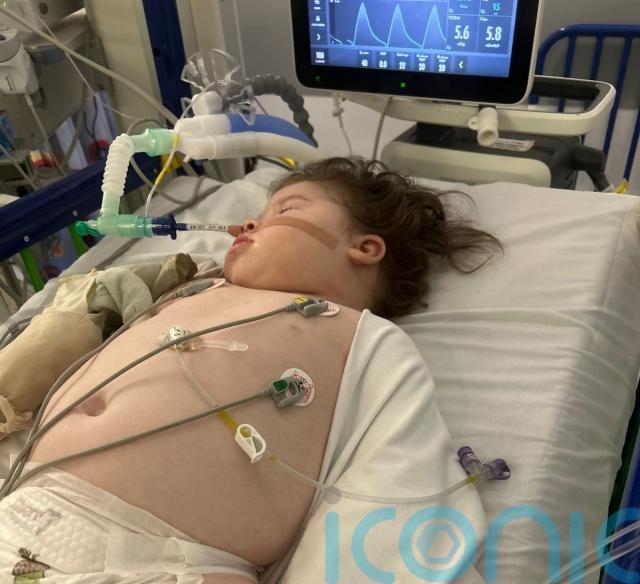
Now that Florence is back at home and has “bounced back”, defying the odds, Kate said she cannot believe her daughter is “still here”.
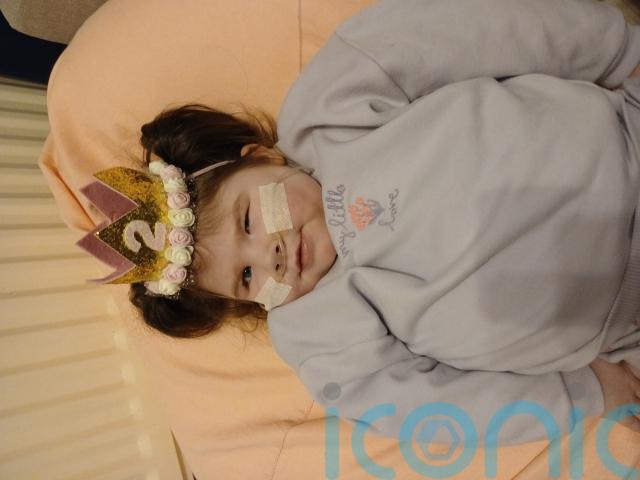
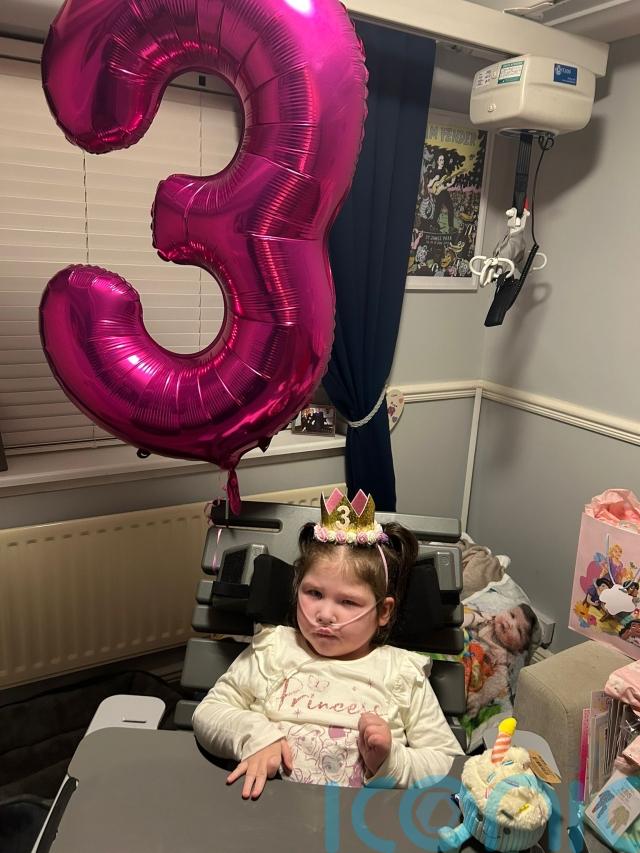
“It was her birthday the other day, so that was a monumental birthday for me because of what we’ve just been through,” Kate told PA Real Life.
“I ended up delaying going back to work because I thought, ‘No, I’m going to spend her birthday with her’, because I didn’t think she would be here.
“I just feel very grateful that we still have her and she has just bounced back so quickly.
“I always use the word ‘resilient’ when I talk about her.”
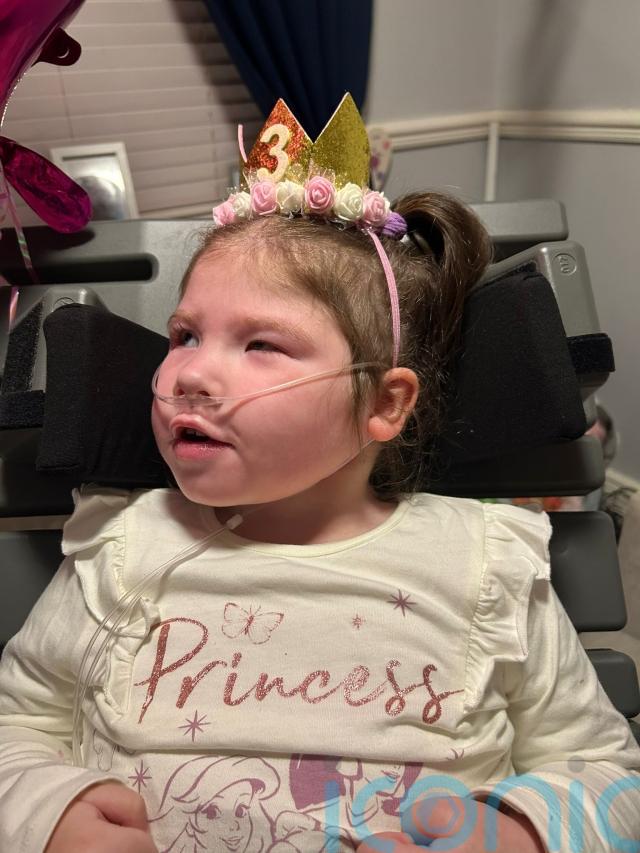
Kate explained that she had a normal pregnancy and Florence was delivered via an induced labour, as she was overdue, in March 2023.
The first-time mother said the birth was “straightforward”, but she noticed Florence’s left eye was smaller than her right.
She said doctors initially attributed this to “swelling from birth”, but further testing at Sunderland Eye Infirmary confirmed she had coloboma – missing tissue in a part of the eye – which can cause vision loss and sensitivity to light.
At seven weeks old, Florence then started having seizures.
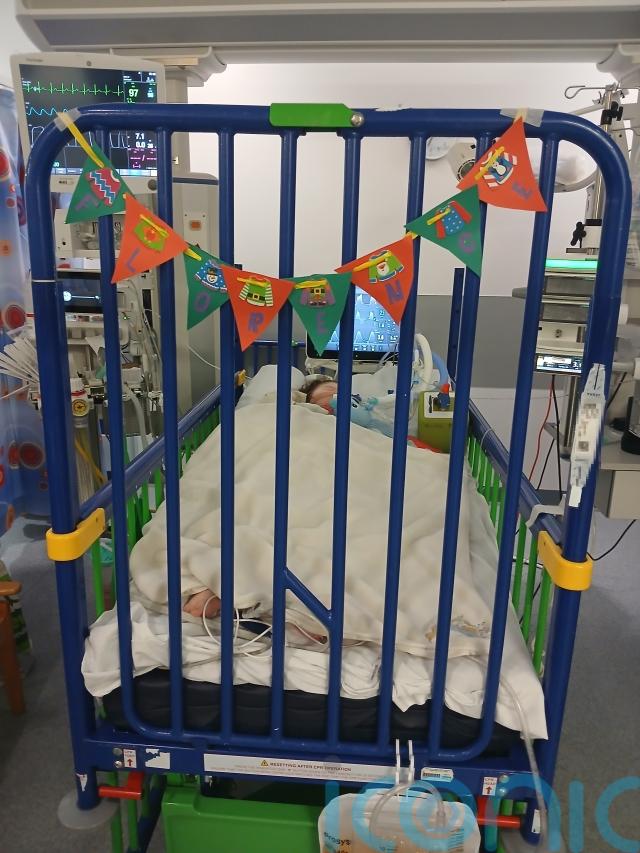
“Before she was medicated, she was having 20 to 30 seizures a day,” Kate explained.
“Now she has up to five seizures a day, which is obviously much better, but she has never been seizure-free.”
When Florence started having fevers as well at seven weeks, she had an MRI scan which revealed she had Aicardi syndrome.
“We were devastated,” Kate continued.
“It’s incredibly rare but it’s so different with every child – some children with Aicardi can walk and talk, but Florence is fully disabled.
“She’s got no muscle tone, her legs are constantly in that frog-leg position, she has sight problems, she’s non-verbal, she can’t speak, and she can’t do anything for herself, really.
“She’s PEG fed, so she’s fed through her stomach, she’s oxygen-dependent, so she has oxygen 24/7, and then obviously the chest infections – she’s prone to chest infections.”
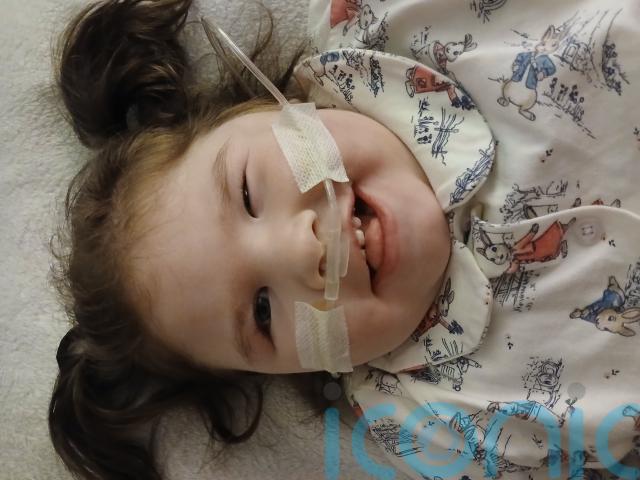
In October 2023, Florence started developing repeated chest infections, meaning the family were “in and out of hospital every couple of weeks”.
On December 1 2024, however, Kate said their “world was turned upside down” as Florence was admitted to Sunderland Royal Hospital and diagnosed with respiratory syncytial virus (RSV).
While the NHS says RSV is a common cause of coughs and colds and infections usually get better by themselves, Kate said it was particularly dangerous for Florence because of her weakened immune system from Aicardi syndrome.
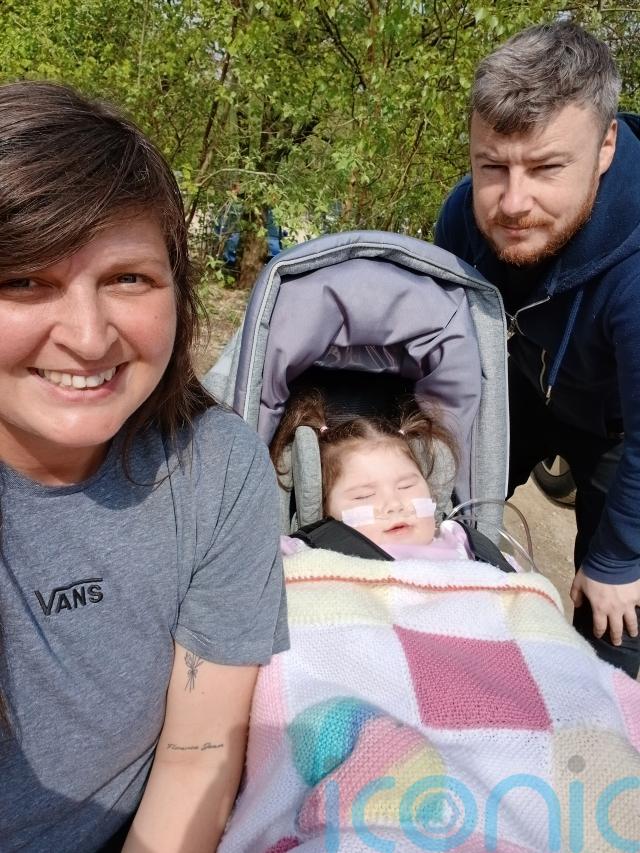
“It was three nights (at Sunderland Royal) and she just wasn’t improving,” Kate said.
“She was working really hard and, even on extra oxygen and higher-flow oxygen, her breathing wasn’t improving.”
Florence was transferred to the Royal Victoria Infirmary (RVI) in Newcastle on December 4, where she remained in intensive care for four nights, and during this time Kate received a “horrendous” phone call.
“I got the call at 6am from Anthony, and he told me that Florence had taken a turn for the worst and I needed to get there straightaway,” she said.
“We’ve learned to be resilient over the years, but nothing prepares you for hearing that your child might not make it through the night.
“We were terrified. Everything felt completely out of our control.”
It was during this time that Kate and Anthony first learned of The Sick Children’s Trust and its “Home from Home”, called Crawford House.
Crawford House supports families by giving them a place to stay just minutes from their child’s hospital bedside – and Kate said this was their haven during the “darkest time of (their) lives”.
“I couldn’t bear the thought of Florence waking up or something happening and not being there,” Kate said.
“She’s never had to face any of her hospital stays without one of us by her side… so I remember walking in and just feeling a weight lift off my shoulders.
“It wasn’t just a bed; it was a safe haven. Somewhere we could breathe, cry, rest.”
Florence was then transported back to Sunderland Royal on December 8, before finally being discharged on December 17, meaning they were home for Christmas that year.
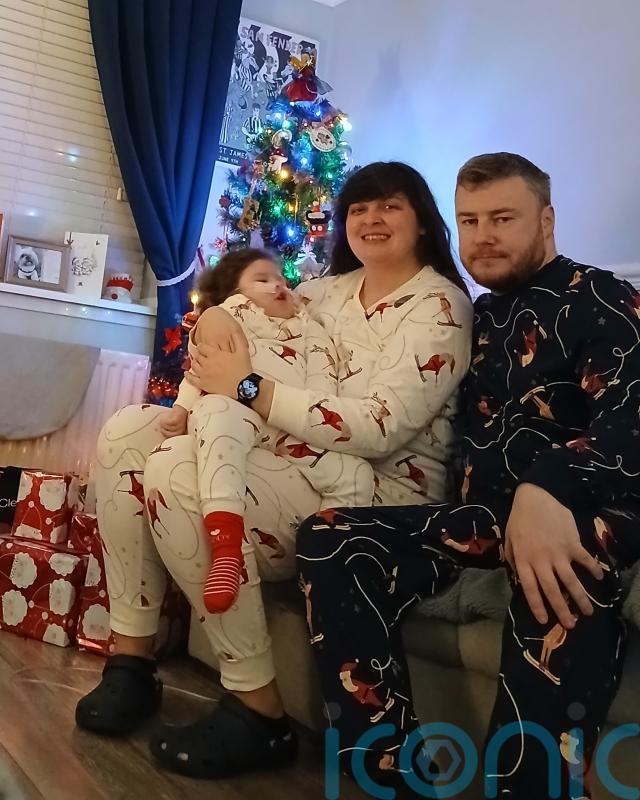
However, within the first few months of 2025, Florence had nine hospital admissions and continued to have chest infections.
She was admitted to Sunderland Royal on December 28 2025, had one night back at home on January 7 2026, and then returned to the hospital until January 26 as she “still wasn’t right”.
During this time, Kate learned Florence had developed RSV for a second time, and she then took her to the RVI where she remained for three more weeks, and the family stayed in Crawford House again.
Speaking about the impacts of the second RSV diagnosis, Kate said: “When we got home and I was putting her to bed, I just thought: ‘I can’t believe that you’re here’, because we thought she was going to die.
“Whenever a child has to go on a ventilator, it’s life or death, I think, but I don’t think I really understood it the first time.
“It has been horrendous, but I think I felt it more this time around.”
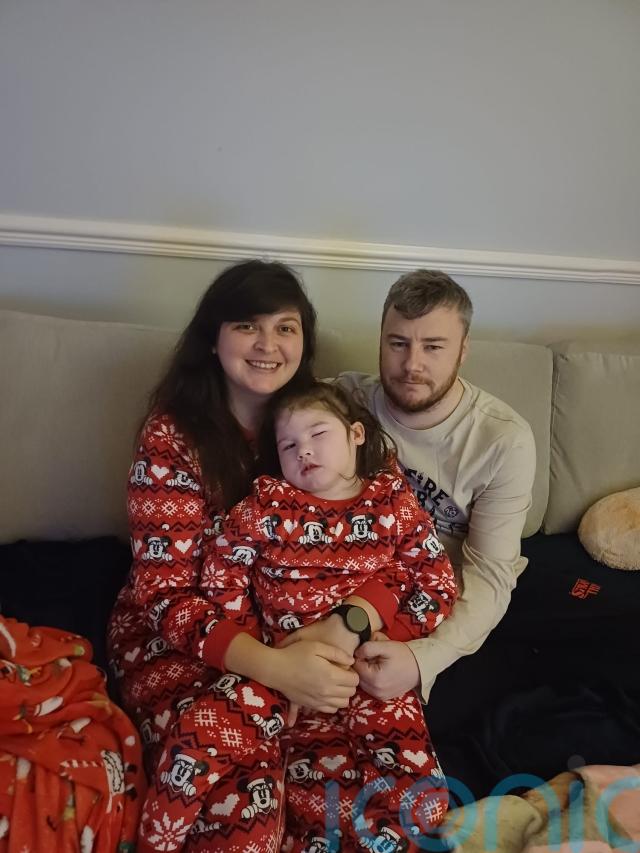
Kate and Anthony ended up having a delayed Christmas in January this year, and while Florence faces many challenges, they said her condition has never stopped them from enjoying life.
They go camping every year and said Florence loves sensory experiences and TV programmes such as In the Night Garden.
Kate said: “You don’t get much from her because of the condition she’s got, but when she does smile it’s the best thing ever.”
Kate and Anthony are now sharing their story to raise more awareness of Aicardi syndrome and RSV to help other parents, and to say thank you to The Sick Children’s Trust and Crawford House.
They said they have donated some money to the charity, but they hope to arrange larger fundraising events in future to give back.
Reflecting on the last three years, Kate said: “There were two occasions where we thought she was going to die.
“Having two major hospital admissions in the last two years, I honestly thought this time she was going to go, from how the doctors were talking.
“So, I just couldn’t believe that she was home and lying in bed.
“She has just bounced back; she does it every time.”
To find out more about The Sick Children’s Trust, visit: sickchildrenstrust.org.

Subscribe or register today to discover more from DonegalLive.ie
Buy the e-paper of the Donegal Democrat, Donegal People's Press, Donegal Post and Inish Times here for instant access to Donegal's premier news titles.
Keep up with the latest news from Donegal with our daily newsletter featuring the most important stories of the day delivered to your inbox every evening at 5pm.

This publication supports the work of the Press Council of Ireland and Office of the Press Ombudsman, and our staff operate within the Code of Practice of the Press Council. You can obtain a copy of the Code, or contact the Council, at www.presscouncil.ie, Lo-call 1800 208 080 or email: info@presscouncil.ie.