Rest in Peace James McEvoy
Search


30 Mar 2026

Please allow ads as they help fund our trusted local news content.
Kindly add us to your ad blocker whitelist.
If you want further access to Ireland's best local journalism, consider contributing and/or subscribing to our free daily Newsletter .
Support our mission and join our community now.
To continue reading this article, you can subscribe for as little as €0.50 per week which will also give you access to all of our premium content and archived articles!
Alternatively, you can pay €0.50 per article, capped at €1 per day.
Thank you for supporting Ireland's best local journalism!


With petrol and diesel prices continuing to rise, there’s a good chance that many drivers will be looking towards electric vehicles as a way to escape continued price hikes.
While home charging is the easiest and cheapest way to top up an electric vehicle, for many drivers, it’ll be public charging that they’ll interact with for most of the time. Let’s take a look at how it all works and how to get the best price.
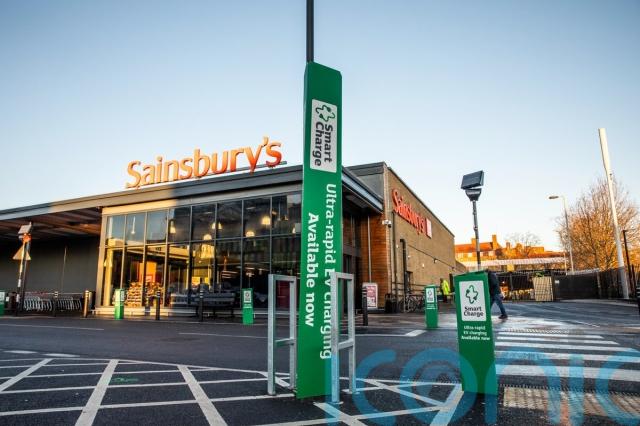
There has been a lot of criticism levelled at the charging infrastructure over the last few years, but it does seem to have turned a corner. According to leading charging mapping service Zapmap, there were 118,321 devices across 45,561 locations as of February 2026. For context, there were 102,771 chargers available at the end of 2024.
These are spread across a variety of speeds, too, but most of the newer installations are faster units designed to deliver a high rate of charge.
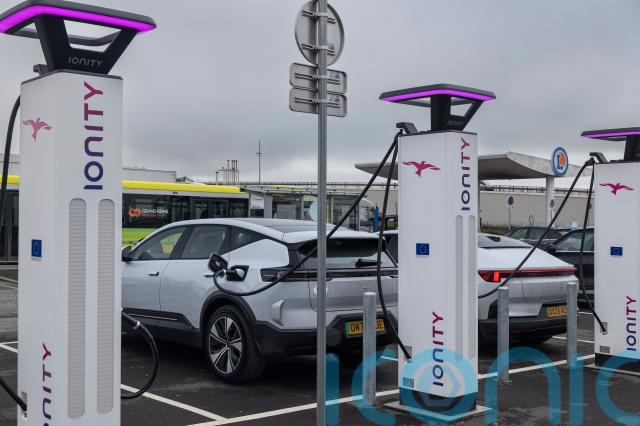
Different chargers are rated to deliver different speeds. The faster the speed, the quicker you’ll be able to charge up a car. The quickest ones in the UK are over 350kW and, in cars which can accept this rate, you could do a 10 to 80 per cent charge in around 18 minutes. However, the most common ones deliver between 3 and 8kW, which is quick enough for full overnight charge.
It’s worth mentioning that just because you find a charger which can deliver a rapid speed, it doesn’t always mean that your car can accept it. Electric vehicles get a maximum charge speed rating and won’t be able to take anything above this. For example, if your car is rated to charge at a maximum speed of 100kW, then that’ll be the quickest it can charge at. Even if you plugged into a 350kW unit, the fastest it’d be able to charge would be 100kW.
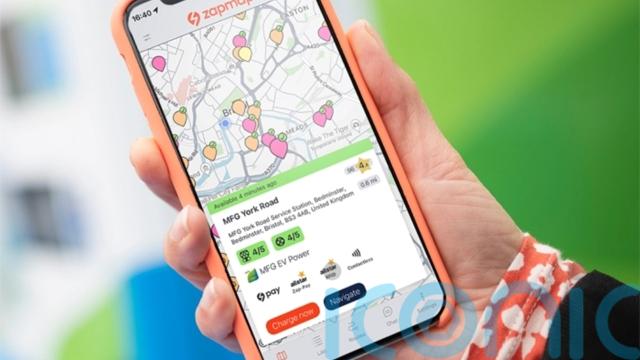
Zapmap is one of the leading mapping services, so it can be a great place to find a charger nearby. However, there are plenty of other options. Google Maps now lists available chargers, while many vehicles come with charging locations pre-loaded into their native navigation systems.
These in-car systems can be a good option, too, as they’ll be able to work out the best possible places to stop across your planned route. They can also calculate how long you’ll have to charge for, and how much remaining charge you’ll be left with once you finish your trip
As with petrol and diesel, prices for electric chargers vary between locations. Again, Zapmap is able to show live prices, as can services such as ChargePrice and PlugShare. These show the locations and the prices that you’ll pay to charge. It’ll be displayed in a price per kilowatt hour, to p/kWh. For high-powered chargers, you can expect to pay in the region of 80p/kWh.
However, charging operators also have apps and these can sometimes offer discount rates.
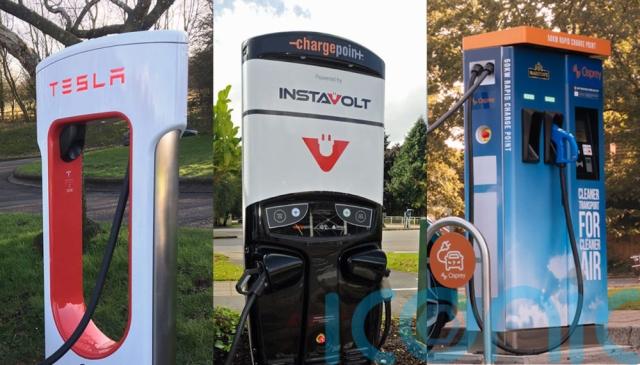
These discount rates are some of the ways in which you can make public charging cheaper. For instance, you can subscribe to a subscription service on some providers to bring down the charges. Ionity, which operates some of the fastest chargers in the UK, offers a range of subscriptions. Its Power 365 plan might cost £104.99 per year, but it nearly halves the cost of charging, which makes it a good option for drivers who are often travelling long distances and need access to cheap – but fast – charging.
If you’re not in a hurry, then slower chargers will nearly always be cheaper. So if you’re able to spend a little longer without your car, or need to stop overnight somewhere, this will usually result in lower charging costs overall.
By law, all new chargers are required to have a contactless card reader installed on them to help make payment easier. However, though this method is the quickest, it stops you from being able to access those lower rates – on occasions. It’s why we’d recommend double-checking apps and charging provider services to check what the lowest prices might be.
You may have to activate the charge via an app, but it could be worth it for a cheaper charge.

Subscribe or register today to discover more from DonegalLive.ie
Buy the e-paper of the Donegal Democrat, Donegal People's Press, Donegal Post and Inish Times here for instant access to Donegal's premier news titles.
Keep up with the latest news from Donegal with our daily newsletter featuring the most important stories of the day delivered to your inbox every evening at 5pm.

This publication supports the work of the Press Council of Ireland and Office of the Press Ombudsman, and our staff operate within the Code of Practice of the Press Council. You can obtain a copy of the Code, or contact the Council, at www.presscouncil.ie, Lo-call 1800 208 080 or email: info@presscouncil.ie.