
RIP: Body found in search for missing man (63) as heartbreaking statement is issued
Search


10 Mar 2026

Please allow ads as they help fund our trusted local news content.
Kindly add us to your ad blocker whitelist.
If you want further access to Ireland's best local journalism, consider contributing and/or subscribing to our free daily Newsletter .
Support our mission and join our community now.
To continue reading this article, you can subscribe for as little as €0.50 per week which will also give you access to all of our premium content and archived articles!
Alternatively, you can pay €0.50 per article, capped at €1 per day.
Thank you for supporting Ireland's best local journalism!


Results from a new National Audit Office (NAO) report suggest that many older adults with frailty are not receiving the follow-up care they need after diagnosis.
The NAO found that frailty assessments for over-65s still haven’t returned to pre-pandemic levels, and GPs often fall short in providing required post-diagnosis care.
Of the 226,000 people diagnosed with severe frailty in 2024/25, only 16% received a medication review and 18% had a falls assessment.
The report also noted a stark local variation, with assessment rates ranging from just 10% to 90% depending on the area.
In light of these findings, we spoke to Dr Nasrin Razzaq, GP lead for personalised care with an extended role in frailty at GP Pathfinder Clinics, who explained exactly what the main symptoms of frailty are and how it is diagnosed and treated.
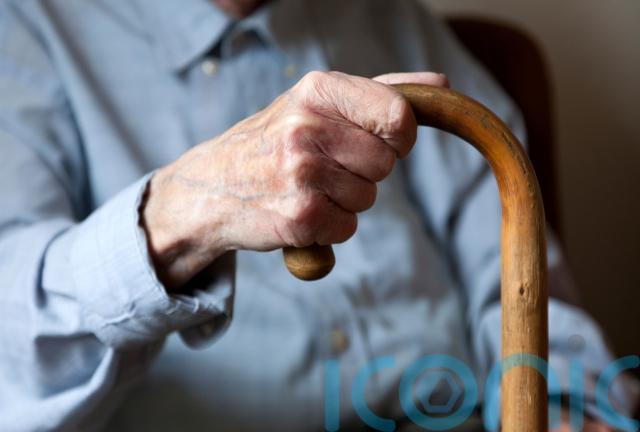
What is frailty? How is it defined in medicine?
Frailty refers to a person’s mental and physical resilience, or their ability to bounce back and recover from events like illness and injury, according to Age UK.
“Frailty is regarded as a syndrome, and a syndrome is a group of signs and symptoms that helps recognise frailty which includes things like being slower,” higlights Razzaq. “Generally, when we start thinking about frailty clinically, we are thinking about the over-65s and to do with the way the body’s ageing, and the physiological things that are changing in the body. However, frailty can exist under 65.”
The GP adds that being able to diagnose frailty enables healthcare professionals to think about a patient more holistically.
“I often use the example of if a 35-year-old woman with a UTI comes with a GP, they are likely to be given three days of antibiotics and general advice and be set on their way,” says Razzaq. “However, if an 85-year-old with frailty comes in with an UTI that is very different, in terms of their illness and they are likely to take longer to recover.
“The beauty of having that sort of label or understanding that somebody has frailty is that it prompts healthcare professionals to think about the patient in a more holistic way.”
Spotting the signs of frailty early can help increase someone’s quality of life.
“The aim of all of the work that we do with frailty is to try and maintain people’s independence in their own home, because that’s what most people want,” says Razzaq.
What are some key signs of frailty to look out for?
1. Slow walking speed
Taking longer than usual to walk a certain distance is seen as one of the major signs of frailty.
“Being able to recognise frailty includes things like being slower, what we call ‘gait speed’, and you can measure that,” explains Razzaq. “One of the ways that we measure it is something called a Timed Up and Go (TUG) test, where we have a stopwatch and get a person to stand up, walk three meters, turn around and walk back again.
“We time that and if it’s in double digits, so more than 10 seconds, then it means they’ve slowed down a little bit. Less than 10 seconds is considered normal, slightly more is considered mild frail and more than 15 seconds is moderate frail.”
2. Weakness
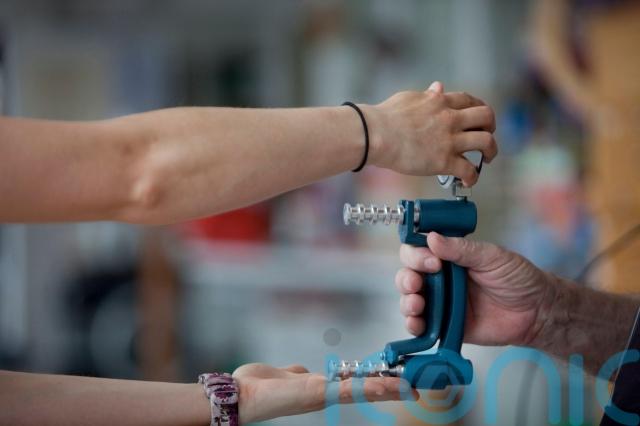
This can be seen as reduced grip strength or general muscle weakness.
“One of the other symptoms of frailty is weakness or lack of muscle strength,” says Razzaq. “We’ve got instruments that we can measure grip strength with.”
3. Tiredness
“Feeling tired all the time is also a common presentation that GPs often see,” says Razzaq. “Being tired isn’t in itself a symptom of frailty, but if it’s associated with things like muscle weakness or slowing down, then we will start thinking, is this person frail?”
4. Weight loss
“Weight loss is another one,” says Razzaq. “People can lose a significant percentage of their weight loss just because they’re frail. It’s important that doctors make sure that it’s not cancer or anything else more serious, but once that has been excluded we may suggest that it’s part of frailty.
“This is often to do with muscle weakness, or what we call sarcopenia (losing muscle mass) as that has an impact on the actual weight on the scales.”
5. Taking longer to recover from illnesses

Many patients with frailty find that it takes longer to bounce back from illnesses.
“Patients will sometimes say I had a cough and instead of it taking three or four days to recover, it takes a week or two weeks,” says Razzaq.
What should you do if you start presenting with these symptoms?
“Your first port of call should be your GP,” says Razzaq. “When I talk about the GP, I don’t necessarily mean just your doctor. Now we have primary care teams, clinical pharmacists and care coordinators who have all been trained on what to do if somebody presents with these symptoms and is worried about frailty.”
What assessments are used to diagnose frailty?
“The Timed Up and Go (TUG) test is probably the classic one and then there’s also something called the Comprehensive Geriatric Assessment, which looks at the different components of a person,” says Razzaq. “The aim is to holistically assess the patient, and we also do cognitive assessments.
“Then we also do functional assessments, for example getting them to stand with a broom and then squat to see how far they can bend down or getting them to lean forward. Sometimes we also do bone health screenings for things like osteoporosis.”
Is it reversible?
The earlier you recognise the signs of frailty, the better.
“Frailty is not an inevitable part of getting older. There’s an element of reversibility at the early stages, what we call pre-frail or mild frail,” says Razzaq. “If we can build up the muscle mass, improve the diabetes control, improve renal function then that frailty can shift back to pre-frail or no frailty.”
The scale goes from fit, to mild frail, to moderate frail, to severe frail.
“The aim is to recognise which part of that continuum a patient is on, and then to offer the services or the care that’s required for that particular cohort,” says Razzaq.
How is frailty treated and managed?
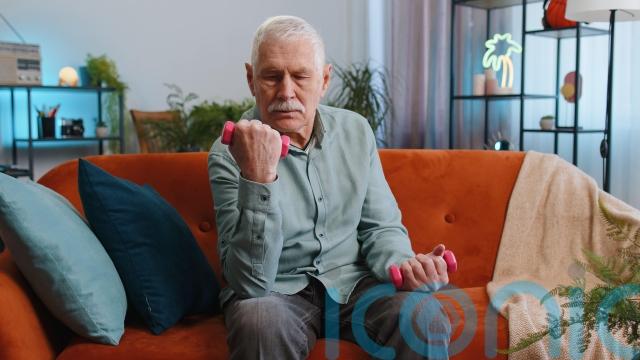
“The management or treatment of frailty is to develop a personalised care plan,” says Razzaq. “The first part of a care plan is to just explore what’s important to that person. We ask them about what matters to them most, so that might be being able to walk around a park every day, for example.
“Then we start matching interventions to their needs. So, we look at the results of their assessments and think about if they require strength and balance exercises or swimming sessions, for example. You can get exercise on prescription now, which helps meet a lot of patients’ physical and social needs.”

Subscribe or register today to discover more from DonegalLive.ie
Buy the e-paper of the Donegal Democrat, Donegal People's Press, Donegal Post and Inish Times here for instant access to Donegal's premier news titles.
Keep up with the latest news from Donegal with our daily newsletter featuring the most important stories of the day delivered to your inbox every evening at 5pm.

This publication supports the work of the Press Council of Ireland and Office of the Press Ombudsman, and our staff operate within the Code of Practice of the Press Council. You can obtain a copy of the Code, or contact the Council, at www.presscouncil.ie, Lo-call 1800 208 080 or email: info@presscouncil.ie.