
A photo of Scarlett Faulkner surrounded by candles in a church I PICTURE: Facebook
Search


03 Apr 2026

Please allow ads as they help fund our trusted local news content.
Kindly add us to your ad blocker whitelist.
If you want further access to Ireland's best local journalism, consider contributing and/or subscribing to our free daily Newsletter .
Support our mission and join our community now.
To continue reading this article, you can subscribe for as little as €0.50 per week which will also give you access to all of our premium content and archived articles!
Alternatively, you can pay €0.50 per article, capped at €1 per day.
Thank you for supporting Ireland's best local journalism!


A prevalent need for long-term support for people who are taking weight-loss jabs has been recommended after a study found participants experienced rapid weight re-gain after stopping treatment.
The University of Oxford research, published in the British Medical Journal, included 37 trials involving more than 9,000 people who took medications such as semaglutide (Wegovy) and tirzepatide (Mounjaro). Participants were treated for an average of 10 months and had an average follow-up of eight months.
Overall, people using weight-loss medication lost an average of 8.3kg, but regained 4.8kg within a year and returned to their original weight within about 1.7 years after stopping treatment.
The study also found that health benefits such as improved blood sugar and cholesterol levels faded after treatment ended, with all cardiometabolic markers returning to baseline within about 1.4 years.
In light of this new research, we spoke to Dr Elise Dallas, GP at The London General Practice who runs her own weight-loss clinic, to find out how these weight-loss medications actually work, and what happens to our bodies once we stop taking them.
How do these weight loss injections actually work? What do they do to our bodies?
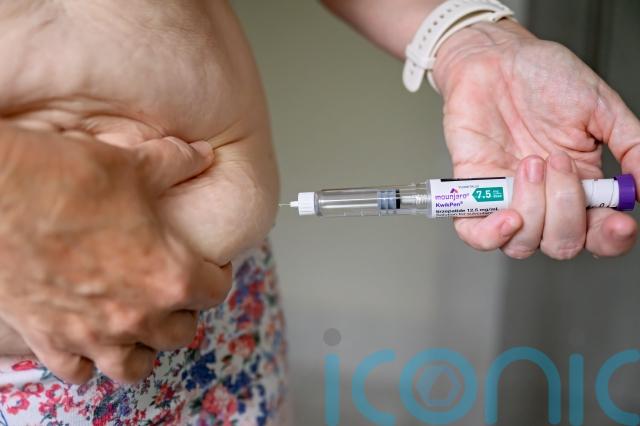
Buzzwords like “weight-loss jabs”, “GLP-1” and “Mounjaro” have dominated headlines and the weight-loss industry over the last year, but what do they actually mean?
Glucagon-like peptide-1 receptor agonists (GLP-1s or GLP-1RAs) – also known as weight-loss jabs – are medicines that help people feel fuller by mimicking a natural hormone released after eating, according to the GOV.UK website.
“GLP-1 is a natural hormone within our body and the problem is, when it’s natural, it degrades within a few seconds or a couple of minutes so it’s not long-term,” says Dallas. “So, they finally invented a way to make this process last longer with this medication.”
In the UK, there are several licensed GLP-1 medicines including semaglutide (sold under the brand names Wegovy, Ozempic and Rybelsus), tirzepatide (Mounjaro) and liraglutide (sold under various brand names), according to GOV.UK website.
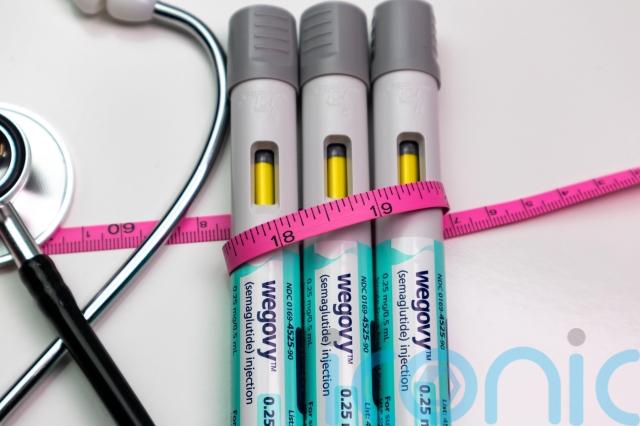
“Essentially, when you take this, it signals to the brain to reduce hunger and increases a fullness, because this is released when your tummy gets full,” explains Dallas. “It also slows gastric emptying, so how quickly your food leaves your stomach.
“By reducing your appetite and your cravings, you naturally eat less, and then digestion slows so you don’t get hungry as quickly, which leads to a calorie deficit.”
They can also impact key metabolic markers.
“These medications can also help keep blood sugar levels stable, lower blood pressure, improve cholesterol levels and reduce inflammation,” says Dallas. “So, that’s what we’re aiming for, not just pure weight loss.”
However, Dallas highlights how professional guidance and careful dosage is crucial in preventing a reduction in muscle mass.
“If you lose weight quickly, you can’t tell your body to lose only fat and not muscle, so you have to be incorporating muscle-saving lifestyle habits such as weight training and increasing your protein intake alongside it,” says Dallas.
What happens to your body when you come off them?
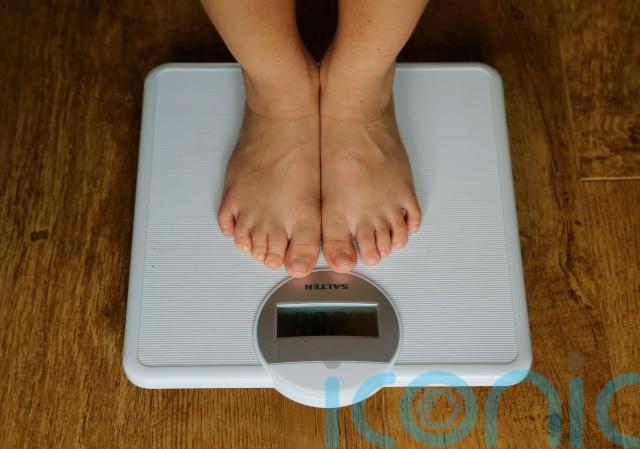
“If you are at your goal body weight but have not made any lifestyle changes and just stop taking the jabs cold turkey and go back to eating your original diet, then research shows that most people will gain weight again,” says Dallas.
“That usually starts from about eight to 12 weeks after you’ve stopped the medication because naturally your appetite returns and you are not having that slow gastric emptying, so you’ll just start to feel hungrier quicker.”
In addition, the impact on your metabolic markers, such as cholesterol and blood pressure, can be reversed.
“All these things will go back to what they originally were before, unless you are doing things to protect those metabolic markers,” says Dallas. “Once you stop taking these drugs you don’t get them acting on the pancreas and helping you balance your blood sugar [anymore]. Everything basically goes back to what it was pre-treatment.”
What advice would you give someone looking to come off the weight-loss jabs?

Dallas highlights how everyone’s journey is different, and that some people might not be able to ever come off this medication, but says that thinking about an individualised long-term plan from the start is crucial.
“Plan ahead and don’t stop suddenly,” advises Dallas. “You’ve got to taper, whether that be in time or dose. So, some people might choose to first go down a dose but still take it every week.”
Dallas stresses the importance of implementing lifestyle changes from the start to see long-term changes.
“It’s all about making those small changes so that hopefully after a year and a half of taking the medication, people have had enough time to start making these habits into lifelong changes,” says Dallas. “For example, prioritise strength training to protect the muscle and metabolism and try to increase your protein intake to at least 1.2 grams per kilogram of your lean body weight per day.
“Its about giving people the tools and education, and about finding long-term support, whether that is health coaches, psychological support or a community of like-minded people.”

Subscribe or register today to discover more from DonegalLive.ie
Buy the e-paper of the Donegal Democrat, Donegal People's Press, Donegal Post and Inish Times here for instant access to Donegal's premier news titles.
Keep up with the latest news from Donegal with our daily newsletter featuring the most important stories of the day delivered to your inbox every evening at 5pm.

This publication supports the work of the Press Council of Ireland and Office of the Press Ombudsman, and our staff operate within the Code of Practice of the Press Council. You can obtain a copy of the Code, or contact the Council, at www.presscouncil.ie, Lo-call 1800 208 080 or email: info@presscouncil.ie.