Search


22 Apr 2026
Search
22 Apr 2026

Please allow ads as they help fund our trusted local news content.
Kindly add us to your ad blocker whitelist.
If you want further access to Ireland's best local journalism, consider contributing and/or subscribing to our free daily Newsletter .
Support our mission and join our community now.
To continue reading this article, you can subscribe for as little as €0.50 per week which will also give you access to all of our premium content and archived articles!
Alternatively, you can pay €0.50 per article, capped at €1 per day.
Thank you for supporting Ireland's best local journalism!


During the chilly wintry months, most of us have a tendency to wrap up warm, crank up the heating and reach for hot drinks rather than guzzling down glasses of water.
However, it’s important to remember that your body still needs consistent hydration to function at its best and has subtle ways of sounding alarm bells.
Here are six signs that might indicate that your body is craving more H2O this winter…
1. Dry mouth

“The most obvious sign of dehydration is thirst which is often accompanied by a dry mouth, lips or tongue,” highlights Michael Zemenides, co-founding GP of A-Z General Practice at The Wellington Hospital, part of HCA Healthcare UK.
2. Dark urine
“A dark yellow or strong smelling urine is another indicator which usually means that the patient is peeing less often than usual,” notes Zemenides.
3. Dizziness

“Dehydration can cause nausea, dizziness and lightheadedness,” says Zemenides. “If you’re dehydrated, your blood pressure will drop and that can affect your sensation of dizziness. Also, in extreme cases, dehydration can lead to confusion which will make you feel even more dizzy and unsteady on your feet.”
4. Headaches
“If you’re dehydrated, you’ve got less water in your circulation system going around your body which means there’s less fluid around the brain itself, and that can impede how it functions and cause headaches,” explains the GP.
5. Fatigue

“If you don’t drink enough water you might begin to notice that your energy levels are affected and that you feel fatigued and tired,” says Zemenides. “It can also impact your concentration and how sharp you are feeling.”
6. Constipation
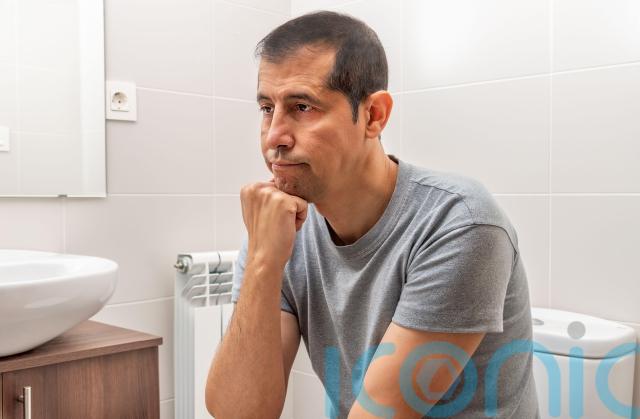
“Water is quite key in how you’re digesting things and the actual process of moving things through the bowel itself,” says Zemenides. “So, if everything’s quite lubricated and moving smoothly, then you’re less likely to get constipated.”
How much water should you drink every day?
“The government has quite simplified guidelines in The Eatwell Guide, which recommends about six to eight cups or glasses of fluid per day, assuming that you’re getting about 20% of your intake from eating food,” says Zemenides.
“However, this water intake requirement will increase with things like exercises, if you’re in a hot environment or if you’re ill, for example.”
Why is staying hydrated so important? What issues can dehydration lead to?
“Water is essential for human life and is involved in every biochemical reaction in the body,” highlights Zemenides. “It plays a pivotal role in regulating our temperature, maintaining our blood pressure, helps supports your kidney function and helps aid digestion.”
Therefore, being dehydrated can have a big impact on your body.
“Dehydration can become more serious overtime and can increase your risk of urinary tract infections and kidney problems, and lead to confusion which can result in an increased number of falls,” warns Zemenides. “In severe cases, you can experience a rapid heart rate, breathing difficulties or even collapse.”
When should you seek medical advice about this?
“If you’ve got dark urine, you can probably manage that yourself. However, if you’re experiencing those later, and more serious, symptoms, like palpitations, that sensation where you’re feeling unsteady on your feet, headaches or you’re just feeling unwell, then you should be seeking advice from your GP,” advises Zemenides.
Here are some tips on how to increase your water intake this winter…

“Drinking a full glass of water is a good way to start the day,” says Zemenides.
He also recommends small, regular sips throughout the day.
“Often people wait until they feel thirsty before having a drink, but I would recommend drinking little and often, whether you feel thirsty or not,” advises Zemenides. “Having a refillable bottle nearby at all times can help with this.”
Oral rehydration solution can also help treat dehydration caused by diarrhoea and vomiting.
“You can get oral rehydration solutions over the counter in a pharmacy which can help replace lost foods and electrolytes,” says Zemenides.
In addition, the GP also highlights how a significant portion of our daily fluid intake comes not just from drinks, but also from the food we eat, which helps considerably with overall hydration.
“Think about those water-rich foods, like fruits or vegetables and soups to keep some variety,” says Zemenides.

Subscribe or register today to discover more from DonegalLive.ie
Buy the e-paper of the Donegal Democrat, Donegal People's Press, Donegal Post and Inish Times here for instant access to Donegal's premier news titles.
Keep up with the latest news from Donegal with our daily newsletter featuring the most important stories of the day delivered to your inbox every evening at 5pm.

This publication supports the work of the Press Council of Ireland and Office of the Press Ombudsman, and our staff operate within the Code of Practice of the Press Council. You can obtain a copy of the Code, or contact the Council, at www.presscouncil.ie, Lo-call 1800 208 080 or email: info@presscouncil.ie.