RIP: Body found in search for missing man (63) as heartbreaking statement is issued
Search


10 Mar 2026

Please allow ads as they help fund our trusted local news content.
Kindly add us to your ad blocker whitelist.
If you want further access to Ireland's best local journalism, consider contributing and/or subscribing to our free daily Newsletter .
Support our mission and join our community now.
To continue reading this article, you can subscribe for as little as €0.50 per week which will also give you access to all of our premium content and archived articles!
Alternatively, you can pay €0.50 per article, capped at €1 per day.
Thank you for supporting Ireland's best local journalism!


Researchers have predicted that cases of glaucoma, a common eye condition that can lead to blindness if not treated, are expected to increase by 60% across the UK by 2060.
Using the latest census data, researchers from UCL and Moorfields Eye Hospital estimate that around 1.1 million people in the UK currently live with glaucoma, representing approximately 3% of those aged over 40. The study, published in the British Journal of Ophthalmology, also predicts that this figure will rise to 1.6 million by 2060, based on population projections from the Office for National Statistics.
These figures highlight the critical importance of regular eye examinations and early detection of glaucoma. To better understand this condition we spoke with Denise Voon, clinical adviser at The College of Optometrists, to find out about what causes it and the key signs to look out for.
What is glaucoma?
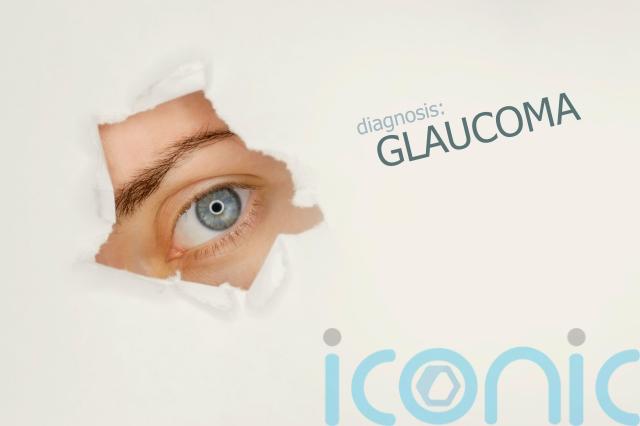
“Glaucoma is a group of diseases in which the optic nerve is damaged by pressure of the fluid inside the eye,” explains Voon. “It can affect one or both of your eyes and can lead to sight loss if not treated.”
There are lots different types of glaucoma, but the two most common types are chronic glaucoma and acute glaucoma.
“Chronic glaucoma develops slowly and is the most common form in the UK, whilst acute glaucoma (also referred to as acute angle-closure glaucoma) is caused by a rapid increase in the pressure,” says Voon.
Who is more at risk?
“Anyone can develop chronic glaucoma, but the risks increase if you’re over 40, are very short-sighted, are of African or Caribbean origin, or have a close relative (first degree relative, a brother, sister, parent) of someone with chronic glaucoma, if you’re known to have raised pressure in your eyes, if you’re diabetic, and if you have high blood pressure,” explains Voon.
“However, with acute glaucoma, women tend to be more susceptible and you’re also more at risk if you’re over 40, if you’re East Asian or South Asian, if you’ve got a family history of close-angle glaucoma, or if you’re long-sighted because your eyes are a little bit smaller.”
How serious is it?
“Both types of glaucoma can lead to irreversible sight loss if they are not treated,” warns Voon. “In the very late stages of untreated glaucoma, you’ll notice tunnel vision. So, your peripheral vision will slowly decrease more and more until you get to a point where you only retain that central part of your vision.”
What are some common symptoms to look out for?
“With acute glaucoma, the symptoms are usually quite obvious and include pain/aching/discomfort in the eye and blurred vision, perhaps with halos around lights,” says Voon. “You might also notice that your pupils get bigger if you go into the dark.”
The NHS website also lists a red eye, tenderness around the eye, seeing rainbow-coloured circles around bright light, feeling sick (nausea) and being sick and/or a headache as other key signs to look out for.
“However, with chronic glaucoma, there aren’t any symptoms in the early stages and the only real way to pick it up is to go and see your optometrist regularly,” says Voon.
How is glaucoma diagnosed?
“There are various tests that optometrists can do and the one that they do a lot is the intraocular pressure test [often called a tonometry] to check the pressure inside your eyes,” explains Voon. “We look for pressure that is abnormally high, or see if there’s been a change in the pressure in your eyes.
“We also look at the optic disc, which is the head of the nerve that joins the eye to the brain, to look for any subtle changes in the structure of the disc which might have been damaged from glaucoma. We can also do visual fields tests, so look at your peripheral vision and your field of vision to see if there has been any changes in that.”
How is it treated?
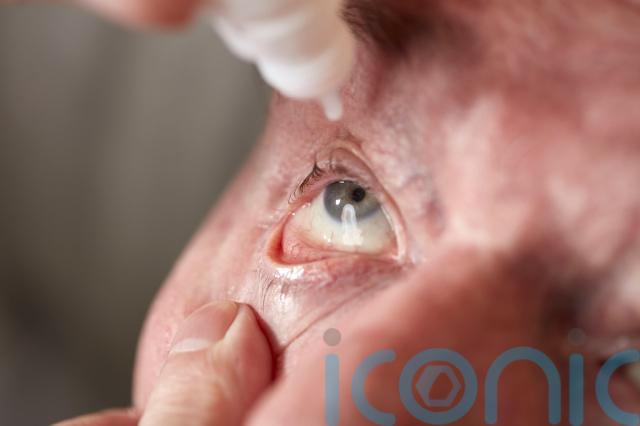
The treatment you’ll have depends on how your sight is affected and the type of glaucoma you have.
“Generally, glaucoma is treated with eye drops,” says Voon. “But there are also different types of surgery and laser treatments that can help reduce the pressure and help that fluid drain away a little bit more.”
Can you do anything to prevent it?
“There’s nothing we know of currently that you can do to prevent glaucoma,” says Voon. “The best thing to do if you are worried about glaucoma is to get your eyes tested regularly. That way, if you develop it, we can find it early then it can be treated early so it won’t get worse and lead to sight loss.”

Subscribe or register today to discover more from DonegalLive.ie
Buy the e-paper of the Donegal Democrat, Donegal People's Press, Donegal Post and Inish Times here for instant access to Donegal's premier news titles.
Keep up with the latest news from Donegal with our daily newsletter featuring the most important stories of the day delivered to your inbox every evening at 5pm.

This publication supports the work of the Press Council of Ireland and Office of the Press Ombudsman, and our staff operate within the Code of Practice of the Press Council. You can obtain a copy of the Code, or contact the Council, at www.presscouncil.ie, Lo-call 1800 208 080 or email: info@presscouncil.ie.