Search


18 Mar 2026
Search
18 Mar 2026

Please allow ads as they help fund our trusted local news content.
Kindly add us to your ad blocker whitelist.
If you want further access to Ireland's best local journalism, consider contributing and/or subscribing to our free daily Newsletter .
Support our mission and join our community now.
To continue reading this article, you can subscribe for as little as €0.50 per week which will also give you access to all of our premium content and archived articles!
Alternatively, you can pay €0.50 per article, capped at €1 per day.
Thank you for supporting Ireland's best local journalism!


Tenacious Red Rose and two-time Olympian Abi Burton, who made an amazing comeback to international rugby following a life-threatening diagnosis and medically induced coma, says the “traumatic” experience gave her a new outlook on life.
Since being diagnosed and treated for autoimmune NMDA receptor encephalitis aged 22, the rugby player from West Yorkshire, now 26, says: “I’ve been through something so traumatic and have to remember I’m not the same person that I was before, but that’s OK.”
Burton had never heard of encephalitis before her diagnosis, but says her family started to realise something wasn’t right in the months following the high of her first-ever Olympics, Tokyo 2021.
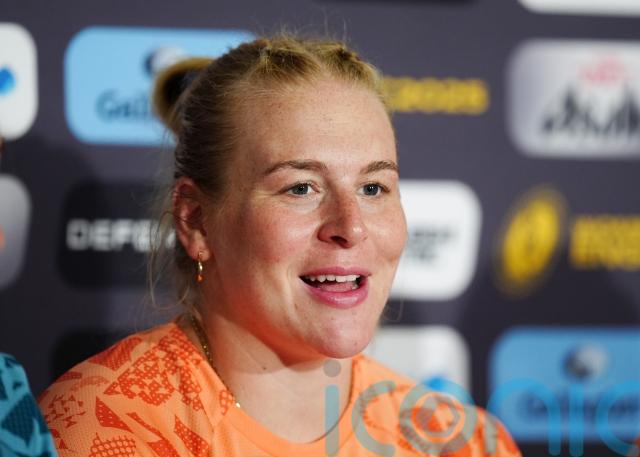
“Initially, a lot of people put it down to the fact that I’d been injured [Burton had an MCL – medial collateral ligament– injury] and was still trying to find my feet, but I actually felt confident in my own rugby-playing ability. It was more that I just felt like deep sadness, and I couldn’t put my finger on why I felt like that,” says the back-row forward, who currently plays for Trailfinders Women and the England Red Roses.
During this low point, Burton says she slowly began to lose her spark and was put on antidepressants.
“I was always one of the loudest people in the room, but I just I didn’t want to spend time with anybody,” she remembers.
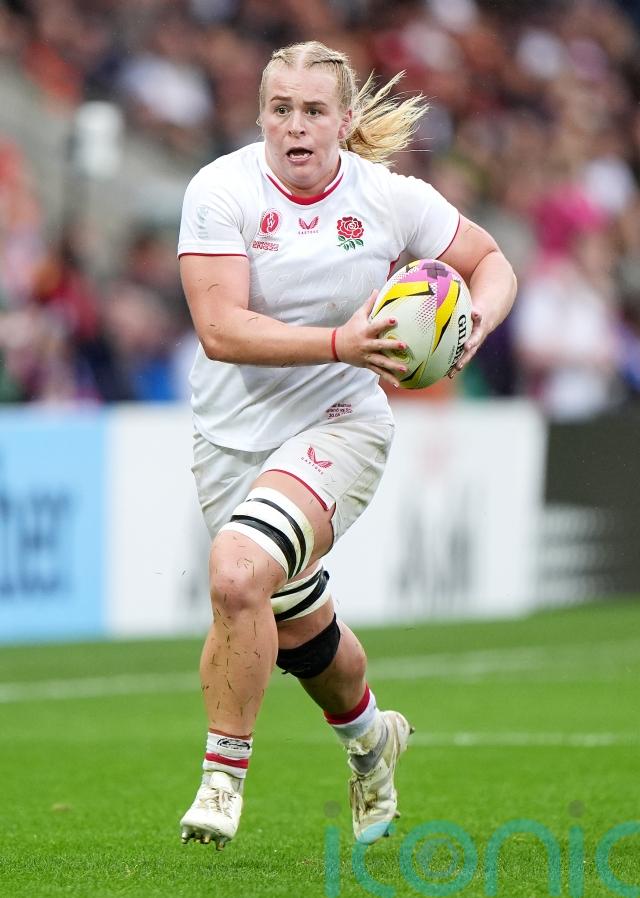
Burton says between May and September 2022 her memories are incredibly hazy, so her family had to fill her in on the dramatic events that transpired, where her behaviour transitioned from being sad to aggressive.
“My mum said during this time I ran around the house unclothed, punched her in the face and ripped the spindles off the stairway,” says Burton.
“Despite having no recollection of this, guilt still lingered because I had put my loved ones through so much during this time, and I fought with that for a really long time.
“It was off the back of the Olympics and we had the Commonwealth Games and the World Cup coming up that year, so I think from a psychiatric point of view, the most logical explanation was that I must be having a mental breakdown. The phrase ‘stress-induced psychosis’ was thrown around a lot.”
After multiple seizures and further bouts of frightening behaviour, Burton was admitted to the psychiatric unit at Fieldhead Hospital in Wakefield, where a blood test confirmed she had autoimmune NMDA receptor encephalitis.
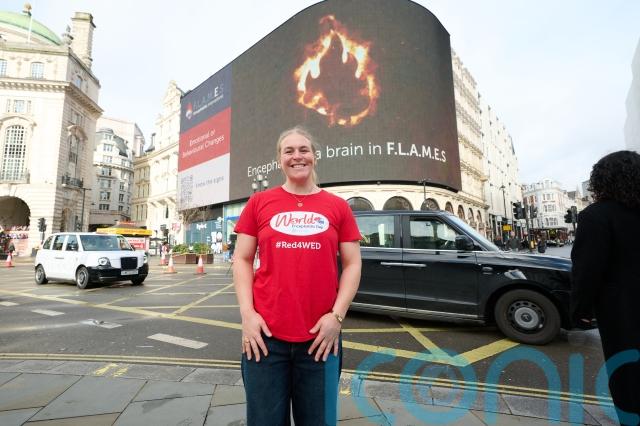
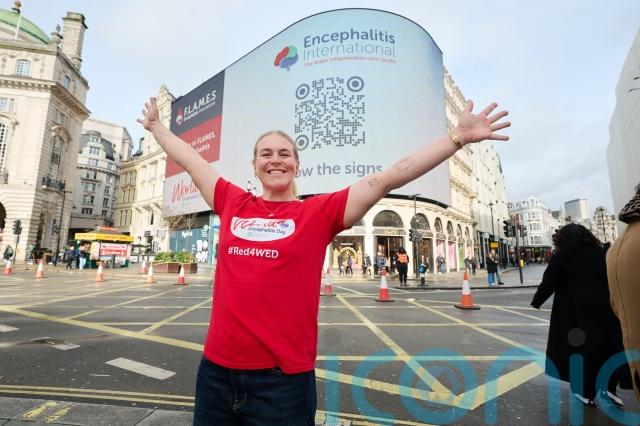
Encephalitis is often misdiagnosed, so Burton has recently joined a host of famous faces – including former Olympic swimmer Rebecca Adlington and Strictly Come Dancing finalist George Clarke – to support Encephalitis International’s new F.L.A.M.E.S campaign.
F.L.A.M.E.S stands for Flu-like symptoms, Loss of consciousness, Acute headaches, Memory problems, Emotional or behavioural changes, and Seizures – which has been designed to help the public spot the early warning signs of this rare, serious condition.
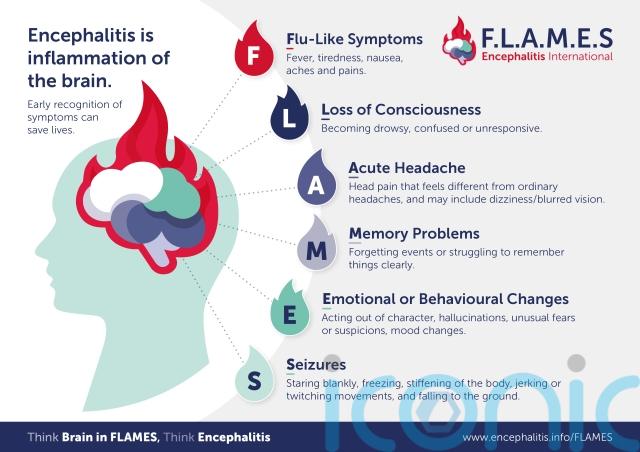
“Of course lots of people experience these symptoms in isolation, but collectively when these symptoms came together this might suggest there’s something neurological going on and indicate that people should seek urgent medical attention,” highlights Easton.
After exhibiting extreme, aggressive agitation that prevented doctors from treating her, Burton was put in a medically induced coma and received Rituximab, a second-line immunotherapy used to treat this critical illness, when she did not respond to numerous plasma exchanges.
“I still have some things that I struggle with, such as my memory and fatigue, but ultimately, I don’t have any lasting physical damages – which I know some people aren’t so lucky in that area – so I feel privileged and lucky,” reflects Burton.
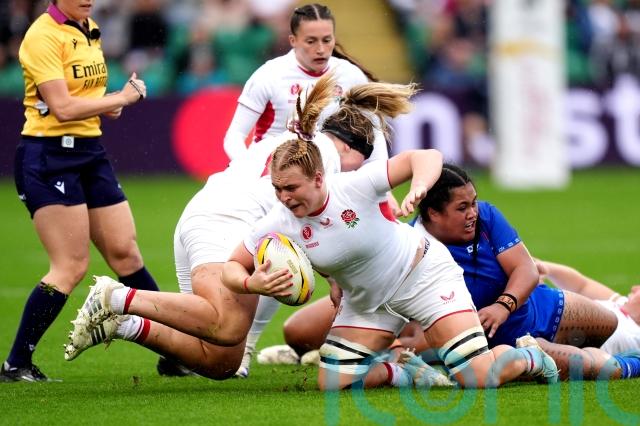
Burton says her life-long love for rugby, incredible family support and sheer stubbornness helped her return to international rugby – she went on to represent England at the Paris Olympic Games in 2024.
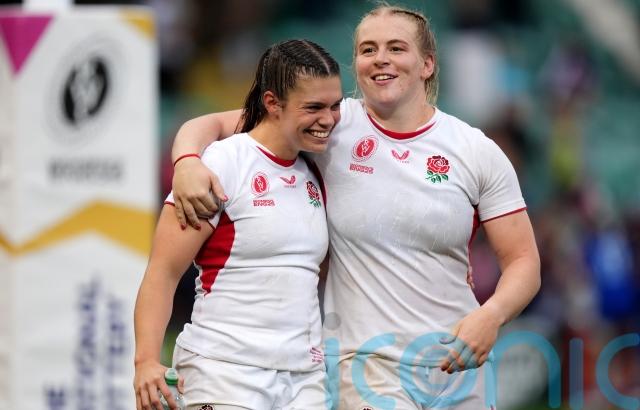
“The doctors said to me they weren’t sure if I’d ever be able to rugby play again, but one thing about me is that I’m stubborn,” said Burton.
“I just had the attitude of ‘let’s just go at it’. I was in the physio room with dumbbells doing bicep curls [after treatment]… They were shocked but no one wanted to stop me.”
Burton says rugby is something that bonds her family deeply.
“Playing rugby is just the place where I’ve always felt like me,” she says.
“My dad used to play, my brothers both play and I knew that if I wasn’t allowed back to play, then I’d go coach.”
Her friendships have also played a fundamental role in her recovery.
“None of the girls I’ve met at rugby treat me any differently, and that’s the thing that I love the most about them,” says Burton.
“To them I’m not an encephalitis survivor, I’m not a World Cup winner, I’m not an Olympian, I’m just Abi. They also remind me that sometimes I need to be a bit kinder to myself.”
The traumatic series of events has also given her a new perspective on life.
“If I wasn’t selected for the Tokyo Olympics, that would have crushed me. But after everything that happened afterwards, I remember that when it got to the Paris Olympics in 2024, I just thought, I don’t get selected, it’s OK,” says Burton.
“I’m still competitive, don’t get me wrong, but I also now know that selection doesn’t define me. It’s not the be-all and end-all.
“The way that I look at life now is you can’t take anything for granted. You never know which game is going to be your last, so you’ve got to go out and enjoy the moment for what it is.”
Visit Encephalitis International’s website to find out more about its F.L.A.M.E.S campaign.

Subscribe or register today to discover more from DonegalLive.ie
Buy the e-paper of the Donegal Democrat, Donegal People's Press, Donegal Post and Inish Times here for instant access to Donegal's premier news titles.
Keep up with the latest news from Donegal with our daily newsletter featuring the most important stories of the day delivered to your inbox every evening at 5pm.

This publication supports the work of the Press Council of Ireland and Office of the Press Ombudsman, and our staff operate within the Code of Practice of the Press Council. You can obtain a copy of the Code, or contact the Council, at www.presscouncil.ie, Lo-call 1800 208 080 or email: info@presscouncil.ie.