Search


26 Mar 2026
Search
26 Mar 2026

Please allow ads as they help fund our trusted local news content.
Kindly add us to your ad blocker whitelist.
If you want further access to Ireland's best local journalism, consider contributing and/or subscribing to our free daily Newsletter .
Support our mission and join our community now.
To continue reading this article, you can subscribe for as little as €0.50 per week which will also give you access to all of our premium content and archived articles!
Alternatively, you can pay €0.50 per article, capped at €1 per day.
Thank you for supporting Ireland's best local journalism!


As the House of Lords reiterated its backing for a ban on social media use by under-16s on Wednesday, and a landmark US case concluded that a 20-year-old plaintiff should be awarded £4.4 million in damages from social media giants Meta and Google, the UK Prime Minister has voiced fresh concerns about the addictive nature of social media for children.
Sir Keir Starmer told reporters: “The status quo isn’t good enough. We need to do more to protect children.
“That’s why we’re consulting about issues such as banning social media for under-16s.
“I’m very keen that we do more on addictive features within social media.”
We spoke to Alex Sharpe, associate lecturer in psychology at the University of Chichester, who shared some insight on why social media can be so addictive and suggested some ways to break this cycle.
1. Intolerance of uncertainty

“There’s this really interesting theory called the ‘intolerance of uncertainty’, and it’s the idea that as people, as humans, we can’t deal with the fact that we don’t know something – and I think this is particularly prevalent in today’s society when we have so much information at our fingertips,” says Sharpe, whose doctoral research focuses specifically on the phenomenon of doomscrolling.
“We become almost desperate to try and find out more information about things, and because of that, we engage further with these social media tools to try and find out the most up-to-date information.
“When we don’t have up-to-date news out, there’s an intolerance of uncertainty associated with that, because people just can’t handle not knowing more. So, that’s a big psychological driver towards us wanting to engage with behaviours like doomscrolling.”
2. Predisposed bias towards negative content
“We generally have a predisposed bias towards negative content,” says Sharpe. “It’s theorised to be more of an evolutionary tendency that’s just come from being more aware of negative information, so we are more aware for our own survival.
“But there are concerns these platforms exploit that bias and show us more negative content, because we are all predisposed to it.”
3. Dopamine feedback loop
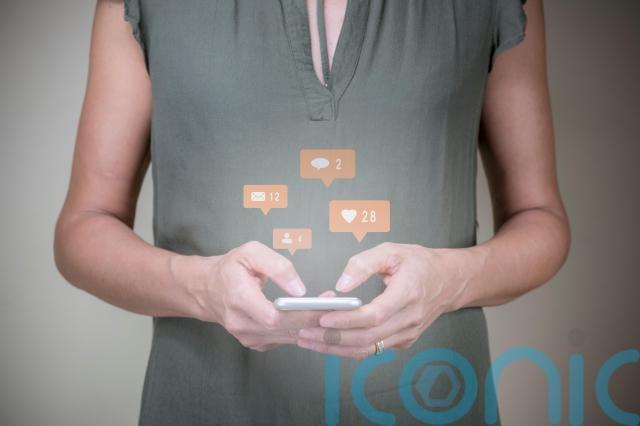
“My colleagues Benjamin Sharpe and Rylee Spooner looked into dopamine scrolling, which is this idea that you engage with this content because of the positive associations with it,” says Sharpe. “For example, when you get that like notification or watch an amusing video, it triggers a little hormone release in the brain called dopamine, which is a happy chemical.
“That happy chemical is a reason why you get drawn back to these platforms, because you are seeking that feeling again which creates that positive association with social media apps.”
4. The algorithm
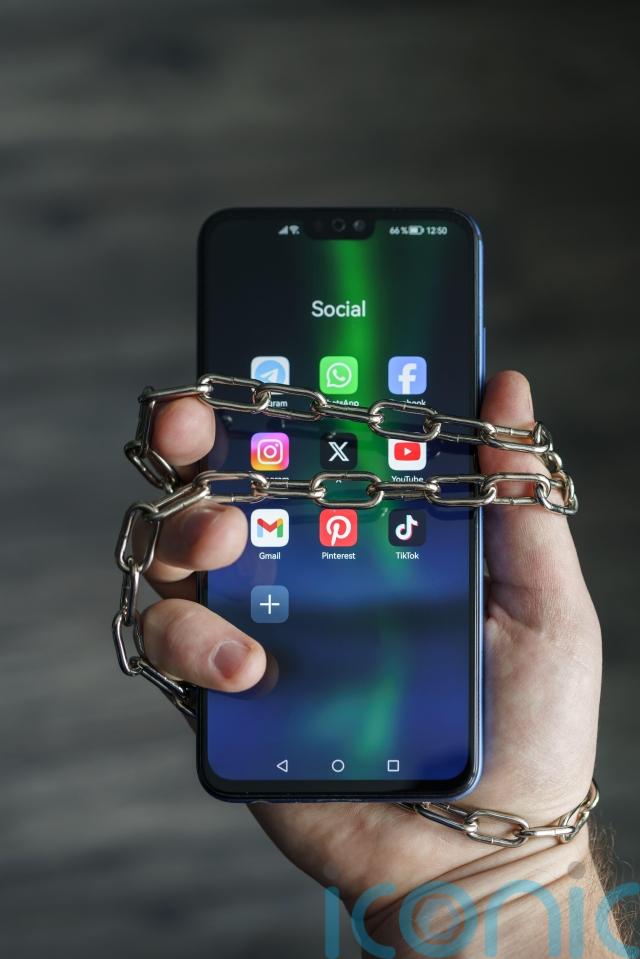
“Social media sites have these algorithms built into them which are created to establish exactly what keeps people on their app for longer,” highlights Sharpe. “Therefore, as soon as it sees that someone is engaging with a post or a video for even half a second longer, it will realise that this type of content is keeping them on the app for longer, so will then promote similar material a little bit more.
“This increases the chance of someone clicking or engaging with more content, and therefore make them stay on the app for a longer amount of time.”
5. Layout
The psychology lecturer also notes how a lot of engagement with social media platforms can be attributed to the general layout of them.
“Most social media platforms have this scrolling mechanism which makes it so easy to get to the next page, and there is never an end to the content,” says Sharpe. “You could scroll for hours and hours without seeing the same video twice, and that’s the novelty factor that comes with it. You’re not going to get bored because it’s always showing you brand-new content.”
Here are some tips on how to escape this cycle of endless scrolling…
Install app timers
“Put timers on the social media apps on your phone to limit how long you spend engaging with them,” recommends Sharpe.
Set out some phone-free zones or periods

“It might be useful to develop some phone-free periods,” suggests Sharpe. “For example, have phone-free family dinners, or decide certain places in the house where you don’t use your phone.”
Engage in mindfulness activities
“It can be quite good to engage with mindfulness-based activities,” suggests Sharpe. “Try to distance yourself from what’s going on in the world, and instead try to focus on yourself and enter these periods of calmness a little bit more.
“It’s about having self-compassion and recognising that it’s good to step away. Even if you feel bored for a bit when you’re not looking at the phone, it’s good to have that feeling of boredom and to experience the present a little bit more.”
Share your goals with others

“Tell close family or friends about what targets you have for screen time because the more you tell other people, the more they can help hold you accountable for those targets,” recommends Sharpe.
See what works for you
“It’s important to explore some different options to see what works for you, because everyone is different,” says Sharpe. “If you think of it like an alcohol or a smoking addiction, there’s no one defined method that works for everyone, so it’s about seeing how you respond to different methods and which one you find to be more effective.”

Subscribe or register today to discover more from DonegalLive.ie
Buy the e-paper of the Donegal Democrat, Donegal People's Press, Donegal Post and Inish Times here for instant access to Donegal's premier news titles.
Keep up with the latest news from Donegal with our daily newsletter featuring the most important stories of the day delivered to your inbox every evening at 5pm.

This publication supports the work of the Press Council of Ireland and Office of the Press Ombudsman, and our staff operate within the Code of Practice of the Press Council. You can obtain a copy of the Code, or contact the Council, at www.presscouncil.ie, Lo-call 1800 208 080 or email: info@presscouncil.ie.