Search


22 Apr 2026
Search
22 Apr 2026

Please allow ads as they help fund our trusted local news content.
Kindly add us to your ad blocker whitelist.
If you want further access to Ireland's best local journalism, consider contributing and/or subscribing to our free daily Newsletter .
Support our mission and join our community now.
To continue reading this article, you can subscribe for as little as €0.50 per week which will also give you access to all of our premium content and archived articles!
Alternatively, you can pay €0.50 per article, capped at €1 per day.
Thank you for supporting Ireland's best local journalism!


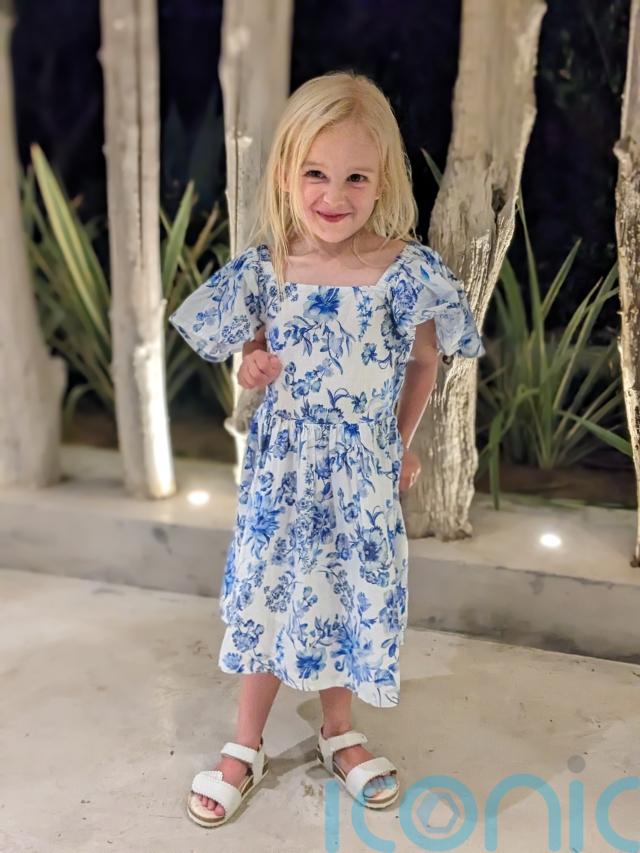
A six-year-old girl who was left paralysed after life-saving spinal surgery is relearning how to walk, fulfilling her brother’s Christmas wish to Santa to “please make my sister walk again”.
In June 2024, then-four-year-old Sofia Hill’s parents, Kate and Pete, noticed she was struggling to walk. She was dragging her left leg, falling over and stumbling – symptoms that came on suddenly and seemingly without explanation – so they took her to hospital to get her checked out.
Assuming an injury to her leg, hip or knee, they sought an orthopaedic consultant, who found no breaks, sprains or fractures and recommended Sofia see a neurologist.
Two separate neurologists suspected cerebral palsy – the name for a group of lifelong conditions that affect movement and coordination, caused by issues with the brain – and referred her for scans of her brain and spine.
Instead of cerebral palsy, however, doctors discovered a spinal arteriovenous malformation (AVM) – a tangle of abnormal blood vessels in or around the spinal cord where arteries connect directly to veins – and advised Kate and Pete to rush her to hospital immediately.
“We had (the scan) at about four o’clock on a Monday in July 2024, and then we came back from London, went to bed, and then woke up at about 7am to a very urgent phone call from the doctor that had reviewed the scan,” 43-year-old Kate, who lives near Bristol, told PA Real Life.
“They said, ‘No, it’s not cerebral palsy. There’s a huge mass on her spine’. They’d been on the phone all night to Bristol Children’s Hospital, and could we take her straight into the hospital? Which we did.”
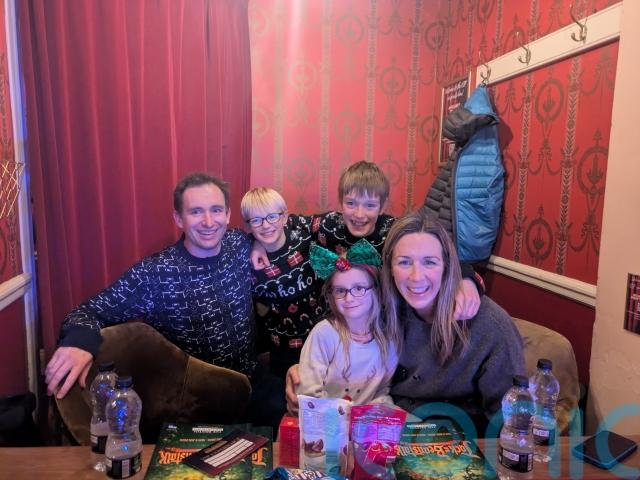
At hospital, Sofia was diagnosed with hereditary haemorrhagic telangiectasia (HHT), an inherited genetic disorder also known as Osler-Weber-Rendu syndrome characterised by the development of AVMs. Doctors had discovered multiple AVMs across her body, including one on her spine that needed urgent surgery.
“She had one on her spine, she’s got at least 10 in her lungs,” explained Kate, who also shares two sons – Ralph, 12 and Arlo, nine – with her husband, Pete.
“In terms of the one on her spine, they’re incredibly, incredibly rare – the doctors said we just haven’t seen them grow on a child’s spine before, because they normally start growing when you hit puberty, and she was four when it all first happened.
“So I don’t think anyone expected it to be that diagnosis.”
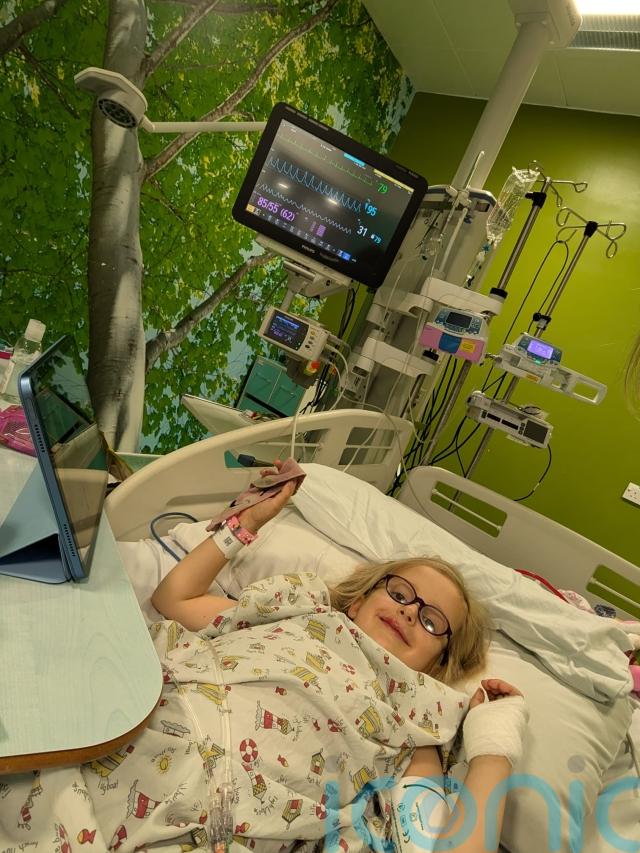
From that point in July 2024, Sofia was admitted into Bristol Children’s Hospital, where she stayed until February 2025.
She had two 15-hour days of life-saving spinal surgery to remove the AVM on her spine, as leaving it could cause complications like spinal cord damage, haemorrhage, serious neurological problems, or even death.
While the operation was successful in terms of the AVM, Kate said the invasive procedure had life-altering consequences for Sofia.
“It paralysed her.”
Sofia was left with an incomplete spinal cord injury, meaning the spinal cord is not severed completely but is injured, prompting months of recovery and rehabilitation both in hospital and as an outpatient.
Her parents knew paralysis was a risk of the surgery, as it was discussed with them by doctors and clearly detailed on the consent form for the procedure, but were nonetheless devastated that Sofia had another battle ahead of her after the operation.
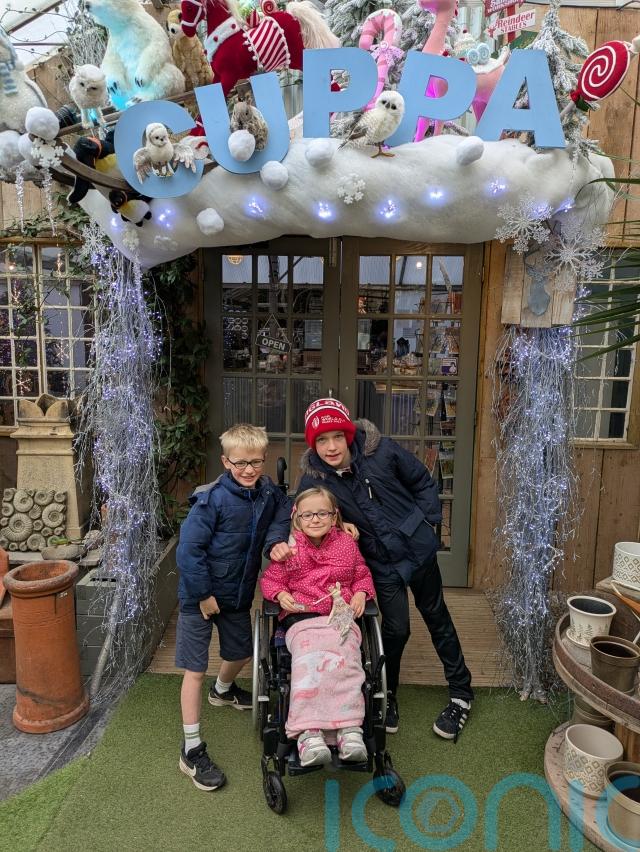
“You sign a consent form, and they said quite clearly: The risks are this operation is going to paralyse your daughter,” Kate said.
“But the alternative was she was going to die if we didn’t do the surgery. So it wasn’t kind of a decision… We went into it knowing there was a risk, but you obviously hope for the best.
“She woke up and she just couldn’t move or feel anything. And then, after a few days, she could just about wriggle a toe with monumental effort and no feeling whatsoever. So that was the first month or two months, and then it’s just been about a year of very intensive physiotherapy and rehab.”
Sofia was left paralysed from the waist down from the site of the AVM, losing use of her legs as well as bladder and bowel function. She first spent six months in recovery at Bristol Children’s Hospital, before being transferred to Stoke Mandeville in Buckinghamshire, which has a specialist spinal cord injuries unit, where she spent six weeks.
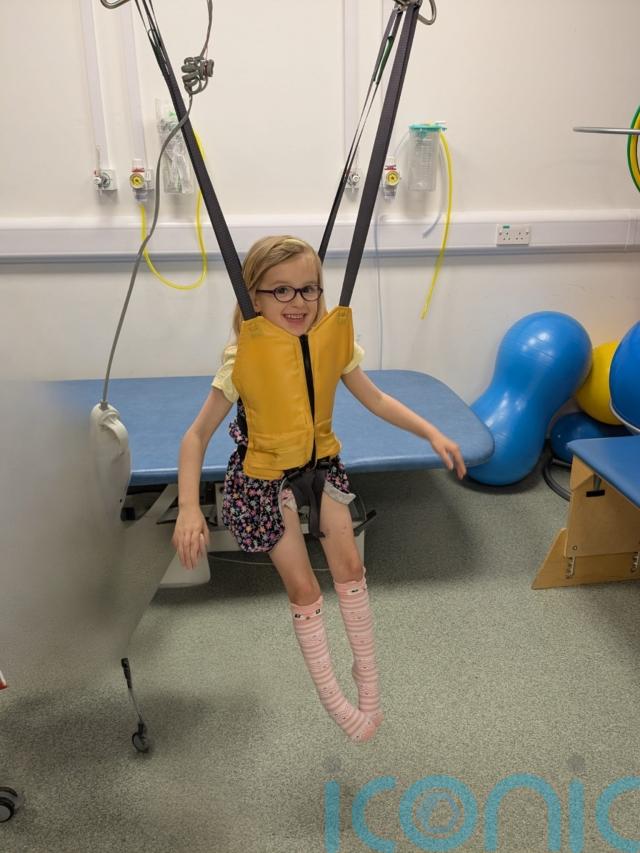
She recently came home from another two-week stay there, and Kate explained that she “sort of goes in and out of Stoke Mandeville to try and keep the progress going and review her condition”.
She also accesses care through Neurokinex, a not-for-profit organisation that provides specialist activity-based rehabilitation for people living with spinal cord injury and other neurological conditions.
Kate was recommended the service by another mum at Stoke Mandeville, as well as by Bristol Children’s Hospital, and decided to give it a go since the charity offers six free sessions initially for new patients.
After seeing not only how much Sofia loved the sessions, which are designed to be fun for children as well as providing the necessary rehabilitation, as well as how effective they seemed to be, she and Pete knew that “this is something we’ve got to find the money for”.
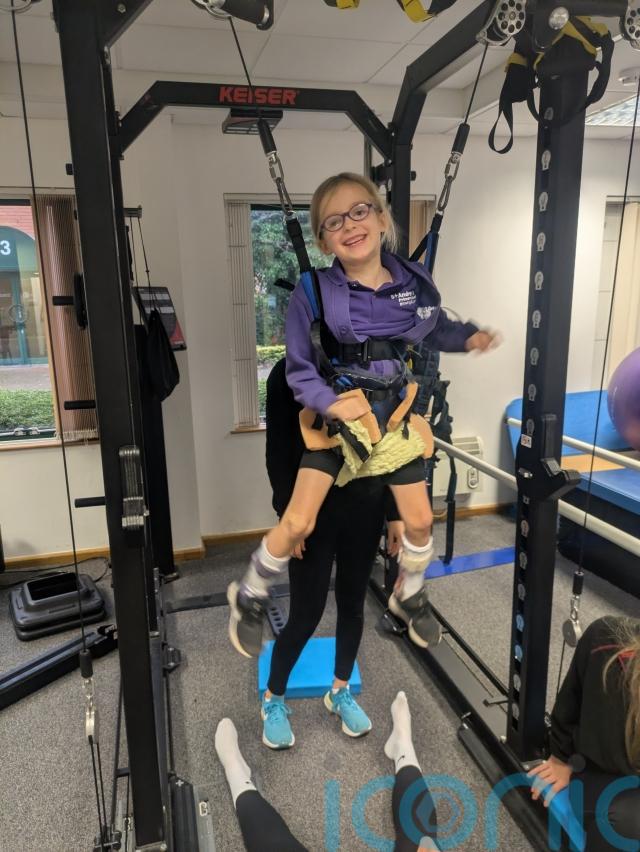
“It’s just brilliant,” she said.
“They are so good for children, they try and make it fun, which for Sofia is the main thing, because she’s just turned six, she’s spent 18 months of her life doing physio, and it’s boring.
“Also, it’s really hard to get Sofia to appreciate that she’s got to do it now, because we’ve got to get these pathways firing again. If we don’t, then the chances are she’s going to spend the rest of her life in a wheelchair, and there is a significant chance of this.
“So we just need to do everything we can while she’s still young, and while, hopefully, the connections between her brain and her spine and her legs can try and regrow.”
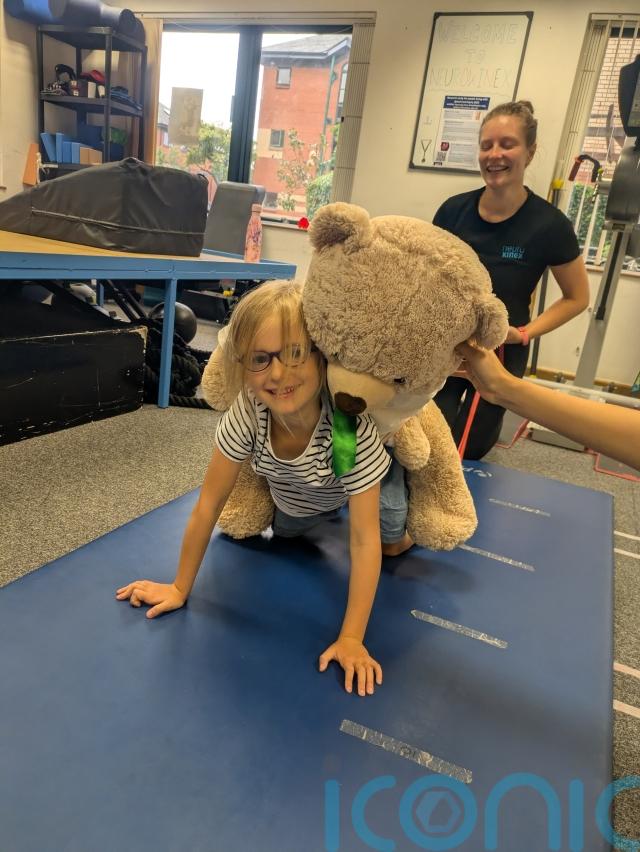
Because the trainers at Neurokinex make the sessions “really fun”, Kate said Sofia comes away saying she’s had a great time, “rather than more boring physio”.
“She doesn’t see the long term goals like you and I would, so we’ve to try and make it fun in the moment,” Kate explained.
Sofia attends Neurokinex twice a week, for two-hour sessions, and Kate and Pete pay £75 per hour for the service.
“It’s not cheap at all, but you just have to think: I’ve just got to do what I can, find the money and give up everything else so that we can make this work,” Kate said.
“I don’t want to look back and think we could have done more for her.”
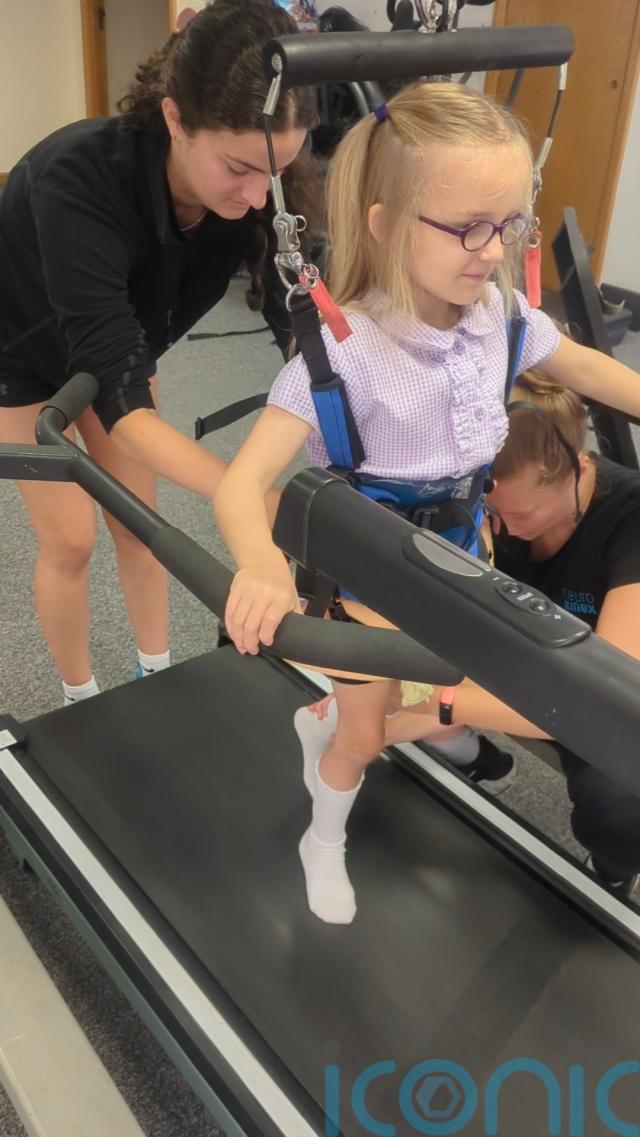
Now, Sofia can take steps on crutches, and it’s hoped that she’ll be able to walk using poles, which is the next goal.
“That was an incredible moment when we saw her standing up, because she’d been laid either flat on her back or in a wheelchair for months,” Kate said.
“To see her stand, that was probably the best moment for me, when she took some steps in her frame. Now she’s on crutches, and then the next thing, hopefully one day, will be poles. That’s what we’re all aiming for.”
Sofia is also back at school in Year One and is doing “incredibly well”, thanks to the school’s “brilliant” support and the amazing teaching staff at Bristol Children’s Hospital, Kate said.
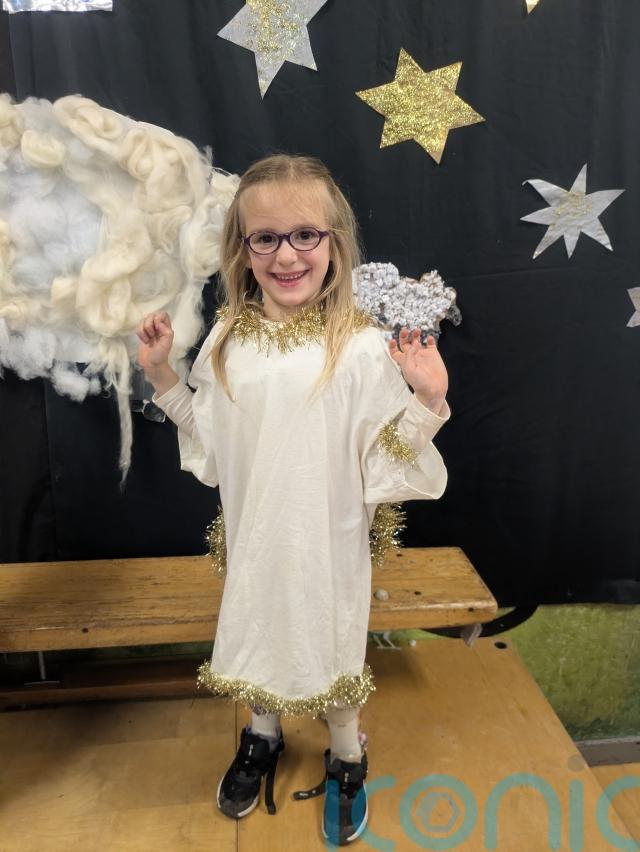
“She just did a nativity, and she stood on the stage for about 15 seconds on her own, while we took a photo. So that was amazing.”
The condition will affect Sofia for the rest of her life, and she’ll need to go for regular checks to monitor the AVMs and check for spread or new growths.
For the family, it’s one battle at a time, but having just celebrated Christmas at home as a family for the first time after Sofia’s diagnosis, Kate is thrilled that her son’s wish to Santa last year is coming true.
“Last Christmas, my son’s Christmas list was just: Dear Santa, please, please make my sister walk again,” she said.
“And now I’m like: ‘Look, she’s walking on her crutches, isn’t she?’ So we’ll get there.”
To find out more about Neurokinex charitable trust, which provides specialist activity-based rehabilitation for people living with spinal cord injury and other neurological conditions, visit www.neurokinex.org.

Subscribe or register today to discover more from DonegalLive.ie
Buy the e-paper of the Donegal Democrat, Donegal People's Press, Donegal Post and Inish Times here for instant access to Donegal's premier news titles.
Keep up with the latest news from Donegal with our daily newsletter featuring the most important stories of the day delivered to your inbox every evening at 5pm.

This publication supports the work of the Press Council of Ireland and Office of the Press Ombudsman, and our staff operate within the Code of Practice of the Press Council. You can obtain a copy of the Code, or contact the Council, at www.presscouncil.ie, Lo-call 1800 208 080 or email: info@presscouncil.ie.