Search


03 Apr 2026
Search
03 Apr 2026

Please allow ads as they help fund our trusted local news content.
Kindly add us to your ad blocker whitelist.
If you want further access to Ireland's best local journalism, consider contributing and/or subscribing to our free daily Newsletter .
Support our mission and join our community now.
To continue reading this article, you can subscribe for as little as €0.50 per week which will also give you access to all of our premium content and archived articles!
Alternatively, you can pay €0.50 per article, capped at €1 per day.
Thank you for supporting Ireland's best local journalism!


A mum-of-two from Bristol has found purpose volunteering for Samaritans after calling the suicide prevention charity saved her own life during the Covid-19 pandemic.
About once a month, Leann Caines will get out of bed at around one in the morning, get dressed and make herself a cup of tea, readying herself for the night’s shift.
Then, leaving her two sleeping children and husband in bed, she’ll make her way to Bristol city centre, sometimes crossing students in heels hobbling home from a night out as she passes in her tracksuit bottoms and Ugg boots.
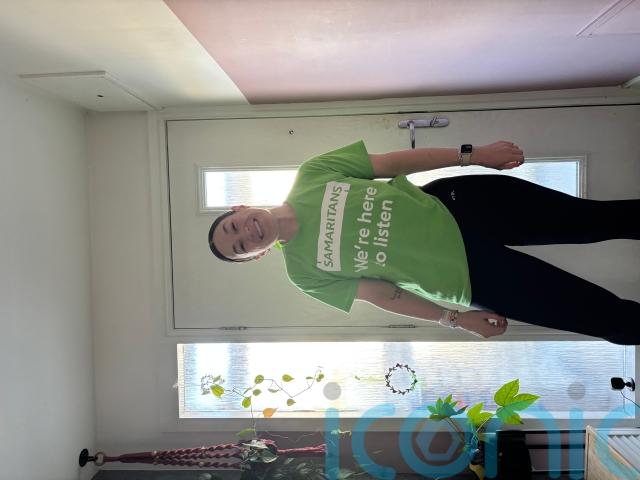
Leann, 37, is a Listener for the suicide prevention charity Samaritans, often volunteering for night shifts to take calls from people across the country at their most vulnerable moments.
Around five years ago, during the Covid-19 pandemic, Leann was one of those callers.
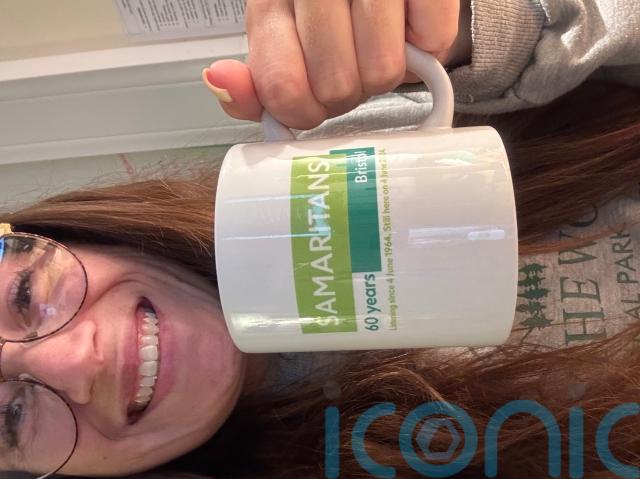
“My family was going through a traumatic time,” she said, adding that she struggled with her relationship with her younger sisters.
“I was trying to support everyone while simultaneously manage my job and care for my young family. I didn’t really have anyone to talk to about the way I was feeling and the pressure I was under.”
When the person on the other end of the line asked if she was considering taking her own life, Leann understood for the first time that she was suicidal.
“I didn’t realize that I’d gotten to a place where I just wanted all these feelings I had to end – I just wanted to run away from this situation, to just escape from it all,” she said.
“I always thought, ‘well, I’m not doing X, Y and Z action that would lead to me dying, so therefore I’m not suicidal.’ But suicide is just so much wider than that.”
There were more than 6,000 deaths by suicide across England and Wales registered in 2024, the latest data available. During 2025, volunteers at the Samaritans’ Bristol branch alone fielded more than 27,000 requests for help.
When Leann called the Samaritans for the first time, she had to wait until someone was available. Imagining how difficult the delay would be for someone at their lowest possible point was what made her “even more determined to want to be there for those people”, especially during night shifts.
“Everything feels worse at night,” she said.
“When you’re up in that overnight period and your brain is just being so unkind to you, you’re like, ‘I just want to sleep’, and yet sleep feels like the furthest thing away from you.”
Leann said that the phone call where she reached out for help was the first time she’d properly confronted the state of her mental health.
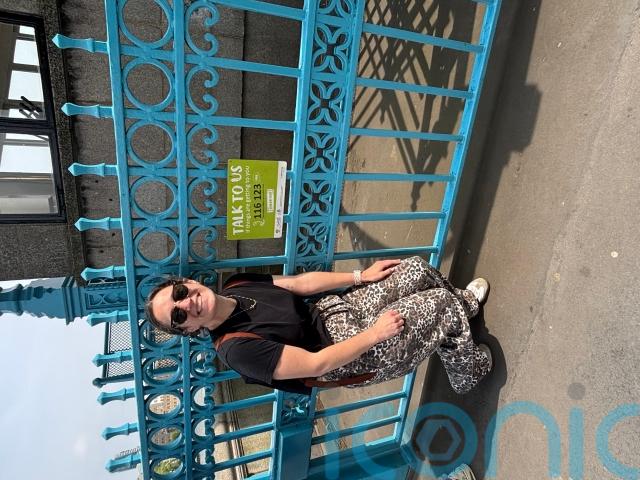
“I have got the typical eldest daughter mentality,” she said.
“Anything that I felt was always pushed down to care for other people – and so I was aware of mental health but always thought that’s just something that happens to other people.”
That habit of pushing feelings down persisted through traumatic events across her life, such as the death of a childhood friend and her father, working in the military, being posted in Afghanistan throughout her childhood.
When, in her 30s, family conflicts pushed her to breaking point, she found she couldn’t bring herself to reach out to anyone close to her for help.
“I was like, that’s not going to make me feel any better, because I will have to put on my happy Leann face to interact with them, and I’m so tired of that facade, of the way that I was presenting myself to the world. So that’s why I was like, ‘well, I can ring Samaritans,’” she said.
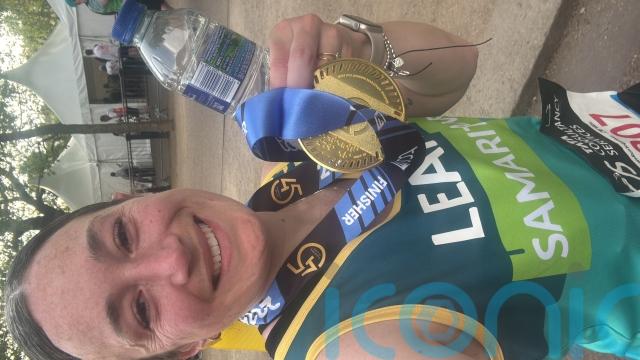
Since training to be a volunteer Listener herself, Leann has learned that Samaritans place an emphasis on the principle of ‘self-determination,’ and allowing callers to speak without judgement or advice on how to manage their situation. It was this approach which Leann found so life-changing during her call for help.
“The call that I had with that Samaritan is probably the first that I’ve ever had in my life where somebody just listened to what I was saying,” she said.
“They didn’t try and give their opinion. They didn’t try and give me solutions. They didn’t try and fix me. They just let me unload everything that I had pent up over, like, a year’s worth of feelings, experiences, and just let it all out. It’s so freeing.”
After calling the Samaritans in 2020, Leann sought talking therapy through the NHS, before training to become a volunteer herself in 2022. She enjoys being a Listener so much that she chose to do a day shift for her birthday last year.
But, most of the time, she puts in her hours overnight after finishing her full-time job in risk management and putting her children to bed.
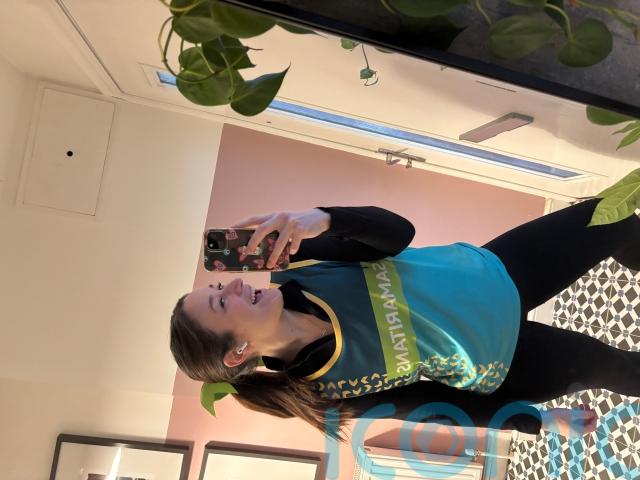
“I love going to do it and I feel so good afterwards,” she said, describing settling into a call room with a fellow volunteer between 2am and 6.30am in the morning, watching the sun rise as the shift ends and feeling its warmth on her back. She’s also found the skills she’s learned volunteering have helped her in her personal relationships, including with her sisters.
“I’m so grateful that I found Samaritans, and I’m so grateful that I’m a volunteer with them, because I get to help people, I get to help strangers, and I get to help people I care about,” she said.
“It sounds like a bit of a cliche to say, but that call really did save my life.”
For mental health support, call the Samaritans for free on 116 123, email them at jo@samaritans.org, or visit samaritans.org.

Subscribe or register today to discover more from DonegalLive.ie
Buy the e-paper of the Donegal Democrat, Donegal People's Press, Donegal Post and Inish Times here for instant access to Donegal's premier news titles.
Keep up with the latest news from Donegal with our daily newsletter featuring the most important stories of the day delivered to your inbox every evening at 5pm.

This publication supports the work of the Press Council of Ireland and Office of the Press Ombudsman, and our staff operate within the Code of Practice of the Press Council. You can obtain a copy of the Code, or contact the Council, at www.presscouncil.ie, Lo-call 1800 208 080 or email: info@presscouncil.ie.