Search


30 Jan 2026
Search
30 Jan 2026

Please allow ads as they help fund our trusted local news content.
Kindly add us to your ad blocker whitelist.
If you want further access to Ireland's best local journalism, consider contributing and/or subscribing to our free daily Newsletter .
Support our mission and join our community now.
To continue reading this article, you can subscribe for as little as €0.50 per week which will also give you access to all of our premium content and archived articles!
Alternatively, you can pay €0.50 per article, capped at €1 per day.
Thank you for supporting Ireland's best local journalism!


A 21-year-old woman who suffers from a rare urinary retention condition that causes debilitating pain and repeated infections is fundraising to pay for costly private treatment that could prevent her from needing her bladder removed.
Caris Gibson, who lives in Oxfordshire, has been battling severe symptoms of Fowler’s Syndrome since January 2024. After experiencing painful, difficult urination that she’d originally chalked up to a urinary tract infection, she became unable to go to the toilet at all and found herself in A&E most weeks begging for answers.
It wasn’t until November 2025 that she was formally diagnosed with Fowler’s Syndrome – a rare, chronic condition that predominantly affects women in their 20s and 30s, characterised by a failure of the urethral sphincter to relax. The condition causes urinary retention, significant pain, and infection, according to Fowler’s Syndrome UK, and despite attempts with catheterisation, Caris has had no real, lasting relief from her symptoms since they began two years ago.
Now, Caris and her mother Jill Lumsden, 53, are fundraising to help pay for costly private care after waiting years on an NHS list for treatment, with Jill vowing to run five kilometres every day in 2026 to raise awareness of the condition and money for Caris’s treatment.

“I was waking up in the morning and I couldn’t go to the toilet because I had, what felt to me like, a UTI,” Caris told PA Real Life of her early symptoms.
“I’d end up waking up really early in the morning and having to sit in the bath and try and go to the toilet there, because I couldn’t do anything on the toilet myself.
“It got to the point where I was getting kidney pain, bladder pain, and I couldn’t go to the toilet, and I thought I had a really bad infection. I was in A&E pretty much every week from January to March 2024, before my GP referred me to urology.”
For months afterwards, Caris was “still in and out of A&E”, but couldn’t get the answers she needed.
“They didn’t really know what else they could do other than give me antibiotics, just in case,” she said.

After months of waiting for an NHS urology consultation, Caris resorted to paying for a private consultation to shine some light on what could be causing her debilitating symptoms.
She was told that due to the constant urine retention, her bladder had swollen to a capacity of 1.2 litres – a healthy bladder typically holds around 500ml of urine, according to the NHS – and whenever she went to the toilet, unable to fully empty her bladder, around 600ml of urine remained.
According to Fowler’s Syndrome UK, failure to completely empty the bladder puts Fowler’s patients at a greater risk of infection, which can cause back, kidney and suprapubic (lower abdominal) pain, as well as fever and blood in the urine. In severe cases, such infections can lead to sepsis, a life-threatening medical emergency.
To provide relief, Caris was taught to conduct self-catheterisation, where she would insert a thin tube into her bladder through her urethra to drain the urine.
Soon she found it increasingly difficult to insert the catheter due to the tension of her urethral sphincter, so she couldn’t get it all the way in and it wasn’t draining properly. She also started to experience bleeding from her urethra.

At this stage, Caris called NHS 111 and it was arranged for her to have an indwelling catheter inserted, which is designed to stay in place and continuously drain urine into a bag. However, the indwelling catheter caused her unbearable pain and more infections, and she needed it changed more frequently than normal.
In September 2024, nine months after first approaching doctors about her symptoms, she finally saw a specialist NHS urologist who referred her for a urodynamics test, which determines how well the bladder, sphincters and urethra hold and release urine.
“The consultant I saw there was more specialist, and at the first appointment I had, she mentioned Fowler’s Syndrome, but didn’t really say too much about it,” Caris recalled.
“But things were getting worse and worse and worse, and I couldn’t deal with the indwelling catheter anymore. I couldn’t do self-catheterisation because I couldn’t get it in, and it clamped.
“So she came to the decision to put in a suprapubic catheter, which goes straight through my tummy, which I had done in June 2025, and I’ve had that since then.
“To be honest, it hasn’t really done anything but give me more problems.”
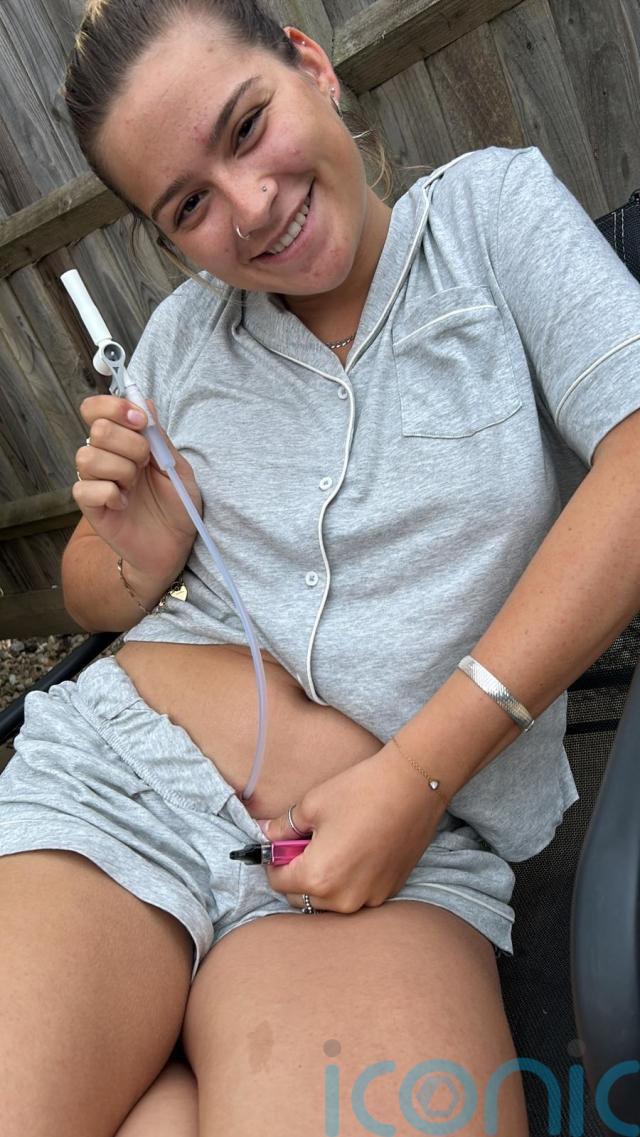
Thanks to the continual infections, Caris has become resistant to several types of antibiotics.
“My bladder still hurts, my kidneys still hurt, my urethra hurts,” she said.
“Recently, it’s been particularly bad. I was waking up at three o’clock in the morning and not being able to go back to sleep because I had a constant feeling of needing the toilet, but I couldn’t go, or I didn’t actually need the toilet.
“Some days I have to go to work with a (urine collection) bag on which I absolutely hate doing, because I’m 21 – it’s no life to have a bag attached to you.”
Caris has the option to use a urine collection bag or a flip-flow release valve on her suprapubic catheter, and while the bag usually offers her some relief on the worst days, sometimes she gets no respite at all from the pain.
“It really depends on the day. It’s really random,” she said.
“I can never wake up in the morning and think: ‘Yeah, I’ll be fine today’, because by midday, it might all go completely the wrong way, and I’ll be in pain. My kidneys will hurt, and my catheter might stop draining.”

Finally, in November 2025, Caris was formally diagnosed with Fowler’s Syndrome. She remains on a waiting list for NHS treatment, which she has been on since April 2025, but was told she was unlikely to be contacted for an initial consultation until April 2026.
Desperate and no longer able to deal with the debilitating pain – and the impact it is having on her mental wellbeing – she and her parents are pursuing private care and are facing prohibitive fees.
“I don’t want to see her have to deal with her mental health as well as her physical health…” said her mum, Jill.
“It’s just heartbreaking.”
Jill has set up a GoFundMe fundraising page, where the target is set at £7,000, though she explained that the treatment will cost more than this.
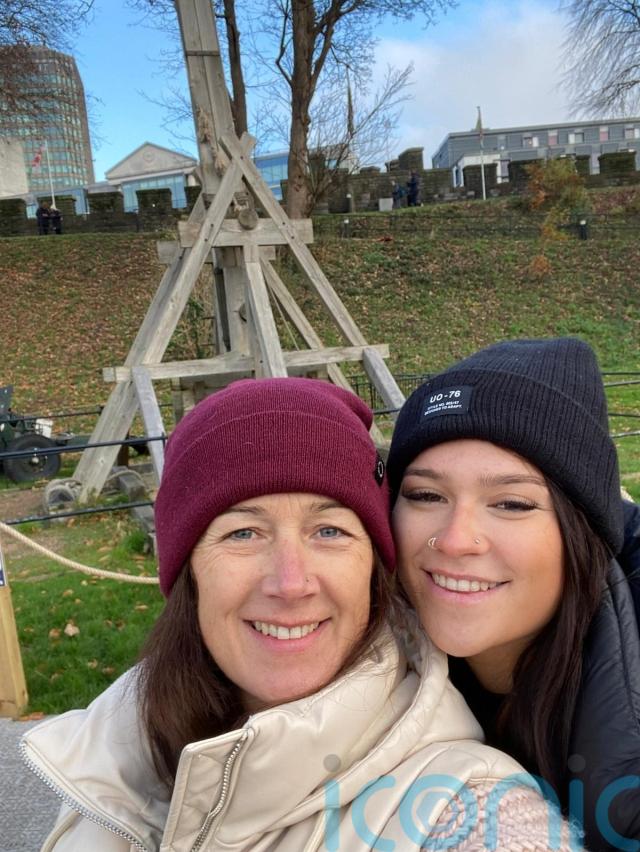
After a first-stage consultation, a private urologist told Caris that she can try a sacral nerve stimulator (SNS) – a device that sends mild electrical impulses to nerves in the lower back which can help improve control over bladder function.
There is, however, no guarantee that this would work.
“If it works, then that’s fantastic. We are obviously trying to generate positive manifestation that it is going to be successful,” Jill said.
“But if there’s a chance that it isn’t, then he was quite clear with what the other option would be… We just don’t want to think about what the other option is. We don’t want to say it out loud.”
If the SNS is not successful, it is likely that the only course of action is for Caris’s bladder to be removed and a permanent urostomy bag fitted, which will collect the urine that would otherwise have gone into the bladder.
To fundraise for Caris’s treatment, and to raise awareness of this little known condition, Jill is running five kilometres every day in 2026. When asked why, she replied: “Bake sales are not my thing!”

Jill has been running for 20 years, even taking Caris along in a pushchair when she was an infant, “but I’ve never run every single day in a year”.
The challenge is designed to shine a light on the physical and mental struggles Caris faces every single day, and she hopes that it will raise awareness of the silent, hidden battle Caris is fighting.
“Five kilometres is half-an-hour of my day. And compared to what she is going through in her day – she can sit in the bathroom for half-an-hour and be in pain,” Jill explained.
“There’s a physical and a mental side to it, much like her position at the moment.”
The fundraising total currently stands at almost £2,400. To donate to the fundraiser, visit: www.gofundme.com/f/a-mothers-love-cariss-journey-and-the-2026-5k-challenge

Subscribe or register today to discover more from DonegalLive.ie
Buy the e-paper of the Donegal Democrat, Donegal People's Press, Donegal Post and Inish Times here for instant access to Donegal's premier news titles.
Keep up with the latest news from Donegal with our daily newsletter featuring the most important stories of the day delivered to your inbox every evening at 5pm.

This publication supports the work of the Press Council of Ireland and Office of the Press Ombudsman, and our staff operate within the Code of Practice of the Press Council. You can obtain a copy of the Code, or contact the Council, at www.presscouncil.ie, Lo-call 1800 208 080 or email: info@presscouncil.ie.