Search


22 Apr 2026
Search
22 Apr 2026

Please allow ads as they help fund our trusted local news content.
Kindly add us to your ad blocker whitelist.
If you want further access to Ireland's best local journalism, consider contributing and/or subscribing to our free daily Newsletter .
Support our mission and join our community now.
To continue reading this article, you can subscribe for as little as €0.50 per week which will also give you access to all of our premium content and archived articles!
Alternatively, you can pay €0.50 per article, capped at €1 per day.
Thank you for supporting Ireland's best local journalism!


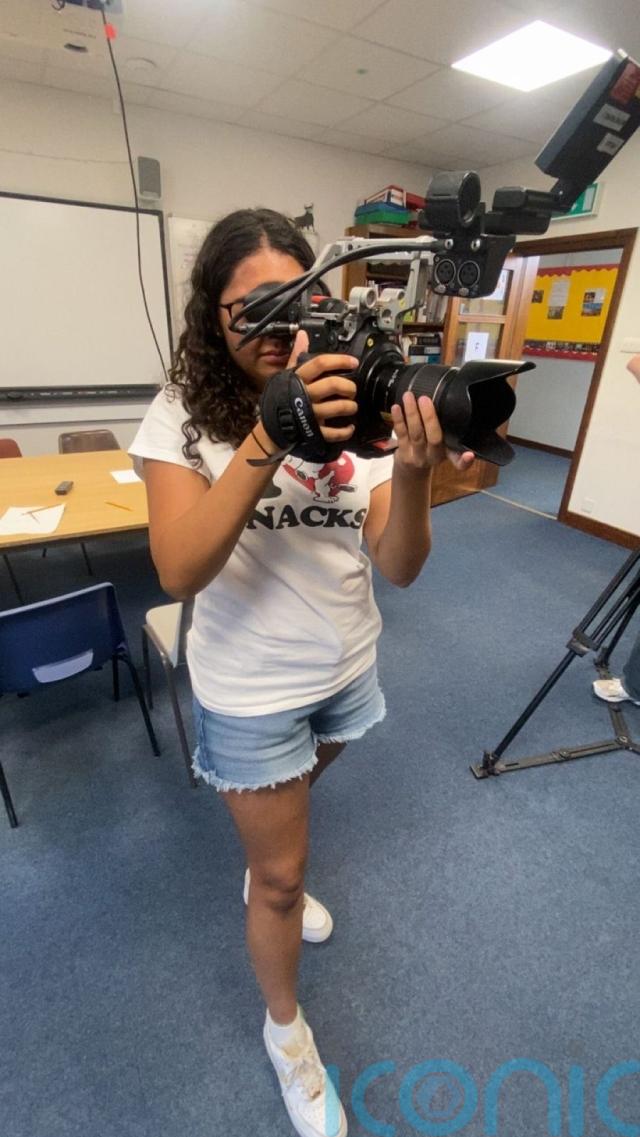
A teenage aspiring filmmaker with Tourette syndrome has been left “scared” to enter the industry following a backlash after campaigner and subject of the Bafta-winning film I Swear John Davidson’s involuntary outburst at the awards ceremony on Sunday.
Lucy Gould, 17, was diagnosed with Tourette syndrome – a condition that causes sudden, repetitive sounds or movements, known as tics – when she was 13.
An aspiring filmmaker who is preparing a documentary about the condition, she said she has been bullied at school and faced insults in public about her involuntary tics, and said the public reaction following John Davidson MBE’s verbal tic at the Bafta Film Awards on Sunday February 22 has left her fearful that she may “not (be) invited to an award ceremony or not invited into the room” because of her condition.
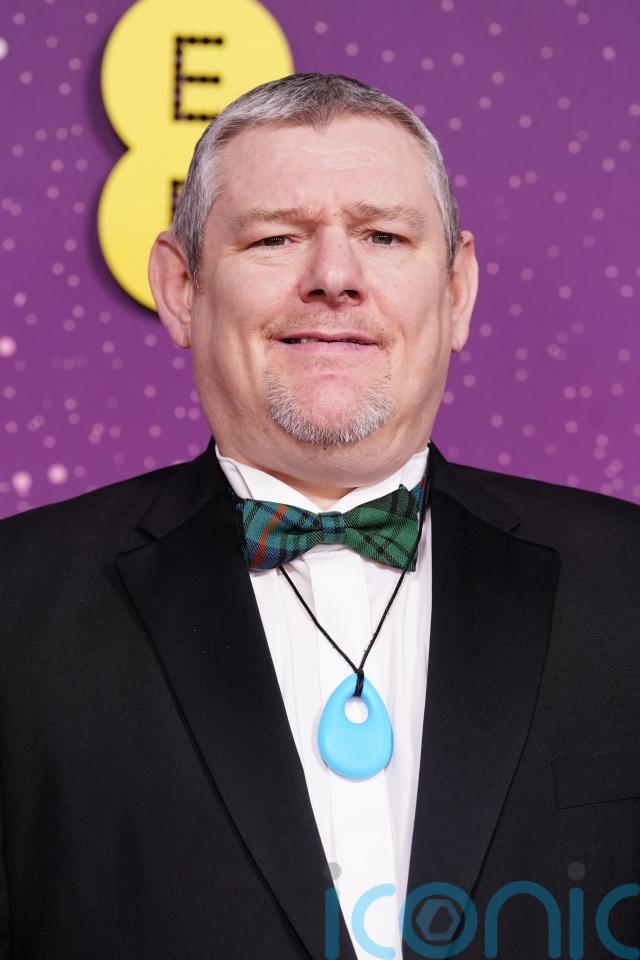
The 54-year-old Tourette’s campaigner could be heard shouting a racial slur as Sinners actors Delroy Lindo and Michael B Jordan presented the award for special visual effects during the ceremony at London’s Royal Festival Hall, to which he was invited “to celebrate the film of my life, I Swear, which more than any film or TV documentary, explains the origins, condition, traits and manifestations of Tourette syndrome”, as the film collected two Baftas.
He has said he is “deeply mortified if anyone considers my involuntary tics to be intentional or to carry any meaning”. The BBC initially broadcast footage containing the slur, but it has now been removed from the BBC iPlayer.
Lucy, who has watched the backlash unfold on social media and in news outlets, told PA Real Life that she has found it “incredibly sad and scary for me personally… as someone who wants to go into the industry”.

Lucy, a British girl who lives in Abu Dhabi with her parents, said she has “always had tics, whether they were nervous or involuntary”. When she was younger, they manifested as “nervous tics like biting nails, knee tapping”, adding that she has struggled with anxiety from a young age.
“I started experiencing the condition severely at 12, and it was a really bad time for me. It was really, really tough,” she said, adding that she first experienced a tic attack – a surge of tics in quick succession – during a maths exam at school.
Following this incident, she saw a doctor who diagnosed her with Tourette syndrome. She began treatment for the condition, which involved talking therapy, hypnotherapy and cognitive behavioural therapy, which she said made her “a little better with coping with them and kind of suppressing them… But if I suppress them for too long, I end up having tic attacks, which are very harmful and very painful. So I then went to medication.”

Lucy has tried various SSRIs, which are diagnosed to people with Tourette’s to treat underlying conditions such as anxiety, but she said they can have “many, many side effects, like weight gain, drowsiness, nausea”.
“It’s been a hard process with medication, which is why I don’t like taking it… But it is helping me manage my tics on a daily basis. Without them, I feel like I would be a lot worse.”
Lucy experiences both verbal tics – such as whistling, sniffing, and repeating words, some of which are inappropriate or derogatory – as well as physical tics such as jerking movements, but can also experience physically harmful tics, such as hitting herself.
“I’ve gotten nosebleeds from hitting my nose or my face or punching myself,” she said.
“I can punch walls. I can break stuff. My mum has been hit a few too many times in the process, and my dad.
“It’s very frustrating… the mental toll it has on me, because it’s so frustrating and so tiring, it fatigues me so much.”

Her symptoms have become less severe over the years, as she has learned techniques for managing them, but she said that suppressing tics for too long can cause painful, prolonged tic attacks.
“Tourette’s is different for every single person, but for me personally, whenever I tic I have this pain in my chest – like a panic attack, it’s like that kind of feeling, but constantly,” Lucy explained.
“I’ve just learned to live with it.
“Whenever I have a tic, it’s like an urge – I can only explain it like a sneeze, it’s like this surge going up. And then when I tic, it’s like when a sneeze comes out. It’s relieving, but it’s also short-lived.
“When I try to suppress it, it’s like when you try not to cough: the more you try not to cough, the more it happens.”

Lucy said she has experienced bullying and insults from other people due to her Tourette syndrome. At school, she tries to suppress the tics to avoid bullying insults from fellow students, but this leads to her having painful tic attacks when she gets home.
The hardest part, she said, is being in public spaces – particularly quiet spaces such as the cinema, which Lucy describes as her “safe place”, being a huge film lover.
“I am very conscious of my own tics, and I hate how people can be affected by it,” she said.
“In public spaces, I tend to always be with someone else who can explain it for me, and I don’t like being alone when that happens, because if I’m insulted or something – which I have been – it’s harder to process that by myself.
“In public situations, it’s the hardest to be honest, because it’s when you don’t want to do it that obviously you feel the urge to do it more.”

As Lucy studies for her A-levels in media, photography and English literature, she is also working towards a career in film. She is currently working on a documentary about Tourette’s, sharing the stories of people who live with the condition and “debunking the myths and stereotypes”.
“My dream is to get celebrities who suffer from the condition on it, like Billie Eilish and Lewis Capaldi,” she said.
“But realistically, I want everyday people to tell their stories… It’s just something I’m very passionate about.”
“I want to tell misrepresented stories, misunderstood stories, these stories that matter to not just me, but to a community of people like Tourette’s,” she added.
However, the events at the Baftas on Sunday, and the resulting media storm around John Davidson’s involuntary outburst are “incredibly sad and scary”, Lucy said, adding that she worries that she might “not (be) invited to an award ceremony, or not invited into the room because of this condition”.

“It’s a great thing to have disabled and neurodivergent people at these events, but they don’t actually think about it, and they don’t actually understand what that means,” she reflected.
“I’ve seen a lot of backlash online about it, about the Baftas and about John Davidson and all that, but you can’t say he shouldn’t have been invited, when the whole problem is that we haven’t been invited already…
“It’s just hard to create this kind of safe space for people who are disabled, and then not adapt to their disability.
“John Davidson, he suffers from Tourette’s, and the whole movie, I Swear, is on his life and on his journey. He deserves to be there, but then he can’t control what he says.
“While I do believe the presenters deserve an apology, it is not his place to be affected by all this backlash at him. It’s incredibly sad.”

Speaking more broadly about the public’s understanding of Tourette’s, Lucy said: “I just wish people knew how conscious and how human people with tics are, because we’re not just the tics. We’re not just disabled people. We are people with thoughts and feelings.”
“It’s easy to make a comment about someone not knowing who they are, not knowing how it affects them,” she added.
However, to people living with Tourette’s who want to realise their dreams, Lucy said: “It’s incredibly important to not stop your passion for a society that isn’t ready for it yet.”
In a letter sent to Bafta’s members on February 24, Bafta chairwoman Sara Putt and chief executive Jane Millichip said: “We would like to address the situation that arose during the EE Bafta Film Awards on Sunday night, in which highly offensive language that carries incomparable trauma and pain for so many was heard. We issued a statement last night, and we want members to hear from us directly, too. Please find our public statement here.
“We recognise this has impacted members in a multitude of ways – we want to acknowledge the harm this has caused, address what happened and apologise to all.
“One of our guests, John Davidson MBE, has Tourette syndrome and has devoted his life to educating and campaigning for better understanding of the condition. John is an executive producer of one of the nominated films, I Swear. The film highlights that Tourette Syndrome is a neurological disability that causes involuntary verbal tics, that the individual has no control over. Such tics are in no way a reflection of an individual’s beliefs and are not intentional.
“We take the duty of care to all our guests very seriously and prepared extensively in order for John to be able to be present in the room. We made those in attendance aware of the tics, announcing to the audience before the ceremony began, and throughout, that John was in the room and that they may hear involuntary strong and offensive language, noises or movements during the ceremony.
“We fully understand our intention to be inclusive in no way diminishes the impact of what happened.
“Early in the ceremony loud and involuntary tics, including one in the form of a profoundly offensive term, were heard by many people in the room. Michael B Jordan and Delroy Lindo were on stage at the time, and we have apologised unreservedly to them, and to all those impacted. We have also thanked Michael and Delroy for their incredible dignity and professionalism – and regret they were put in this position in the first place.
“During the ceremony, John chose to leave the auditorium and watch the rest of the ceremony from a screen, and we have also thanked him for his dignity and consideration of others, on what should have been a night of celebration for him. We are in contact with the studios involved and conversations are ongoing.
“We want to assure all our members that a comprehensive review is under way. You may have also seen the BBC have issued their own apology for the broadcast.
“It was a very complex situation and we understand you will have many questions – please rest assured how seriously we are taking this. If you’d like to contact us, please email membership@bafta.org.
“We take full responsibility for putting our guests and members of the academy in a very difficult situation and we will learn from this.
“We will keep inclusion at the core of all we do, maintaining our belief in film and storytelling as a critical conduit for compassion and empathy – as firmly demonstrated by this year’s nominated and winning films.”
A spokesperson from the BBC, which broadcast coverage of the Bafta Film Awards, said: “Some viewers may have heard strong and offensive language during the Bafta Film Awards. This arose from involuntary verbal tics associated with Tourette syndrome, and as explained during the ceremony it was not intentional. We apologise that this was not edited out prior to broadcast and it has been removed from BBC iPlayer.”

Subscribe or register today to discover more from DonegalLive.ie
Buy the e-paper of the Donegal Democrat, Donegal People's Press, Donegal Post and Inish Times here for instant access to Donegal's premier news titles.
Keep up with the latest news from Donegal with our daily newsletter featuring the most important stories of the day delivered to your inbox every evening at 5pm.

This publication supports the work of the Press Council of Ireland and Office of the Press Ombudsman, and our staff operate within the Code of Practice of the Press Council. You can obtain a copy of the Code, or contact the Council, at www.presscouncil.ie, Lo-call 1800 208 080 or email: info@presscouncil.ie.