Search


22 Apr 2026
Search
22 Apr 2026

Please allow ads as they help fund our trusted local news content.
Kindly add us to your ad blocker whitelist.
If you want further access to Ireland's best local journalism, consider contributing and/or subscribing to our free daily Newsletter .
Support our mission and join our community now.
To continue reading this article, you can subscribe for as little as €0.50 per week which will also give you access to all of our premium content and archived articles!
Alternatively, you can pay €0.50 per article, capped at €1 per day.
Thank you for supporting Ireland's best local journalism!


A man whose wife died of cervical cancer shortly after his own cancer diagnosis has celebrated five years since reaching remission and has found love again.
Nick Rose, a 50-year-old senior director, was diagnosed with diffuse large B-cell lymphoma – a type of fast growing non-Hodgkin lymphoma (NHL) – in early 2016 after noticing a sharp pain in his right leg while getting out of a taxi.
At the time he noticed the pain, which felt like a pulled muscle, he and his wife, Jennifer Qiang, were living in China, and she was receiving treatment for cervical cancer.
After Nick’s diagnosis was confirmed in March 2016, the couple moved from China to the UK and he began having chemotherapy at The Royal Marsden in London.
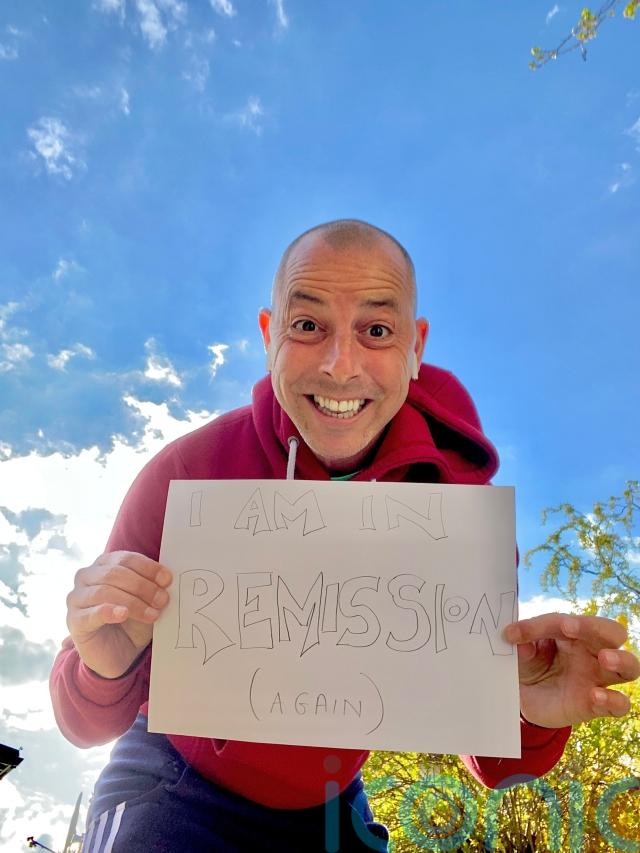
By August 2016, he said he was in remission, but Jennifer passed away, aged 41, in July 2017 after there was “nothing more” her doctors could do.
In 2020, Nick began experiencing heartburn and chest discomfort and tests revealed his lymphoma had returned, leading to more chemotherapy, immunotherapy and CAR-T therapy, which put him into remission again in 2021.
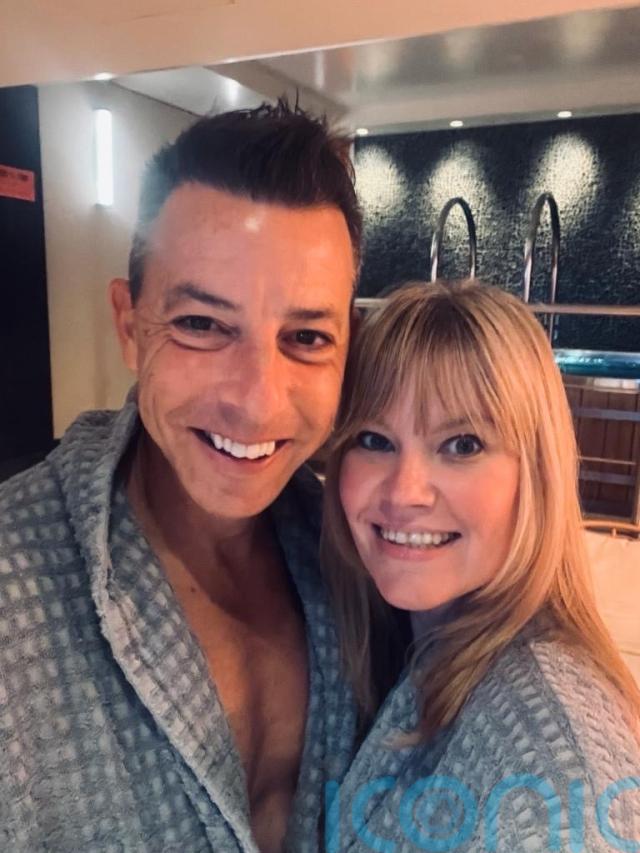
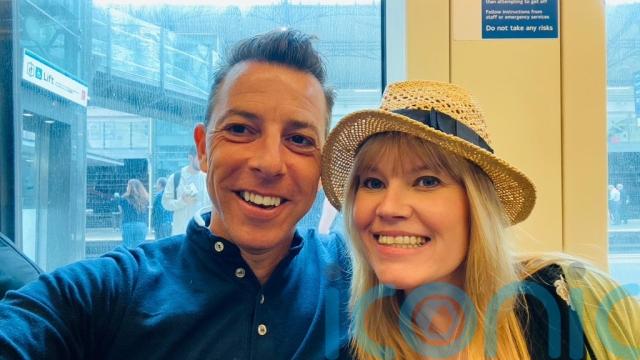
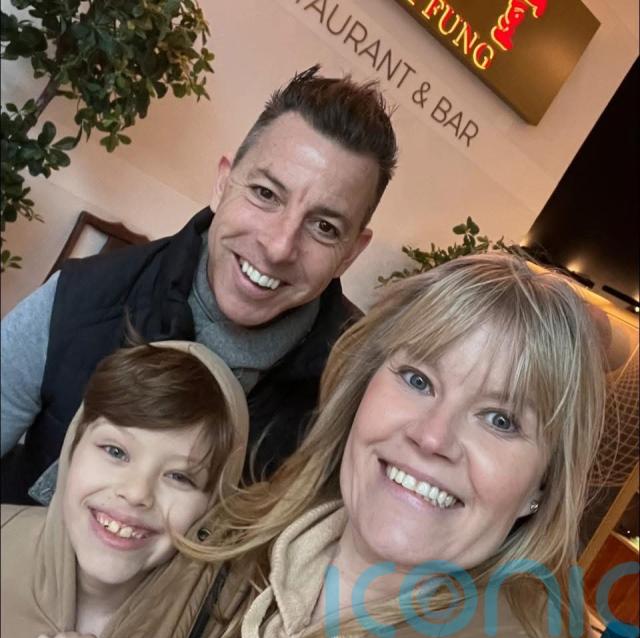
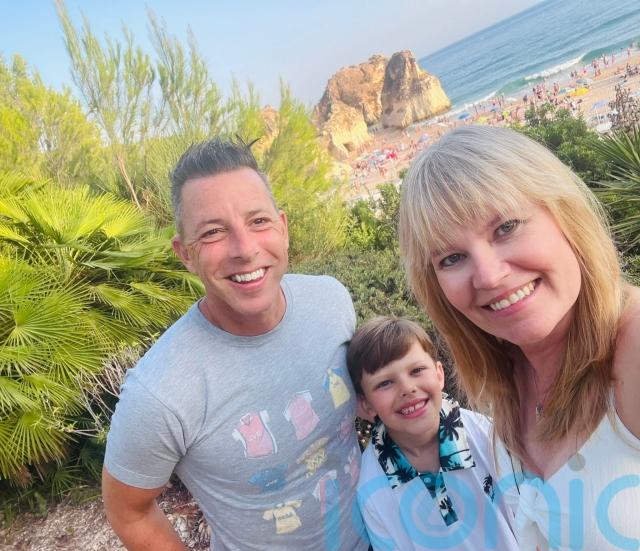
After a “rubbish” few years, Nick met his now partner, Claire Russell, 48, in 2023, and they are moving in together, with Claire’s son, Teddy, aged nine. Nick is running the 2026 London Marathon for The Royal Marsden Cancer Charity to thank the hospital which saved his life.
Nick, who lives in west London, told PA Real Life: “I want to thank The Royal Marsden for keeping me alive all these years.
“It does hit me sometimes, everything I’ve been through, and I have my moments, but I just dealt with it at the time.

“Failure wasn’t an option.”
In January 2016, while living in China, Nick got out of a taxi to visit his wife, Jennifer, in hospital, where she was receiving treatment for cervical cancer.
As he got out of the car, he said he felt a pain at the top of his right leg, as though he had pulled or strained his abductor muscle.
When he and his wife visited her oncologist, they asked why he was limping and suggested he have an MRI.
In February, the results revealed he had lesions – areas of abnormal or damaged tissue – in his hip and throughout his body, and his doctor advised him to return to the UK to receive support.
After having several tests, he received the news he had diffuse large B-cell lymphoma on March 8 – Jennifer’s birthday.
Diffuse large B-cell lymphoma is a type of fast growing non-Hodgkin lymphoma which develops when white blood cells called lymphocytes grow out of control, according to Cancer Research UK.
“I was shocked, I thought it was madness,” Nick said.
So he and Jennifer moved to the UK in March 2016.
On March 12, he was an inpatient at The Royal Marsden – and by then he said he was using a wheelchair as the pain in his leg had worsened.
While in hospital, two lymph nodes on his neck “jumped up like little bumps”.
After his first dose of R-CHOP – a combination of chemotherapy, targeted therapy and a steroid – the lumps disappeared, giving him the “positivity” to continue.
He went on to have six rounds of this treatment every three weeks and he said he dealt with this, along with his wife’s condition, in a “very pragmatic way”.
“I didn’t allow myself to become enveloped in the emotion of the situation because, if I did, it would have been all consuming,” Nick explained.
On August 2 2016, Nick said he was officially in full metabolic remission, meaning the disappearance of all detectable, abnormally high metabolic activity following cancer treatment, indicating no active, visible tumour cells.
“I burst into tears… I remember going to reception and booking my six months check-up to keep an eye on me and just couldn’t believe it,” he recalled.
However, his wife’s condition deteriorated over time.
After being diagnosed with cervical cancer in 2014, she had surgery and treatment and “things seemed to be looking good”.
In January 2016, she was undergoing chemotherapy and remained in a “good place”, which is when Nick first noticed his first symptom.
But after moving to the UK, when receiving care from another London-based hospital, she discovered in April 2016 that the cancer had returned.
She had major surgery which left her with “various health challenges” and “complications”, with other related organs, and in June 2017 they were told by doctors there was “nothing more they can do”.
She passed away the following month, leaving Nick “devastated”.
Nick eventually “settled into London life”, but in January 2020 he said he began experiencing “heartburn” and an uncomfortable feeling in his chest.
From February to September, he said he was prescribed omeprazole and lansoprazole by his GP to reduce stomach acid.
He returned to his GP in September, explaining that it was not working, and he felt something was not right.
After an endoscopy – a test to look inside the body – he was sent to The Royal Marsden in October, which revealed he had a 10cm tumour in his chest and his lymphoma had returned.
“I lit up like a Christmas tree on the scan – I had cancer activity everywhere in my lymphatic system,” he added.
From November 2020 to January 2021, he had chemotherapy, but he said it only managed to shrink some of the cancer.
In March 2021, a nurse collected his T cells to be genetically modified into CAR-T cells in a laboratory and later returned them to his bloodstream via an infusion, where they recognise and attack cancer cells.
He had chemotherapy and immunotherapy in the meantime and, just before starting CAR-T therapy in late April, a scan showed he was in full metabolic remission again.
He spent two weeks in hospital in May having the CAR-T therapy to help prevent the cancer returning.
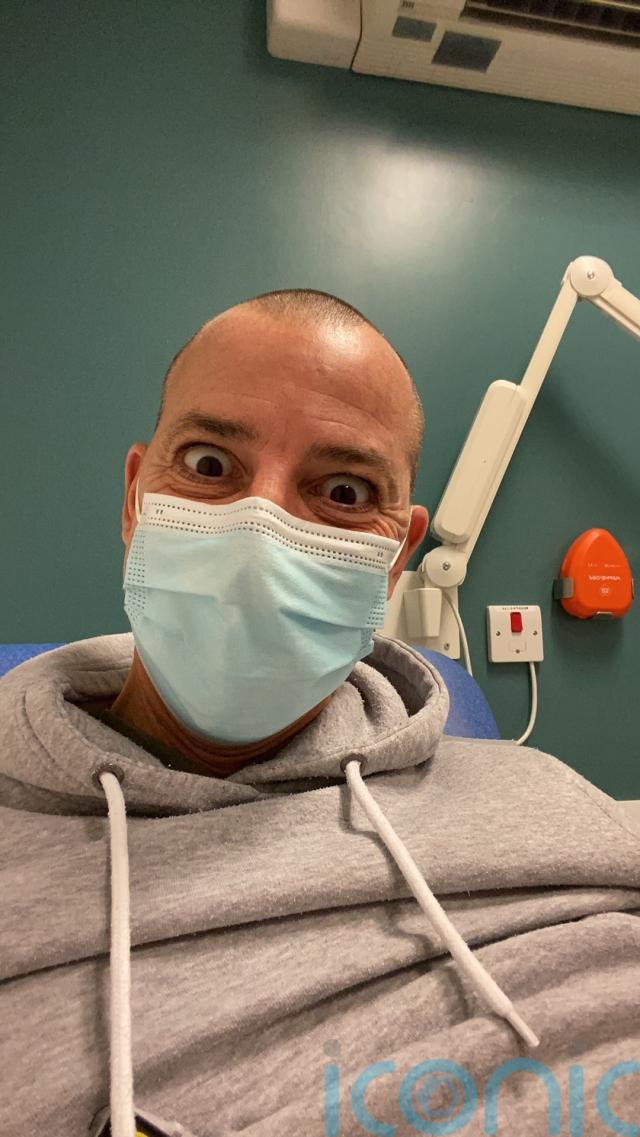
He said: “The Royal Marsden was incredible – the way they look after you, the way they treat you with such dignity, with such kindness.
“Everyone that went into that room and gave me the CAR-T was incredible.”
Since going through two rounds of cancer and losing his wife, he said his perspective on life has changed.
Nick said: “Trivial stuff just doesn’t matter… what is important is your family and your friends and making time for them.”
In October 2022, Nick was diagnosed with pneumonia and has since had immunoglobulin replacement therapy – containing antibodies to make his immune system stronger – every six weeks at The Royal Marsden.
In April 2023, he met his now-partner, Claire, on a dating app, and they are currently looking to buy a house together.
He said: “We have a mutual understanding and respect for one another, I am truly blessed that I’ve been able to find Claire and her son Teddy, and their family.”
Since having cancer, he has also prioritised “looking after” himself even more, eating a healthy diet and staying active.
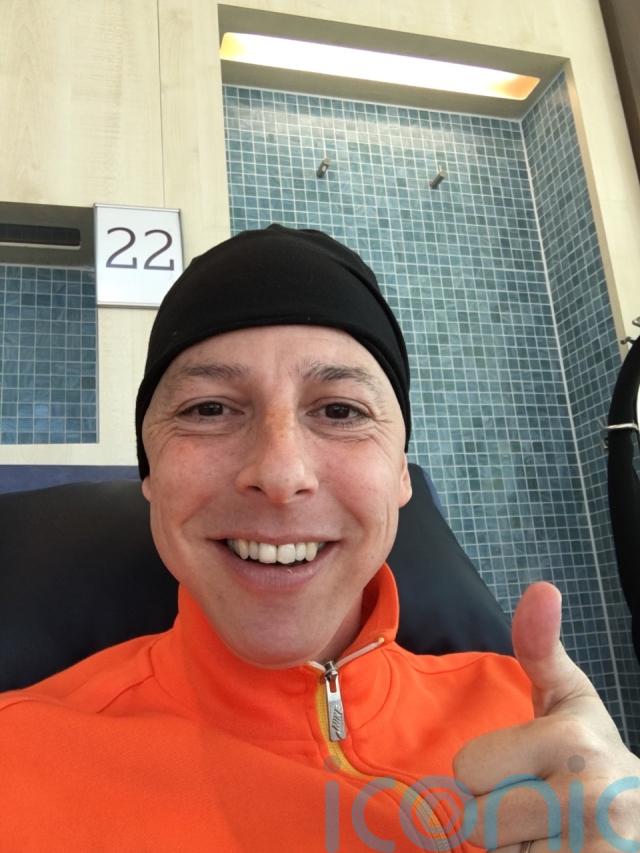
In 2025, he decided to run this year’s London Marathon to “thank” The Royal Marsden for “keeping (him) alive”.
He added: “That’s my motivation – that’s what gets me up on a Sunday morning in the rain to run.
“I did 17 miles last weekend and now we just keep going!”
He is in a group chat with other people running for the hospital, which has encouraged him even further.
He said: “The group gives me confidence in humanity, that there are just some amazing people out there doing amazing, amazing things.”
To donate to the fundraiser, visit: 2026tcslondonmarathon.enthuse.com/pf/nick-rose-977eb.
Nick Rose is supporting The Royal Marsden Cancer Charity and is backing its current fundraising prize draw with Omaze, where entrants can win a £4 million house in the Cotswolds and £250,000 cash via omaze.co.uk.

Subscribe or register today to discover more from DonegalLive.ie
Buy the e-paper of the Donegal Democrat, Donegal People's Press, Donegal Post and Inish Times here for instant access to Donegal's premier news titles.
Keep up with the latest news from Donegal with our daily newsletter featuring the most important stories of the day delivered to your inbox every evening at 5pm.

This publication supports the work of the Press Council of Ireland and Office of the Press Ombudsman, and our staff operate within the Code of Practice of the Press Council. You can obtain a copy of the Code, or contact the Council, at www.presscouncil.ie, Lo-call 1800 208 080 or email: info@presscouncil.ie.