Search


22 Apr 2026
Search
22 Apr 2026

Please allow ads as they help fund our trusted local news content.
Kindly add us to your ad blocker whitelist.
If you want further access to Ireland's best local journalism, consider contributing and/or subscribing to our free daily Newsletter .
Support our mission and join our community now.
To continue reading this article, you can subscribe for as little as €0.50 per week which will also give you access to all of our premium content and archived articles!
Alternatively, you can pay €0.50 per article, capped at €1 per day.
Thank you for supporting Ireland's best local journalism!


A 29-year-old woman who is considering a hysterectomy following six years of excruciatingly painful periods says medical cannabis has given her her life back.
Hannah Nurse, a project manager from Costessey in Norfolk, experienced “the worst period of (her) life” in 2020. At the time, she was working as an estate agent, and said that the pain was so unbearable she vomited and passed out at work.
After six years of searching for answers, including being investigated for endometriosis – a condition where cells similar to those in the lining of the womb grow in other parts of the body, causing severe pain, among other symptoms – Hannah is still none the wiser about what is causing the pain, which is now near-constant.
However, she said that being prescribed medical cannabis through Curaleaf Clinic has changed her life: she is now “almost completely pain-free” on the drug, and is able to return to her hobbies such as climbing, walking and spending quality time with friends.

Hannah had been taking the contraceptive pill since she was 16, but after experiencing side effects such as mood swings, she decided to come off it in 2019. All was well for around a year, but in spring 2020 she had “the worst period of (her) life” – an extremely painful period which led to her vomiting and passing out at her estate agent job.
“I ignored it for about two months because I thought, ‘Oh, it’s just a period’. That’s what everyone tells you,” Hannah told PA Real Life.
By May 2020, however, “every single period was getting like that – it was getting completely unmanageable”.
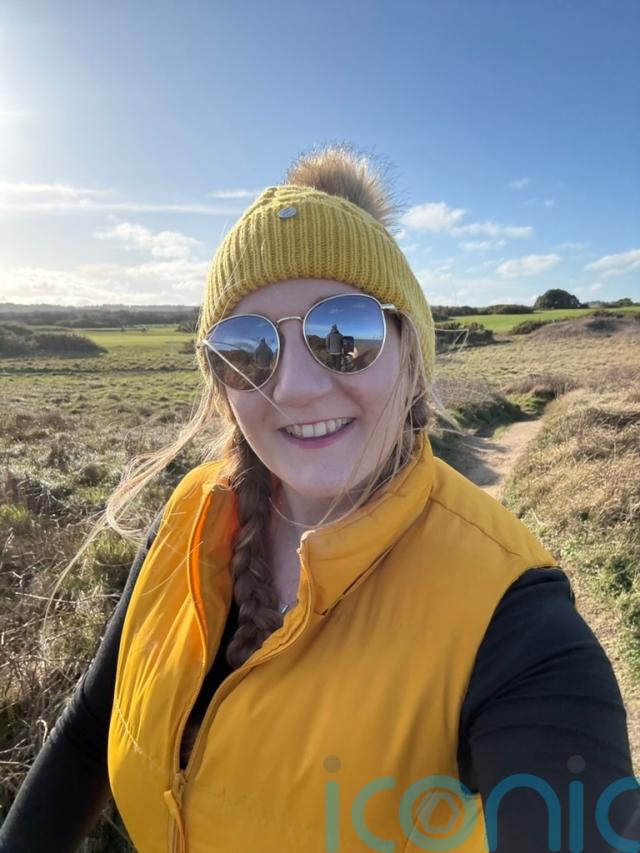
Hannah sought help from her GP, who advised her to get an ultrasound, which showed no signs of ectopic pregnancy or miscarriage.
She was then put on a waiting list for gynaecology, but thanks to the Covid pandemic, the wait was long. It wasn’t until December 2021 that she had her first gynaecology consultation, and it was another six months before she was able to have a laparoscopy to investigate suspected endometriosis in July 2022.
However, doctors found no sign of endometriosis.
Hannah went back to her GP, where she was advised to start taking the contraceptive pill again. Having come off the pill because of the side effects, she instead opted for a hormonal IUD, but it provided no relief.
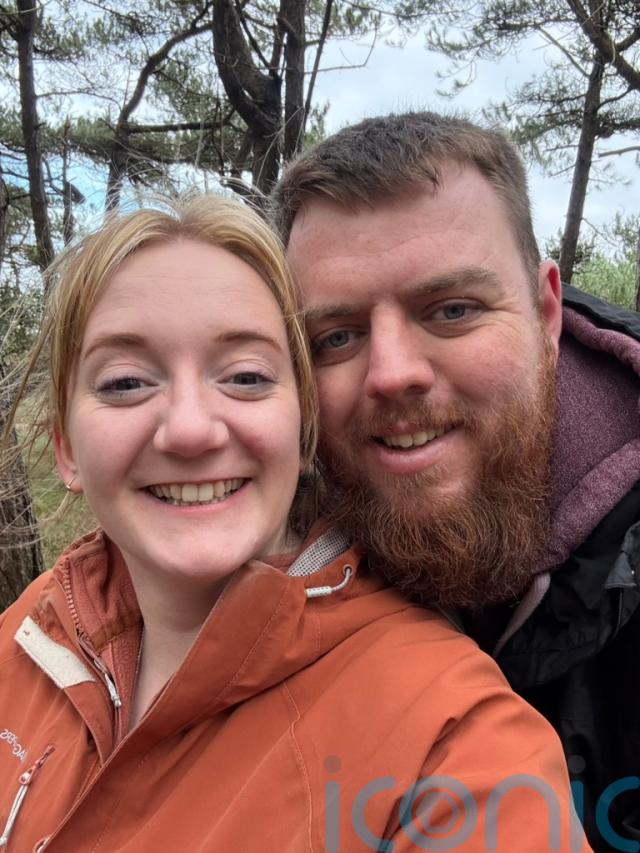
Next, she had a medically induced menopause for three months from January 2024, which is reversible – though Hannah and her partner, Mitchell, do not want children so fertility was not a concern – but medical menopause brought its own issues, and “neither the coil nor the menopause helped at all with any of my symptoms”.
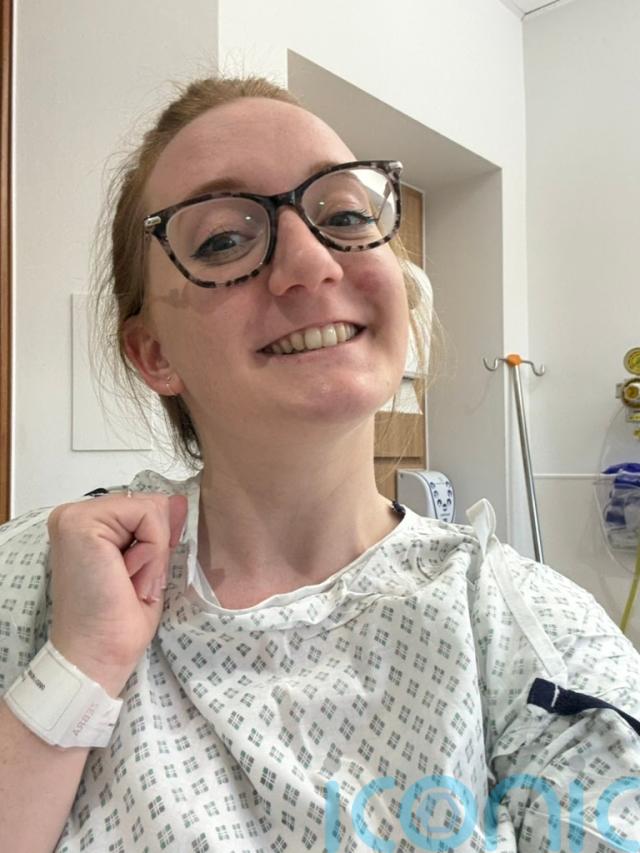
“The hot flushes, the mood swings, it was all of the things I came off the pill for, basically,” Hannah said.
“It wasn’t pleasant at all, emotionally very draining, as well as physically. And it just did nothing for the symptoms.”
As time went on, Hannah’s pain worsened. At first, she was in pain only while menstruating, but it progressed to being nearly constant.
“I had to change my job, because I was an estate agent, so I was driving around all the time, doing viewings, going up stairs and stuff, and I just couldn’t manage it any more,” Hannah said.
“I was in so much pain, even depressing the clutch on my car was problematic so I now drive an automatic car, and I’ve got a new job that I fully work from home.”
To manage the pain, Hannah tried over-the-counter painkillers such as paracetamol and ibuprofen, but then moved onto co-codamol which was “the only thing that seemed to touch it”.
However, she became dependent on the opioid so had to stop taking it, and other forms of pain relief, such as heating and cooling pads, came with the drawback of skin irritation.
In 2024, she began a pain management programme through the NHS and was prescribed Pregabalin and Meloxicam, which she said is “good on the bad days”.
However, everything changed when she discovered Curaleaf Clinic – a licensed and regulated private clinic with specialist doctors who can prescribe medical cannabis – through an advert on Instagram in January 2025.
“I was a bit nervous to start off with, just because of the stigma,” Hannah said, but “at this point I was just like, something has got to work, let’s try it.”
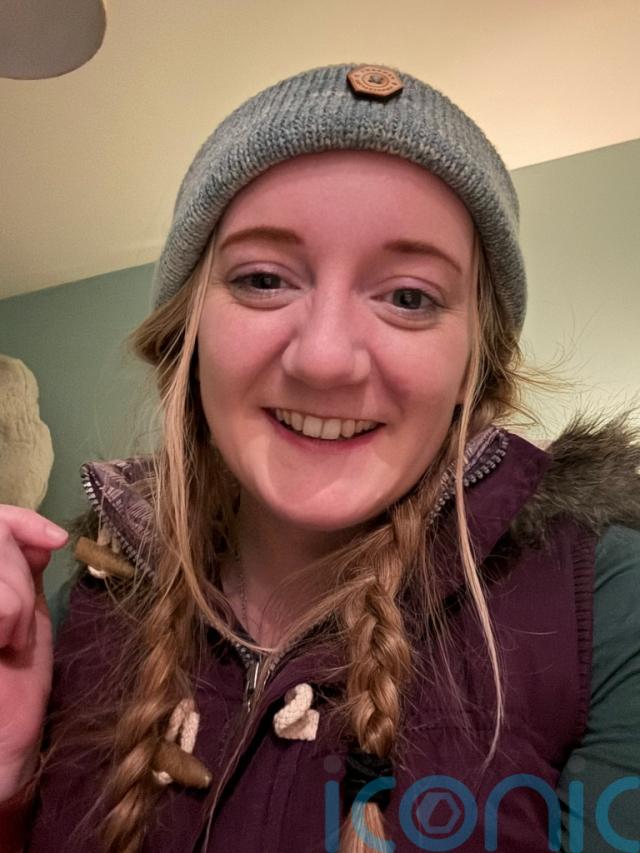
Through the consultation process for a medical cannabis prescription, Hannah said she was “genuinely taken aback by how much I was actually listened to”.
Following her consultation, Hannah’s case was put to a board to decide whether a cannabis prescription was right for her. The specialists deemed it was, as she was diagnosed with dysmenorrhea – painful periods. A diagnosis is required for prescription. Hannah was prescribed a vaporiser for cannabis flower as well as gummies.
Hannah said she takes the gummies, which contain the psychoactive cannabinoid THC, at night, adding that they are “particularly good because when I’m in pain, I really struggle to sleep, so they kind of just zonk me out, which is really good”.

Her vaporiser, for which she has two strains of cannabis – one that is pure THC, and the other which contains both THC and non-psychoactive CBD – can then be used when she is in significant pain to provide more “instant relief”.
Hannah had not used cannabis before, but said the Curaleaf Clinic team were “so helpful” with their advice on dosage and on how she can combine THC and CBD strains to fit her needs.
Before taking her medicine, Hannah said her pain is regularly around a seven out of 10, but the gummies take the pain down to a two or a three. She uses the vaporiser when her pain is a 10 out of 10, and that brings it down to a six – “a manageable level” – and “pairing the two together, I’m almost completely pain-free”.

As for the stigma, Hannah has found that people are not bothered in the slightest.
“I’m of the attitude that it is medicine and it does help me,” she said.
“I surround myself with lovely people, and luckily, I’ve never had a problem. I don’t really use the vaporiser outside of my house, either.”
Hannah’s prescription costs her around £40 a month, though it will cost her slightly more to stock up on the flower for her vaporiser, and she said she finds the cost “manageable” – especially given the relief it provides to her.

As for next steps, she is awaiting another laparoscopy to check again for endometriosis, as she still does not know the cause of her intense pain – even a colonoscopy in July 2025 to check for any bowel-related issues also came back clear. However, she knows the realistic end game will be a hysterectomy.
“It’s not the most effective treatment for some people, especially if you want to have children. But for me, it seems like the lesser of two evils.”
To find out more about medical cannabis, visit www.curaleafclinic.com.

Subscribe or register today to discover more from DonegalLive.ie
Buy the e-paper of the Donegal Democrat, Donegal People's Press, Donegal Post and Inish Times here for instant access to Donegal's premier news titles.
Keep up with the latest news from Donegal with our daily newsletter featuring the most important stories of the day delivered to your inbox every evening at 5pm.

This publication supports the work of the Press Council of Ireland and Office of the Press Ombudsman, and our staff operate within the Code of Practice of the Press Council. You can obtain a copy of the Code, or contact the Council, at www.presscouncil.ie, Lo-call 1800 208 080 or email: info@presscouncil.ie.