RIP: Body found in search for missing man (63) as heartbreaking statement is issued
Search


09 Mar 2026

Please allow ads as they help fund our trusted local news content.
Kindly add us to your ad blocker whitelist.
If you want further access to Ireland's best local journalism, consider contributing and/or subscribing to our free daily Newsletter .
Support our mission and join our community now.
To continue reading this article, you can subscribe for as little as €0.50 per week which will also give you access to all of our premium content and archived articles!
Alternatively, you can pay €0.50 per article, capped at €1 per day.
Thank you for supporting Ireland's best local journalism!


The mum of a girl who fought kidney failure aged two before having a kidney transplant and receiving a bowel cancer diagnosis said she has “beat the odds” time and time again.
Jennifer McNeill, 43, is mum to now-nine-year-old Bay, who has faced life-threatening health issues since she was two years old.
From 2018 to 2025, Bay was in and out of London’s Great Ormond Street Hospital as kidney failure led to a transplant, before she battled a bowel tumour and was given the all-clear in November 2025.
Despite fighting the unimaginable, Bay’s childhood was made brighter by the charity Spread a Smile, which brings joy, fun and laughter to seriously ill children during long hospital stays, and Jennifer said she is “just in absolute awe” of the work they do.
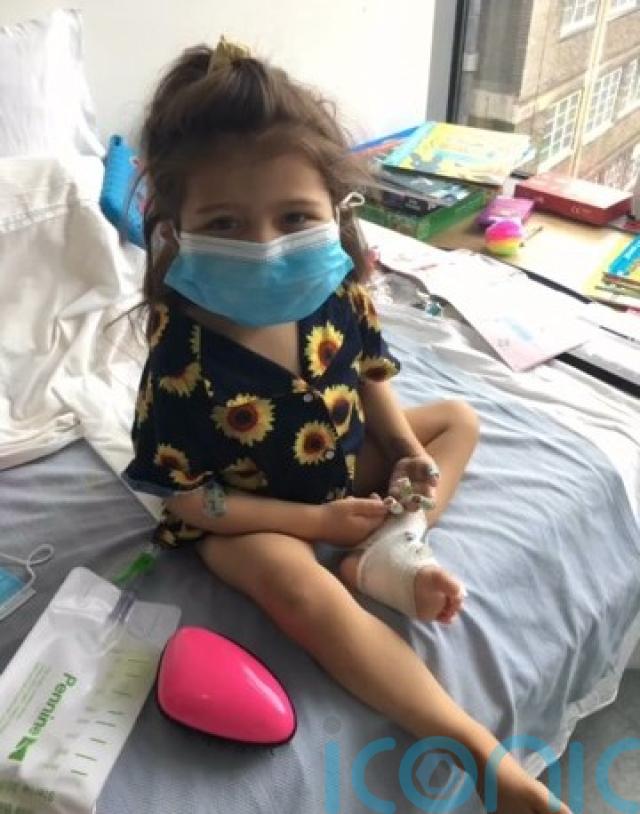
Bay’s health battle began in February 2018, when, aged two, she developed an illness.
“We thought it was a virus… like a cold, a malaise,” Jennifer, who lives in Barking, east London, told PA Real Life.
After visiting their GP a handful of times, Jennifer took Bay to A&E twice as she thought “something doesn’t feel right”.
Doctors believed it was a virus, advising Jennifer to administer Calpol, but after three weeks Bay began looking “really pale, like an off-colour grey, almost, and she was starting to vomit and walking really funny, losing her balance,” Jennifer said.
They made a third trip to A&E, where doctors conducted more tests before deciding Bay was fit to go home, as they still believed she was suffering from a virus.
“Bay being Bay was, apart from that, her normal, chatty, wonderful, energetic self, singing songs,” Jennifer said.
“But before we were about to go home, one doctor said, on our way out: ‘Actually, I’m going to do a blood test. She does look a bit of an odd colour’.
“We did the blood test, and they came running back and said: ‘There must be a mistake, because her electrolytes seem a bit off’. Back then, I didn’t really have any experience with blood numbers, I didn’t really know what anything meant.
“He said, ‘Oh, her potassium is reading quite high. This must be wrong’. Did the test again. Did it for a third time. And then things moved very quickly.
“Suddenly, we were moved into resus. Bay seemed very well – I remember Bay sitting up in resus on the bed – and they said: ‘We think she’s in kidney failure’.
“I was in utter disbelief and shock.”
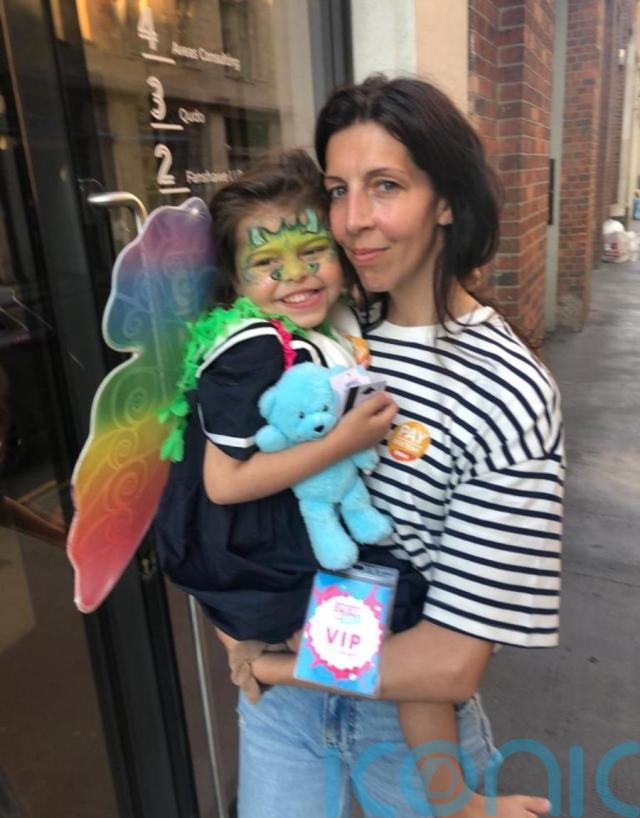
From then, Jennifer said “things just went at 100 miles an hour”. There were dozens of doctors in the room, and they were in contact with Great Ormond Street Hospital (GOSH), which she said “felt very surreal”.
Bay was then blue-lighted to GOSH by ambulance, and “within about two minutes of arriving in intensive care, she was intubated, put into a coma, and they very quickly told me that she’s not going to survive the night”.
Jennifer couldn’t believe they had been about to leave the hospital, and is unspeakably grateful to “that one doctor that one million per cent saved her life”.
The mum was told to “prepare for the worst” as Bay was put on dialysis, as doctors feared it had “gone too far”.
She learned that Bay would need a kidney transplant, but Jennifer had already donated one of her kidneys to her mother, who battled a late diabetes diagnosis, so she couldn’t be her daughter’s donor.
Thankfully, her identical twin sister Mimi, who had just arrived at GOSH to provide support, “instantly” volunteered herself as a donor for Bay.
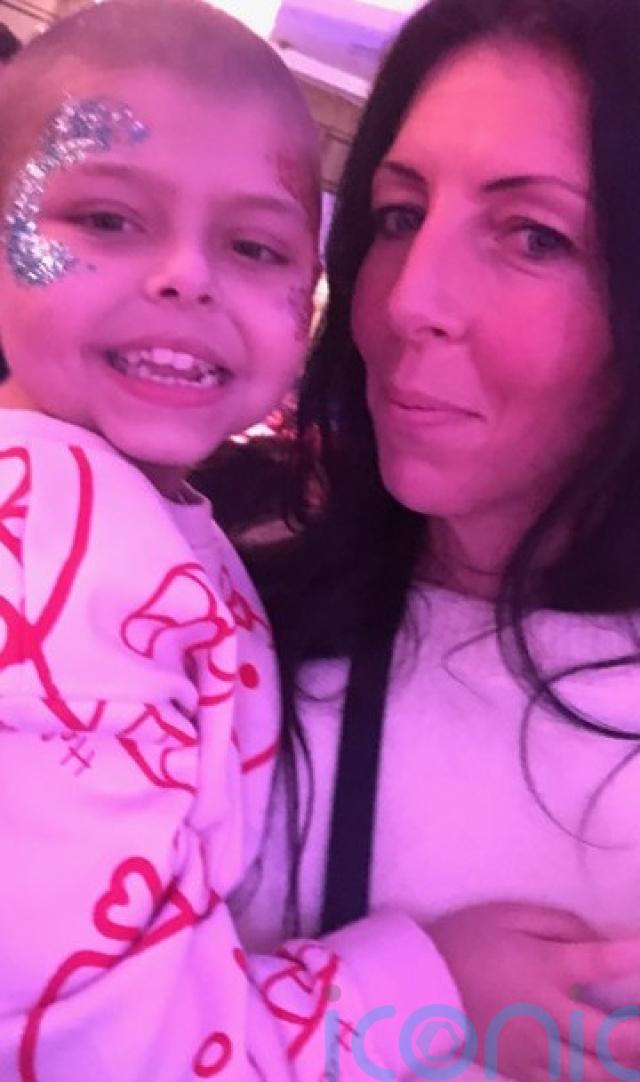
Bay could not have the transplant immediately, as she needed to be stabilised and prepared for the procedure. She was an in-patient at GOSH for three months, “in and out of ICU”, before being allowed home when Jennifer was trained to administer dialysis from home.
“I remember that day a nurse from the hospital came home with us and set up all the machines at home, and I remember that feeling of feeling very vulnerable,” Jennifer said.
“I’m at home now, with her having dialysis. We’ve got a big machine that alarms, and I’m really in charge of her…
“That became our normality, our new normal, and we did that for three years.”
By August 2021, after her health improved and following delays due to the Covid pandemic, Bay was able to have Mimi’s kidney transplanted. The transplant went well, and Jennifer said “you could see the instant colour in Bay’s face” after the then-five-year-old had a whole adult kidney transplanted.
However, it soon became apparent that there had been a complication with the surgery. Jennifer learned that Bay’s lymphatic system had been damaged during the operation, and she remained in hospital until December 2021.
“We had some very horrible conversations around if they can keep her safe, if they can save her, but Bay being Bay, she did beat the odds again,” Jennifer said, adding that Bay was able to return home for Christmas 2021.
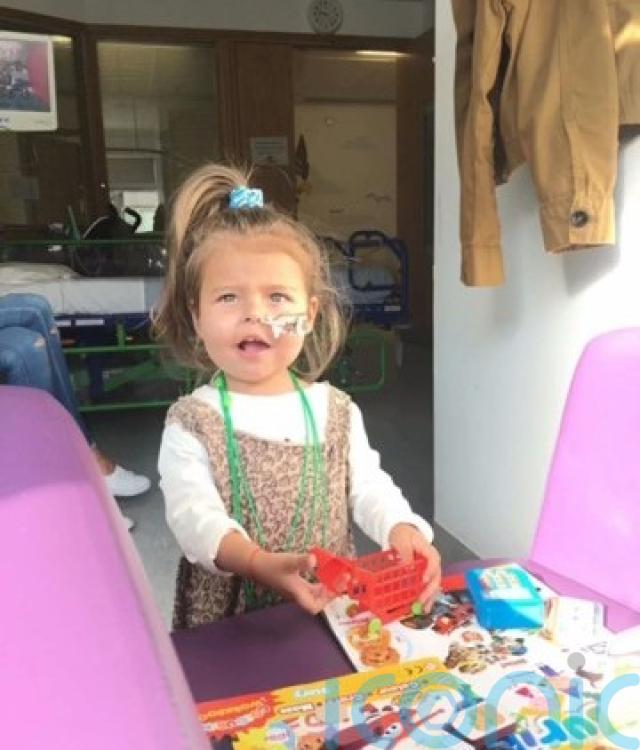
“It felt terrifying, to be honest, because of the gravity of the situation that we were in… You feel so euphoric, the last few years have been building up to this transplant. You understand that things can always happen, but for the majority, it’s going to go fine,” Jennifer said.
“She came out of the ICU, she was walking around. It was like, wow, Bay’s up and about already. And then suddenly you’re thrown into a world where she’s back to ICU, and things feel very uncertain…
“When the doctors don’t feel certain that they can put things right, it’s really just an uneasy, terrifying feeling.”
Mimi was also in hospital with septicaemia following her surgery at another hospital, which made things even scarier for Jennifer.
“But you have to just put your faith in the teams, and just take each day as it comes.”
Throughout it all, Spread a Smile kept them going. The charity, which operates in hospitals across the UK, offers virtual and in-person visits from entertainers – from magicians to musicians, artists to therapy dogs – to seriously ill children in NHS hospitals and hospices.
In 2025 and 2026, Spread a Smile will deliver more than 18,411 in-person bedside visits and over 2,860 virtual visits, in partnership with 39 NHS hospitals and six hospice partners.
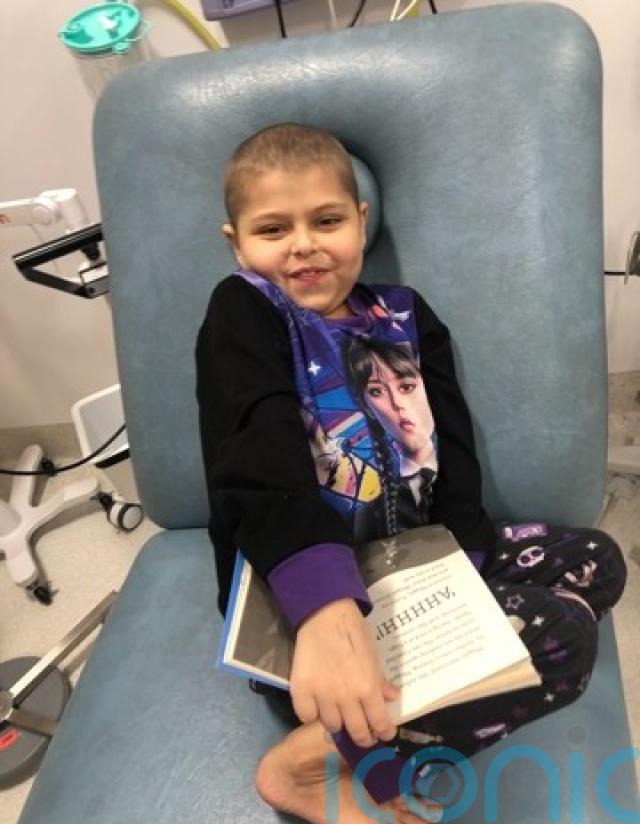
In a chance meeting in a park near GOSH when Bay was two, she and Jennifer met staff from Spread a Smile who invited Bay to join their activities, bringing some joy back into her childhood.
All in all, Bay’s recovery from her transplant took around a year – and from then, she was doing well and catching up on her childhood. Jennifer began to homeschool Bay, and she was getting involved with extra-curricular clubs such as performing arts, Brownies and chess club.
However, in early 2024 her blood tests became irregular, and “she started to look quite puffy, but the main alarming symptom was she started to get some blood in her poo”.
The likelihood of Epstein-Barr virus (EBV) – a viral infection which commonly causes glandular fever – was growing according to her blood numbers, and Jennifer knew that for immunosuppressed Bay it had “the potential to be quite dangerous” and could lead to post-transplant lymphoproliferative disorder (PTLD).
According to Lymphoma Action, PTLD is the broad name for lymphomas that can develop in people who have had a transplant. Many cases of PTLD are linked to EBV, as the suppressed immune system following a transplant can cause the EBV to change lymphocytes into cancerous cells.
“Eventually, in December 2024 we had an ultrasound, because I was digging my heels in a little bit. There’s something very wrong,” Jennifer explained.
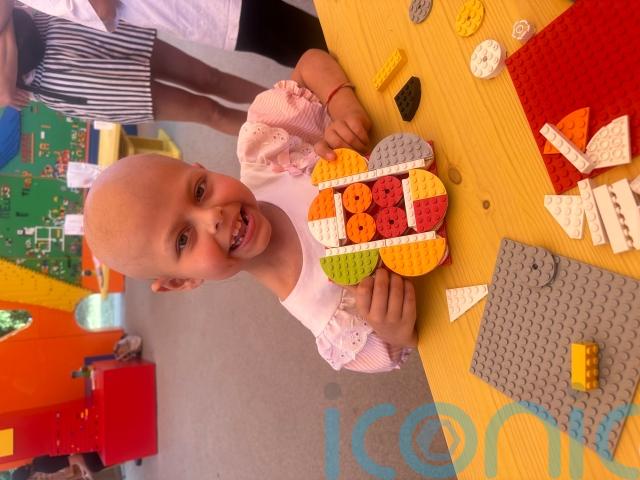
“They found a mass in her bowel, which I think in my heart of hearts it was almost like a relief, because we just knew, for almost a year, that something was wrong.”
On December 18 2024, Bay was diagnosed with PTLD, and “things started moving very quickly again”. Bay was admitted into hospital, she had a biopsy and a lumbar puncture to ascertain whether it was cancer, and Jennifer was told that doctors had discovered a malignancy, with the lesion in Bay’s bowel, and that she would need chemotherapy and immunotherapy.
“I think it’s every parent’s worst nightmare, to be honest,” she said.
Initially, Bay’s prognosis “wasn’t great”, as she was fragile and immunocompromised following her transplant. Doctors advised a lower dose of chemotherapy alongside immunotherapy, as they feared her body would not cope with more aggressive chemotherapy, but Bay only had “a partial response”.
By March 2025, after Bay had been receiving chemotherapy for three months, doctors said they would need to look for alternative treatments, as the lower dose of treatment wasn’t effective and they were still reluctant to go down a more aggressive route.
“Reading between the lines, we knew what that meant,” Jennifer said, and once again she and her family prepared for the worst.
However, after another meeting among the consultants, they decided that they would try the aggressive chemotherapy, which Jennifer “fully supported”.
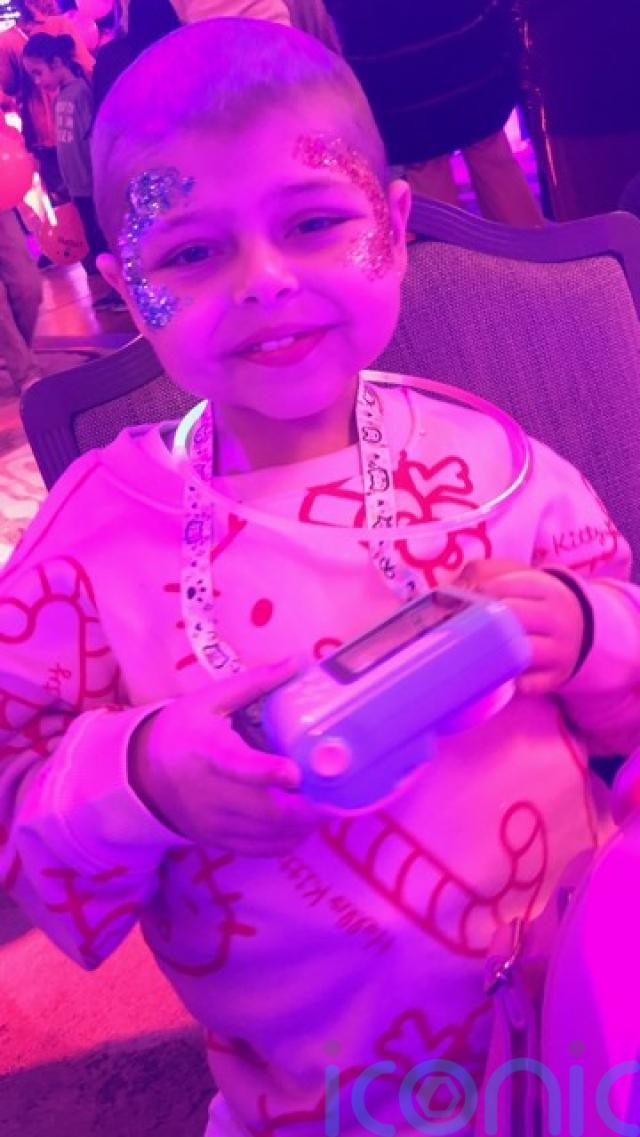
They started a new block of 10 cycles of chemotherapy, and while it was “a little bit bumpy because it’s aggressive chemo and Bay’s already very immunosuppressed… She got through it”.
“To get the cancer that Bay had – she had it quite aggressively in her bowel – was quite rare,” Jennifer said.
“The protocol they followed, they’ve only used it I think nine times in 20-plus years.”
In November 2025, Bay had a PET scan which confirmed there was no more evidence of cancer, which Jennifer said “was just the most wonderful news, considering she went in with one arm behind her back”.
After Bay’s remission was confirmed, she now requires twice-yearly PET scans. Jennifer was told the chance of relapse is low, but she knows that “it’s always a possibility”.
“We live for now, until the next scan,” she added.
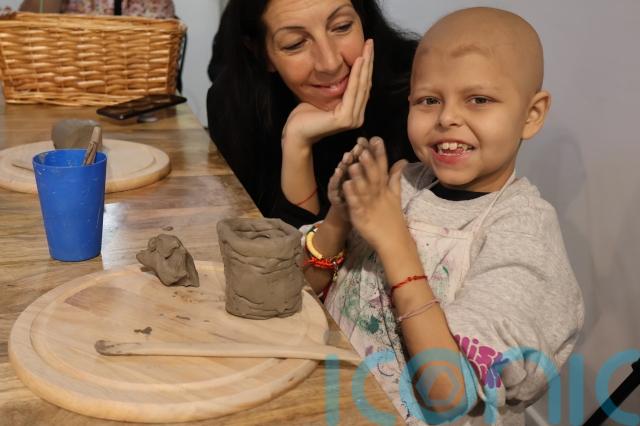
“We are just completely going to grab life with both hands. It’s really hard to put into words how much you appreciate life.
“You’re just thankful and grateful, and I can’t believe it, almost, I cannot believe it.
“It’s this feeling you’ve been waiting for and wishing and praying for the whole time, and you don’t ever think you’re going to get there and hear it, but it’s wonderful.”
Bay is still being homeschooled by her mum, and she has returned to Brownies and chess club, as well as her performing arts academy, and is still actively involved with her Spread a Smile family.
“The other day, we went to the winter party, and somebody was asking her, ‘What does Spread a Smile mean to you?’ She said: ‘I get to meet lots of children like me’,” Jennifer said, adding that even the opportunity to go to a party was huge for Bay.
“She didn’t go to nursery or school, she didn’t get invited to parties, but she went to a party every year, with Spread a Smile.”
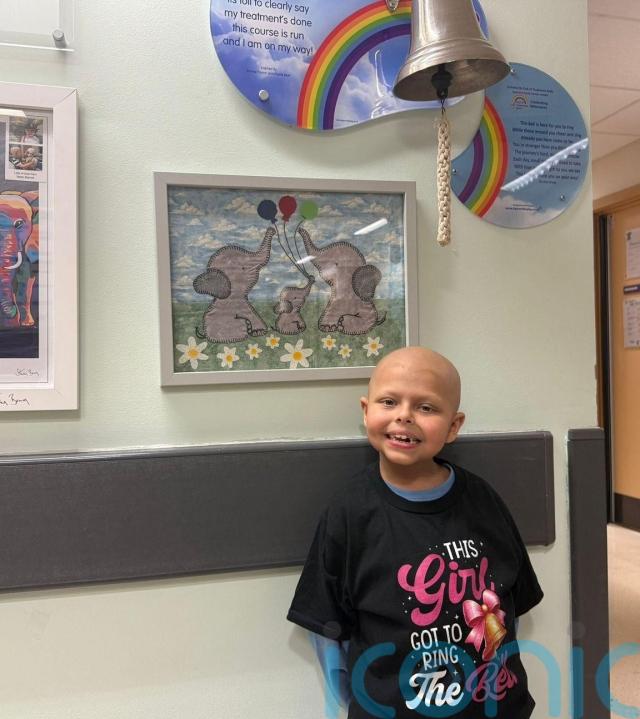
“Obviously, when you’re a vulnerable child, we would not really go to any kind of social events or mingle,” she added.
“But with Spread a Smile, we know that we’re with like-minded families, we know it’s going to be – as much as we can predict – a safe environment.
“We will always go.”
To find out more about Spread a Smile, visit spreadasmile.org.

Subscribe or register today to discover more from DonegalLive.ie
Buy the e-paper of the Donegal Democrat, Donegal People's Press, Donegal Post and Inish Times here for instant access to Donegal's premier news titles.
Keep up with the latest news from Donegal with our daily newsletter featuring the most important stories of the day delivered to your inbox every evening at 5pm.

This publication supports the work of the Press Council of Ireland and Office of the Press Ombudsman, and our staff operate within the Code of Practice of the Press Council. You can obtain a copy of the Code, or contact the Council, at www.presscouncil.ie, Lo-call 1800 208 080 or email: info@presscouncil.ie.