Credit: West Midlands Police
Search


17 Mar 2026

Please allow ads as they help fund our trusted local news content.
Kindly add us to your ad blocker whitelist.
If you want further access to Ireland's best local journalism, consider contributing and/or subscribing to our free daily Newsletter .
Support our mission and join our community now.
To continue reading this article, you can subscribe for as little as €0.50 per week which will also give you access to all of our premium content and archived articles!
Alternatively, you can pay €0.50 per article, capped at €1 per day.
Thank you for supporting Ireland's best local journalism!


An Essex mother of a three-year-old boy diagnosed with a rare brain tumour has said three separate GP visits misdiagnosed her son’s cancer as infections before he was rushed to A&E.
Emily Cable, 30, a former retail worker, said her son Frank first presented with fatigue and irritability in April 2024, aged one. This progressed to breathlessness within two weeks, so he was taken to a private GP who said it was a chest infection and prescribed a five-day course of antibiotics.
Within days, Frank’s condition worsened to vomiting and extreme lethargy, so Emily said her husband Josh took him to their local GP two more times, where on both occasions it was believed to be a viral infection.
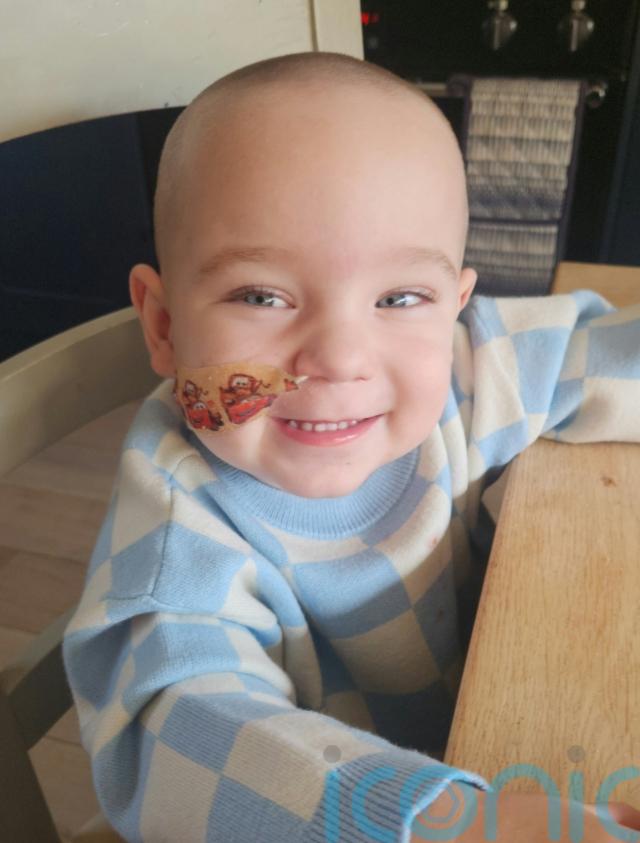
But less than 24 hours after the third appointment, Emily said Frank was rushed to Broomfield Hospital in Chelmsford and had a “massive seizure” in her arms that “completely came out of the blue”, prompting a CT scan and X-ray.
Emily told PA Real Life: “When we came back, Josh and I got asked to go and talk in another room and I just knew at that point that it was going to be bad news.
“We walked into this treatment room and there were chairs in a circle and a box of tissues. They sat us down and they said to us that there was a large tumour at the back of Frank’s head and a large amount of fluid build-up too.
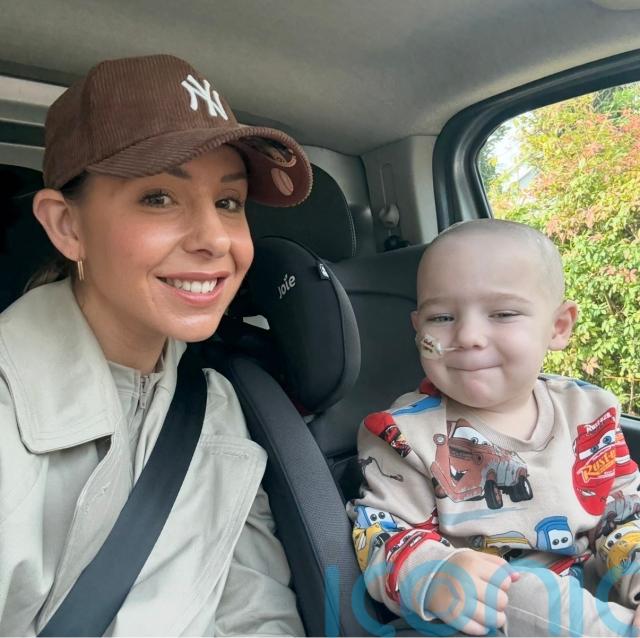
“Frank was in a really bad way,” she said of his diagnosis on May 23, 2024, aged 15 months.
Emily said Frank had to be put in an induced coma because the fluid build-up put him “at risk of having a stroke or more seizures”, before an intensive care ambulance team transferred him to Great Ormond Street Hospital (Gosh) in London.
“So all of a sudden our world just changed,” Emily said. “We had this huge news and suddenly they were passing Frank over to this team that had arrived at the hospital with all this equipment.
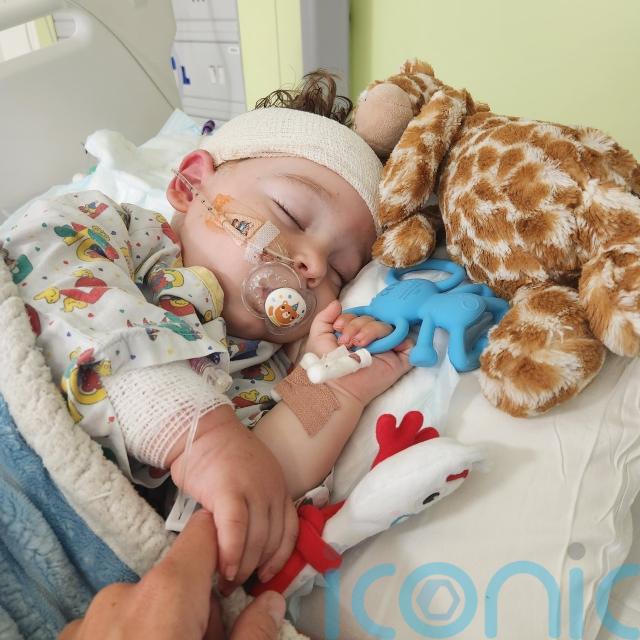
“It was terrifying,” she added.
Immediately after arriving at Gosh, Emily said Frank was taken “straight into theatre” for “life-saving surgery” while she and Josh signed the paperwork and then waited up to two hours for an update.
After a successful surgery, Emily described what happened next: “I will never forget walking in and seeing Frank lying in this hospital bed in a coma with all this equipment around him.
“There were so many tubes and so many wires. He just seemed so tiny with so much attached to him, keeping him alive.
“I just sobbed. And I remember saying to my husband, ‘we can’t lose him’,” she said.
Less than a week later, Emily said Frank had to undergo an 11-hour surgery to remove his brain tumour, where she described having to “say goodbye” to him before he was put under general anaesthetic.
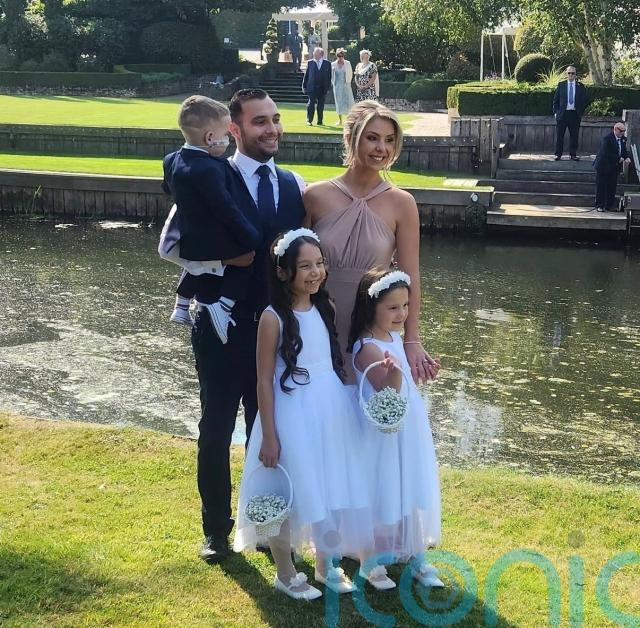
Emily and Josh hadn’t seen their daughters, Olivia and Sofia, 9 and 7 respectively, since the start of Frank’s medical emergency, so the couple’s parents brought the girls to London to spend the day together while they waited for an update from the hospital.
Emily said: “I was just constantly checking my phone, checking to see if there were going to be any updates. In a way, I didn’t want there to be because they said to us, ‘You’d only hear if it’s bad news’
“The time just went on and on and on, and it felt like the longest day of my life. Then we got a phone call to say that he was back and that they were really pleased with how the surgery had gone, and I had never walked faster back to the hospital to get there,” she said.
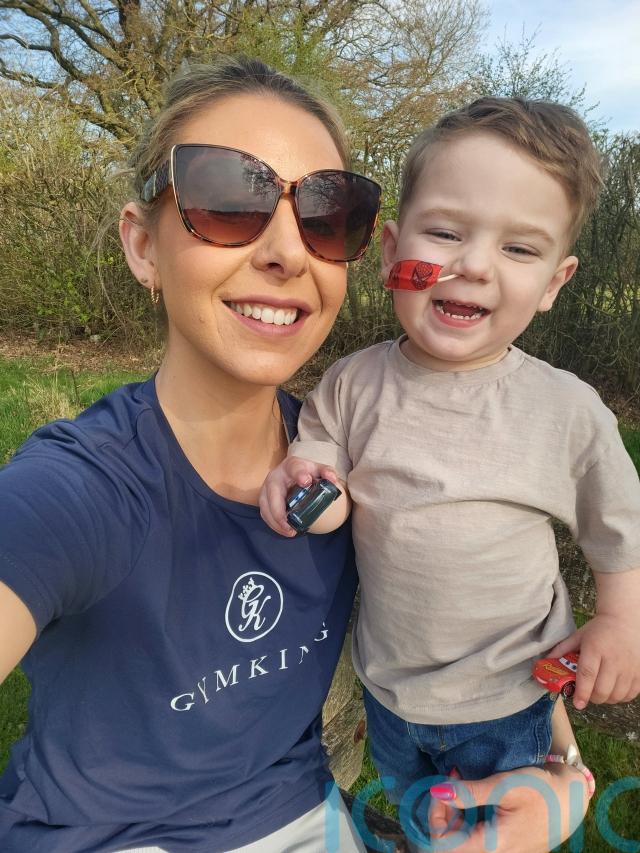
Following the surgery, Emily remembered Frank was “very swollen”, bruised, and he couldn’t move his head: “How the brain surgeons managed to get rid of the whole tumour without causing any real permanent damage is just incredible.”
“Frank’s done amazing. He is our little miracle,” she added.
Once doctors tested Frank’s tumour, Emily said they found out it was cancerous – specifically a rare form of cancer called an ependymoma, with typical symptoms including headaches, feeling or being sick, problems with coordination and sight, and seizures, according to the cancer charity Macmillan.
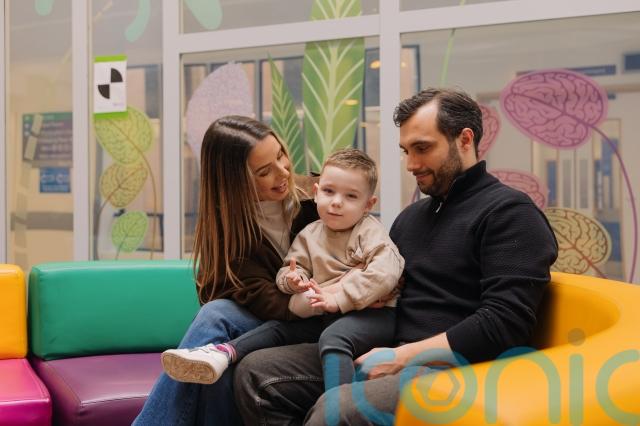
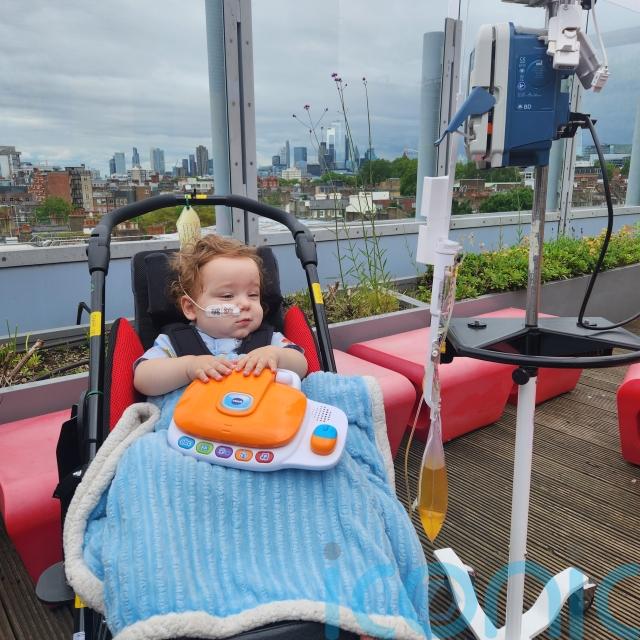
Frank started a course of proton beam therapy at University College London Hospital (UCLH) in June 2024, which is a highly targeted form of radiotherapy.
After six weeks of this daily treatment, with only the weekends as respite, Emily said it took its toll on her son: “He was exhausted. He stopped sleeping. He stopped eating.
“He had to have a feeding tube. He had no energy to really crawl around and play. And it was really hard for him,” she said.
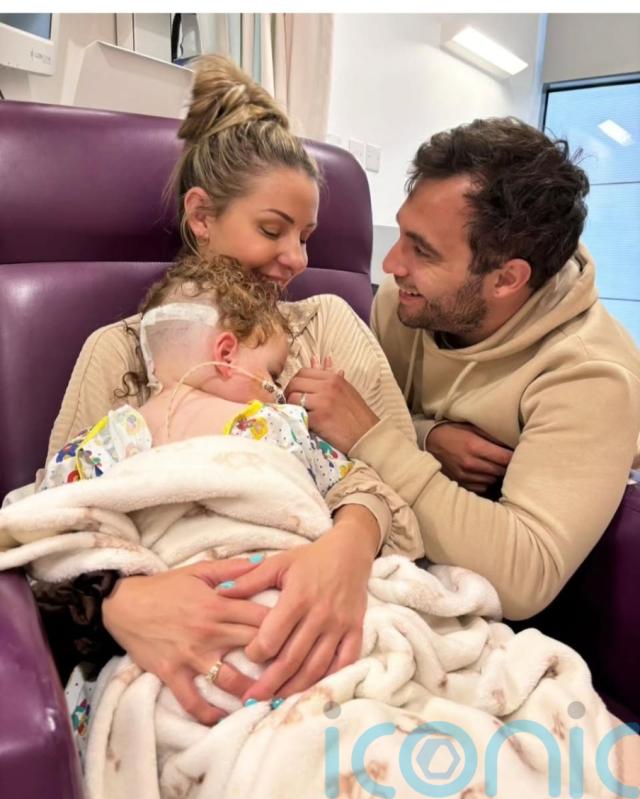
Emily praised the hospital staff throughout her son’s journey, including Broomfield Hospital in Chelmsford, who were “absolutely incredible” in updating the family on “next steps and communicating”.
Similarly, she said Gosh were “such a big support” to her family, especially the dedicated play team, who would “tailor toys” for him during his recovery.
“They’d bring little lights or balls for him and they really worked hard to build up a relationship,” Emily said. “And now, when we go back to the same ward for appointments, Frank is so comfortable with them.
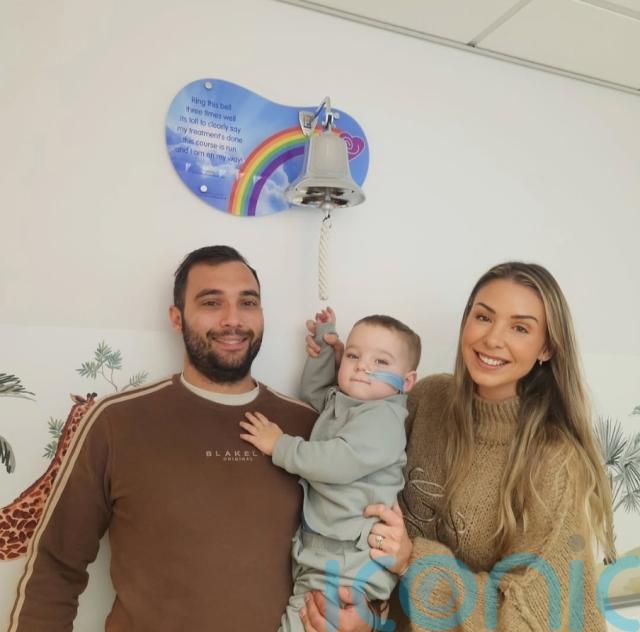
“He will go straight off into that playroom, sit down with the play specialist and chat away. He’ll boss her around. When we were last in the ward, he was getting her to push him up and down in a little car.
“They just really work hard to get that trust. Because there’s so much scary stuff for them – getting poked and prodded – so then to have the play specialist there that is fun and making them comfortable is so important,” she said.
By the end of 2024, Frank had finished his radiotherapy and had a scan to reveal he was in remission.
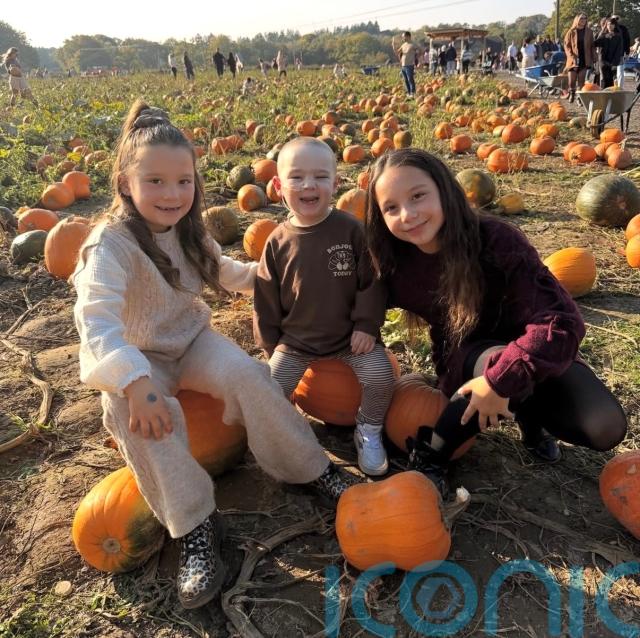
Emily said: “I remember getting the message as I was collecting my girls from school. I was crying with my friends and other school mums.
“It was just a huge celebration,” she said.
Emily said Frank’s development was impacted by his surgeries and treatments, meaning he “only really just started to talk” and walk from November 2025 onwards, using a walking frame for the latter.
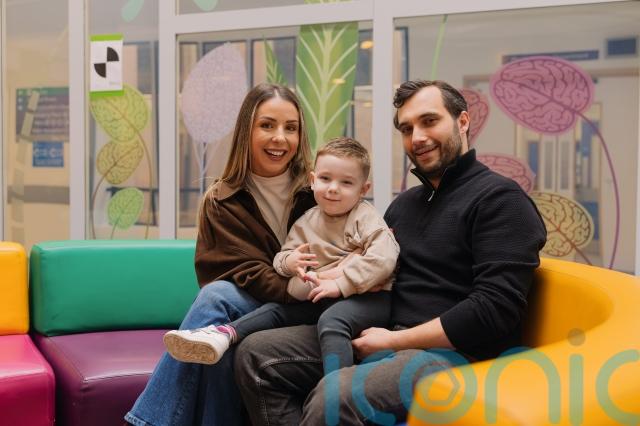
Today, Emily said Frank “still spends a lot of time in hospital” and he will need to continue to have scans regularly over the next 10 years.
Emily said: “We try to keep things as normal as possible for our family. It’s hard and that worry will never go.
“Your life changes forever, but you take every win, so seeing Frank walk for the first time and standing up or talking to us, even saying his sister’s names – those are the most special moments ever.
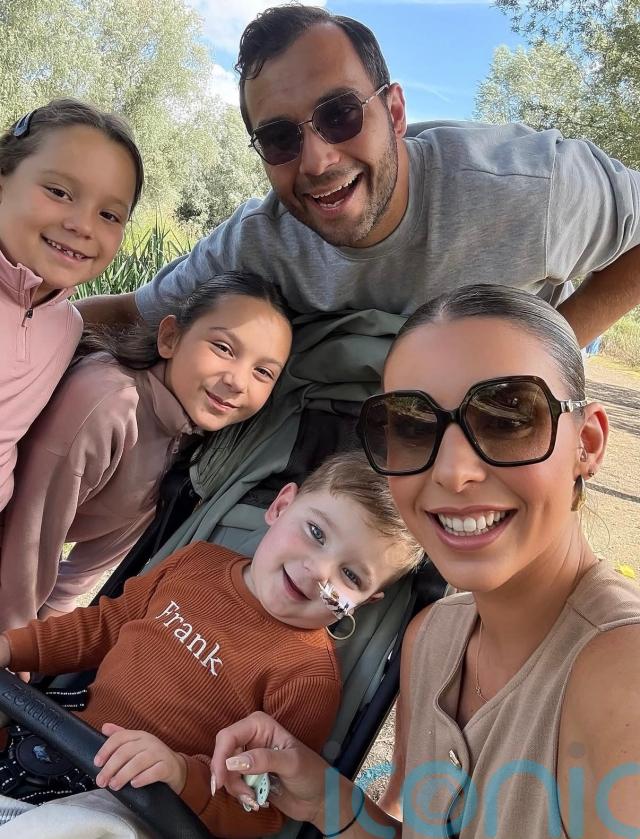
“Because, at one point, I never thought I’d see that,” she said.
Emily, Josh, and Frank are supporting Gosh Charity’s launch of three sculptures at Queen Elizabeth Olympic Park from Tuesday March 17, woven from replica chemotherapy wires. To find out more and donate to help build the new Children’s Cancer Centre at GOSH, visit: gosh.org/childrens-cancer-centre

Subscribe or register today to discover more from DonegalLive.ie
Buy the e-paper of the Donegal Democrat, Donegal People's Press, Donegal Post and Inish Times here for instant access to Donegal's premier news titles.
Keep up with the latest news from Donegal with our daily newsletter featuring the most important stories of the day delivered to your inbox every evening at 5pm.

This publication supports the work of the Press Council of Ireland and Office of the Press Ombudsman, and our staff operate within the Code of Practice of the Press Council. You can obtain a copy of the Code, or contact the Council, at www.presscouncil.ie, Lo-call 1800 208 080 or email: info@presscouncil.ie.