A still from a video, which has been widely shared on the social media, of the shocking incident
Search


24 Mar 2026

Please allow ads as they help fund our trusted local news content.
Kindly add us to your ad blocker whitelist.
If you want further access to Ireland's best local journalism, consider contributing and/or subscribing to our free daily Newsletter .
Support our mission and join our community now.
To continue reading this article, you can subscribe for as little as €0.50 per week which will also give you access to all of our premium content and archived articles!
Alternatively, you can pay €0.50 per article, capped at €1 per day.
Thank you for supporting Ireland's best local journalism!


A 47-year-old Cambridgeshire woman has described the “unbearable pain” she experienced – to the point she wished somebody would cut her “leg off” – before she got a rare diagnosis that affects up to three in 100,000 people via an AI physiotherapist.
Amie Smith, a carer, said she first felt lower back pain on Sunday April 20, 2025 that she initially tried to manage with painkillers, but it progressed to “excruciatingly painful” levels that travelled down her body and into her legs within days.
The mother of three said she had an urgent GP appointment on Tuesday April 22 and was referred to an AI physiotherapist programme called Flok Health, which the NHS trust in her area was trialling.
After a consultation with an AI-powered physiotherapist, Amie said she received a call on Monday April 28 from Kirsty Henderson, senior physiotherapist at Flok Health, who flagged that she might have a condition called cauda equina syndrome, which is compression of the spinal nerves at the tail end of the spinal cord that can cause paralysis and incontinence if left untreated, according to the NHS.

The next day, Amie said she was rushed to hospital where she had an MRI and was diagnosed with the condition, prompting a five-hour emergency lumbar decompression surgery on May 1.
Amie told PA Real Life: “Initially, I thought (an AI physiotherapist) is not very personal. I felt like I was probably talking to a robot that couldn’t really help me.
“But, actually, if it wasn’t for that process, I wouldn’t have gotten the help that I did, and ultimately I would have had a lot more damage.
“I think there’s a lot of people in my generation and upwards that are very negative (about AI), but I’m really quite thankful for it,” she added.
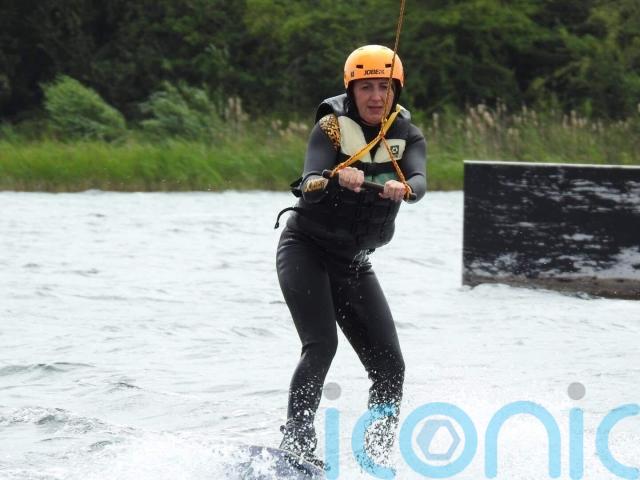
After a fibromyalgia diagnosis in 2018 – a chronic condition that causes pain all over the body – Amie said she has lived with pain ever since, but what she experienced in April 2025 felt “completely different”.
Amie said: “I’ve always suffered with back pain, but this was excruciatingly painful.
“I left it for a few days thinking that if I just take pain relief and I carry on, I should be fine. But it just gradually got worse.”
Amie made a telephone appointment at her GP on Tuesday April 22, but she said the doctor “automatically” wanted to “blame” her new pain on her fibromyalgia, despite Amie’s insistence that it was “different” and that she was really struggling to walk by that point.
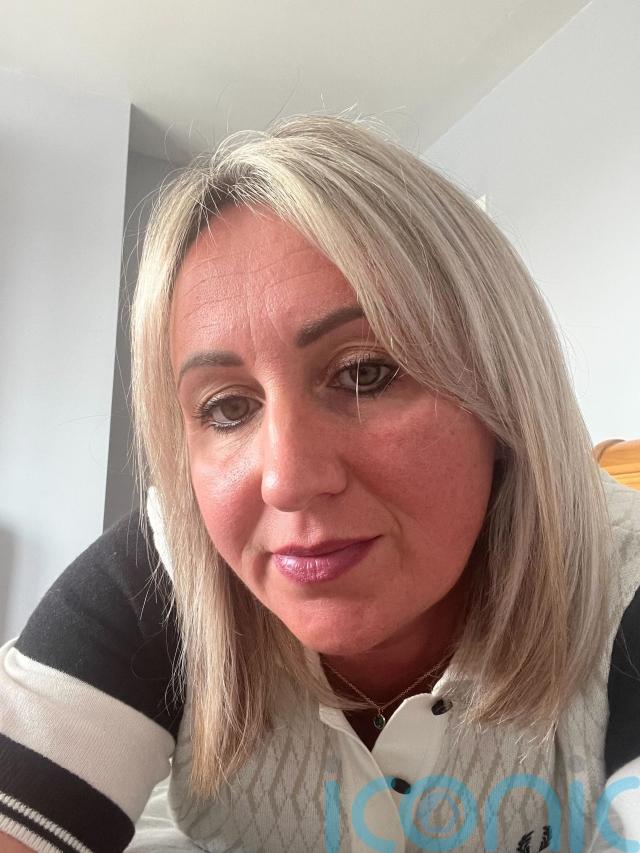
Amie said she was signposted to the Flok Health app, which was deployed in February 2025 by Cambridgeshire Community Services NHS Trust (CCS) as a way to help cut NHS back pain waiting lists.
She didn’t initially use Flok, because she didn’t think it was “very personal”, so when her pain worsened she opted instead to request an e-consult from her GP, which she didn’t hear back from. Amie said she submitted another one the next day and when she didn’t get a response from that one too, she decided to give Flok a go on Friday April 25.
According to Flok Health, patients receive an invitation to complete an automated video call assessment and during this consultation an AI-powered physiotherapist will evaluate their symptoms to determine the right treatment.
It was during this consultation that Amie said the AI physiotherapist flagged her symptoms and lack of movement as serious, so encouraged her to go to A&E, where she was prescribed muscle relaxants and was sent home.
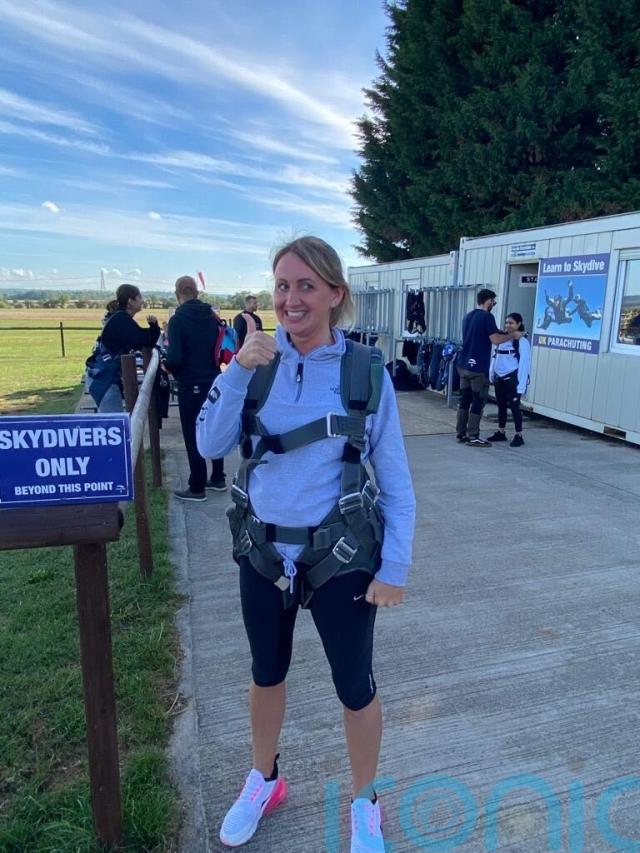
By Monday April 28, Amie said she was “beside” herself in pain and she hadn’t heard anything back from her e-consult requests, but then her phone rang around 5pm. She said she was “pleasantly surprised” to receive an hour-long telehealth appointment with Kirsty Henderson from Flok, calling to see how she had got on at the hospital.
Amie said: “I described everything to her and I just felt like she was able to do what nobody else had: Give me time to tell exactly how this is affecting me and what’s happening.
“Straight away, she said that I definitely needed an MRI.
“She explained to me that it could be something called cauda equina, and that getting help urgently is essential because the longer it goes on, the more damage that can be done.
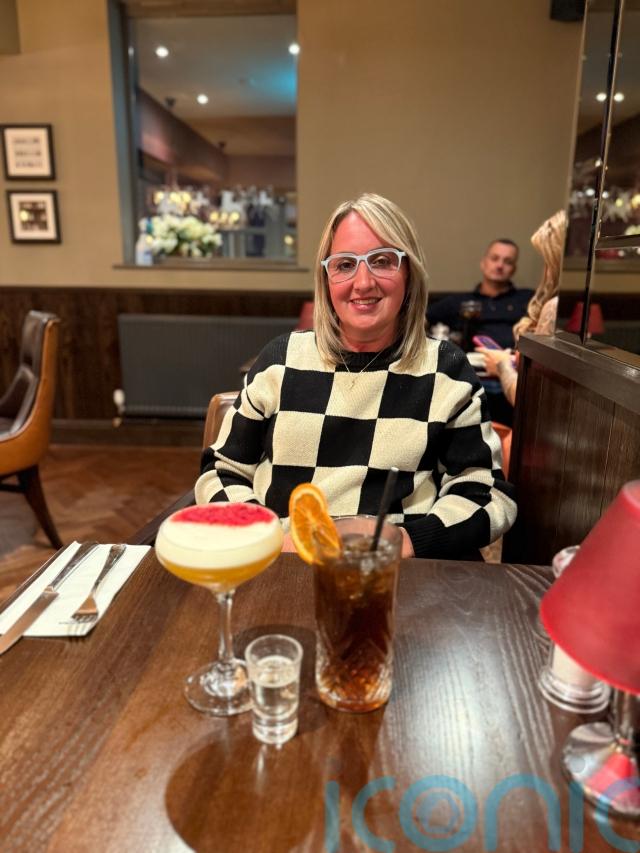
“That was the first time out of all the people I spoke to that anybody actually told me that I was at risk,” she added.
After getting the confidence from Kirsty to advocate for herself, Amie said she called her GP the next morning, but didn’t get anywhere with that. So a friend of Amie’s took her back to A&E, where she said doctors could see she was “extremely upset” so they took her blood pressure and it was “really high”.
Amie said she was taken “straight through” to being admitted and saw a doctor who did some initial tests and immediately sent her for an MRI scan. Within hours, Amie said an orthopaedic doctor described it as a “really bad situation” where her discs had slipped and they were trapping the nerves – something she later discovered in her GP’s notes as cauda equina syndrome.
Half an hour later, Amie said she was in the back of an ambulance being transferred to a nearby specialist hospital, where she spent a couple of days, until she told a doctor that the back of her leg was numb so she was rushed into a five-hour lumbar decompression surgery on May 1.
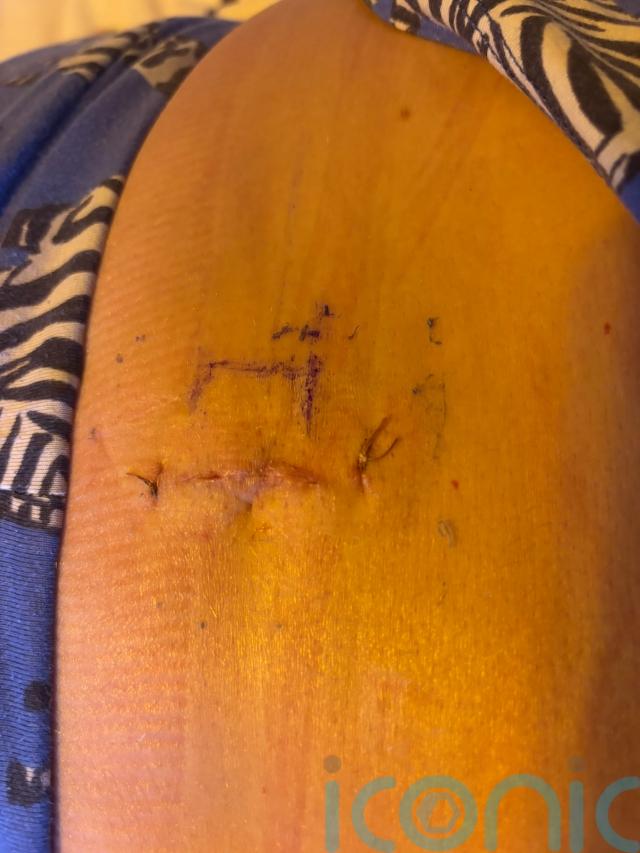
Since the surgery, Amie said her pain has subsided but she has had to make some “adaptations” because she still doesn’t have full use of her left leg, like driving her son’s automatic car instead of her manual one. She said she also struggles to walk for too long.
Mike Passfield, the deputy director from Cambridgeshire Community Services NHS trust, told PA Real Life: “The new AI-assisted approach is having a significant impact in our region, enabling thousands of patients to get faster access to expert physiotherapy support.
“Not only is the technology capable of treating and discharging patients at scale, but its red flag system means patients with more serious or extremely rare conditions are identified and directed to the right human-led service quickly to get the appropriate care.
“During a pilot of Flok Health in Cambridgeshire last year, we cut waiting lists by more than half. Thousands more people are getting immediate access to support thanks to the new approach, transforming the way we deliver physiotherapy,” he added.
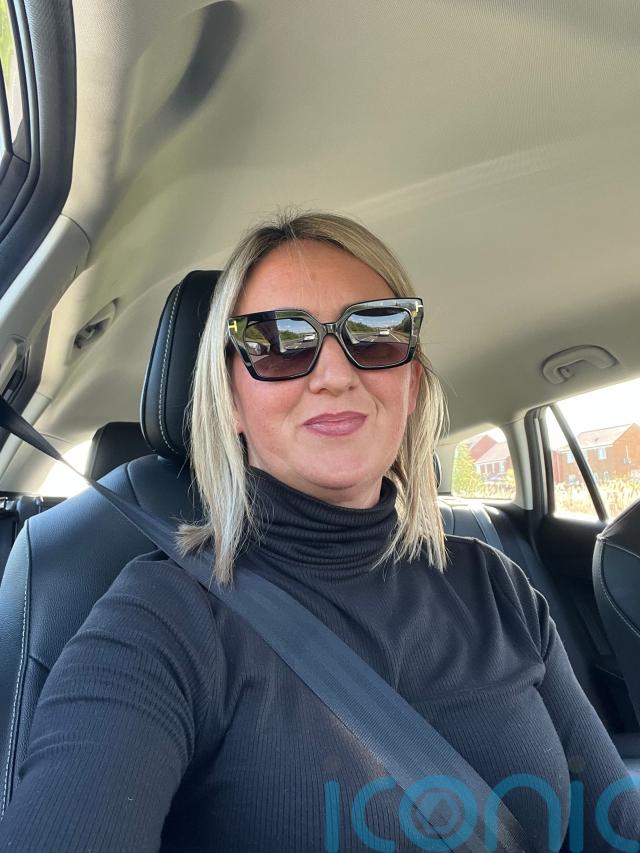
After everything settled down, Amie said: “I went back to Kirsty to really thank her because I honestly felt like she was the only person that actually listened.
“She realised the red flags, talked me through it, explained the risks and what she was concerned about, and even gave me advice on how to try to get the doctors to help me.
“Now I can see that every 24 hours that was going by, more damage was being done to my body.
“That damage is still here today to a point, but had I not spoken to Kirsty and then gone on to follow what I’ve been told to do, I probably would have been unable to walk.
“I feel like I owe a lot to Kirsty. She made a huge difference,” Amie said, still surprised by how it all “started” with an AI physio.

Subscribe or register today to discover more from DonegalLive.ie
Buy the e-paper of the Donegal Democrat, Donegal People's Press, Donegal Post and Inish Times here for instant access to Donegal's premier news titles.
Keep up with the latest news from Donegal with our daily newsletter featuring the most important stories of the day delivered to your inbox every evening at 5pm.

This publication supports the work of the Press Council of Ireland and Office of the Press Ombudsman, and our staff operate within the Code of Practice of the Press Council. You can obtain a copy of the Code, or contact the Council, at www.presscouncil.ie, Lo-call 1800 208 080 or email: info@presscouncil.ie.