Search


01 Apr 2026
Search
01 Apr 2026

Please allow ads as they help fund our trusted local news content.
Kindly add us to your ad blocker whitelist.
If you want further access to Ireland's best local journalism, consider contributing and/or subscribing to our free daily Newsletter .
Support our mission and join our community now.
To continue reading this article, you can subscribe for as little as €0.50 per week which will also give you access to all of our premium content and archived articles!
Alternatively, you can pay €0.50 per article, capped at €1 per day.
Thank you for supporting Ireland's best local journalism!


A woman who was diagnosed with bowel cancer at 26 after a tumour obstructed her colon and left her unable to eat, vomiting for three hours after mealtimes, and in severe pain said the experience made her realise “how fragile life is” and works to raise awareness that “this can be happening to young people”.
Charlotte Rutherford, now 32, was living in Australia in 2020 when she was admitted into hospital with severe stomach pain, vomiting and complete loss of appetite.
She had been experiencing symptoms intermittently for around 18 months, but it wasn’t until she was in an “emergency state” that a CT scan revealed she had Stage 3B bowel cancer, with the tumour obstructing her colon and having spread to her lymph nodes.
“I was told that when I went into hospital the first time in 2020 that I was maybe 48 hours away from my heart just giving up,” Charlotte told PA Real Life.
“You realise that, really, things can change so quickly – so don’t sweat the small stuff – live life how you want to live.”
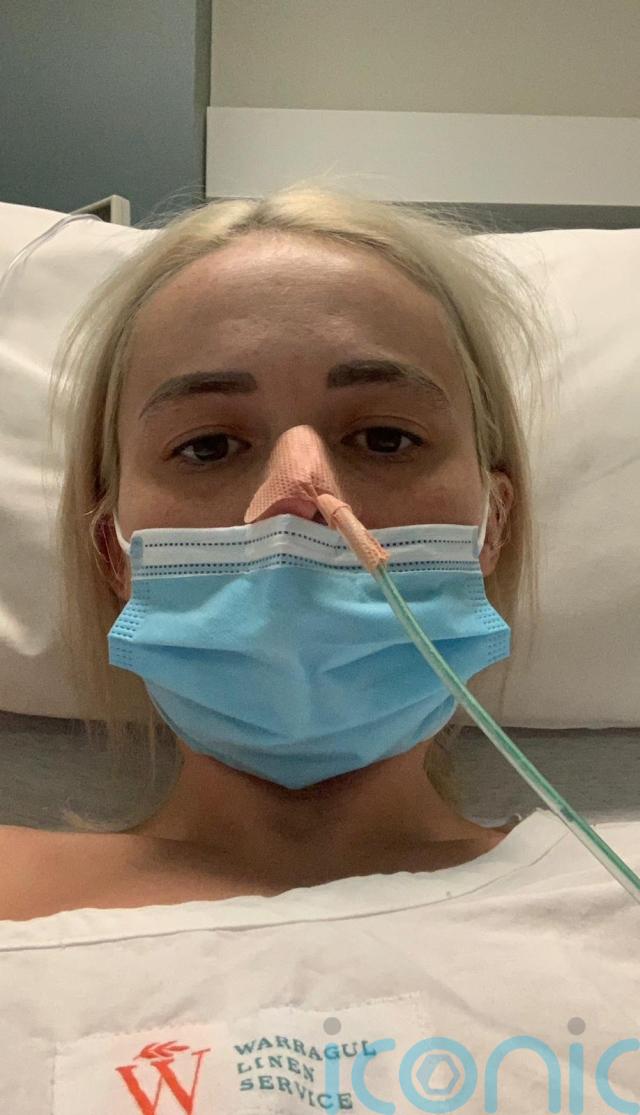
Charlotte, who is a community manager for cancer charity Mission Remission and lives in Bristol, had been living in Australia for around three years when, in December 2020, she was rushed into hospital as severe but intermittent symptoms including stomach pain and vomiting became constant.
She was unable to eat, having three-hour vomiting episodes after mealtimes and losing “a really dramatic amount of weight”, and noticed a change in bowel habits, symptoms she’d been experiencing on-and-off for around 18 months.
“At the time I went into hospital, I was so constipated,” Charlotte said.
“But all I can remember is the severe nausea, because, essentially, I was so blocked up and had been for a long time, it was kind of poisoning me.”
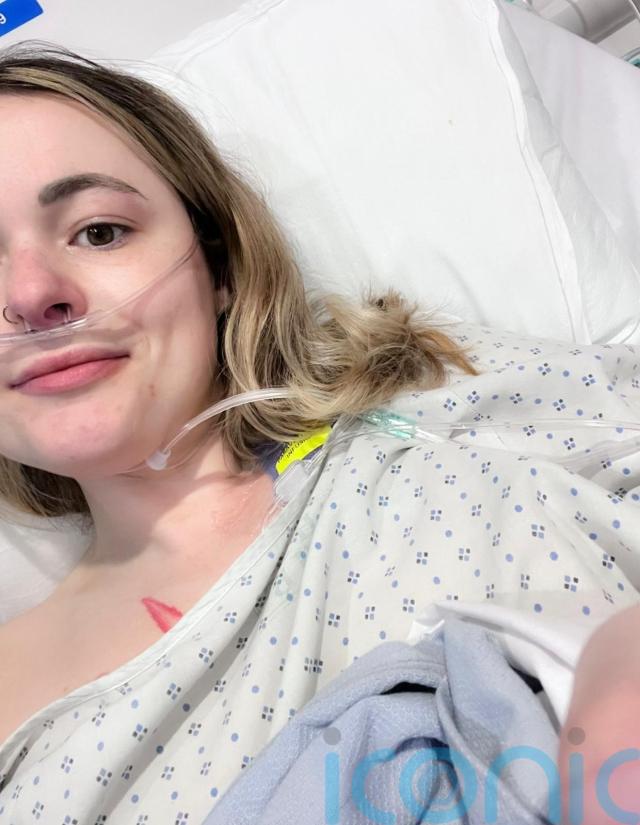
When Charlotte was admitted into hospital, she was given a CT scan which revealed an obstruction in her bowel that required urgent surgery.
Upon seeing the CT scan, the doctors asked if Charlotte had a history of bowel cancer in her family.
“I said: ‘I don’t have cancer, do I?’. And they were like: ‘We don’t know yet, but we’ll find out’,” she recalled.
On December 11, 2020 – within 24 hours of arriving at the hospital – Charlotte was in theatre having the obstruction removed for biopsy. On December 17, it was confirmed that she had advanced bowel cancer, and doctors estimated it had been developing for three to five years.
“I had no time to think,” she said.
“I was in Australia, and it was in Covid, so I was on my own in the hospital. To be honest, the thing that was going through my mind because of how unwell I felt… I just thought I was going to die in the hospital.”
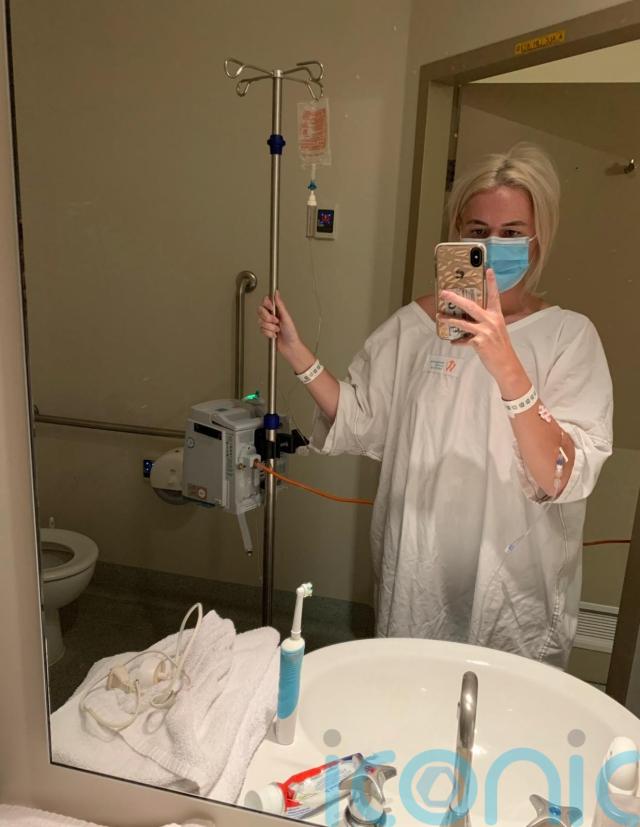
Charlotte was diagnosed with Stage 3B bowel cancer, with the cancer having spread to her lymph nodes. While the large tumour and the affected lymph nodes had been removed during surgery, she required 12 weeks of preventative chemotherapy administered via drip and oral tablets to ensure there was no cancer remaining.
On 6 April 2021, having completed the four rounds of chemotherapy, Charlotte was told she was in remission.
Charlotte moved back to the UK in April 2021, and had scans and blood tests every six months for monitoring. By 2023, when she was 29, no recurrence had been noted, and when she went in for her routine scan in February 2023 Charlotte “felt so fit and so healthy, it was probably the scan I went into with the least amount of scan anxiety”.
However, nine days later, Charlotte received a call from the hospital.
“They said, ‘Your surgeon would like to see you next week’… I was like, I’ve never been called in before, so that can’t be good news,” she said.
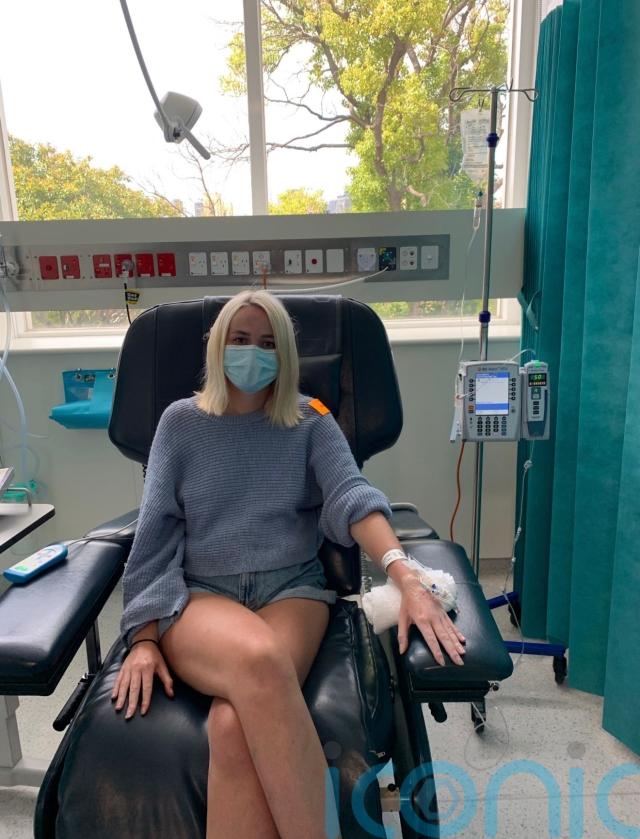
At that appointment, Charlotte was told the cancer had returned on her lung, and she was diagnosed as stage 4, since it had metastasized away from its original location in the bowel.
“We spoke about treatment options, and normally, the NHS will say that anyone who’s had a recurrence has to have another round of chemo. But I was 29 at the time, and fertility was a really big factor,” Charlotte said.
“I essentially had to weigh up whether it meant more to me to not have chemo and protect my fertility, or have chemo and reduce my chance of the cancer coming back.”
Because of the tumour’s small size, Charlotte was able to have it removed through keyhole surgery in April 2023. She was on bed rest for two weeks, and “after that, it was a case of really slowly and gradually building up my fitness again”. She was told she was in remission again in August 2023.

The hardest part, she said, “was the breathlessness – I couldn’t walk anywhere without being so breathless… It took a long time to build up my fitness again”.
“Maybe it was naive, but I really didn’t think I was going to have a recurrence during my remission,” she added.
“It was a huge shock, because I felt so fit and healthy.”
Battling cancer twice in her late 20s has taken an emotional toll on Charlotte, too.
“Because I was so young, you’re around an age group where people are progressing with other areas of their life, like buying houses and work and stuff. You just feel so behind where everyone else is, for something that is just so out of your control.”

As April marks Bowel Cancer Awareness Month, Charlotte is urging both young people and medical professionals to look out for the warning signs of bowel cancer. The NHS states that the main symptoms of bowel cancer include changes in your poo, blood in stools, which can make poo black or red, stomach pain, losing weight without trying, and bloating.
According to data from Bowel Cancer UK, every year more than 2,500 people under the age of 50 are diagnosed with bowel cancer in the UK.
“There isn’t quite that awareness still that this can happen to young people,” Charlotte said.
“I think that just raising awareness of the symptoms and making sure people have the confidence to get checked if something doesn’t feel right… To not have that immediate thought of: ‘You’re too young to have bowel cancer’ is important.”

This Bowel Cancer Awareness Month, Bowel Cancer UK and Takeda UK are spotlighting their Stage4You campaign – developed and funded by Takeda UK and supported by Bowel Cancer UK – which has been created to address the real challenges and unmet needs of people living with stage 4 bowel cancer.
Particularly in April, when much-needed awareness content is more prolific, the campaign encourages “people living with stage 4 bowel cancer to take a self-awareness day, and give themselves permission to step back when disease awareness content feels too much”.
For Charlotte, Stage4You has been valuable as it “acknowledges the mental toll of what we’re going through, and gives us that acknowledgement to be able to just take some time, and to see that life doesn’t just go on as normal sometimes”.
“I think my whole perspective on life changed (after cancer),” she added.
“I say yes to more things. I make sure that all of the time I have is spent doing things that I actually want to do.
“I think it shows you how fragile life is.”

Subscribe or register today to discover more from DonegalLive.ie
Buy the e-paper of the Donegal Democrat, Donegal People's Press, Donegal Post and Inish Times here for instant access to Donegal's premier news titles.
Keep up with the latest news from Donegal with our daily newsletter featuring the most important stories of the day delivered to your inbox every evening at 5pm.

This publication supports the work of the Press Council of Ireland and Office of the Press Ombudsman, and our staff operate within the Code of Practice of the Press Council. You can obtain a copy of the Code, or contact the Council, at www.presscouncil.ie, Lo-call 1800 208 080 or email: info@presscouncil.ie.