Search


16 Apr 2026
Search
16 Apr 2026

Please allow ads as they help fund our trusted local news content.
Kindly add us to your ad blocker whitelist.
If you want further access to Ireland's best local journalism, consider contributing and/or subscribing to our free daily Newsletter .
Support our mission and join our community now.
To continue reading this article, you can subscribe for as little as €0.50 per week which will also give you access to all of our premium content and archived articles!
Alternatively, you can pay €0.50 per article, capped at €1 per day.
Thank you for supporting Ireland's best local journalism!


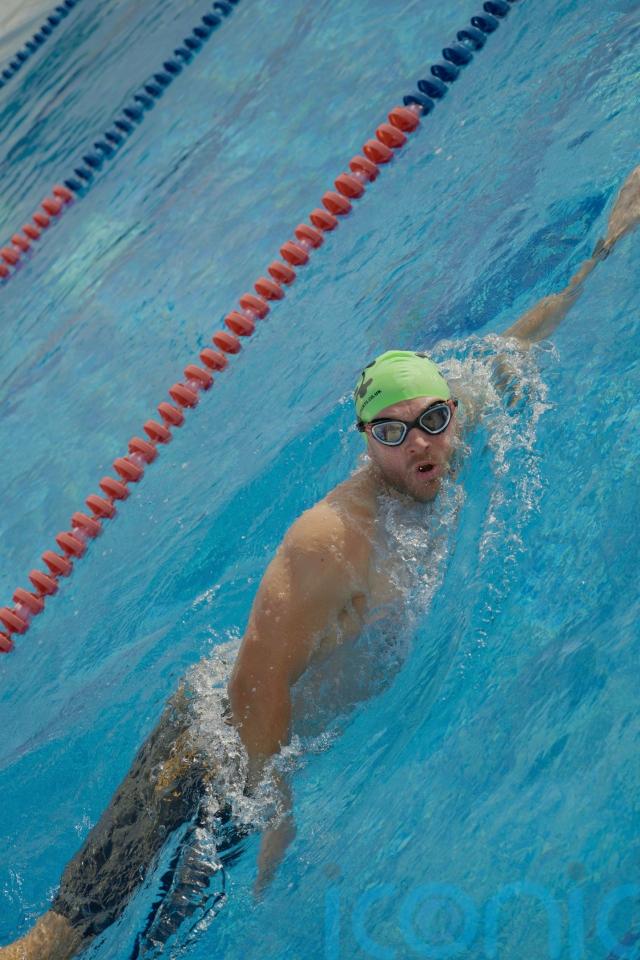
A 30-year-old Edinburgh man is attempting to complete 10 Ironman-distance triathlons – consisting of a 2.4 mile swim, 112 mile cycle, and 26.2 mile run – in 10 cities over 10 consecutive days to mark 10 years since he attempted to take his own life.
Fergus Crawley, who runs a fitness coaching business, has called his feat Project TENacity and will be fundraising for the suicide prevention charity Campaign Against Living Miserably (CALM) which provides life-saving services, information and advice to people struggling.
From Thursday April 30 to Saturday March 9, Fergus will complete a triathlon each day, with members of the public joining him by donating £12.20 – an amount which will fund “a potentially life-saving phone call” from CALM – and taking part as he swims, cycles and runs in 10 cities across the UK.
Fergus will start in his home city of Edinburgh, then repeat the challenge in Glasgow, Belfast, Dublin, Liverpool, Manchester, Leeds, Cardiff and Bristol before finishing in London.
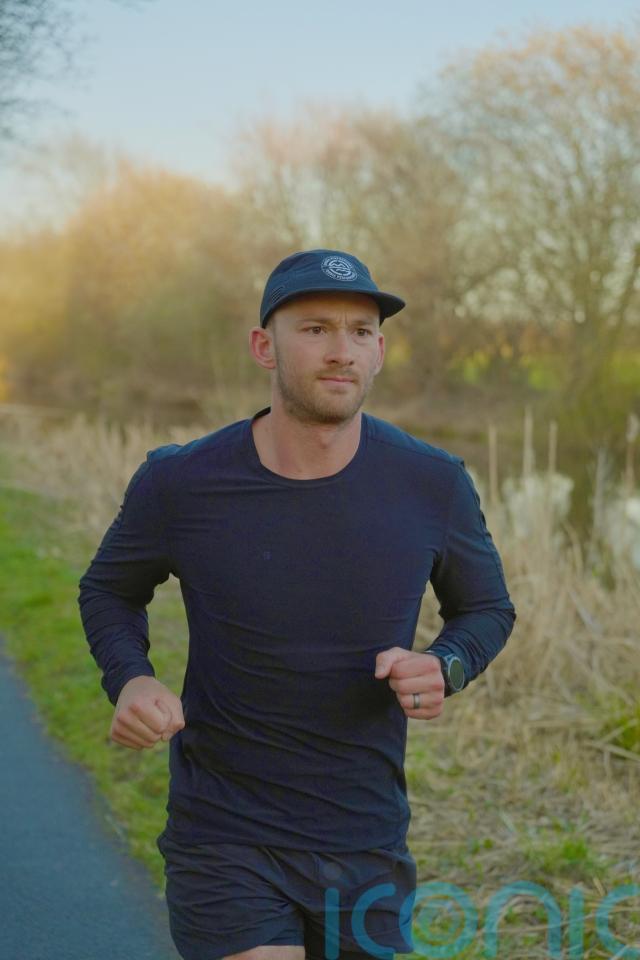
Fergus’s battle with his own mental health began in 2014, when he moved to Durham for university. He had worked hard at school, supported by his loving family, to get into Oxford University to study theology and religion – a subject he admits he only chose to increase his chances of acceptance to the prestigious institution – but missed out on a place and went to Durham instead.
He felt like he’d made a mistake and was “embarrassed” to admit that he might have got it wrong.
“And then a bit of a spiral started to develop where, for the next 18 months, things started to just get worse and worse mentally,” Fergus told PA Real Life.
“I quite quickly felt quite lonely, which was something I hadn’t felt for a long time.”
He struggled to make friends, not connecting with his flatmates in halls and feeling unhappy with his choice of course.
“I hadn’t even viewed Durham – I was just under the impression I should go to the best possible university that I can, because it will be the best box to tick for future career paths. I kind of bought into the narrative of ‘tick these boxes to achieve this thing’,” he said.
“I didn’t want to admit that I wasn’t happy, I didn’t want to admit that I felt lonely, I didn’t want to admit I felt like I’d failed, and that narrative started to spiral, and spiral, and spiral.”
“The thing that prevented me from taking more decisive action was that my perspective on masculinity was that if I admitted that I was falling short of the expectations I had of myself, or other people did, that would have been viewed as a failure,” Fergus added.
“I felt like because other people weren’t in the situation I was in, that somehow it was my fault, that I’d failed, and that they’d laugh at me… All these little things just sort of fed the narrative that I’d done something wrong, I was a failure, and that started to become quite self-destructive.”
Things came to a head for Fergus in the spring of 2016, in his second year at university. During a week where students were getting their heads down, revising for exams, he realised that he hadn’t spoken to another person, “other than a barista or a Tesco cashier”, for a full week.
He was lonely, disconnected, and feeling the physical effects of what he now knows was depression: “Weights in the gym felt heavier, I wasn’t eating as much, I wasn’t sleeping very well. If I did fall asleep, I’d wake up a lot after alarms had gone off hours earlier, and things like that.”
“I kept ruminating on how I was feeling and what I could do about it, and because I’d let things get so bad, and because they got on for so long, rather than thinking, ‘Okay, you’ve hit a brick wall here, you need to sort this out’, it was the opposite, which was, ‘This is so embarrassing now, you’re such a failure, you’re such a laughing stock, no one can ever find out about this. There’s no other options’,” Fergus said.
“In May 2016, in the state of irrational mind that I was in, I decided that suicide was the preferable option.”
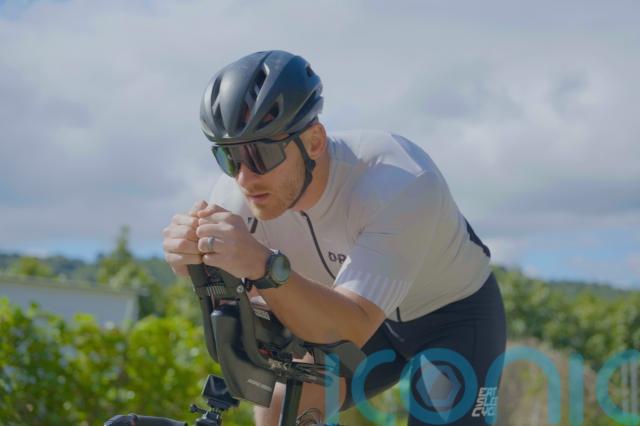
After Fergus attempted to take his own life, he was able to get the help he needed.
“Training, and the community around it, was a strong anchor for me, and then became a core component of my recovery as well,” Fergus explained.
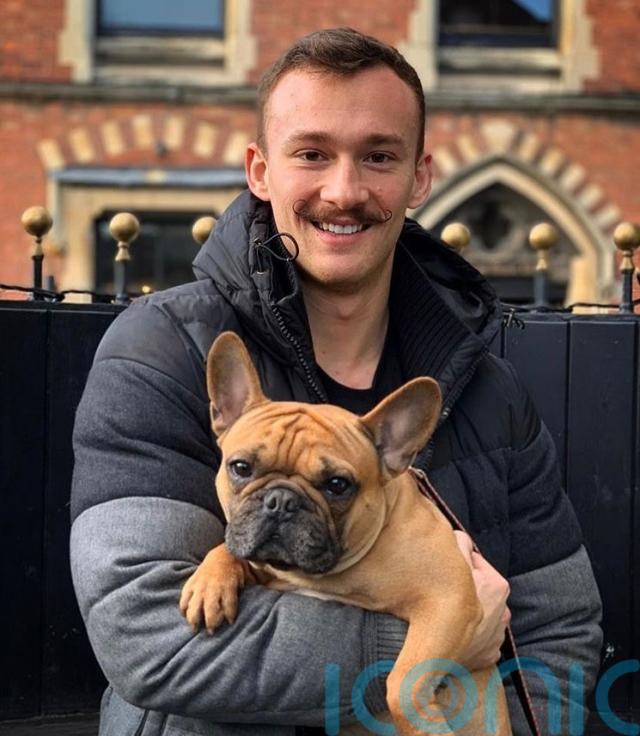
While on the road to recovery, he also got his dog Odie, which he admits “was a ridiculous idea” for a second year university student, but his pet gave him purpose and routine.
He also found it to be a way to “start conversations” while out and about, which helped him gain some perspective on his challenges with mental health, and build the confidence that he deserved help and happiness.
Fergus graduated from university with an upper second class degree, and decided to ensure that his life moving forward gave him purpose and fulfilment.
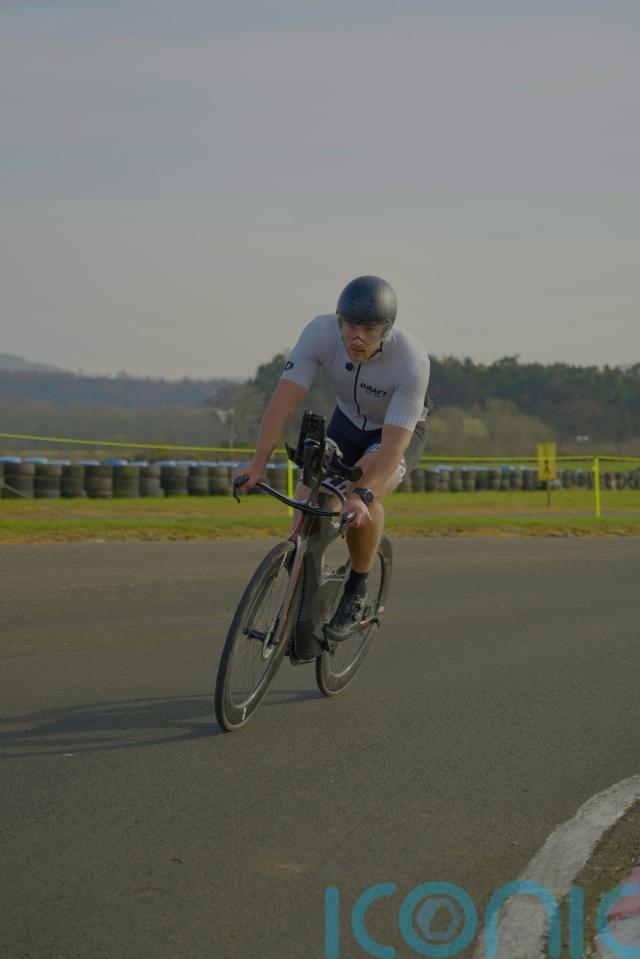
He started his own coaching business, OMNIA Performance, helping other people to share in his hobbies of weightlifting and multidisciplinary races, and has raised hundreds of thousands of pounds for charities like Movember since 2018.
To mark a decade since his lowest moment, however, he wanted to go even bigger – and Project TENacity was born.
Training for the challenge has been “mentally demanding” and “boredom has been something I’ve had to get very, very comfortable with”, he said – but he has dedicated himself to a 25-hour weekly training schedule through “consistency, scheduling, continually showing up”.
“With all my training, the question is always: ‘How does this make me better? Is this something I enjoy? Is this fulfilling?’ Not where do I place, or how can I perform better so that I can sit higher on a leaderboard. I’m really, really not arsed about that,” he said.
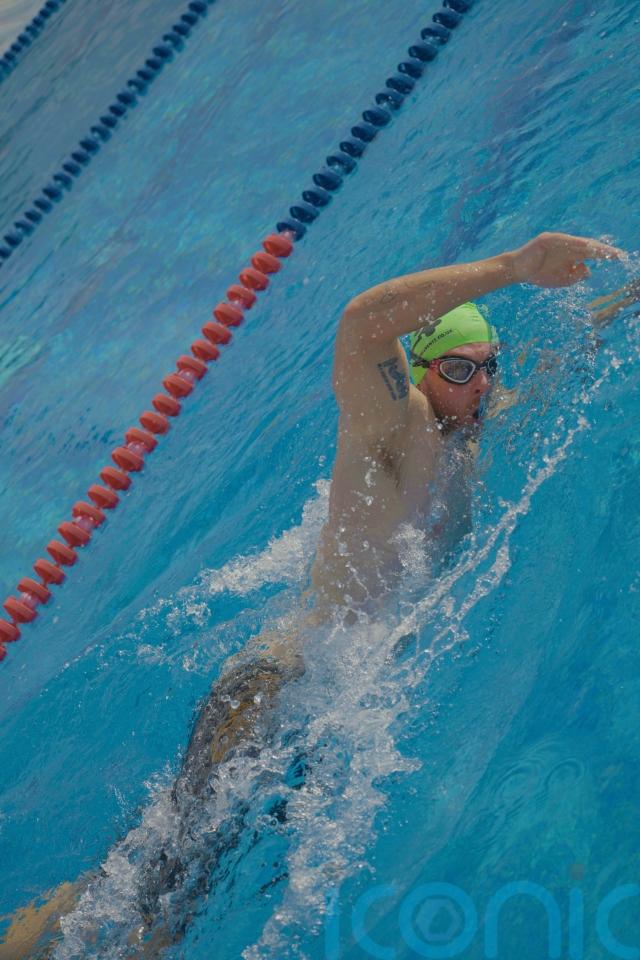
In taking on 10 triathlons in 10 cities in 10 days, Fergus hopes to unite the country in spreading the message about mental health, and raise vital funds for suicide prevention charity CALM.
In each city, people will be able to join Fergus by swimming, cycling or running – even “if they want to come and swim one length and then go home, that’s just as valuable as someone that comes and swims the whole distance”.
People can get involved by donating a minimum of £12.20 to CALM, a figure which would fund “a potentially life-saving phone call” and “might create the opportunity for someone to be at that point that I was at, where a phone call might be the thing that keeps them with us”.
“It would be foolish of me to try and say that I’ve got the solution or I know what to do,” Fergus said.
“So all I’m really going to do is just try and shine a light on my own experience, hope that it resonates.”
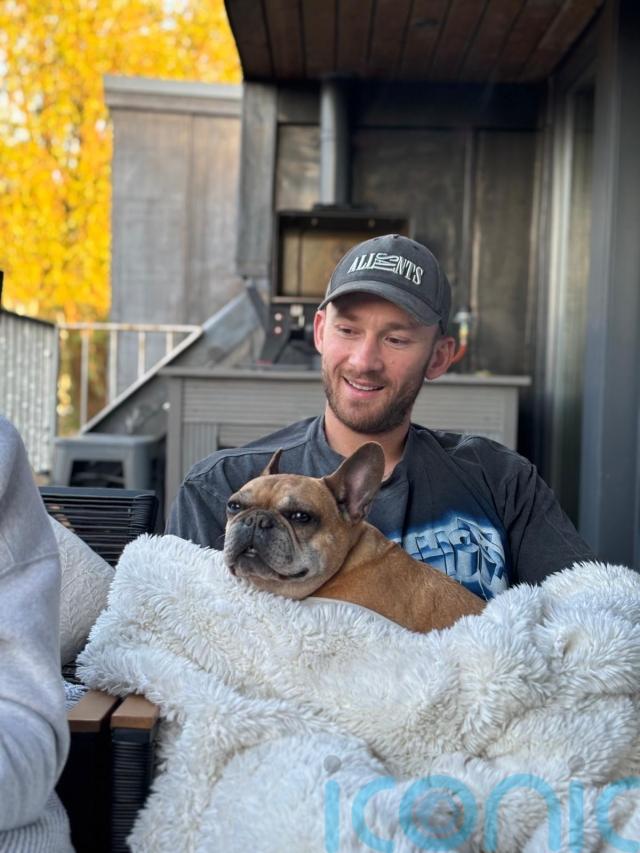
TENacity aims to raise £122,000 for suicide prevention charity CALM to fund 10,000 potentially life-saving calls. To make a donation, find out more about the challenge or to sign up to participate, visit https://givestar.io/gs/project-tenacity.
When life is difficult, Samaritans are here – day or night, 365 days a year. You can call them for free on 116 123 or visit samaritans.org to find your nearest branch.

Subscribe or register today to discover more from DonegalLive.ie
Buy the e-paper of the Donegal Democrat, Donegal People's Press, Donegal Post and Inish Times here for instant access to Donegal's premier news titles.
Keep up with the latest news from Donegal with our daily newsletter featuring the most important stories of the day delivered to your inbox every evening at 5pm.

This publication supports the work of the Press Council of Ireland and Office of the Press Ombudsman, and our staff operate within the Code of Practice of the Press Council. You can obtain a copy of the Code, or contact the Council, at www.presscouncil.ie, Lo-call 1800 208 080 or email: info@presscouncil.ie.